Brass buttons
Leptinella squalida. Family Asteraceae. Groundcover.
Also called New Zealand brass buttons, Cotula squalida.
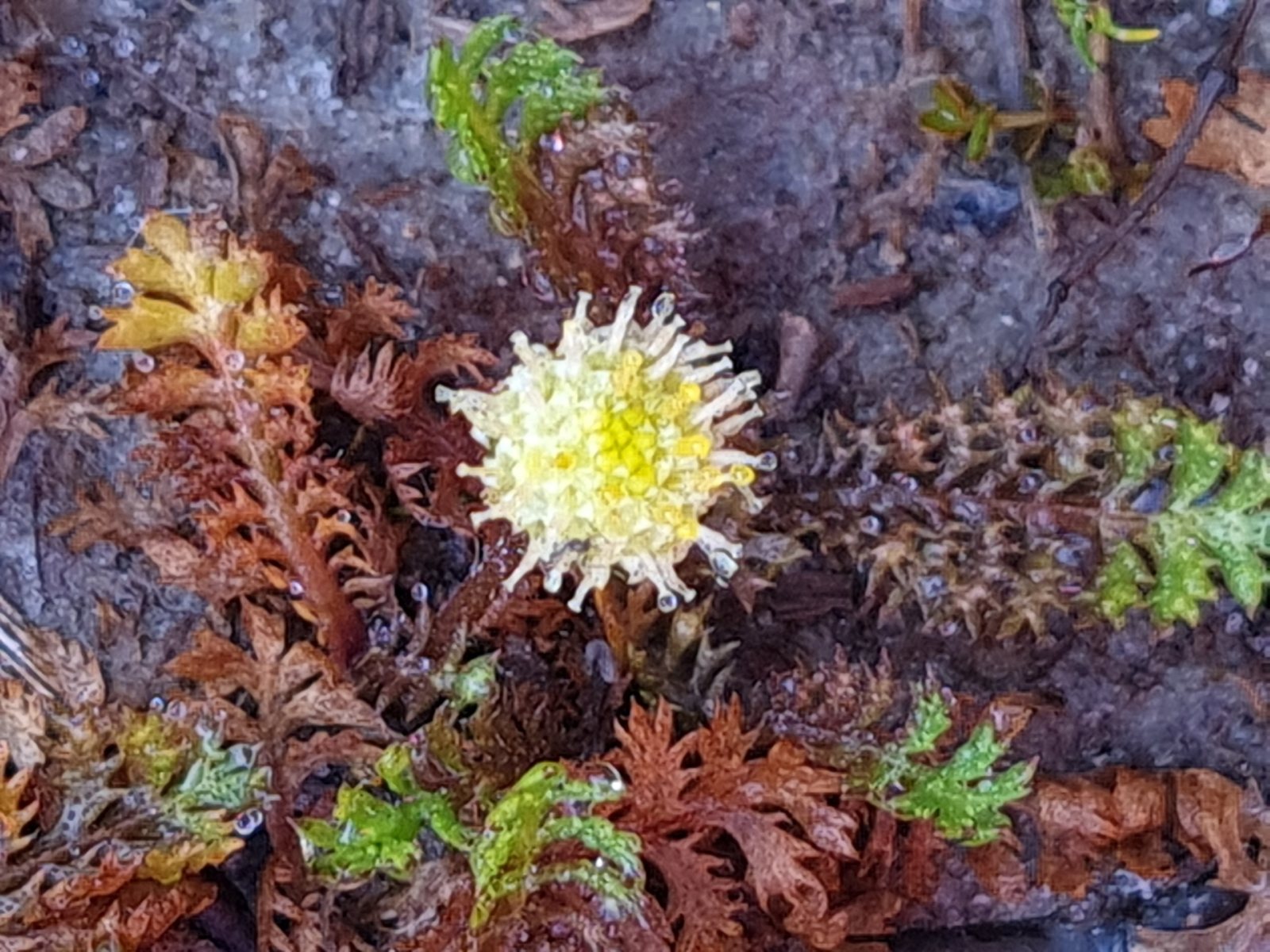
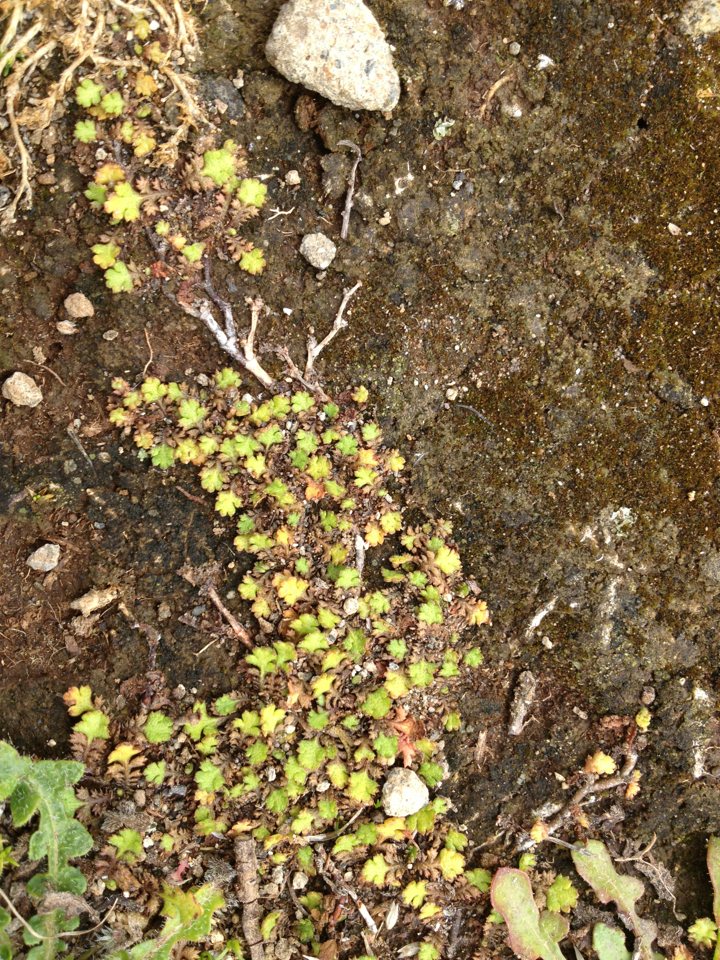
Brass buttons is a creeping perennial from New Zealand that forms a low carpet of finely divided, fern-like leaves. Gardeners grow it between stepping stones, along paths and beneath small plants where the soil stays moist but drains freely. It tolerates occasional footsteps, but not regular foot traffic.
At a glance
- Sun
- Full sun to partial shade; provide afternoon shade in hot climates.
- Water
- Keep evenly moist, especially during establishment and hot weather; avoid prolonged drought and waterlogged soil.
- Soil
- Moist, well-drained soil with some organic matter; tolerates sandy or loamy soils if they do not dry out.
- Height
- 0.08-0.17 ft (0.025-0.05 m)
- Spread
- 0.5-1 ft (0.15-0.3 m), spreading farther over time by creeping stems
- Flowers
- Late spring to summer; tiny yellow-green to brassy yellow button-shaped flower heads.
- Foliage
- Evergreen. Small, finely divided, fern-like leaves, usually green with bronze or purplish tones. Dark-leaved selections are also grown.
- Growth
- Moderate to fast in cool, moist conditions
- Care needed
- Low
The year at a glance
- Cold hardy
- Wildlife
- Low allergen
| J | F | M | A | M | J | J | A | S | O | N | D | |
|---|---|---|---|---|---|---|---|---|---|---|---|---|
| Flowers | ||||||||||||
| Plant |
Northern hemisphere months. In Australia, shift them by six.
- Difficulty
- Easy
- Toughness
- Fairly tough
Will it suit your garden?
Pick your zone, country, light and whether you have pets.
Full sun is 6 or more hours of direct sun a day, part shade 3 to 6 hours, shade under 3.
How it grows
Planting day
0 ft (0.01 m)
After 1 year
0.1 ft (0.03 m)
After 2 years
0.1 ft (0.04 m)
full size
About 2 years to full size.
From a typical nursery size, at an average rate for this kind of plant. A rule of thumb, not a forecast.
Good to know
- Cats and dogs
- Safe
- In the garden
- Spreads vigorously: plan to contain it.
- Growth rate
- Fast
Care
Jobs through the year
- WaterMar–May, Sep–Oct, every 7 days
- Water established mats if rain is insufficient to keep shallow roots moist; new plants need closer checks.
- WaterJun–Aug, every 3 days
- Water established mats during dry weather before edges crisp; skip when soil remains moist.
- PruneMar–Apr
- Gently remove winter-damaged foliage without pulling up shallow roots.
- PruneSep
- Trim or lift rooted stems spreading beyond the intended area.
- DivideApr–May, Sep
- Lift rooted sections to renew thin patches or fill gaps, then water them in.
- ProtectJan–Feb, Nov–Dec
- Remove smothering leaves and avoid walking on frozen or saturated mats.
- Water regularly during the first growing season so the shallow roots do not dry out.
- During dry spells, water before the mat becomes crisp or starts to shrink.
- Work a little compost into poor soil before planting; established plants rarely need additional feeding.
- Keep thick mulch off the foliage and creeping stems.
- Divide crowded mats or rooted edges in spring to fill gaps and renew thin patches.
- Keep regular foot traffic on stepping stones rather than on the plants.
Pruning. In spring, gently remove dead or winter-damaged foliage without pulling up the shallow roots. Trim or lift rooted stems whenever they creep beyond the intended area; mowing is unnecessary.
Through the year
- Early spring
- Remove winter-damaged foliage and check that water is draining away from the mat.
- Spring
- Plant or divide rooted sections, then water them regularly until established.
- Late spring
- Remove weeds by hand before they become tangled in the spreading stems.
- Summer
- Water during dry weather and watch exposed edges for scorching.
- Early autumn
- Trim spreading edges and replant rooted pieces into bare patches while conditions are mild.
- Winter
- Keep fallen leaves from smothering the mat and avoid walking on frozen or saturated plants.
In the garden
- Fill gaps between widely spaced stepping stones on lightly used paths.
- Edge small beds with a low, finely textured carpet.
- Plant beneath dwarf shrubs where there is enough light and little root competition.
- Combine with small ferns and mossy stones in a cool, moist courtyard.
- Use in a moist rock garden with sharp drainage, away from drought-loving alpine plants.
Garden styles it suits: Japanese, Woodland, Moss and fern garden, Modern courtyard, Small-space and Pacific Northwest woodland.
Plant it with: Dwarf hostas, Japanese painted fern, Dwarf mondo grass, Siberian bugloss and Primroses.
Wildlife: The small flowers may be visited by small insects, but this is not a major nectar plant. Its low mat provides shelter for small ground-dwelling invertebrates.
Problems to watch for
- Drought or hot sun can turn the mat brown and leave bare patches; water deeply, provide afternoon shade and replant rooted sections once conditions improve.
- Waterlogged soil can cause rotting and winter losses; improve drainage or move the plant to a slightly raised position.
- Slugs and snails may damage tender growth; remove hiding places, hand-pick at dusk or use a labelled iron-phosphate bait.
- Frequent foot traffic crushes the shallow-rooted mat; add stepping stones and allow damaged areas to regrow.
Safety
Not known to be toxic to people, cats, dogs or horses. Species-specific safety information is limited, so no particular part can be declared proven safe to eat; it is not a food plant.
Easily confused with
Silver brass buttons (Cotula hispida)
Has conspicuously silvery, hairy foliage rather than the flatter green or bronze leaves of Leptinella squalida, and generally prefers drier conditions.
Irish moss (Sagina subulata)
Forms a similar low carpet but has tiny, narrow, undivided leaves and white star-shaped flowers rather than fern-like leaves and yellowish buttons.
The name
The common name refers to the small, rounded, brassy yellow flower heads.
Propagation. Divide in spring or early autumn, lifting small sections with roots attached and replanting promptly. Rooted pieces of creeping stem establish readily if kept moist. Propagate named selections by division to preserve their foliage characteristics.
Checked against open data
- Accepted botanical name
- Leptinella squalida
- Native range
- Chatham Is., New Zealand North and New Zealand South.
Sources: GBIF (CC BY 4.0) and Trefle (CC BY 4.0). The care and design notes are LandscapeGPT's own.
See it in your own yard.
Upload a photo of your yard and see it redesigned with plants that suit your climate, each checked against your zone.