Brown Turkey fig
Ficus carica 'Brown Turkey'. Family Moraceae. Tree.
Also called Brown Turkey common fig.
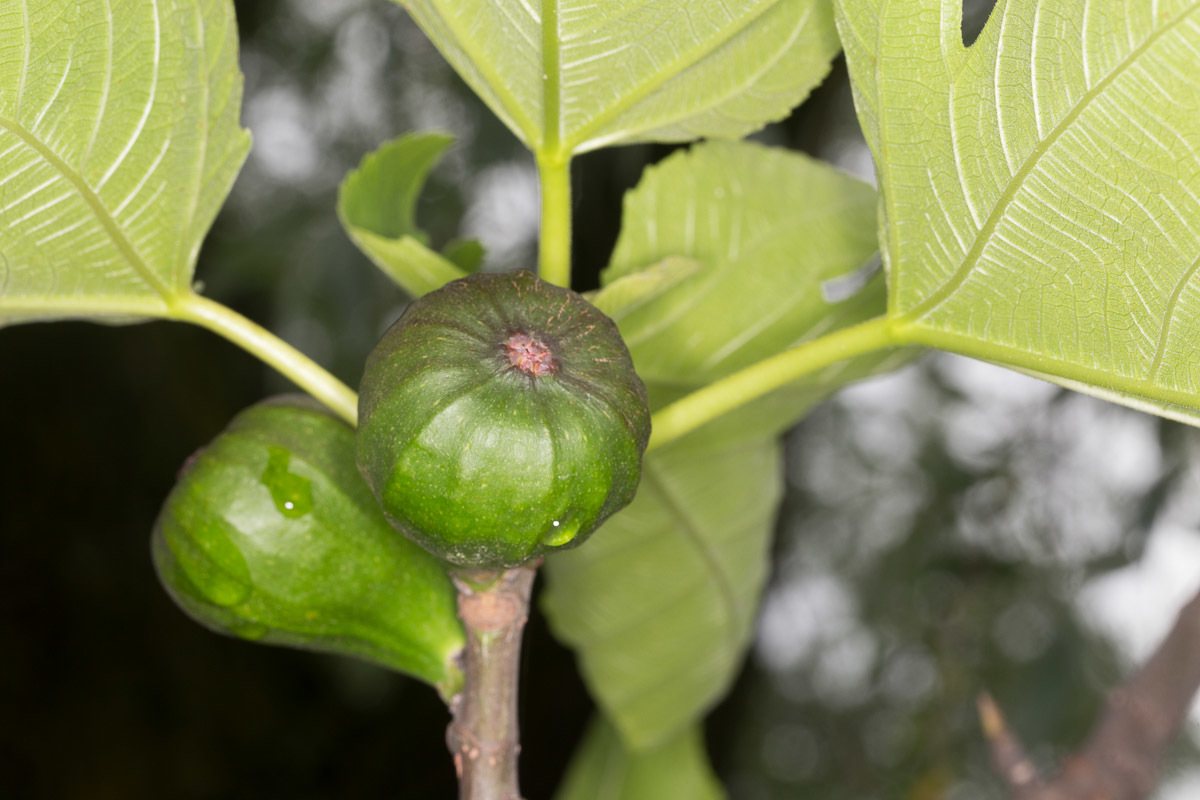
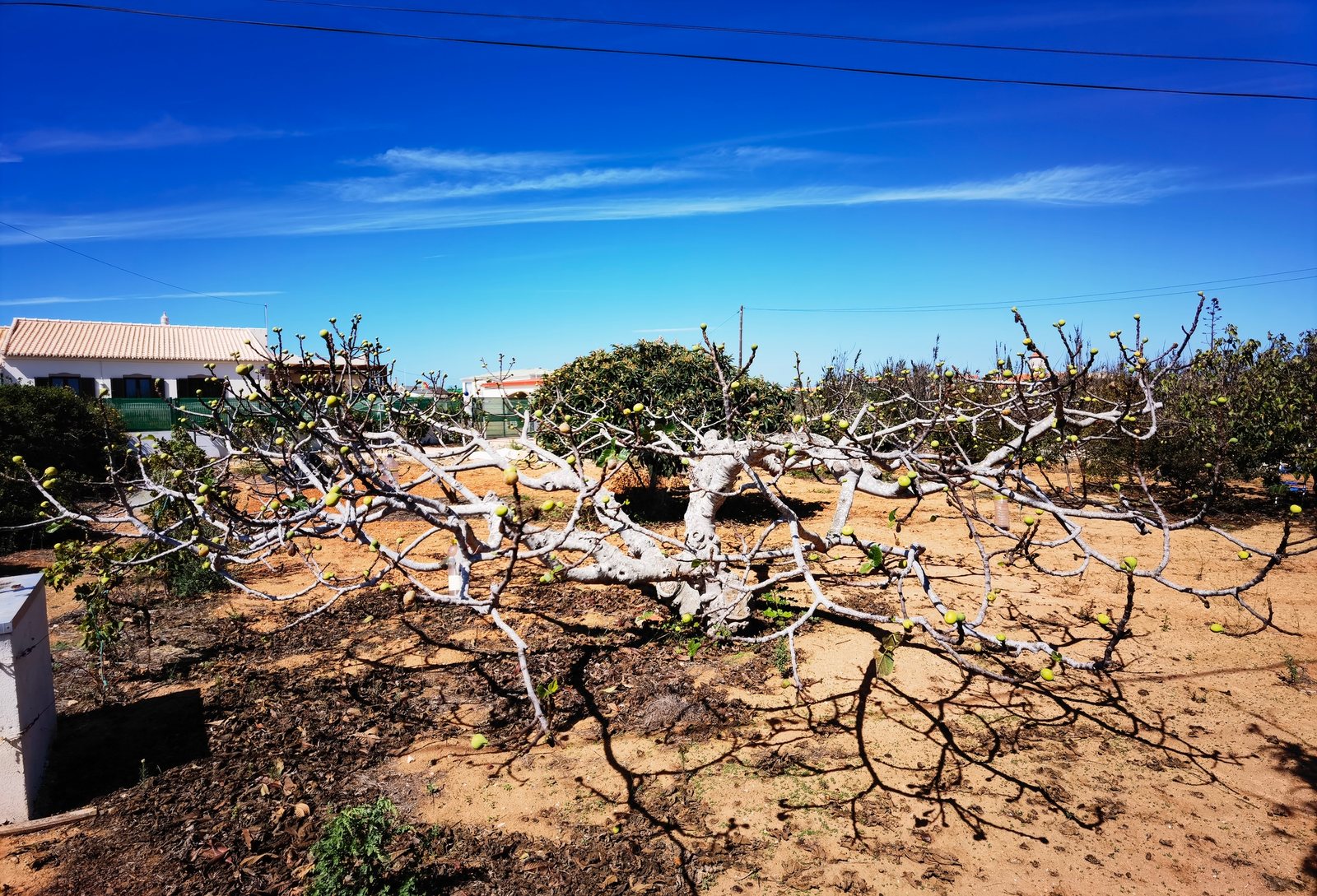
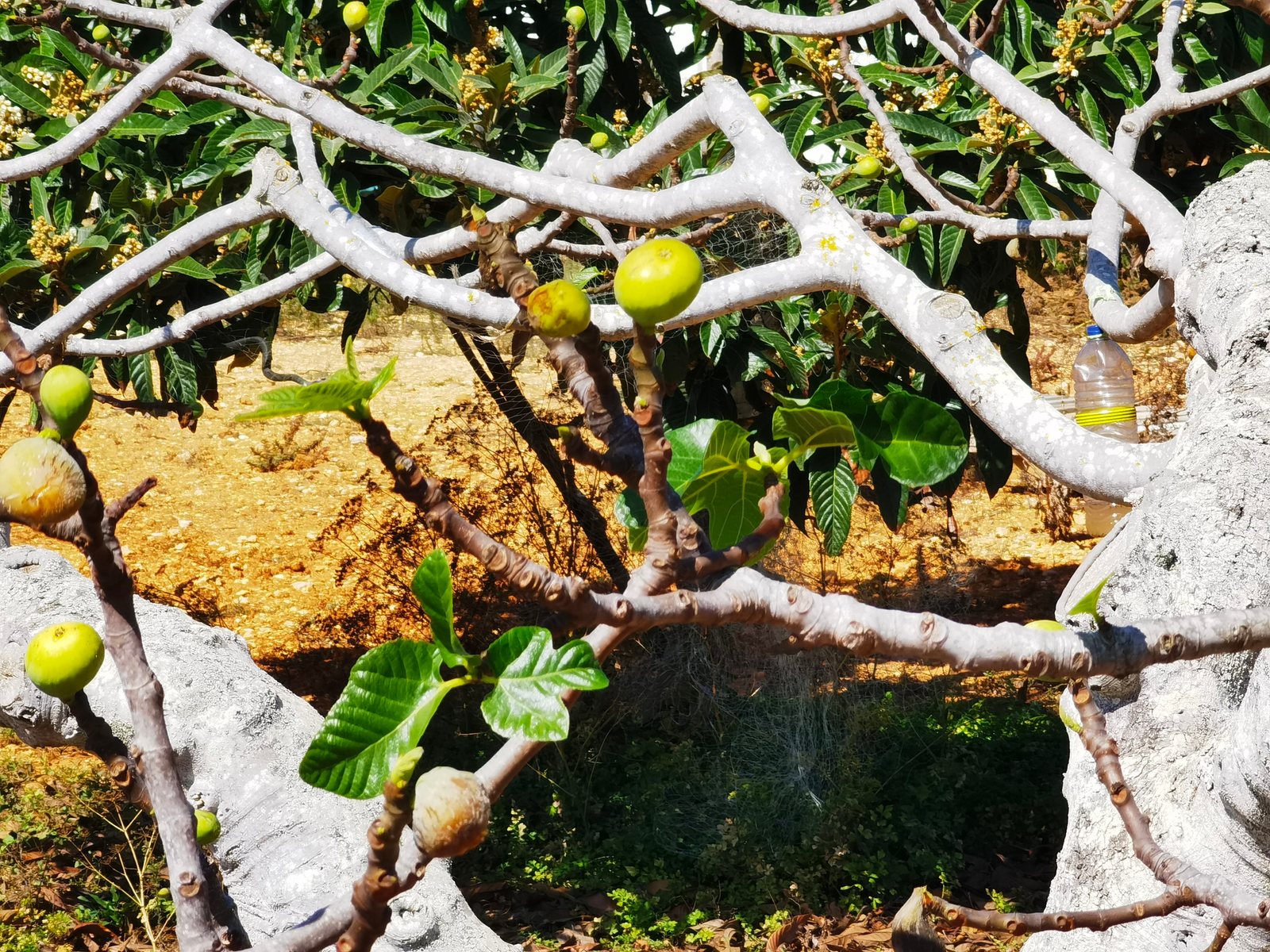
A deciduous fruit tree with large, lobed leaves and brownish-purple figs with sweet pink to amber flesh. It bears fruit without a pollinating partner or fig wasp, but needs a warm, sunny position to ripen well. Plants sold as 'Brown Turkey' vary between regions, so local nursery advice is useful when choosing for your climate.
At a glance
- Sun
- Full sun; a sheltered, sun-facing wall improves ripening in cool climates.
- Water
- Water regularly while establishing and during fruit swelling; established trees tolerate some drought, but dry spells can cause fruit drop.
- Soil
- Well-drained loam, sandy soil or improved clay; avoid waterlogged ground. Use a free-draining potting mix in containers.
- Height
- 10-25 ft (3-7.6 m), usually smaller in containers or with training
- Spread
- 10-20 ft (3-6 m)
- Flowers
- Tiny flowers are enclosed inside the developing figs and are not visibly showy.
- Foliage
- Large, rough-textured green leaves, usually with three to five deep lobes; yellowing before autumn leaf fall.
- Growth
- Moderate to fast in warm conditions
- Care needed
- Medium
The year at a glance
- Drought tolerant
- Heat tolerant
- Wildlife
- Low allergen
- Edible
| J | F | M | A | M | J | J | A | S | O | N | D | |
|---|---|---|---|---|---|---|---|---|---|---|---|---|
| Flowers | ||||||||||||
| Fruit | ||||||||||||
| Plant |
Northern hemisphere months. In Australia, shift them by six.
- Difficulty
- Moderate
- Toughness
- Fairly tough
Will it suit your garden?
Pick your zone, country, light and whether you have pets.
Full sun is 6 or more hours of direct sun a day, part shade 3 to 6 hours, shade under 3.
How it grows
Planting day
7 ft (2 m)
After 1 year
7 ft (2.2 m)
After 2 years
8 ft (2.4 m)
After 3 years
9 ft (2.6 m)
After 5 years
10 ft (3 m)
About 16 years to full size.
From a typical nursery size, at an average rate for this kind of plant. A rule of thumb, not a forecast.
Good to know
- Cats and dogs
- Toxic
- Invasive in
- the US and Australia
- Growth rate
- Fast
Care
Jobs through the year
- WaterApr–May, Oct, every 14 days
- Water established in-ground trees if soil is dry; young trees need more frequent watering.
- WaterJun–Sep, every 7 days
- Water deeply during dry weather as figs swell, avoiding abrupt changes in moisture.
- FeedApr
- Feed lightly only if growth is weak; excess nitrogen reduces fruiting.
- MulchApr
- Mulch with compost or bark, leaving a clear gap around the trunk.
- PruneMar–Apr
- After severe frost, remove dead and crowded branches while retaining healthy older shoots; wear gloves.
- ProtectApr–May
- Protect emerging leaves during late frosts.
- HarvestJul–Oct
- Pick only soft, drooping figs that detach easily; cool gardens may crop only in autumn.
- ProtectJan–Mar, Nov–Dec
- Insulate young stems and roots against severe frost; zone 6 gardens need substantial winter protection.
- Water deeply during dry spells while fruit is developing; check containers frequently in hot weather.
- Mulch the root area with compost or bark, keeping mulch clear of the trunk.
- Feed lightly in spring only if growth is weak; excess nitrogen encourages leaves rather than fruit.
- Use a large container or purpose-built root restriction where space is limited; do not rely on paving to contain roots.
- Protect young trees from severe frost and move pots to a sheltered, unheated space where winters exceed their hardiness.
Pruning. In late winter, after the worst frost but before strong growth begins, remove dead, damaged and crossing branches and thin crowded growth. Avoid hard annual pruning, which can remove an early crop and stimulate excessive leafy shoots; wear gloves to avoid the irritating sap.
Harvest
Pick individual figs in summer or autumn when they soften, hang downward and come away easily; skin colour alone is unreliable, and figs do not ripen properly after picking. Warm climates may produce a small early crop on older wood followed by a main crop on new growth, while cool summers may not ripen both.
Through the year
- Late winter
- Remove dead or crowded branches before strong growth starts, preserving healthy older shoots where an early crop is possible.
- Spring
- Plant after severe frost risk has passed, mulch the root area and feed lightly if needed.
- Late spring
- Move overwintered containers outdoors gradually and protect emerging leaves from late frost.
- Summer
- Water consistently as figs swell and protect ripening fruit with wildlife-safe netting.
- Summer to autumn
- Check fruit frequently and pick softened, fully ripe figs before they split or attract wasps.
- Late autumn
- Clear fallen fruit and leaves, and shelter container-grown trees before severe freezing weather.
In the garden
- Train as a fan against a sunny wall to save space and improve ripening in cool gardens.
- Grow in a large courtyard container for edible fruit and bold summer foliage.
- Use as a small specimen tree in an edible landscape, allowing room for its spreading crown.
- Pair with lavender, rosemary and thyme around the sunny outer edge of its canopy for a Mediterranean-style planting.
Garden styles it suits: Mediterranean, Modern courtyard, Edible landscape, Potager (kitchen garden), Backyard orchard and Food forest.
Plant it with: Lavender, Rosemary, Thyme, Sage and Nasturtium.
Wildlife: Ripe figs attract birds, mammals, ants and wasps. The enclosed flowers are not an accessible nectar source for ordinary garden pollinators; this cultivar does not need fig-wasp pollination to crop.
Problems to watch for
- Fruit fails to ripen: give the tree the warmest sunny position available, avoid heavy nitrogen feeding and excessive pruning, and choose locally proven stock.
- Fruit drops or splits: maintain even soil moisture; sudden heavy watering or rain after drought can split ripe figs.
- Scale insects: inspect stems and leaf undersides, remove small infestations by hand and use a locally approved horticultural oil according to its label.
- Fig rust: yellow-orange leaf spots and early leaf fall are common in humid climates; remove fallen leaves, improve airflow and avoid wetting foliage.
Safety
Ripe figs are edible for people. Milky sap from leaves, shoots and unripe fruit can irritate skin and eyes and cause blistering when contaminated skin is exposed to sunlight. Leaves and sap are toxic or irritating to cats and dogs if chewed, causing mouth irritation, drooling, vomiting or diarrhoea. Horse-specific toxicity information is limited; keep prunings away from horses and seek veterinary advice after ingestion.
Where it spreads. Ficus carica can escape cultivation and is invasive in parts of California and southern Australia, including South Australia and Western Australia. Seedling spread depends on the presence of its specialist pollinating wasp; 'Brown Turkey' fruiting without pollination does not itself indicate viable seed.
Easily confused with
Black Mission fig (Ficus carica 'Mission')
Ripe fruit is usually much darker purple-black. Leaves overlap greatly in shape, so fruit and a reliable label are better guides.
Brunswick fig (Ficus carica 'Brunswick')
Fruit is often larger and more asymmetrical, with greenish-yellow skin and a brown or purple flush. Cultivar identification from leaves alone is unreliable.
Chinese rice-paper plant (Tetrapanax papyrifer)
Its much larger, deeply lobed leaves have conspicuously pale, felted undersides; it produces exposed flower clusters rather than edible figs.
The name
Ficus is Latin for fig, and carica refers to Caria, an ancient region of southwestern Asia Minor associated with fig cultivation.
Propagation. Take hardwood cuttings during dormancy or layer a low branch. These methods preserve the cultivar; seedlings do not come true to type.
Checked against open data
- Accepted botanical name
- Ficus carica
- In the US and Canada
- Introduced in the lower 48 states, Pacific Basin and Puerto Rico.
- Native range
- Afghanistan, Cyprus, Greece, Iran, Iraq, Kriti, Lebanon-Syria, North Caucasus, Pakistan, Palestine, Transcaucasus and Turkmenistan.
- Measured
- Average height 540 cm.
Sources: GBIF (CC BY 4.0), USDA PLANTS and Trefle (CC BY 4.0). The care and design notes are LandscapeGPT's own.
See it in your own yard.
Upload a photo of your yard and see it redesigned with plants that suit your climate, each checked against your zone.