Bugleweed 'Black Scallop'
Ajuga reptans 'Black Scallop'. Family Lamiaceae. Groundcover.
Also called Carpet bugle 'Black Scallop', Ajuga 'Black Scallop'.
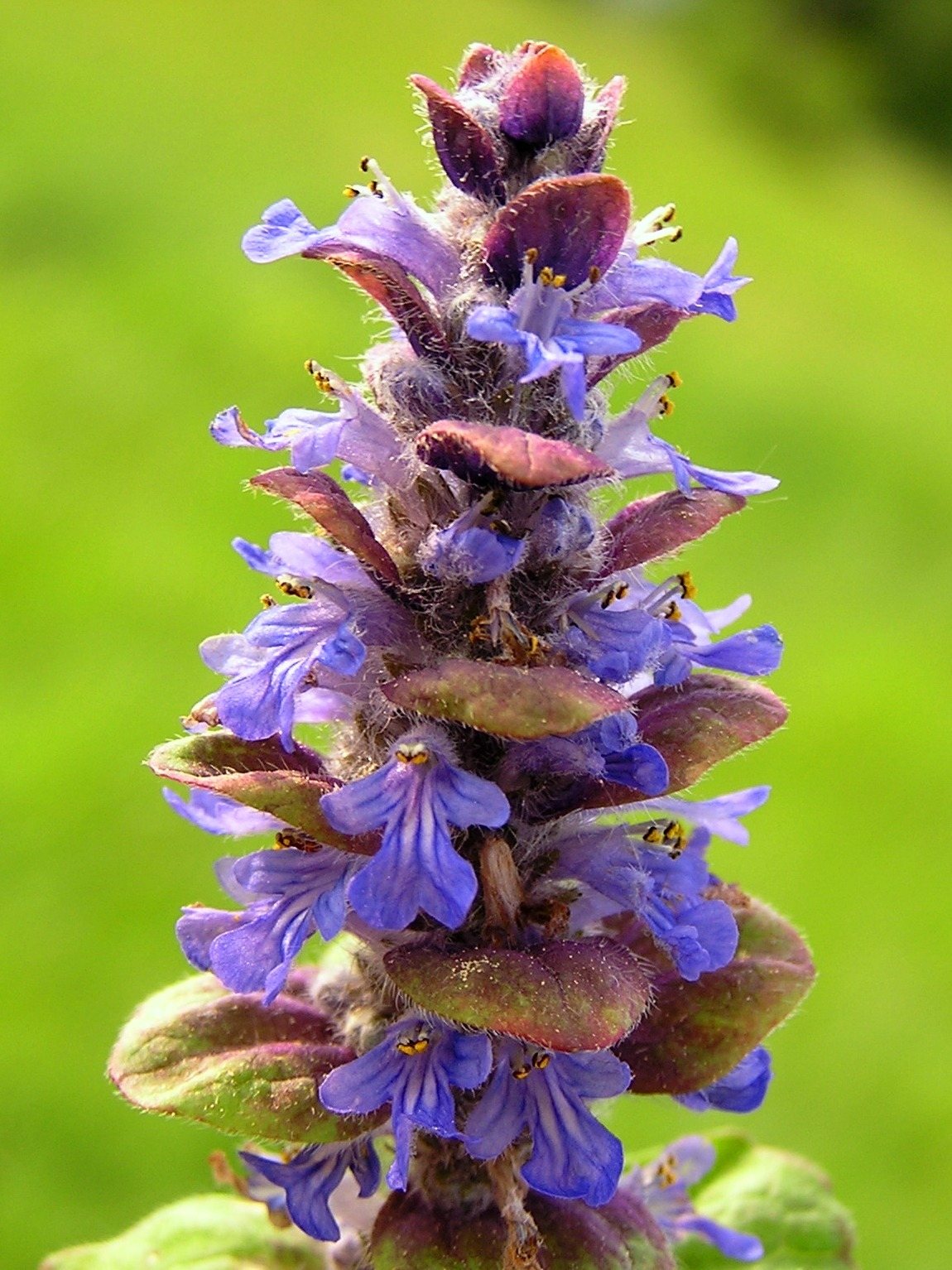
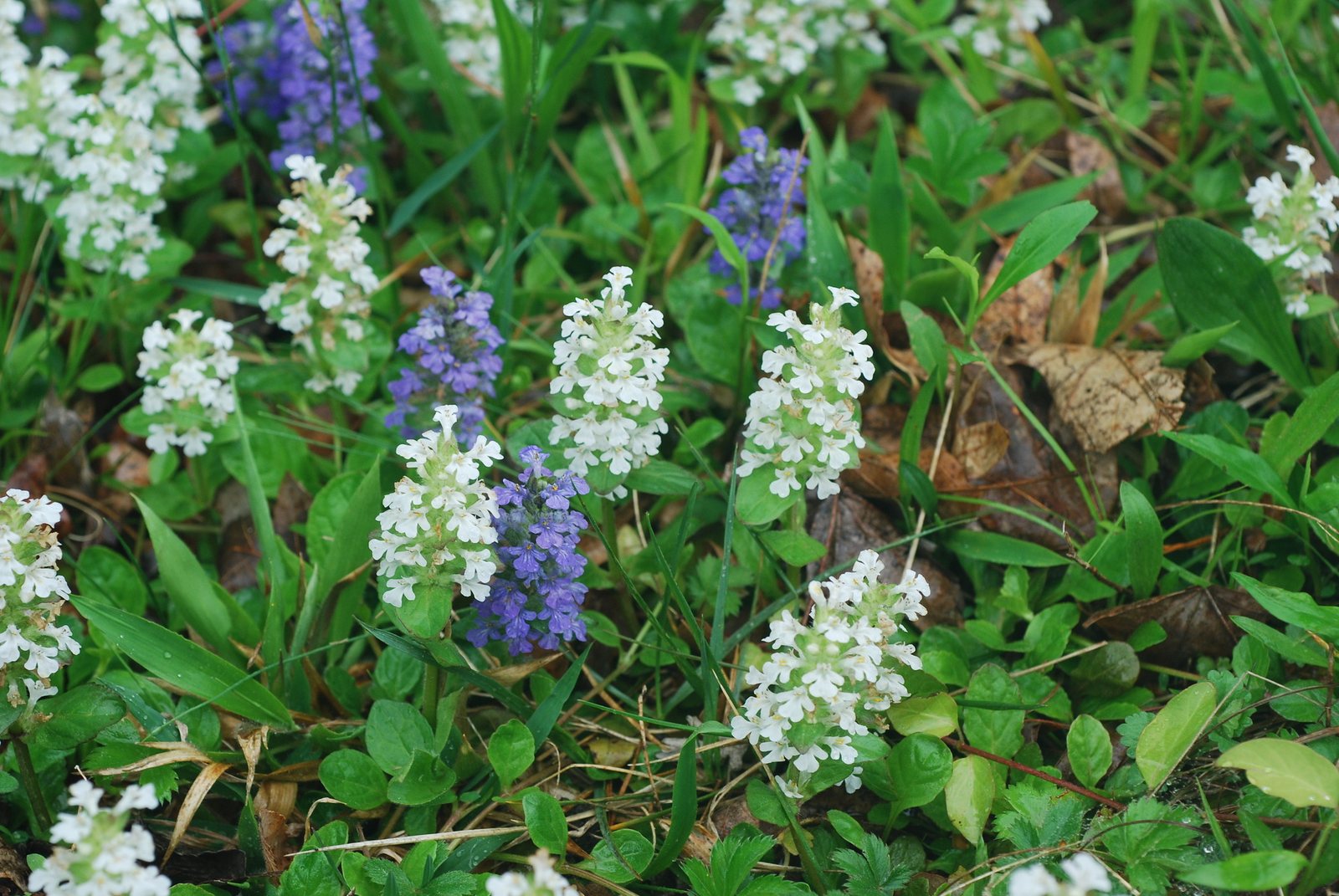
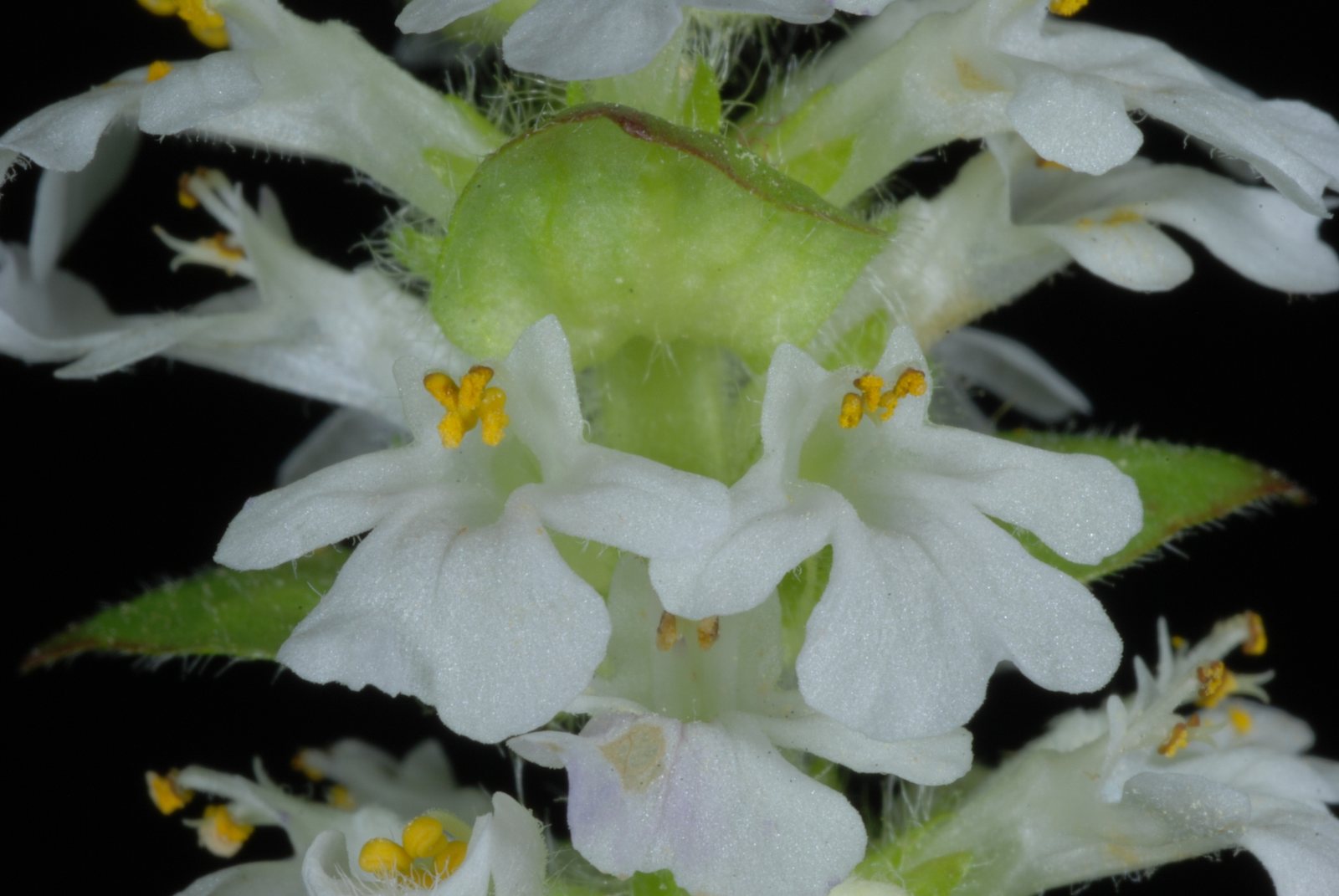
'Black Scallop' forms a low carpet of glossy, deeply scalloped, purple-black leaves, with short spikes of blue flowers in spring. Gardeners use it to cover small patches of ground and contrast with lighter foliage, but its rooting runners need watching near lawns and natural areas.
At a glance
- Sun
- Partial shade is ideal. Full sun gives darker foliage where the soil stays moist; provide afternoon shade in hot climates.
- Water
- Keep evenly moist while establishing. Established plants tolerate brief dry spells, but prolonged drought causes thinning and scorched leaves.
- Soil
- Moist, well-drained soil with organic matter; tolerates clay if it does not remain waterlogged.
- Height
- 0.25-0.5 ft (0.08-0.15 m) in leaf; flower spikes reach about 0.5-0.75 ft (0.15-0.23 m)
- Spread
- 1-2 ft (0.3-0.6 m), spreading farther over time through rooting runners
- Flowers
- Blue flower spikes in mid- to late spring, sometimes continuing into early summer
- Foliage
- Evergreen. Broad, rounded, glossy leaves with strongly scalloped edges; dark burgundy to nearly black, often greener in deep shade.
- Growth
- Fast in moist, fertile soil
- Care needed
- Medium
The year at a glance
- Pollinators
- Deer resistant
- Cold hardy
- Wildlife
- Low allergen
| J | F | M | A | M | J | J | A | S | O | N | D | |
|---|---|---|---|---|---|---|---|---|---|---|---|---|
| Flowers | ||||||||||||
| Plant |
Northern hemisphere months. In Australia, shift them by six.
- Difficulty
- Easy
- Toughness
- Fairly tough
Will it suit your garden?
Pick your zone, country, light and whether you have pets.
Full sun is 6 or more hours of direct sun a day, part shade 3 to 6 hours, shade under 3.
How it grows
Planting day
0.1 ft (0.03 m)
After 1 year
0.3 ft (0.08 m)
After 2 years
0.4 ft (0.12 m)
full size
About 2 years to full size.
From a typical nursery size, at an average rate for this kind of plant. A rule of thumb, not a forecast.
Good to know
- Cats and dogs
- Safe
- Native to
- the UK
- Invasive in
- the US
- In the garden
- Spreads vigorously: plan to contain it.
- Growth rate
- Fast
Care
Jobs through the year
- WaterApr–May, Sep–Oct, every 14 days
- Water established mats if soil is dry; keep new plants evenly moist.
- WaterJun–Aug, every 7 days
- Water deeply during dry weather, avoiding saturated crowns.
- MulchMar–Apr
- Apply a thin compost dressing, keeping crowns uncovered.
- PruneMar
- Remove winter-damaged leaves and inspect crowns for rot.
- PruneApr–Oct, every 21 days
- Lift escaping runners and rooted rosettes before they invade adjacent areas.
- DeadheadMay–Jun
- Snip faded flower spikes above the foliage for a tidy mat.
- DivideMar–Apr, Sep
- Divide crowded or thinning patches as needed, replanting healthy outer rosettes.
- ProtectJan–Feb, Nov–Dec
- Clear smothering leaves and avoid walking on wet or frozen mats.
- Water new plants regularly until rooted, then water during prolonged dry weather.
- Apply a thin layer of compost in spring; avoid heavy feeding that encourages excessive spread.
- Keep mulch away from crowns to reduce rot.
- Lift runners that cross bed edges before they root into lawns or neighbouring plants.
- Divide crowded or thinning patches in spring or early autumn, replanting healthy outer rosettes.
Pruning. Snip off spent flower spikes after flowering and remove winter-damaged leaves in early spring. Cut back or lift unwanted runners whenever they spread beyond the intended area.
Through the year
- Early spring
- Remove damaged leaves and check crowns for rot after wet winter weather.
- Spring
- Plant or divide clumps, water thoroughly and apply a thin compost dressing.
- Late spring
- Remove faded flower spikes if you want a tidy foliage carpet.
- Summer
- Water during prolonged dry spells and lift runners escaping into paths or lawns.
- Early autumn
- Divide congested patches while the soil is warm and conditions are moist.
- Winter
- Keep fallen leaves from smothering the mat and avoid walking on wet or frozen plants.
In the garden
- Edge a partly shaded path with a low, dark ribbon of foliage; keep runners off the paving.
- Plant beneath deciduous shrubs where there is adequate moisture and space clear of their crowns.
- Contrast with golden sedges, silver-leaved plants or pale hostas in a shaded border.
- Use in containers as a dark foliage layer that trails slightly over the rim.
Garden styles it suits: Woodland, Cottage garden, English country, Modern courtyard, Blues and silvers and Small-space.
Plant it with: Hostas, Japanese painted fern, Coral bells, Siberian bugloss, Japanese forest grass and Snowdrops.
Wildlife: The flowers provide nectar for bees and other visiting insects. The dense foliage offers shelter for small invertebrates.
Problems to watch for
- Crown rot in waterlogged soil: remove affected plants, improve drainage and keep mulch away from crowns.
- Slugs and snails chewing young leaves: inspect at dusk, remove hiding places and use iron phosphate bait according to the label if needed.
- Leaf scorch or thinning in hot, dry sites: water deeply and provide afternoon shade.
- Runners invading lawns or crowding small plants: lift rooted rosettes regularly and use a contained bed or pot where spread would be troublesome.
Safety
Not known to be toxic to cats, dogs, horses or people; no part is generally recognised as poisonous. It is an ornamental plant, not a recommended food.
Where it spreads. Spreads aggressively by rooting runners in favourable garden conditions. Ajuga reptans is listed as invasive in Virginia and is naturalized across parts of the eastern and midwestern United States. Keep it out of woodland edges and other natural areas, and check local guidance before planting.
Easily confused with
Bugleweed 'Atropurpurea' (Ajuga reptans 'Atropurpurea')
Usually has flatter, less strongly scalloped leaves with a more bronze-purple colour; 'Black Scallop' has noticeably puckered, rounded, darker leaves.
Geneva bugle (Ajuga genevensis)
Has conspicuously hairy leaves and stems and lacks the long rooting runners typical of creeping bugleweed.
Ground ivy (Glechoma hederacea)
Has smaller, kidney-shaped, aromatic green leaves and flowers in the leaf axils rather than dense upright terminal spikes.
The name
The species name reptans means creeping, describing its runners, while 'Black Scallop' refers to the dark leaves and their scalloped edges.
Propagation. Divide established patches or detach rooted runner rosettes in spring or early autumn. Seedlings will not reliably retain the dark foliage and other characteristics of 'Black Scallop'.
Checked against open data
- Accepted botanical name
- Ajuga reptans
- In the US and Canada
- Introduced in Canada and the lower 48 states.
- Native range
- Albania, Algeria, Austria, Baltic States, Belarus, Belgium, Bulgaria, Central European Rus, Czechoslovakia, Denmark, East European Russia and France.
- Measured
- Soil pH 3 to 4. Average height 11 cm.
Sources: GBIF (CC BY 4.0), USDA PLANTS and Trefle (CC BY 4.0). The care and design notes are LandscapeGPT's own.
See it in your own yard.
Upload a photo of your yard and see it redesigned with plants that suit your climate, each checked against your zone.