Burkwood osmanthus
Osmanthus × burkwoodii. Family Oleaceae. Shrub.
Also called Burkwood's sweet olive.
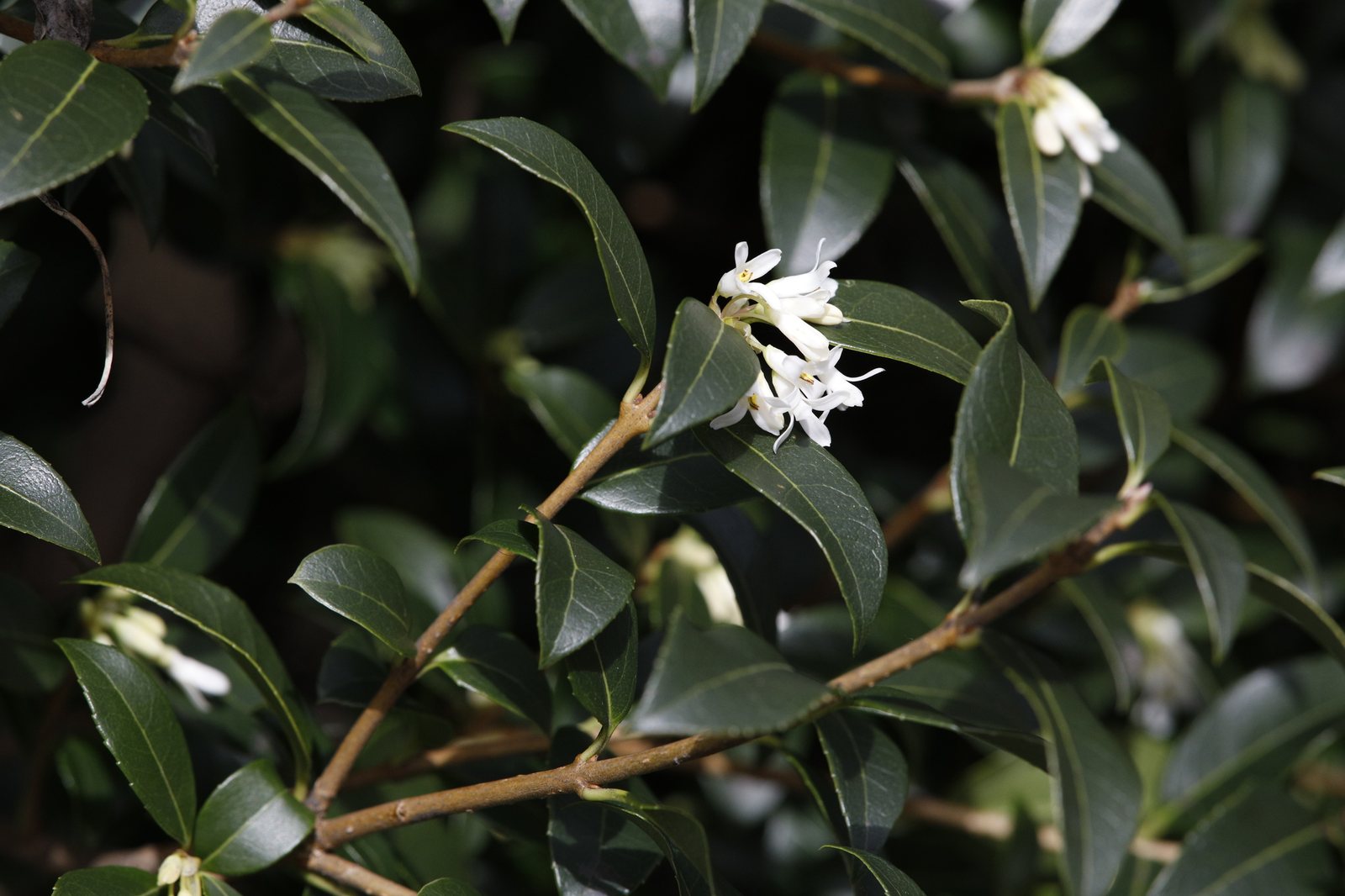
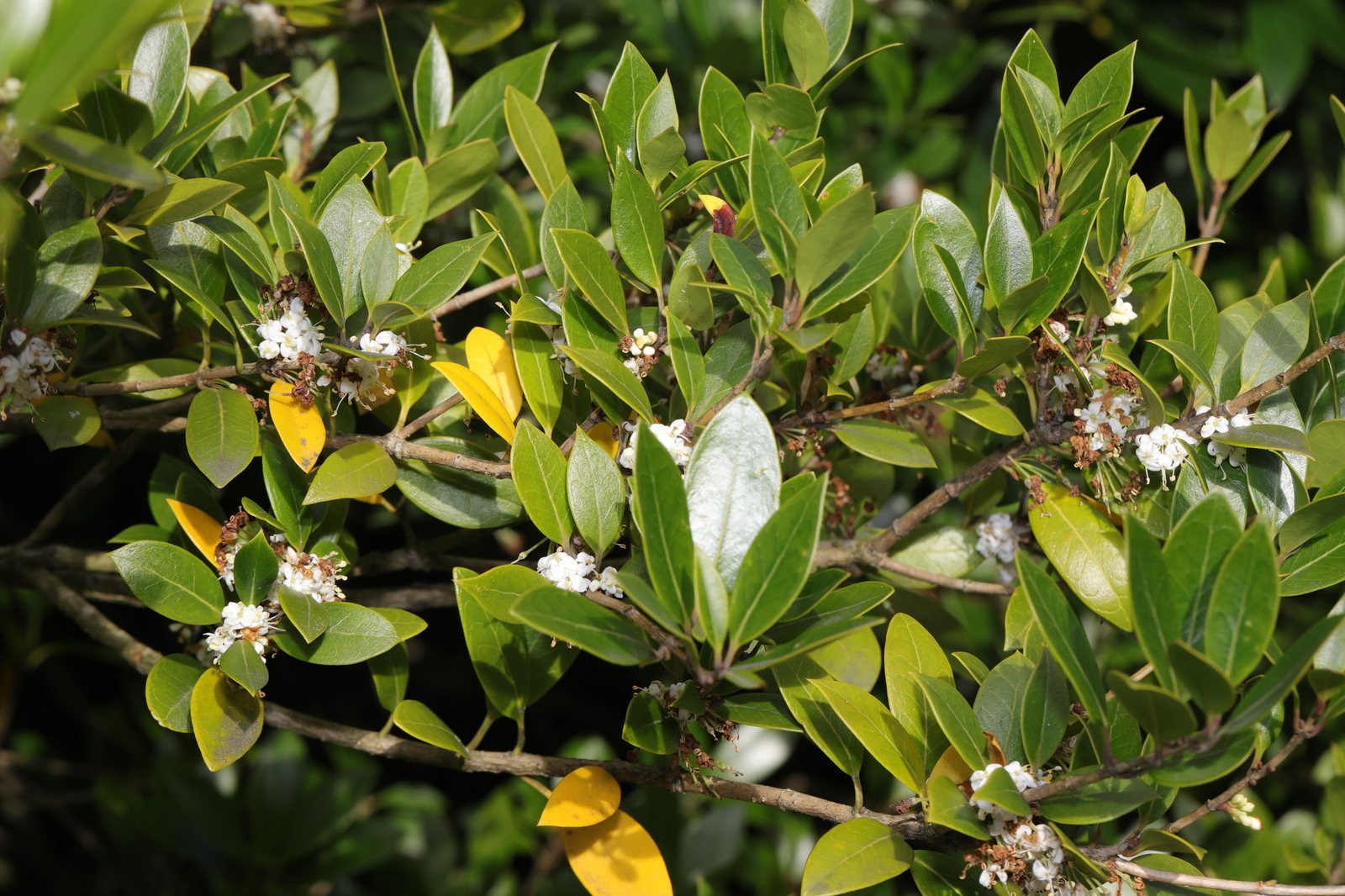
Burkwood osmanthus is a dense evergreen shrub grown for its glossy leaves and small, strongly fragrant white spring flowers. It makes a useful hedge, screen or permanent backdrop to a mixed border, especially where you can enjoy its scent near a path or doorway.
At a glance
- Sun
- Full sun to partial shade; afternoon shade is useful in hot climates. Flowering is lighter in deep shade.
- Water
- Water regularly while establishing; once established, water during prolonged dry spells. Avoid persistently wet soil.
- Soil
- Fertile, well-drained soil, from slightly acidic to alkaline; tolerates clay if drainage is good.
- Height
- 8-12 ft (2.4-3.7 m)
- Spread
- 8-12 ft (2.4-3.7 m)
- Flowers
- Small white flowers in clusters in early to mid-spring, with a strong, sweet fragrance.
- Foliage
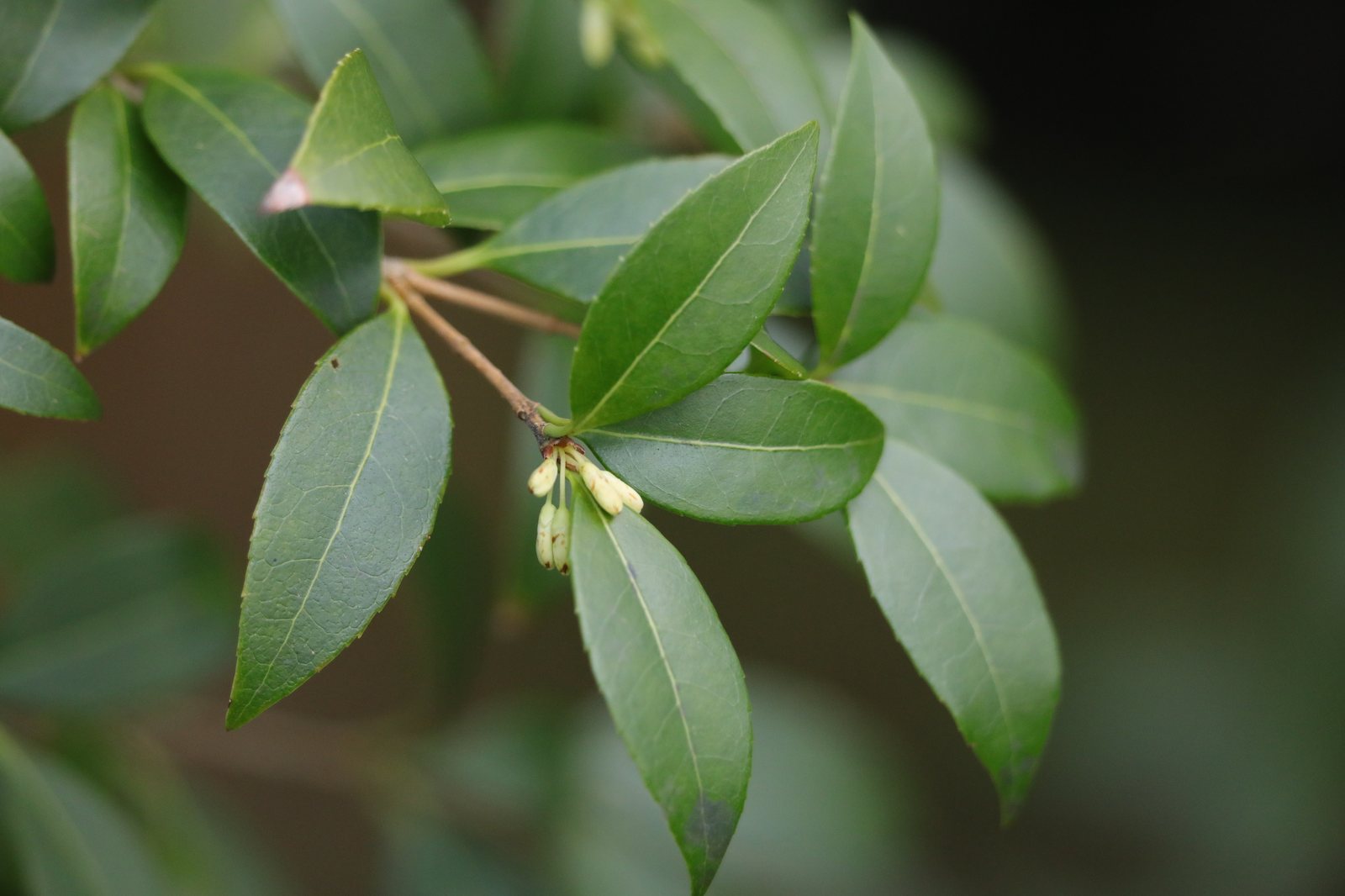
- Evergreen. Small, leathery, dark green, glossy leaves with finely toothed or nearly smooth margins.
- Growth
- Slow to moderate
- Care needed
- Low
The year at a glance
- Pollinators
- Deer resistant
- Drought tolerant
- Heat tolerant
- Wildlife
- Low allergen
- Fragrant
| J | F | M | A | M | J | J | A | S | O | N | D | |
|---|---|---|---|---|---|---|---|---|---|---|---|---|
| Flowers | ||||||||||||
| Plant |
Northern hemisphere months. In Australia, shift them by six.
- Difficulty
- Easy
- Toughness
- Very tough
Will it suit your garden?
Pick your zone, country, light and whether you have pets.
Full sun is 6 or more hours of direct sun a day, part shade 3 to 6 hours, shade under 3.
How it grows
Planting day
1.6 ft (0.5 m)
After 1 year
2.9 ft (0.89 m)
After 2 years
4 ft (1.3 m)
After 3 years
6 ft (1.7 m)
After 5 years
8 ft (2.5 m)
About 7 years to full size.
From a typical nursery size, at an average rate for this kind of plant. A rule of thumb, not a forecast.
Good to know
- Cats and dogs
- Safe
- Growth rate
- Slow
Care
Jobs through the year
- WaterApr–May, Sep–Oct, every 21 days
- For established shrubs, water only during prolonged dry spells; water more frequently for the first two growing seasons.
- WaterJun–Aug, every 14 days
- Water established shrubs deeply during prolonged drought, especially beside walls or beneath trees.
- WaterJan–Mar, Nov–Dec, every 28 days
- Water only during unusually dry, frost-free spells if the root zone is dry.
- MulchMar–Apr
- Refresh 5–7.5 cm of organic mulch, keeping it clear of the stems.
- FeedMar–Apr
- Apply a light balanced shrub feed only where growth is weak or soil is poor.
- PruneApr–May
- Just after flowering, shorten wayward shoots or trim hedges; remove damaged branches.
- ProtectJan–Mar, Nov–Dec
- Protect young shrubs from drying winds; zone 6 sites need a very sheltered position and extra cold protection.
- Plant with the root flare at soil level, in a position sheltered from cold, drying winds.
- Water deeply during dry weather for the first two growing seasons.
- Apply a 2-3 in (5-7.5 cm) layer of organic mulch in spring, keeping it clear of the stems.
- Feed lightly in spring with a balanced shrub fertiliser only if growth is weak or the soil is poor.
- Water established plants during prolonged drought, especially when growing beside walls or under trees.
Pruning. Prune just after flowering in spring, shortening wayward shoots and removing dead or damaged branches. Trim hedges then rather than in late summer or winter, which can remove the following spring's flowers.
Through the year
- Spring
- Plant once the soil is workable, especially in colder areas, and water thoroughly.
- Early spring
- Refresh the mulch and feed lightly if needed.
- Late spring
- After flowering, shape the shrub or trim hedges.
- Summer
- Water young plants during dry spells and check stems and leaf undersides for scale insects.
- Autumn
- Plant in mild regions while the soil is still warm and moist.
- Winter
- Protect recently planted shrubs from drying winds and brush heavy snow gently from branches.
In the garden
- Grow as a clipped evergreen hedge to divide garden spaces without a large seasonal change in appearance.
- Place near a doorway, terrace or well-used path so the spring fragrance can be enjoyed.
- Use behind hellebores, ferns and spring bulbs for a dark, permanent backdrop.
- Plant as an informal screen along a sheltered boundary, allowing enough room for its broad mature shape.
Garden styles it suits: Traditional, English country, Formal, Woodland, Sensory garden and Low-maintenance.
Plant it with: Hellebores, Japanese forest grass, Japanese painted fern, Snowdrops, Daffodils and Camellias.
Wildlife: The spring flowers provide nectar and pollen for visiting bees and other insects. Dense evergreen growth offers shelter for small birds.
Problems to watch for
- Scale insects can cause sticky honeydew and sooty mould. Remove small infestations by hand or use a horticultural oil labelled for evergreen shrubs, following local label directions.
- Leaf spots may develop in damp, crowded conditions. Remove badly affected fallen leaves, improve airflow and water at soil level.
- Root rot can cause yellowing, wilting and dieback in waterlogged soil. Correct drainage and avoid frequent watering; replace badly affected plants in a better-drained position.
- Cold, drying winds can scorch leaves, particularly on young shrubs. Choose a sheltered site, mulch the roots and keep the soil moist during dry winter weather.
Safety
Not known to be toxic to people, cats, dogs or horses. Specific safety information for this hybrid is limited; do not treat its leaves, flowers or any fruit as food.
Easily confused with
Delavay osmanthus (Osmanthus delavayi)
One of its parents; usually has noticeably smaller leaves and a looser, more arching habit.
Holly osmanthus (Osmanthus heterophyllus)
Young growth commonly has sharply spined, holly-like leaves, and its fragrant flowers appear in autumn rather than spring.
Sweet osmanthus (Osmanthus fragrans)
Has larger, longer leaves and usually flowers in late summer or autumn; flowers may be white, cream, yellow or orange.
The name
Osmanthus comes from Greek words meaning 'fragrant flower', while burkwoodii honours the Burkwood nursery family associated with raising the hybrid.
Propagation. Take semi-ripe cuttings in summer and root them in a free-draining propagation mix under humid conditions. Rooting can be slow; layering low branches is another option.
Checked against open data
- Accepted botanical name
- Osmanthus burkwoodii
Sources: GBIF (CC BY 4.0). The care and design notes are LandscapeGPT's own.
See it in your own yard.
Upload a photo of your yard and see it redesigned with plants that suit your climate, each checked against your zone.