Burning bush
Euonymus alatus. Family Celastraceae. Shrub.
Also called Winged spindle, Winged euonymus.
Burning bush is a deciduous shrub grown for its brilliant red autumn leaves and the corky wings along its branches. It makes a broad, dense shrub, but escapes readily into woodland in parts of North America; check local restrictions and choose a non-invasive alternative where it is a problem.
At a glance
- Sun
- Full sun to partial shade; autumn colour is usually strongest in full sun.
- Water
- Moderate; water regularly while establishing. Established plants tolerate short dry spells.
- Soil
- Well-drained soil, including clay that does not remain waterlogged; tolerates acidic to alkaline conditions.
- Height
- 10-20 ft (3-6 m)
- Spread
- 10-20 ft (3-6 m)
- Flowers
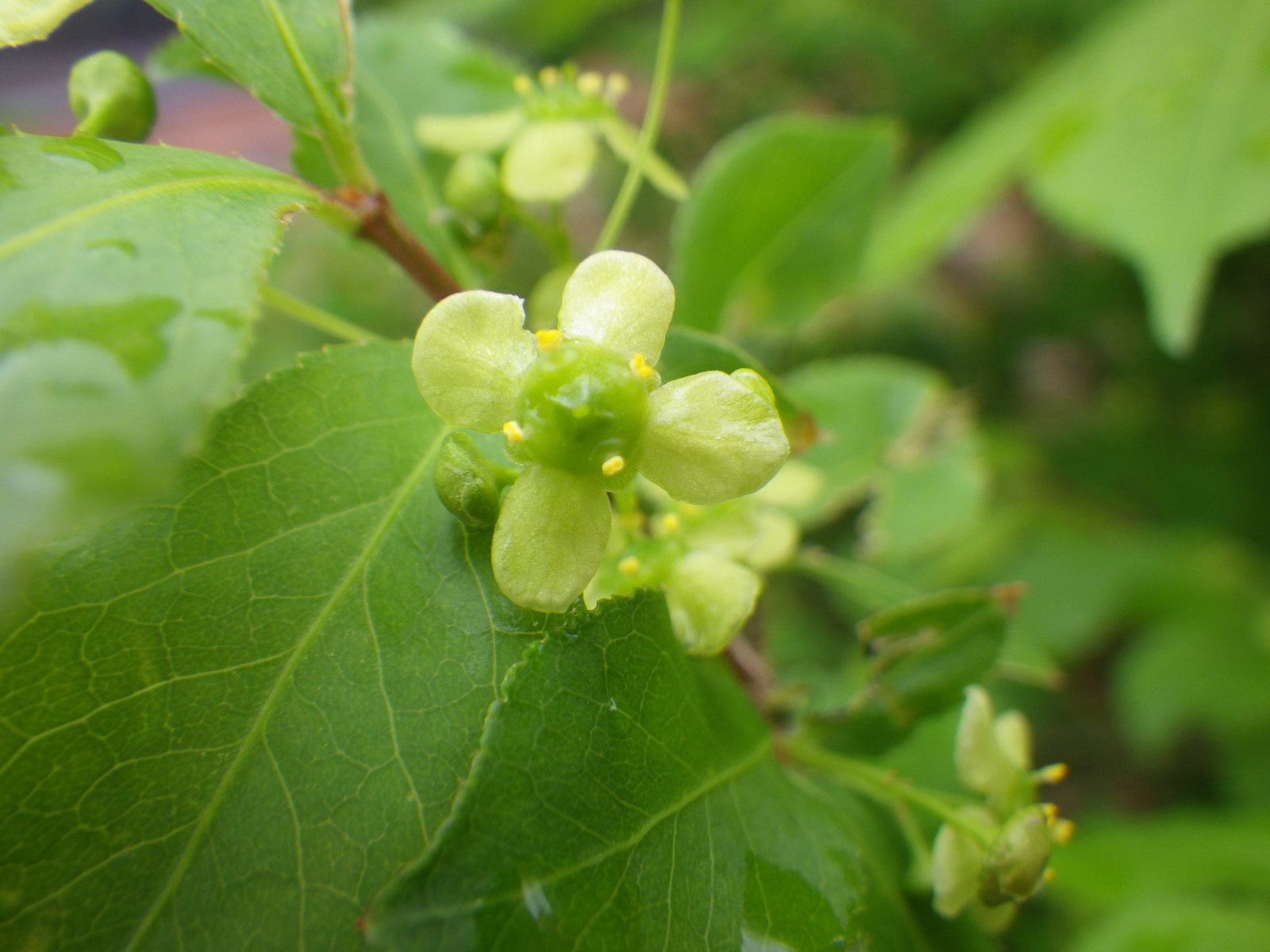
- Small, inconspicuous greenish-yellow flowers in late spring.
- Foliage
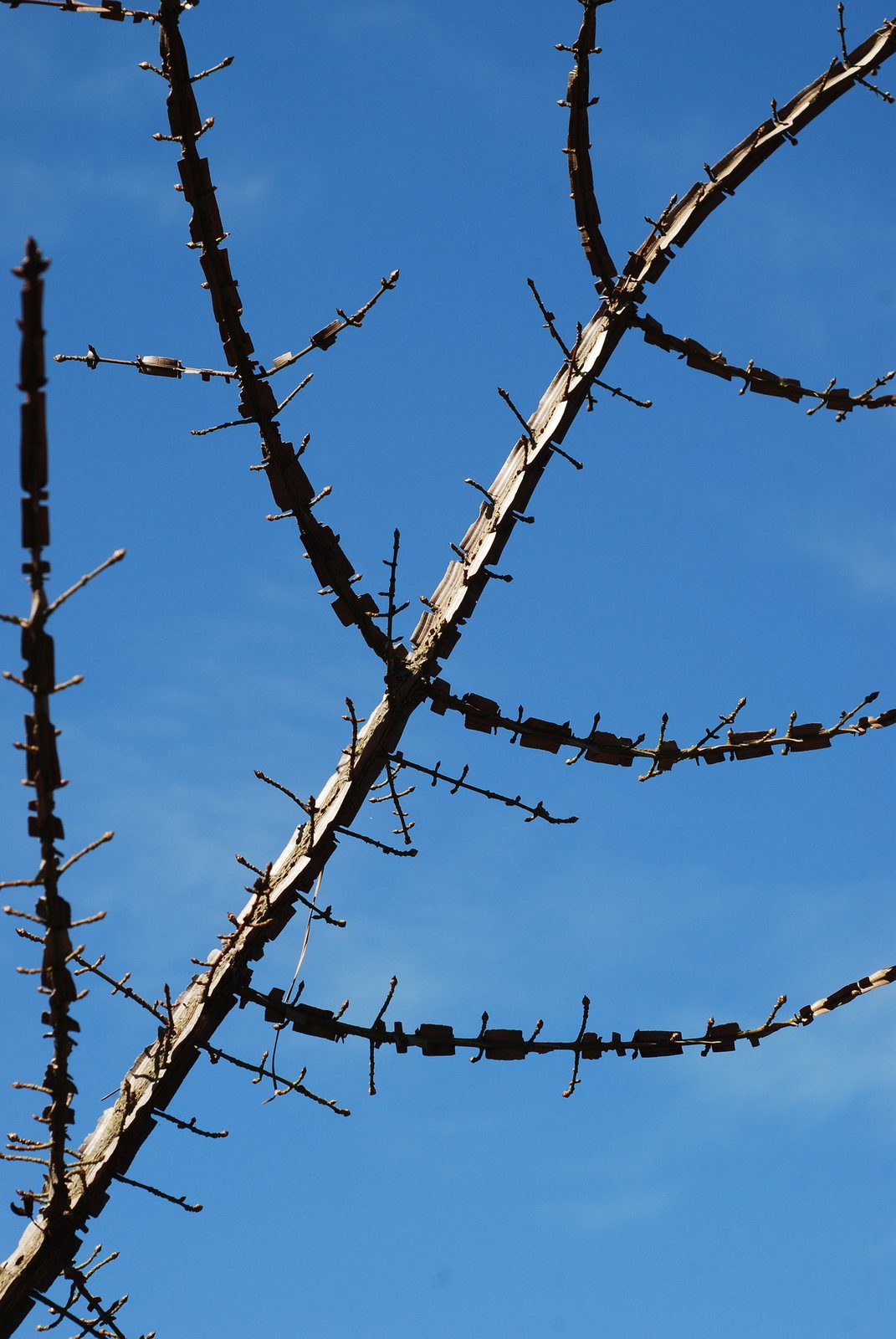
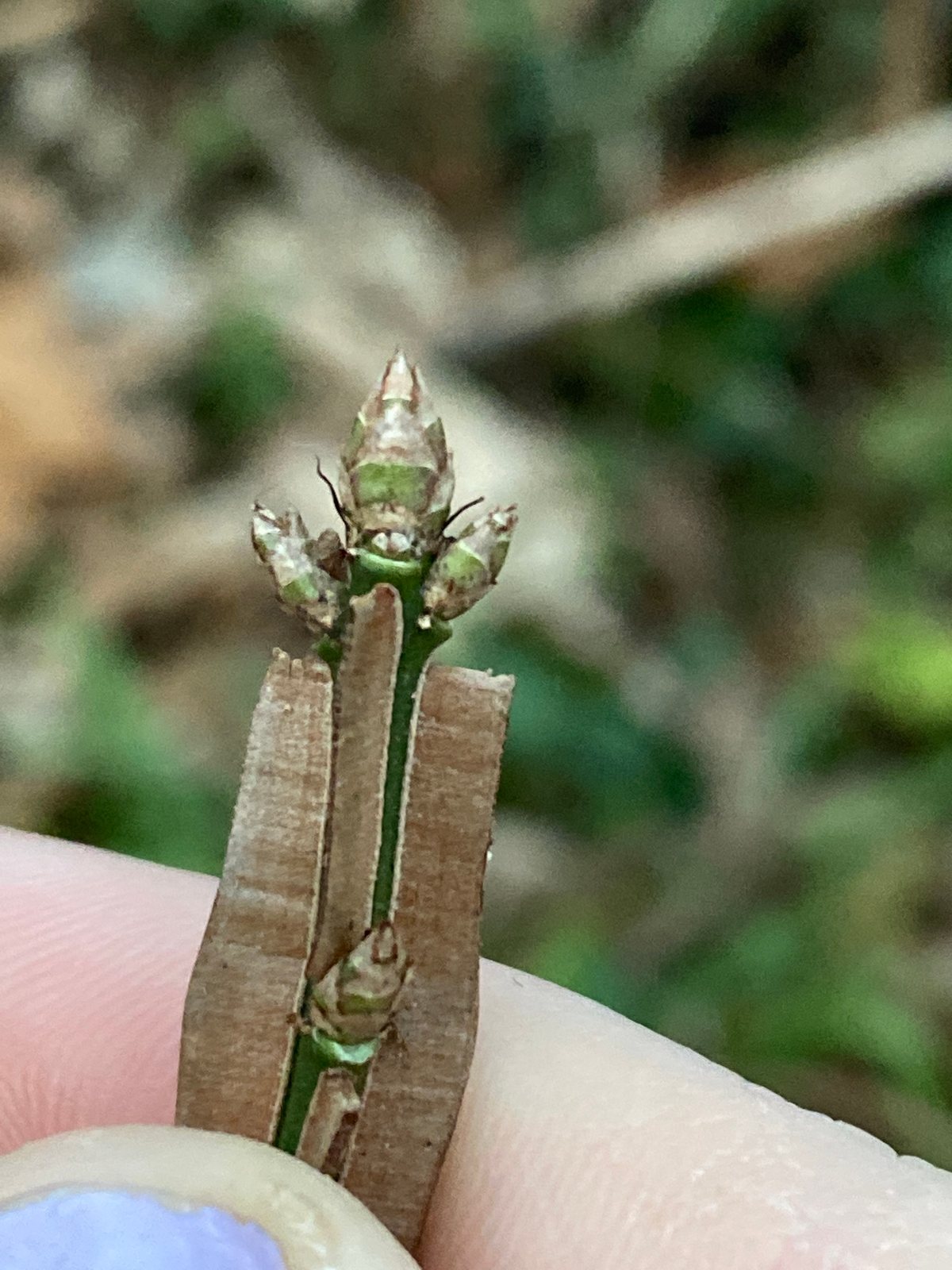
- Opposite, oval green leaves turn pink to scarlet in autumn; colour can be muted in shade. Bare stems have distinctive corky wings.
- Growth
- Slow to moderate.
- Care needed
- Medium
The year at a glance
- Pollinators
- Cold hardy
- Wildlife
- Low allergen
| J | F | M | A | M | J | J | A | S | O | N | D | |
|---|---|---|---|---|---|---|---|---|---|---|---|---|
| Flowers | ||||||||||||
| Fruit | ||||||||||||
| Plant |
Northern hemisphere months. In Australia, shift them by six.
- Difficulty
- Easy
- Toughness
- Very tough
Will it suit your garden?
Pick your zone, country, light and whether you have pets.
Full sun is 6 or more hours of direct sun a day, part shade 3 to 6 hours, shade under 3.
How it grows
Planting day
1.8 ft (0.54 m)
After 1 year
4 ft (1.1 m)
After 2 years
6 ft (1.8 m)
After 3 years
8 ft (2.4 m)
After 5 years
12 ft (3.6 m)
About 7 years to full size.
From a typical nursery size, at an average rate for this kind of plant. A rule of thumb, not a forecast.
Good to know
- Cats and dogs
- Toxic
- Invasive in
- the US and Canada
- In the garden
- Spreads vigorously: plan to contain it.
- Growth rate
- Slow
Care
Jobs through the year
- WaterApr–May, Sep–Oct, every 21 days
- Water established shrubs only during prolonged dry spells; water more often in the first two years.
- WaterJun–Aug, every 14 days
- Water established shrubs deeply if drought persists; avoid saturating the roots.
- PruneFeb–Mar
- Remove dead, crossing or damaged branches and thin crowded stems; avoid repeated hard shearing.
- MulchMar–Apr
- Maintain 5–8 cm of organic mulch, leaving a gap around the stems.
- FeedMar–Apr
- Feed lightly only if growth is poor and soil fertility is low.
- ProtectApr–May, Sep–Nov
- Check invasive-species restrictions; remove seedlings and developing fruits, or remove the shrub where invasive.
- Before planting, check local invasive-species advice and sale restrictions.
- Water deeply during dry spells for the first two growing seasons; avoid keeping the roots saturated.
- Apply 2-3 in (5-8 cm) of organic mulch, leaving a clear gap around the stems.
- Do not feed routinely; use a light spring application of balanced fertiliser only if growth is poor and soil fertility is low.
- Remove seedlings promptly, including beneath nearby trees and hedges.
Pruning. Prune in late winter or early spring, removing dead, crossing or damaged branches and thinning crowded stems at the base. Avoid repeated hard shearing, which hides the branching structure and creates a dense outer shell.
Through the year
- Late winter
- Thin crowded branches and remove dead or damaged wood.
- Spring
- Refresh mulch and check young stems for scale insects.
- Late spring
- Pull seedlings while small, including those beyond the shrub's canopy.
- Summer
- Water establishing plants during dry weather and inspect stippled leaves for spider mites.
- Early autumn
- Where practical, remove developing fruits before birds disperse the seeds; this does not reliably prevent escape.
- Late autumn
- Check surrounding beds and woodland edges for escaped plants and plan removal where locally invasive.
In the garden
- Where locally appropriate, use as an autumn focal point against a dark evergreen background.
- Allow space in a large mixed shrub border for its broad, rounded outline.
- Use as an informal deciduous screen where winter privacy is not needed.
- Place where bare winter branches can be seen against a plain wall or contrasting planting.
Garden styles it suits: Traditional, Formal, Japanese, Autumn colour and Winter interest.
Plant it with: Witch hazel, Oakleaf hydrangea, Christmas fern and Japanese forest grass.
Wildlife: Flowers attract some small insects, and birds eat the orange-coated seeds. Bird dispersal is a major reason this shrub escapes into natural habitats.
Problems to watch for
- Euonymus scale: look for white or brown encrustations on stems and leaves; prune heavily infested growth and use a labelled horticultural oil at the appropriate stage.
- Spider mites: fine stippling and premature leaf drop are more likely in hot, dry conditions; rinse foliage thoroughly and reduce drought stress.
- Root decline in wet soil: avoid waterlogged sites and correct drainage rather than watering or feeding more.
- Weak autumn colour: shade and warm autumn weather can reduce redness; choose a sunny position, but recognise that weather remains a factor.
Safety
Toxic to people, cats, dogs and horses if eaten, particularly the fruits and seeds; leaves and bark also contain toxic compounds. Ingestion can cause vomiting, diarrhoea and abdominal pain, with potentially serious heart effects after larger amounts. Keep it away from grazing animals and seek medical or veterinary advice after ingestion.
Where it spreads. Invasive across much of the eastern and midwestern United States, including New England, the Mid-Atlantic and Great Lakes regions; sale or planting is restricted in several states. It also escapes cultivation and is considered invasive in parts of southern Ontario, Canada. Check current state, provincial and local guidance before planting.
Easily confused with
European spindle (Euonymus europaeus)
Usually has green, angular young stems without the broad corky wings of burning bush, and conspicuous pink fruit capsules containing orange-coated seeds.
Corky spindle (Euonymus phellomanus)
Also has corky-winged stems, but generally has larger, more elongated leaves and pink fruit capsules; burning bush has smaller leaves and usually reddish-purple capsules.
Summer cypress (Bassia scoparia)
Sometimes also called burning bush, but it is an annual with narrow, soft leaves and no permanent woody, corky-winged branches.
The name
The species name alatus means 'winged', referring to the corky stem ridges, while 'burning bush' describes the bright red autumn foliage.
Propagation. Semi-ripe cuttings can be taken in summer where growing it is permitted and environmentally appropriate. Seed needs lengthy dormancy-breaking treatment and is not a sensible choice where escape is a concern.
Checked against open data
- Accepted botanical name
- Euonymus alatus
- In the US and Canada
- Introduced in Canada and the lower 48 states.
- Native range
- Amur, Buryatiya, China North-Central, China South-Central, China Southeast, Chita, Inner Mongolia, Irkutsk, Japan, Khabarovsk, Korea and Kuril Is..
- Measured
- Soil pH 4 to 7. Average height 275 cm.
Sources: GBIF (CC BY 4.0), USDA PLANTS and Trefle (CC BY 4.0). The care and design notes are LandscapeGPT's own.
See it in your own yard.
Upload a photo of your yard and see it redesigned with plants that suit your climate, each checked against your zone.