Bush violet
Browallia speciosa. Family Solanaceae. Annual.
Also called Amethyst flower, Sapphire flower.
Bush violet is a frost-tender perennial usually grown as an annual for its blue-violet, purple or white flowers with pale centres. Its bushy growth and long flowering season suit containers, hanging baskets and lightly shaded borders.
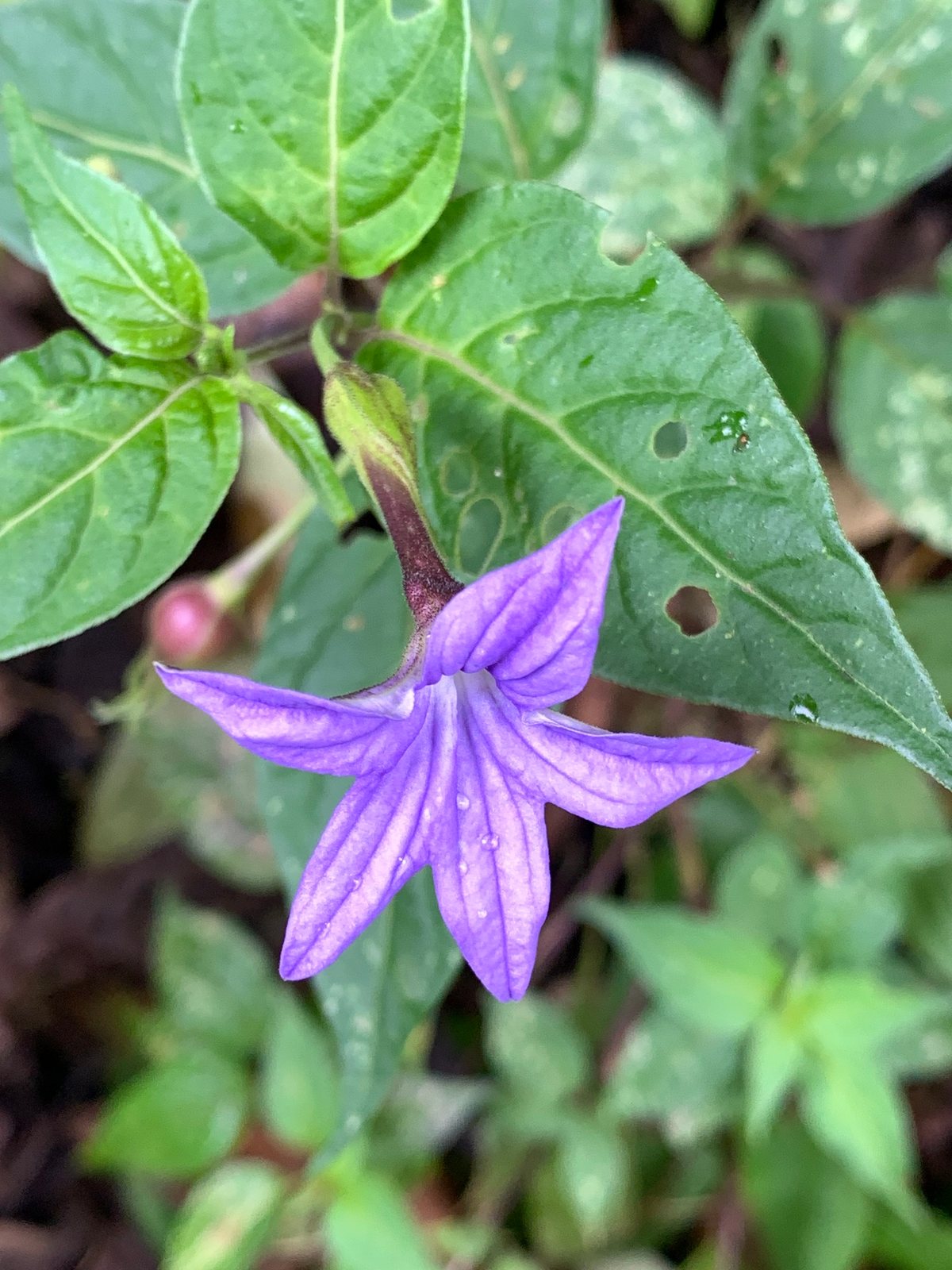
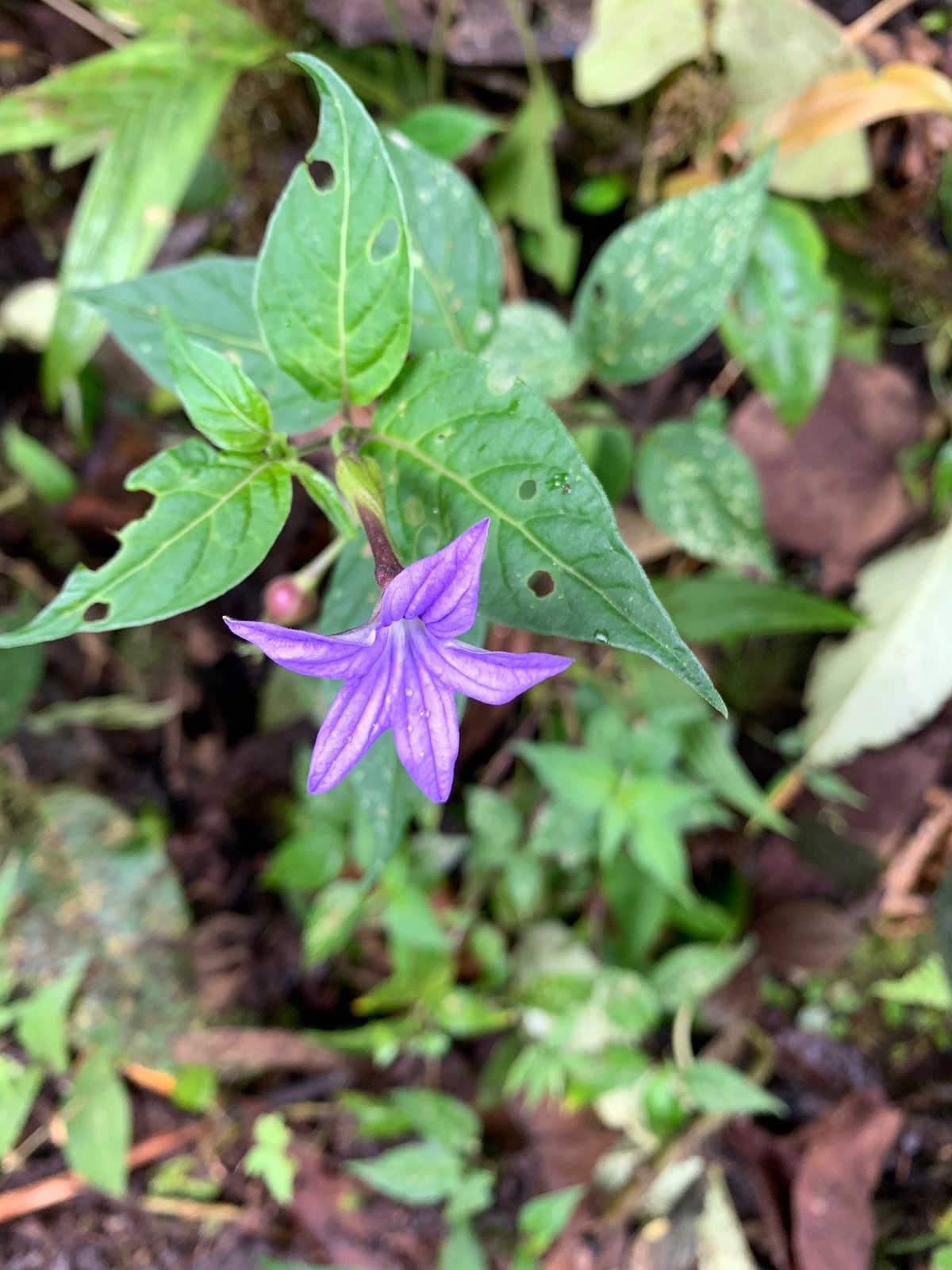
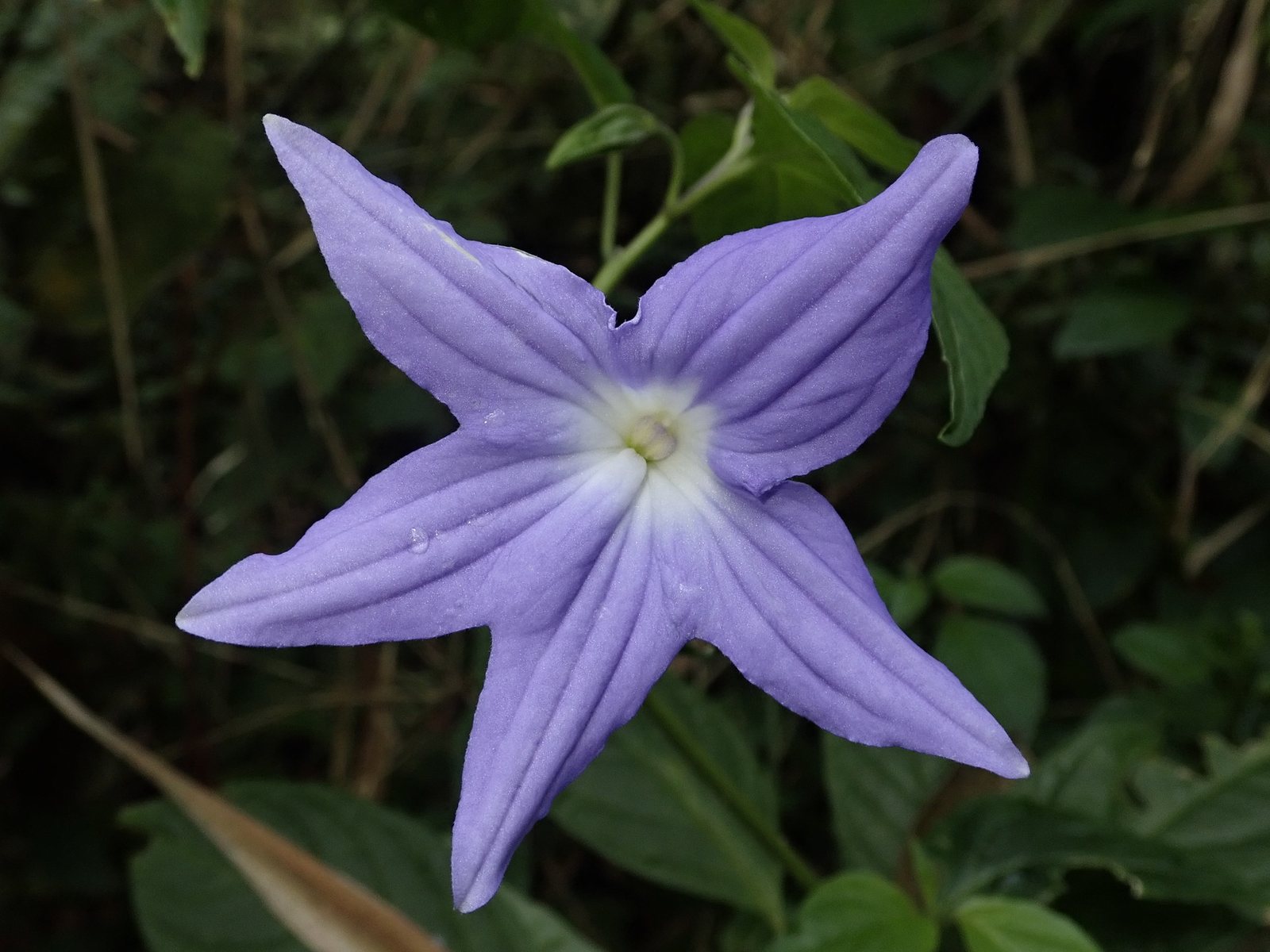
At a glance
- Sun
- Partial shade or bright, filtered light; morning sun is suitable, but protect from strong afternoon sun, especially in hot climates.
- Water
- Keep evenly moist but not waterlogged. Water when the soil surface starts to dry; containers may need daily checks in warm weather.
- Soil
- Fertile, moisture-retentive soil with good drainage; use a good-quality container mix in pots.
- Height
- 1-2 ft (0.3-0.6 m)
- Spread
- 1-2 ft (0.3-0.6 m)
- Flowers
- Blue-violet, purple or white flowers, usually with a pale eye, from late spring or early summer until autumn frost; potentially longer under warm, frost-free conditions.
- Foliage
- Evergreen. Soft, oval to pointed green leaves on branching stems.
- Growth
- Moderate to fast in warm conditions
- Care needed
- Medium
The year at a glance
- Pollinators
- Heat tolerant
- Low allergen
| J | F | M | A | M | J | J | A | S | O | N | D | |
|---|---|---|---|---|---|---|---|---|---|---|---|---|
| Flowers | ||||||||||||
| Plant |
Northern hemisphere months. In Australia, shift them by six.
- Difficulty
- Moderate
- Toughness
- Needs looking after
Will it suit your garden?
Pick your zone, country, light and whether you have pets.
Full sun is 6 or more hours of direct sun a day, part shade 3 to 6 hours, shade under 3.
How it grows
Planting day
0.5 ft (0.15 m)
After 1 year
1.5 ft (0.45 m)
full size
Full size in one season.
From a typical nursery size, at an average rate for this kind of plant. A rule of thumb, not a forecast.
Good to know
- Cats and dogs
- Toxic
- Growth rate
- Fast
Care
Jobs through the year
- WaterMay, Sep–Oct, every 7 days
- Keep established ground plants evenly moist; young plants need closer checks and extra water.
- WaterJun–Aug, every 3 days
- Water established ground plants when the surface starts drying; check containers daily.
- FeedMay–Sep, every 21 days
- Feed container plants with balanced liquid fertiliser at the label rate.
- MulchJun
- Apply a thin organic mulch around bedding plants, leaving stems clear.
- PruneMay–Jun
- Pinch young shoot tips to encourage branching.
- PruneJul–Aug
- Shorten straggly stems above a leaf joint if needed; routine deadheading is unnecessary.
- ProtectMay–Jun
- Plant after frost when nights are mild, in a position sheltered from strong afternoon sun.
- ProtectSep–Oct
- If keeping plants, bring selected pots into bright, frost-free shelter before cold nights.
- WaterJan–Apr, Nov–Dec, every 10 days
- For overwintered plants only, water as the surface dries without drying the root ball completely.
- Plant outdoors only after frost danger has passed and nights are consistently mild.
- Water at soil level to keep the root zone evenly moist, allowing excess water to drain freely.
- Feed container plants every two to four weeks with a balanced liquid fertiliser at the label rate.
- Apply a thin organic mulch around bedding plants, keeping it clear of the stems.
- Move plants you want to keep through winter into a bright, frost-free room before cold nights arrive.
Pruning. Pinch out young shoot tips in spring to encourage branching. During the growing season, shorten straggly stems just above a leaf joint and remove damaged growth; routine deadheading is usually unnecessary.
Through the year
- Late winter
- Sow seed indoors in warmth, pressing it onto the surface of moist seed compost rather than burying it.
- Spring
- Pot on seedlings and pinch their tips once established to encourage bushy growth.
- Late spring
- Harden plants off gradually and plant outside after frost danger has passed.
- Summer
- Check container moisture frequently, feed regularly and protect plants from harsh afternoon sun.
- Late summer
- Take softwood cuttings from healthy, non-flowering shoots if you want plants to keep under cover.
- Autumn
- Bring selected plants into bright, frost-free shelter, or remove annual bedding plants once frost kills them.
- Winter
- Keep sheltered plants bright and moderately warm, watering less often without allowing the root ball to dry out completely.
In the garden
- Plant in pots beside a lightly shaded entrance for flowers at close viewing distance.
- Combine with begonias and impatiens in shaded summer containers.
- Use compact forms along the front of a sheltered border for a low band of blue or white.
- Grow in hanging baskets where branching stems can soften the edges.
Garden styles it suits: Modern courtyard, Cottage garden, Romantic rose garden, Blues and silvers, Tropical and Small-space.
Plant it with: Impatiens, Wax begonia, Coleus, Torenia and Maidenhair fern.
Wildlife: Flowers can attract visiting insects, but bush violet is not a substitute for locally native plants that support specialist wildlife.
Problems to watch for
- Wilting and leaf scorch in hot sun or dry compost: move containers into afternoon shade and restore even moisture.
- Root rot in saturated soil: improve drainage, empty standing water from saucers and avoid watering already wet compost.
- Aphids or whiteflies, especially under cover: inspect leaf undersides and treat with insecticidal soap labelled for ornamental plants if needed.
- Spider mites in hot, dry conditions: look for fine webbing and stippled leaves, rinse leaf undersides and use a labelled mite treatment if the infestation persists.
Safety
Treat all parts as potentially poisonous if eaten. Ingestion may cause stomach upset in people, cats and dogs; keep plants away from children and pets that chew foliage. Horse-specific toxicity information is limited, so do not allow grazing or put clippings in paddocks.
Easily confused with
Jamaican forget-me-not (Browallia americana)
Usually has smaller flowers and a looser, more slender habit than the larger-flowered, bushier Browallia speciosa.
Persian violet (Exacum affine)
Has more evenly star-shaped flowers with conspicuous yellow anthers and glossy leaves; bush violet has broader, uneven flower lobes and softer foliage.
False African violet (Streptocarpus saxorum)
Has small, thick, hairy leaves and flowers with a long, narrow tube; bush violet has larger, thinner leaves and a broader, more open flower face.
The name
Browallia honours the Swedish botanist Johan Browall, while speciosa means showy or beautiful.
Propagation. Grow from seed sown on the surface of moist seed compost in late winter or spring, using gentle warmth and light. Softwood stem cuttings can also be rooted during the growing season; seed from named cultivars may not produce identical plants.
Checked against open data
- Accepted botanical name
- Browallia speciosa
- Native range
- Colombia, Costa Rica, Ecuador, Panamá and Peru.
Sources: GBIF (CC BY 4.0) and Trefle (CC BY 4.0). The care and design notes are LandscapeGPT's own.
See it in your own yard.
Upload a photo of your yard and see it redesigned with plants that suit your climate, each checked against your zone.