Button fern
Pellaea rotundifolia. Family Pteridaceae. Fern.
Also called New Zealand button fern, Round-leaved fern.
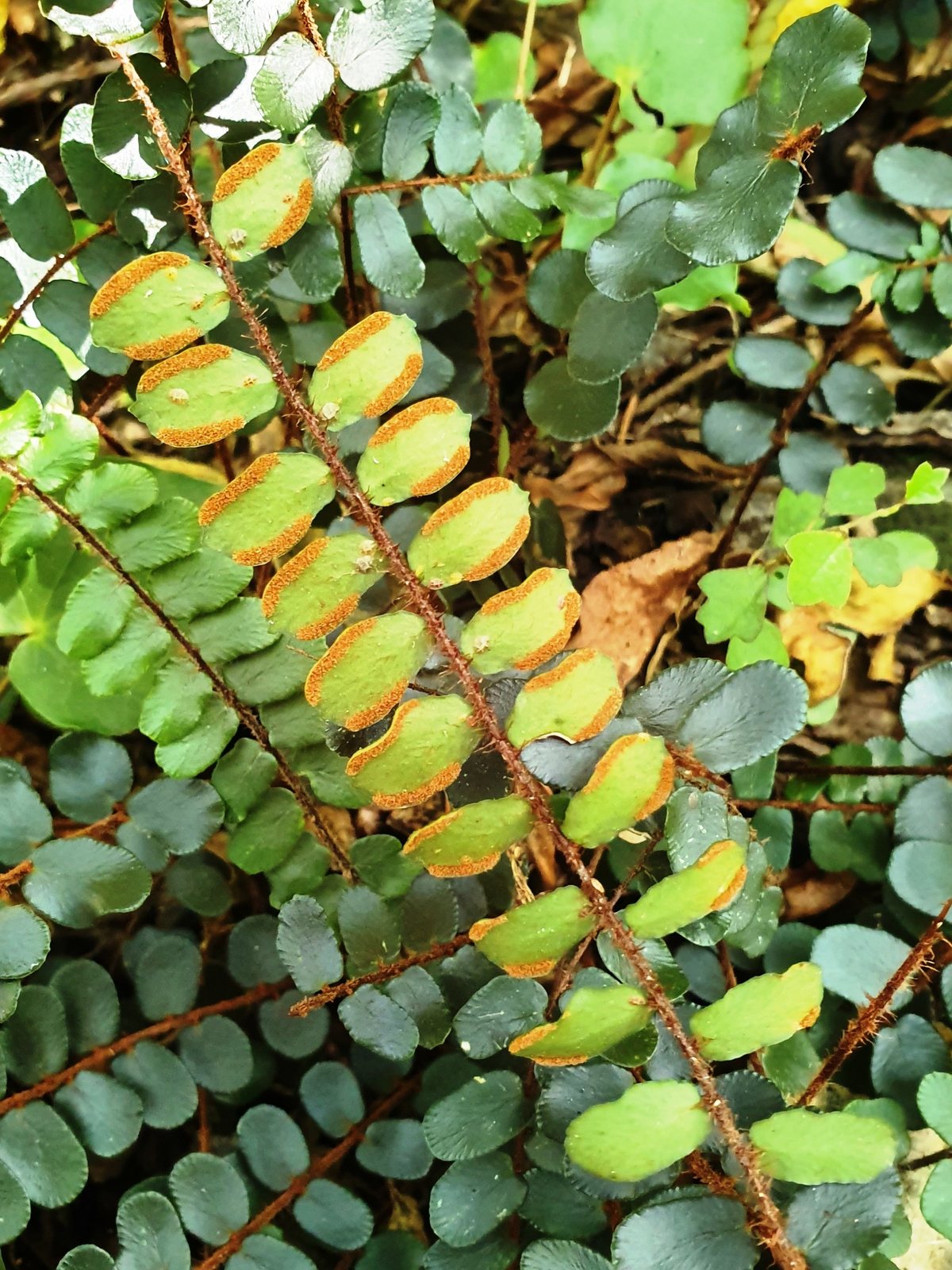
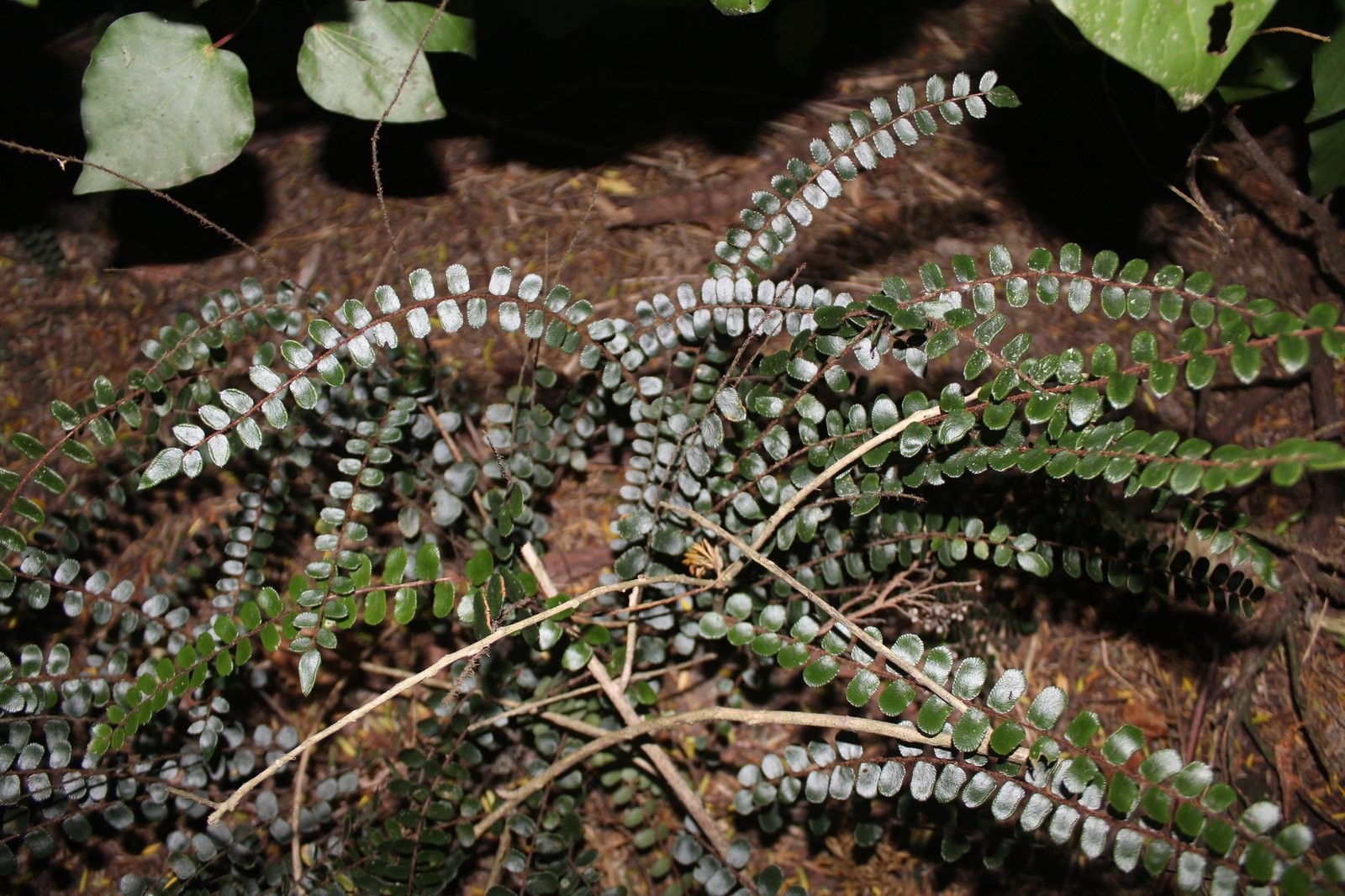
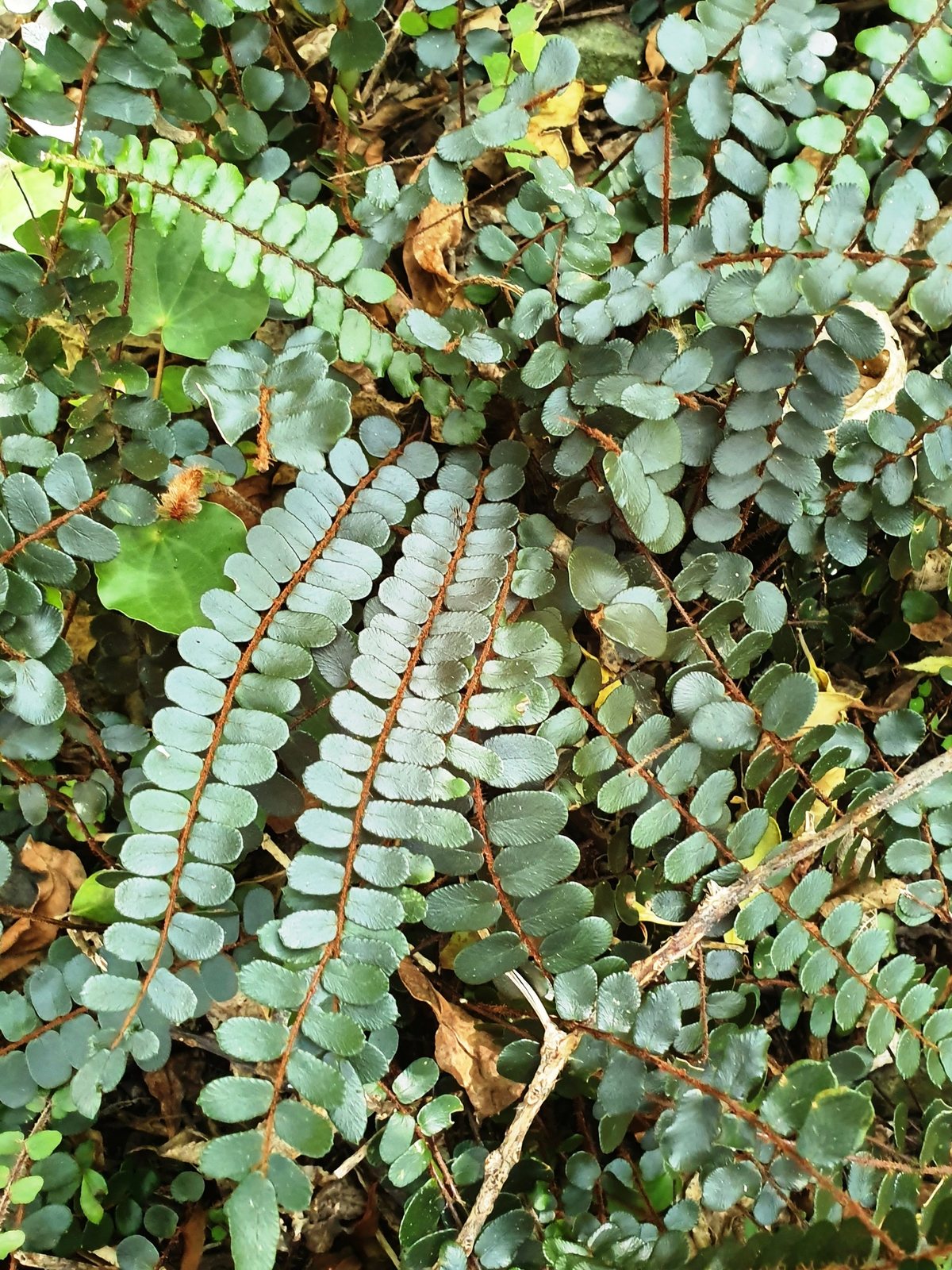
Button fern is a small evergreen fern from New Zealand, grown for its arching fronds of rounded, leathery leaflets. It suits shaded containers and sheltered rock gardens in mild climates; elsewhere, grow it as a houseplant or bring it indoors before frost.
At a glance
- Sun
- Partial to full shade outdoors, with protection from strong afternoon sun. Indoors, provide bright, indirect light.
- Water
- Water when the surface begins to dry, then let excess water drain. Keep the root ball lightly moist rather than constantly wet, and reduce watering in winter.
- Soil
- Humus-rich, freely draining soil or potting mix, preferably slightly acidic to neutral. Avoid heavy, waterlogged soil.
- Height
- 0.7-1 ft (0.2-0.3 m)
- Spread
- 1-1.5 ft (0.3-0.45 m)
- Foliage
- Evergreen. Arching fronds carry small, rounded to oval, dark green leaflets on wiry reddish-brown stalks. Mature leaflets have a firm, leathery texture.
- Growth
- Slow to moderate
- Care needed
- Low
The year at a glance
| J | F | M | A | M | J | J | A | S | O | N | D | |
|---|---|---|---|---|---|---|---|---|---|---|---|---|
| Plant |
Northern hemisphere months. In Australia, shift them by six.
- Difficulty
- Easy
- Toughness
- Fairly tough
Will it suit your garden?
Pick your zone, country, light and whether you have pets.
Full sun is 6 or more hours of direct sun a day, part shade 3 to 6 hours, shade under 3.
How it grows
Planting day
0.8 ft (0.25 m)
full size
About 4 years to full size.
From a typical nursery size, at an average rate for this kind of plant. A rule of thumb, not a forecast.
Good to know
- Cats and dogs
- Safe
- Growth rate
- Slow
Care
Jobs through the year
- WaterMar–May, Sep–Oct, every 7 days
- For pots in this climate, water when the surface begins drying and drain thoroughly; never leave standing in water.
- WaterJun–Aug, every 4 days
- Check pots and water as the surface dries, keeping the root ball lightly moist; small pots may need more.
- WaterJan–Feb, Nov–Dec, every 10 days
- Check indoor pots and water only as the surface dries; do not let the root ball dry completely.
- FeedApr–Aug, every 30 days
- Feed container plants at half the labelled strength during active growth.
- PruneMar
- Remove brown or damaged fronds at the base; leave healthy fronds intact.
- DivideMar–Apr
- Divide only crowded plants when repotting or when additional plants are wanted.
- ProtectJan–May, Sep–Dec
- Bring pots indoors before frost; return to outdoor shade after frost risk passes.
- Use a pot with drainage holes and a loose potting mix amended with fine bark or perlite.
- Check soil moisture before watering; do not leave the pot standing in a saucer of water.
- Feed container plants monthly at half the labelled strength during spring and summer.
- Keep indoor plants away from heating vents, cold draughts and strong direct sun.
- Repot in spring only when roots fill the pot, moving up one pot size.
- In cold regions, bring outdoor pots indoors before frost.
Pruning. Remove brown or damaged fronds at their base whenever needed, using clean scissors. Do not shear the plant or cut healthy fronds back routinely.
Through the year
- Early spring
- Remove dead fronds and check whether crowded plants need repotting or division.
- Spring
- Resume light feeding as new fronds begin to grow.
- Late spring
- Move indoor pots outside only after frost risk has passed, gradually acclimatising them to a shaded position.
- Summer
- Check containers regularly for drying, especially during hot or windy weather.
- Autumn
- Stop feeding and bring pots indoors before frost in cold climates.
- Winter
- Water less often, but do not let the root ball dry out completely.
In the garden
- Plant in shaded rock crevices or raised beds in mild climates, where drainage is sharp.
- Use in small courtyard containers, allowing the fronds to arch over the rim.
- Place at the front of a sheltered woodland planting beside broad-leaved shade plants.
- Grow indoors in a simple pot where the rounded leaflets can be seen at close range.
Garden styles it suits: Woodland, Modern courtyard, Small-space, Green on green, Japanese and Victorian.
Plant it with: Cast iron plant, Mondo grass, Dwarf mondo grass, Japanese holly fern and Bergenia.
Wildlife: Provides a little shelter for small invertebrates outdoors. It has no flowers, nectar or fruit and is not a significant food plant for pollinators.
Problems to watch for
- Root rot causes declining growth and soft, dark roots in wet compost. Improve drainage, remove rotten roots and repot into fresh mix; water less often.
- Brown, crisp leaflets can follow prolonged drying, hot sun or exposure to heating vents. Adjust watering and move to a cooler, sheltered position.
- Scale insects appear as small fixed bumps on stalks or leaflets. Isolate affected pots, remove insects by hand and use a product labelled for scale on ferns if needed.
- Mealybugs leave white, cottony deposits around leaflet bases and new growth. Remove visible insects and repeat treatment with a product labelled for use on ferns.
Safety
Not known to be toxic to cats, dogs, horses or people; no parts are known to be poisonous. Eating foliage may still cause mild digestive upset.
Easily confused with
Lemon button fern (Nephrolepis cordifolia 'Duffii')
Has more upright, feathery fronds with closely spaced, lighter green leaflets rather than button fern's dark, leathery leaflets on wiry brown stalks.
Cliff brake (Pellaea falcata)
Usually grows larger and has distinctly longer, narrower, often sickle-shaped leaflets rather than rounded buttons.
The name
The species name rotundifolia means round-leaved, referring to the rounded leaflets that also give button fern its common name.
Propagation. Divide an established clump in spring, keeping roots and several healthy fronds on each section. Spore propagation is possible but slow and needs carefully controlled moisture and cleanliness.
Checked against open data
- Accepted botanical name
- Pellaea rotundifolia
Sources: GBIF (CC BY 4.0). The care and design notes are LandscapeGPT's own.
See it in your own yard.
Upload a photo of your yard and see it redesigned with plants that suit your climate, each checked against your zone.