Byzantine gladiolus
Gladiolus communis. Family Iridaceae. Bulb.
Also called Byzantine sword lily, Hardy gladiolus, Gladiolus communis subsp. byzantinus.
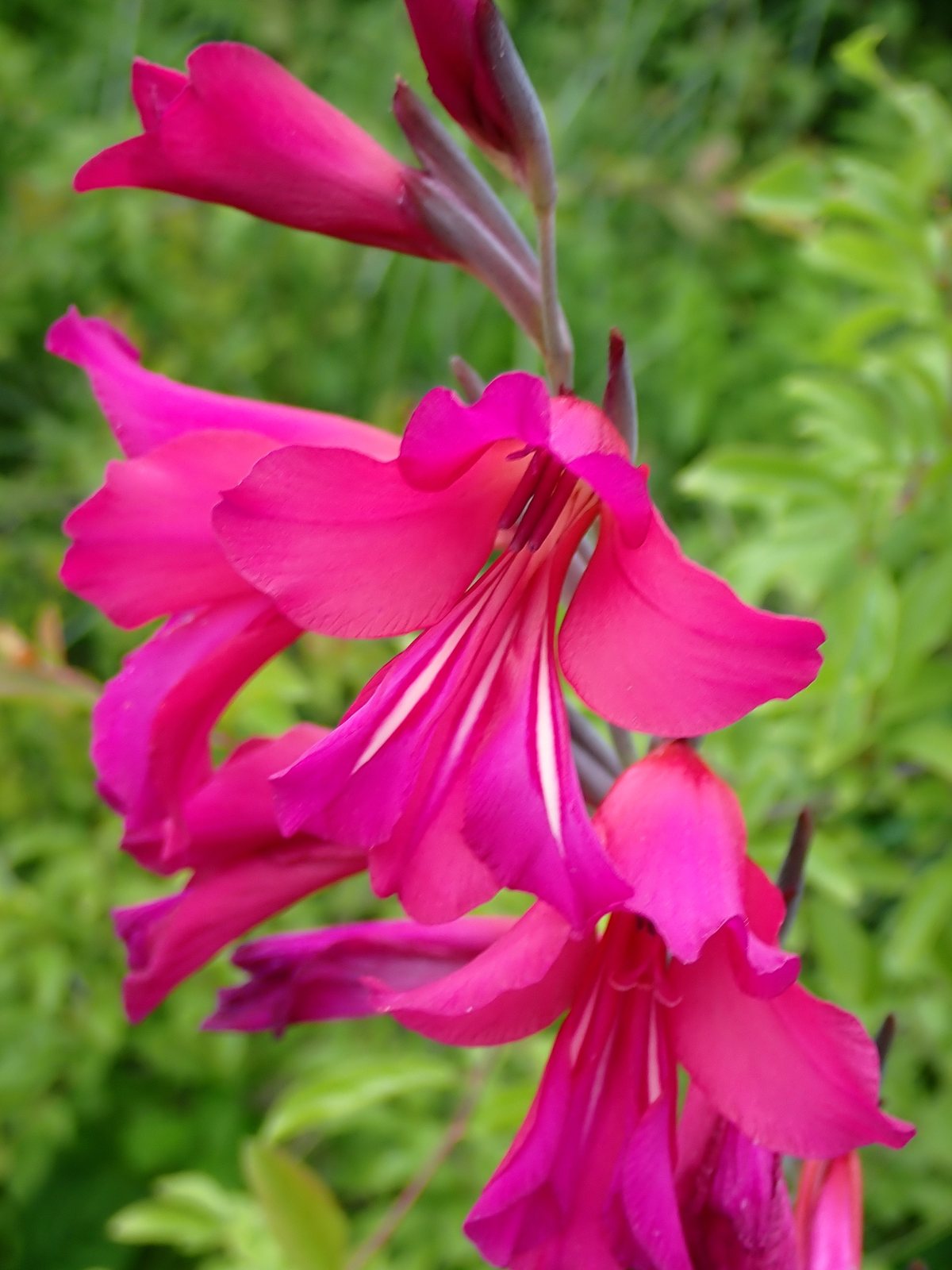
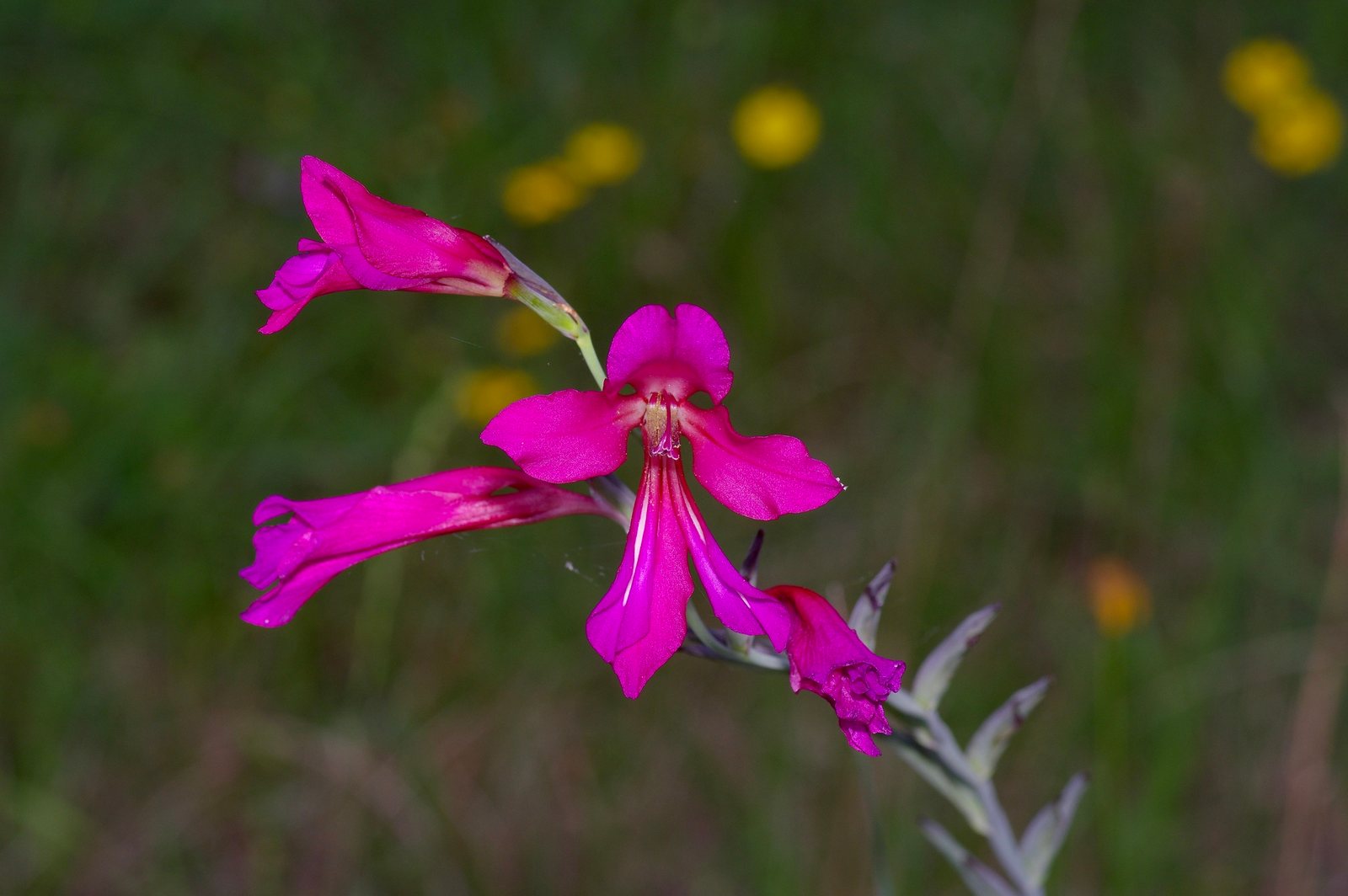
Byzantine gladiolus is a corm-forming perennial grown for slender spikes of vivid magenta flowers in late spring and early summer. The garden plant usually sold under this name is Gladiolus communis subsp. byzantinus, which makes loose clumps among grasses and border perennials and becomes dormant in summer.
At a glance
- Sun
- Full sun; tolerates light shade, but flowers best in an open, sunny position.
- Water
- Water during active growth if rainfall is scarce. Once the leaves die back, keep the soil relatively dry rather than regularly irrigating dormant corms.
- Soil
- Well-drained soil, including sandy, chalky or stony ground. Avoid waterlogged clay, particularly in winter.
- Height
- 2-3 ft (0.6-0.9 m)
- Spread
- 0.3-0.5 ft (0.1-0.15 m) per plant; offsets gradually form wider clumps.
- Flowers
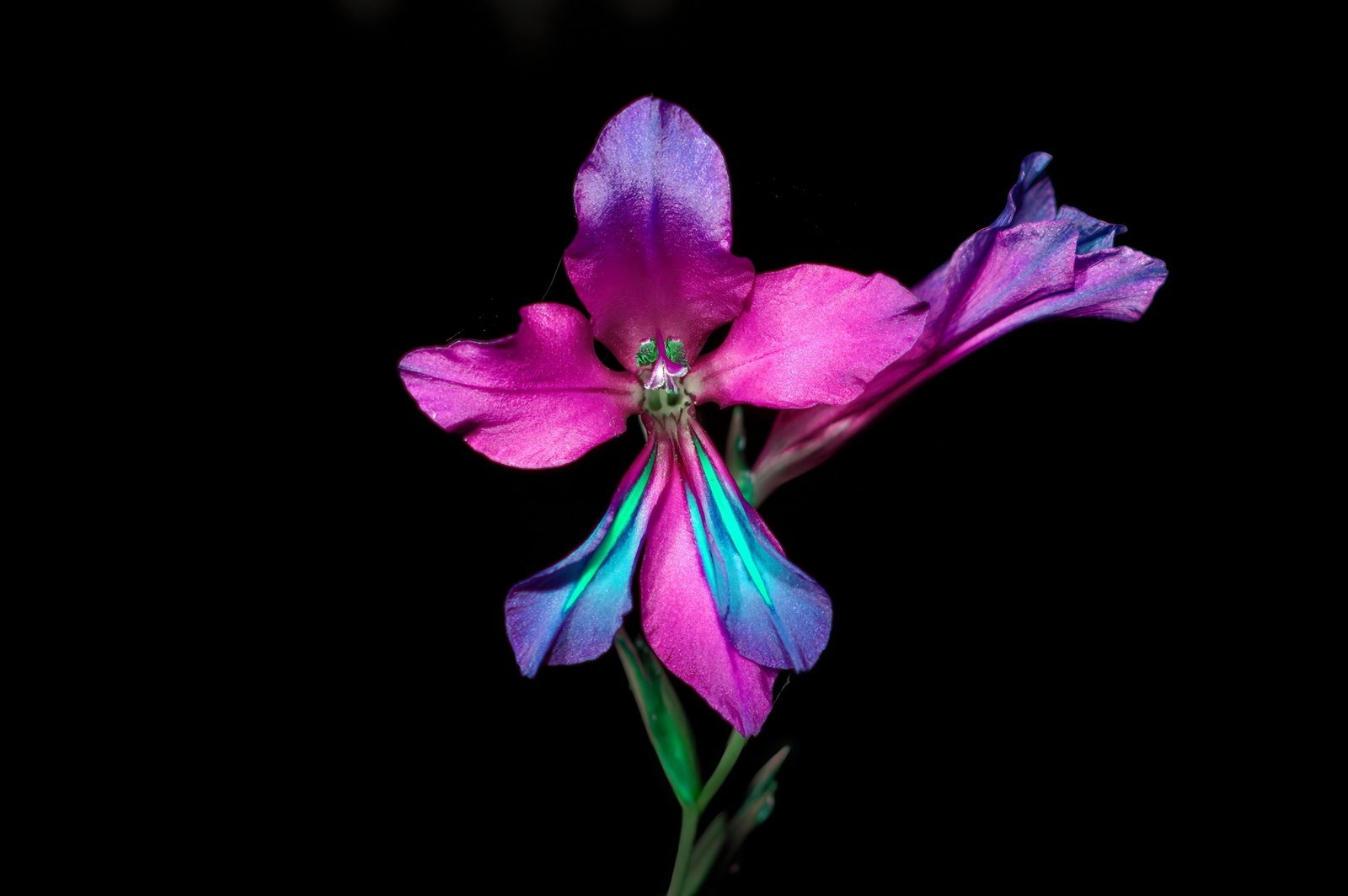
- Late spring to early summer; rich magenta to purple-pink flowers, often with pale markings on the lower petals.
- Foliage
- Narrow, upright, sword-shaped green leaves emerge before flowering and yellow as the plant enters summer dormancy.
- Growth
- Moderate; established corms flower annually and increase through offsets.
- Care needed
- Low
The year at a glance
- Pollinators
- Deer resistant
- Heat tolerant
- Low allergen
| J | F | M | A | M | J | J | A | S | O | N | D | |
|---|---|---|---|---|---|---|---|---|---|---|---|---|
| Flowers | ||||||||||||
| Plant |
Northern hemisphere months. In Australia, shift them by six.
- Difficulty
- Easy
- Toughness
- Fairly tough
Will it suit your garden?
Pick your zone, country, light and whether you have pets.
Full sun is 6 or more hours of direct sun a day, part shade 3 to 6 hours, shade under 3.
How it grows
Planting day
0.5 ft (0.15 m)
After 1 year
2.5 ft (0.75 m)
full size
About 1 years to full size.
From a typical nursery size, at an average rate for this kind of plant. A rule of thumb, not a forecast.
Good to know
- Cats and dogs
- Toxic
- Invasive in
- Australia
- In the garden
- Spreads vigorously: plan to contain it.
- Growth rate
- Moderate
Care
Jobs through the year
- WaterMar–Apr, every 14 days
- Water established growing plants only if rainfall is scarce; new plantings need closer checks.
- WaterMay–Jun, every 7 days
- Water during dry spells while leaves are green; stop routine watering once foliage yellows.
- FeedMar–Apr
- Apply a light balanced feed only on poor soil; avoid heavy nitrogen feeding.
- DeadheadMay–Jun, every 7 days
- Remove spent flower spikes unless seed is wanted.
- PruneJun–Jul
- Remove foliage at ground level only after it has completely yellowed.
- DivideJul–Aug
- Lift overcrowded dormant clumps and separate offsets; replant in freely draining soil.
- MulchNov
- Add winter mulch after the soil cools in colder gardens; avoid trapping moisture.
- ProtectJan–Feb, Nov–Dec
- Prevent winter waterlogging; store dormant corms dry and frost-free where outdoor survival is doubtful.
- Plant corms in autumn in mild climates, about 4-6 in (10-15 cm) deep and 4-6 in (10-15 cm) apart; use spring planting where winters are severe.
- Water during dry spells while leaves and flower stems are growing; reduce watering after the foliage yellows.
- Apply a light dressing of balanced fertiliser in spring on poor soil; avoid heavy nitrogen feeding.
- In colder gardens, mulch after the ground cools, keeping the planting site free-draining.
- Stake only on exposed sites, and divide crowded clumps during summer dormancy.
Pruning. Cut off spent flower spikes unless you want seed. Leave the foliage until it has turned completely yellow, then remove it at ground level.
Through the year
- Autumn
- Plant dormant corms in mild regions, choosing a sunny site with good drainage.
- Winter
- Check that the planting area is not waterlogged; protect outdoor plantings with mulch in colder regions.
- Spring
- Plant stored corms where autumn planting is unsuitable, and water growing plants during dry weather.
- Late spring
- Support stems if winds bend them, and remove fading flower spikes to prevent unwanted seeding.
- Early summer
- Allow leaves to yellow naturally and stop routine watering as plants become dormant.
- Summer
- Lift and separate overcrowded dormant clumps; store corms dry and frost-free if they cannot overwinter outdoors.
In the garden
- Plant in loose groups through cottage borders for slender vertical accents among rounded perennials.
- Combine with ornamental grasses so their later growth conceals the dying leaves.
- Use in sunny gravel gardens with lavender and rock roses, where summer-dry conditions suit the dormant corms.
- Naturalise in long grass that can remain unmown until the gladiolus foliage has died back, where local weed guidance permits.
Garden styles it suits: Cottage garden, English country, Mediterranean, Dry gravel garden, Romantic rose garden and New perennial (prairie).
Plant it with: Lavender, Catmint, Hardy geraniums, Rock roses, Ornamental onions and Feather reed grass.
Wildlife: Flowers provide pollen and nectar for visiting insects, including bees. It is not a native meadow plant in the United States, Canada, the United Kingdom or Australia.
Problems to watch for
- Corm rot in wet ground: improve drainage or move the planting to a raised bed; discard soft or rotten corms.
- Thrips causing streaked flowers or silvery leaves: remove badly affected flowers and avoid keeping infested corms for replanting.
- Slugs and snails eating emerging shoots: inspect new growth and use barriers, hand-picking or labelled iron-phosphate bait.
- Poor flowering in crowded or shaded clumps: divide during dormancy and replant in full sun, leaving the leaves intact after flowering.
Safety
Toxic to cats, dogs and horses if eaten; the corms contain the highest concentration of harmful compounds. In people, ingestion can also cause poisoning, particularly vomiting, abdominal pain and diarrhoea, and sap may irritate skin. Keep corms away from children and animals; seek medical or veterinary advice after ingestion.
Where it spreads. Can spread by corm offsets and seed. It is an environmental weed in parts of southern Australia, including Western Australia, where it can invade bushland; check local guidance before planting or allowing it to naturalise.
Easily confused with
Italian gladiolus (Gladiolus italicus)
Usually has paler pink flowers and anthers longer than their supporting filaments. Its seeds are not winged, unlike those of Gladiolus communis.
Large-flowered garden gladiolus (Gladiolus hybrids)
Usually has much larger flowers on heavier spikes, comes in many colours and flowers later in summer; many forms are less winter-hardy.
The name
Gladiolus means 'little sword' in Latin, referring to the leaves, communis means 'common', and Byzantine refers to the eastern Mediterranean association of the garden form.
Propagation. Separate small corm offsets from dormant clumps in summer and replant in autumn or spring as climate allows. Seed can also be sown, but seedlings take several years to reach flowering size and may vary.
Checked against open data
- Accepted botanical name
- Gladiolus communis
- In the US and Canada
- Introduced in the lower 48 states.
- Native range
- Albania, Bulgaria, Corse, France, Italy, Krym, Libya, Morocco, North Caucasus, Sardegna, Sicilia and Spain.
- Measured
- Soil pH 7.5 to 8. Average height 41 cm.
Sources: GBIF (CC BY 4.0), USDA PLANTS and Trefle (CC BY 4.0). The care and design notes are LandscapeGPT's own.
See it in your own yard.
Upload a photo of your yard and see it redesigned with plants that suit your climate, each checked against your zone.