Caladium
Caladium bicolor. Family Araceae. Bulb.
Also called Angel wings, Heart of Jesus.
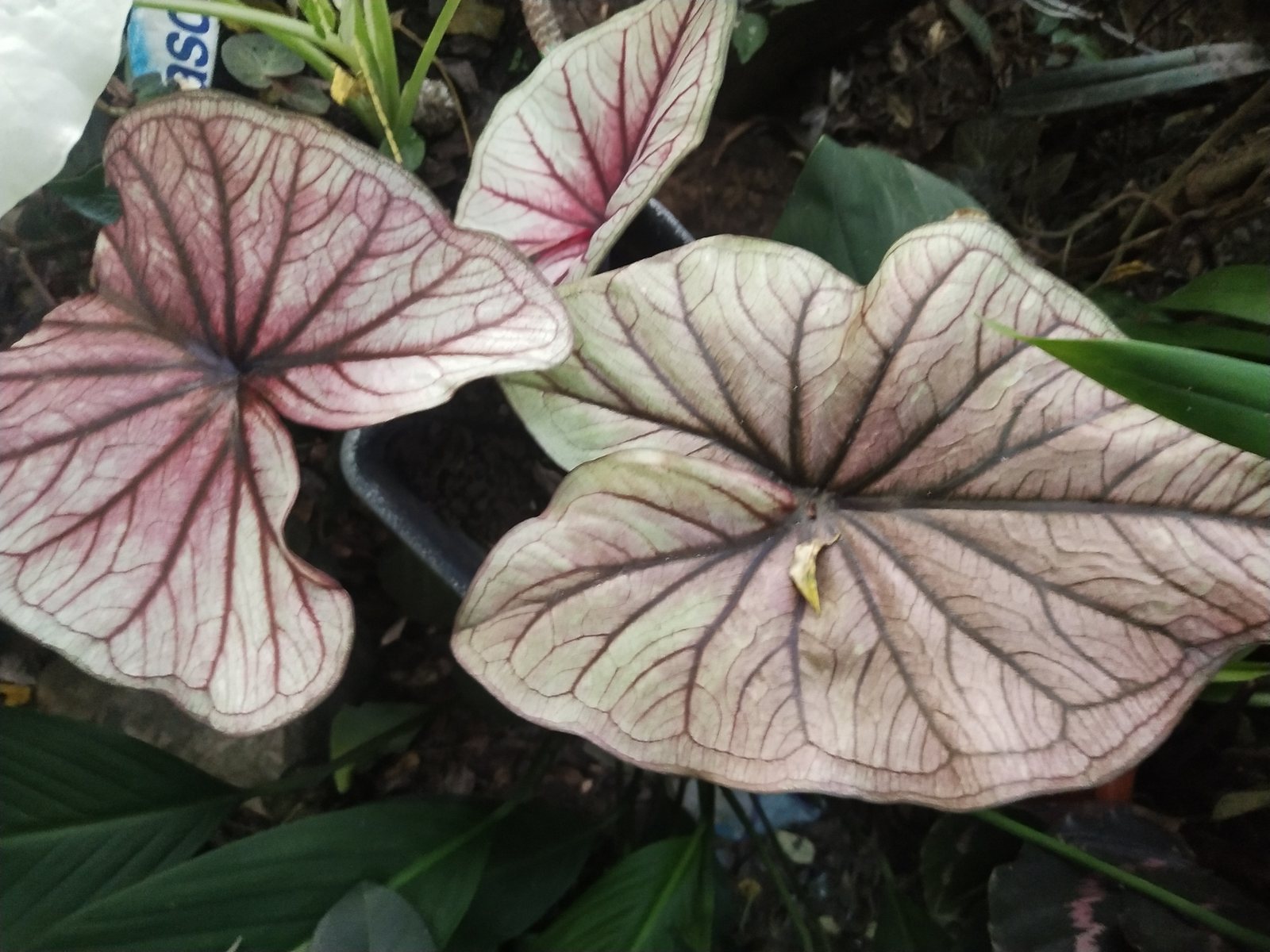
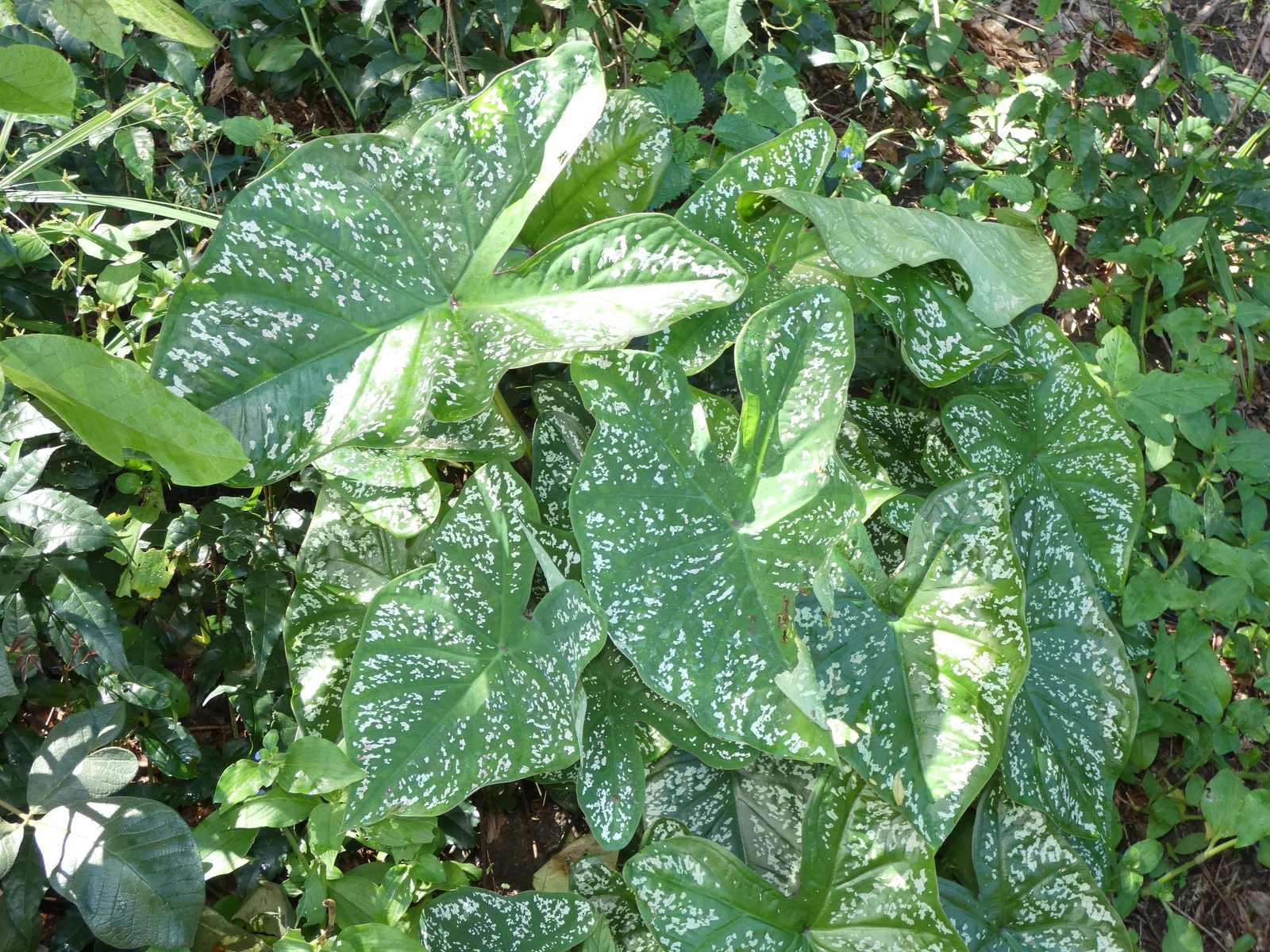
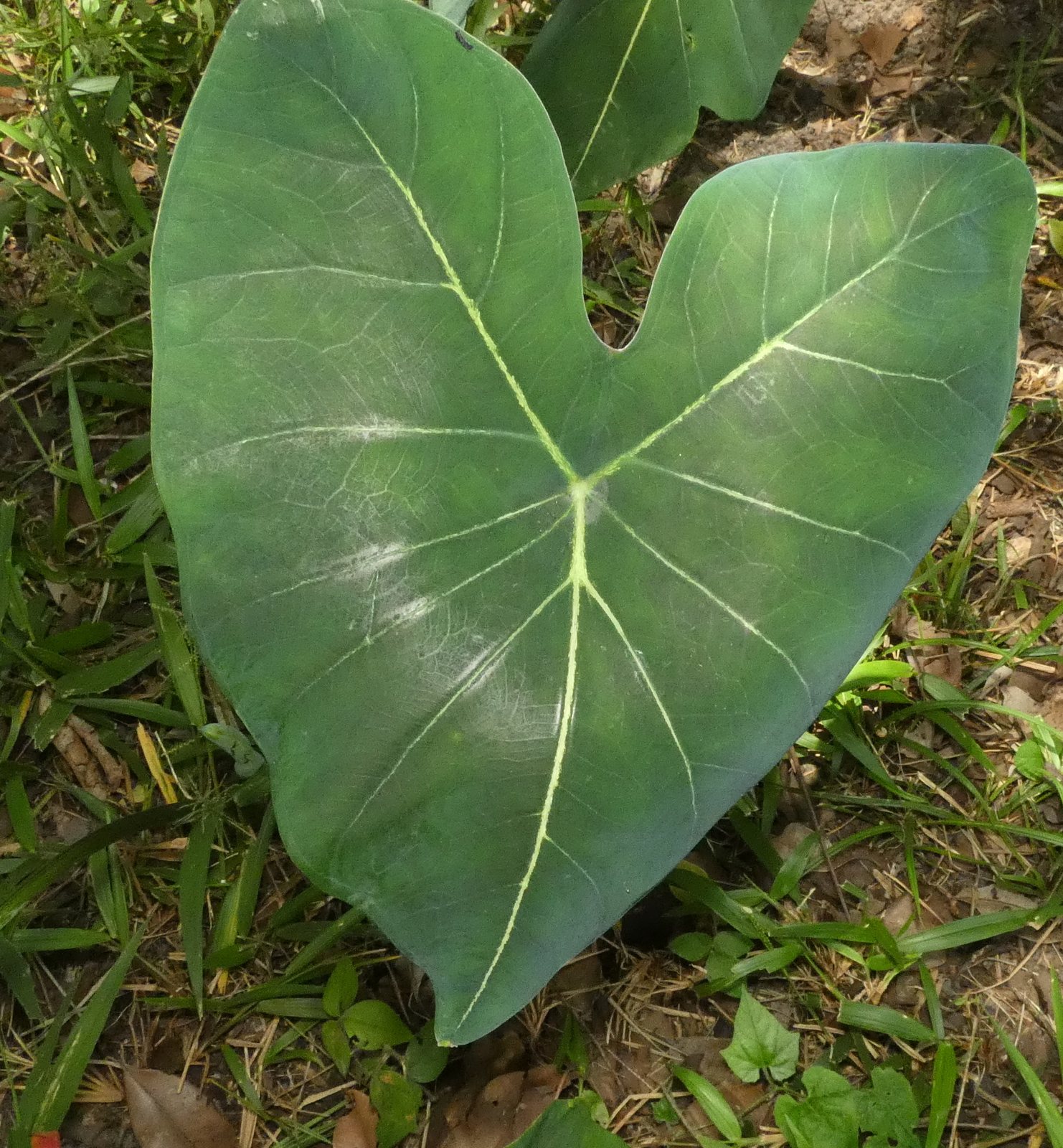
Caladium is a frost-tender, tuberous perennial grown for its large, heart-shaped leaves patterned in green, white, pink or red. It brings colour to warm, shaded beds and containers; in cooler climates it is grown as an annual or its tubers are lifted and stored indoors for winter. Many named garden caladiums are hybrids rather than pure Caladium bicolor.
At a glance
- Sun
- Partial to full shade, preferably with bright filtered light. Gentle morning sun is usually suitable; strong afternoon sun can scorch leaves. Sun tolerance varies among cultivars.
- Water
- Keep evenly moist during active growth, but never waterlogged. Reduce watering as leaves die back and keep dormant tubers dry.
- Soil
- Humus-rich, well-drained soil that retains moisture; slightly acidic soil is ideal. Use a free-draining potting mix in containers.
- Height
- 1-2.5 ft (0.3-0.75 m)
- Spread
- 1-2 ft (0.3-0.6 m)
- Foliage
- Thin, heart- to arrow-shaped leaves on upright stalks, with contrasting veins, spots or broad patches of white, pink, red and green. Leaves die back during dormancy.
- Growth
- Fast in warm weather; slow or dormant in cool conditions.
- Care needed
- Medium
The year at a glance
- Deer resistant
- Heat tolerant
- Low allergen
| J | F | M | A | M | J | J | A | S | O | N | D | |
|---|---|---|---|---|---|---|---|---|---|---|---|---|
| Plant |
Northern hemisphere months. In Australia, shift them by six.
- Difficulty
- Moderate
- Toughness
- Needs looking after
Will it suit your garden?
Pick your zone, country, light and whether you have pets.
Full sun is 6 or more hours of direct sun a day, part shade 3 to 6 hours, shade under 3.
How it grows
Planting day
0.5 ft (0.15 m)
After 1 year
1.7 ft (0.53 m)
full size
About 1 years to full size.
From a typical nursery size, at an average rate for this kind of plant. A rule of thumb, not a forecast.
Good to know
- Cats and dogs
- Toxic
- Growth rate
- Moderate
Care
Jobs through the year
- WaterJun, Sep, every 4 days
- Water established plants when the surface dries; young plants need closer checks, and yellowing plants need less.
- WaterJul–Aug, every 3 days
- Keep actively growing plants evenly moist, not saturated; skip watering when soil is still moist.
- FeedJun–Aug, every 28 days
- On poor soil, apply a light balanced feed during active growth, following the label.
- MulchJun
- Apply a light organic mulch after soil warms, keeping it away from leaf stalks.
- PruneJun–Sep
- Cut damaged leaves near the base; allow naturally yellowing foliage to die back.
- ProtectSep–Oct
- Before the first frost, lift tubers, dry them in an airy place and remove dead foliage.
- ProtectJan–May, Oct–Dec, every 30 days
- Check stored tubers for rot; keep them dry at 16–21°C until restarting.
- Plant tubers outdoors only after frost danger has passed and the soil is consistently at least 21°C (70°F).
- Water when the soil surface begins to dry; empty container saucers so roots do not stand in water.
- Feed container plants with a balanced liquid fertiliser at half strength every four weeks during active growth.
- Apply a light organic mulch to conserve moisture, keeping it clear of leaf stalks.
- In cooler climates, lift tubers before frost, dry them in an airy place and store frost-free at about 16-21°C (61-70°F).
Pruning. Remove damaged leaves by cutting their stalks near the base with clean scissors. Let yellowing foliage die back naturally before removing it at the start of dormancy.
Through the year
- Early spring
- Check stored tubers for rot and start sound tubers indoors in warmth, with their growing buds facing upwards.
- Late spring
- Move plants outdoors once nights and soil are reliably warm; introduce them gradually to their shaded position.
- Summer
- Maintain even moisture and feed container plants while leaves are growing.
- Late summer
- Check leaf undersides for mites and remove damaged foliage.
- Autumn
- Reduce watering as foliage yellows; in frost-prone areas, lift and dry tubers before frost.
- Winter
- Keep dormant tubers dry and warm, checking occasionally for soft or mouldy patches.
In the garden
- Group beneath open-canopied trees in warm gardens to brighten shade with patterned foliage.
- Use in sheltered patio containers with ferns and begonias for contrasting leaf shapes.
- Mass along shaded summer borders for a continuous band of pink, red or white.
- Pair white-leaved forms with dark green foliage near shaded seating areas for strong contrast.
Garden styles it suits: Tropical, Modern tropical, Modern courtyard, Southern, Victorian and Small-space.
Plant it with: Wax begonias, Impatiens, Coleus, Boston ferns, Torenias and Cast iron plants.
Wildlife: Offers little food for pollinators because flowering is inconspicuous and often sparse in garden conditions. Slugs and snails may chew the leaves.
Problems to watch for
- Tuber or root rot: avoid cold, saturated soil, improve drainage and discard soft, rotting tubers.
- Leaf scorch: move plants out of harsh afternoon sun and prevent the root zone from drying out.
- Spider mites: check for fine webbing and stippled leaves; rinse leaf undersides and use insecticidal soap if needed, following the label.
- Poor emergence or stalled growth: cold soil is a common cause; provide steady warmth rather than extra water.
Safety
Toxic to people, cats, dogs and horses if chewed or eaten. All parts, including leaves and tubers, contain insoluble calcium oxalate crystals that cause intense mouth pain, drooling, swelling and difficulty swallowing; serious swelling needs urgent medical or veterinary attention. Sap can irritate skin and eyes.
Easily confused with
Elephant's ear (Colocasia esculenta)
Usually has larger, thicker leaves with the stalk attached well inside the blade's underside; the leaf tips commonly point downwards.
Arrowhead vine (Syngonium podophyllum)
Produces climbing or trailing stems with visible nodes and aerial roots, rather than separate leaf stalks emerging from a tuber.
Polka dot begonia (Begonia maculata)
Has strongly asymmetrical, silver-spotted leaves on jointed cane-like stems, often with reddish leaf undersides.
The name
The species name bicolor means 'two-coloured', referring to the contrasting colours of the leaves.
Propagation. Divide dormant tubers in spring, leaving at least one healthy growing bud on each piece. Use a clean knife, allow cut surfaces to dry and seal, then pot in a warm, free-draining medium and water sparingly until growth begins.
Checked against open data
- Accepted botanical name
- Caladium bicolor
- In the US and Canada
- Introduced in the lower 48 states, Pacific Basin, Puerto Rico and US Virgin Islands.
- Native range
- Argentina Northwest, Bolivia, Brazil North, Brazil Northeast, Brazil South, Brazil Southeast, Brazil West-Central, Colombia, Costa Rica, Ecuador, French Guiana and Guyana.
Sources: GBIF (CC BY 4.0), USDA PLANTS and Trefle (CC BY 4.0). The care and design notes are LandscapeGPT's own.
See it in your own yard.
Upload a photo of your yard and see it redesigned with plants that suit your climate, each checked against your zone.