Callery pear
Pyrus calleryana. Family Rosaceae. Tree.
Also called Ornamental pear, Bradford pear.
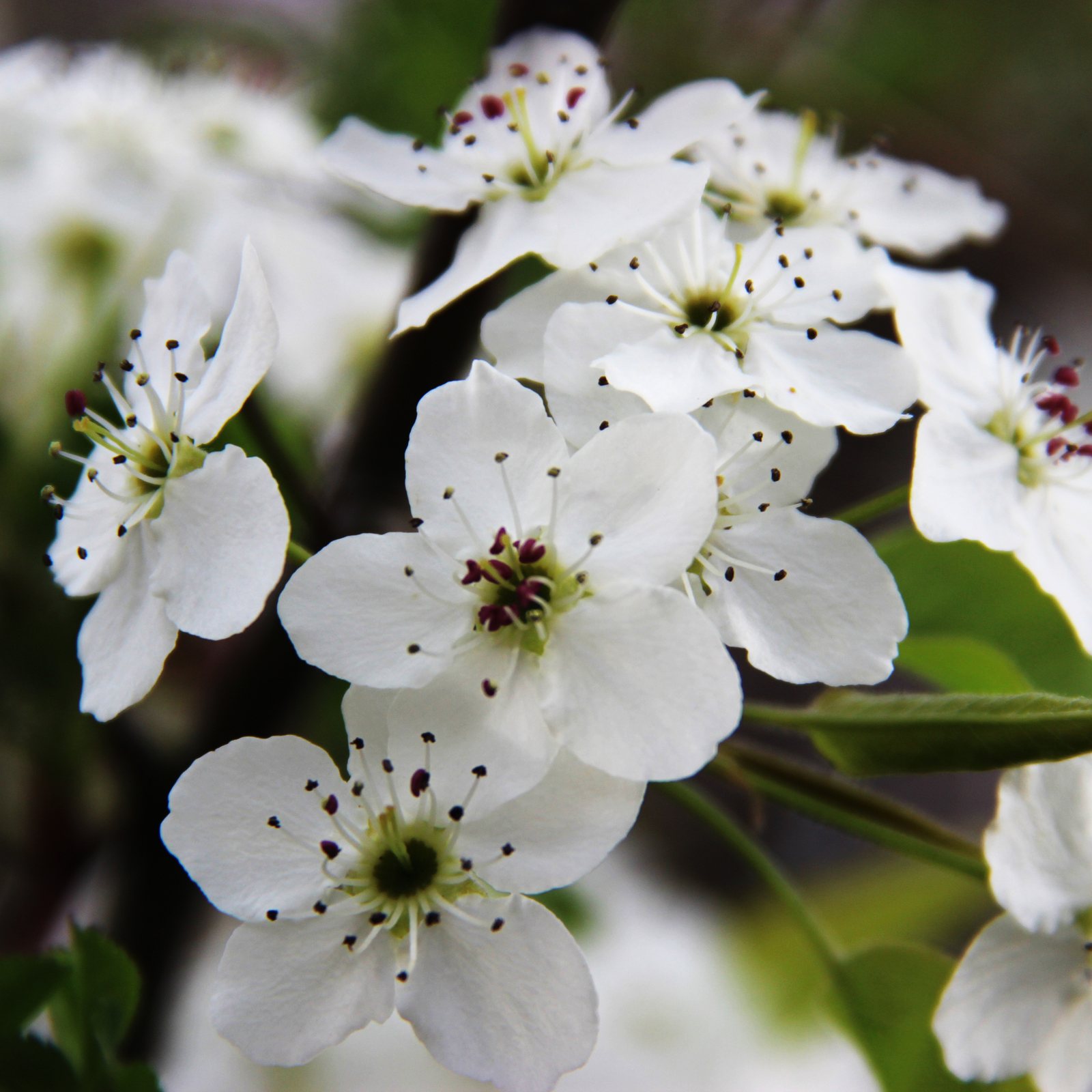
Callery pear is a deciduous ornamental tree grown for white spring blossom, glossy foliage and red, orange or purple autumn colour. Cultivars differ in shape and branch strength; Bradford pear is one cultivar, not a name for every Callery pear. Its invasive spread and tendency to develop weak branch unions make it a poor choice for new planting in many regions.
At a glance
- Sun
- Full sun for the best flowering and autumn colour.
- Water
- Moderate while establishing; tolerates some drought once established, but benefits from deep watering during prolonged dry weather.
- Soil
- Adaptable to clay, loam and sandy soils, including compacted urban ground; prefers reasonable drainage and tolerates acidic to alkaline conditions.
- Height
- 30-50 ft (9-15 m)
- Spread
- 20-35 ft (6-11 m)
- Flowers
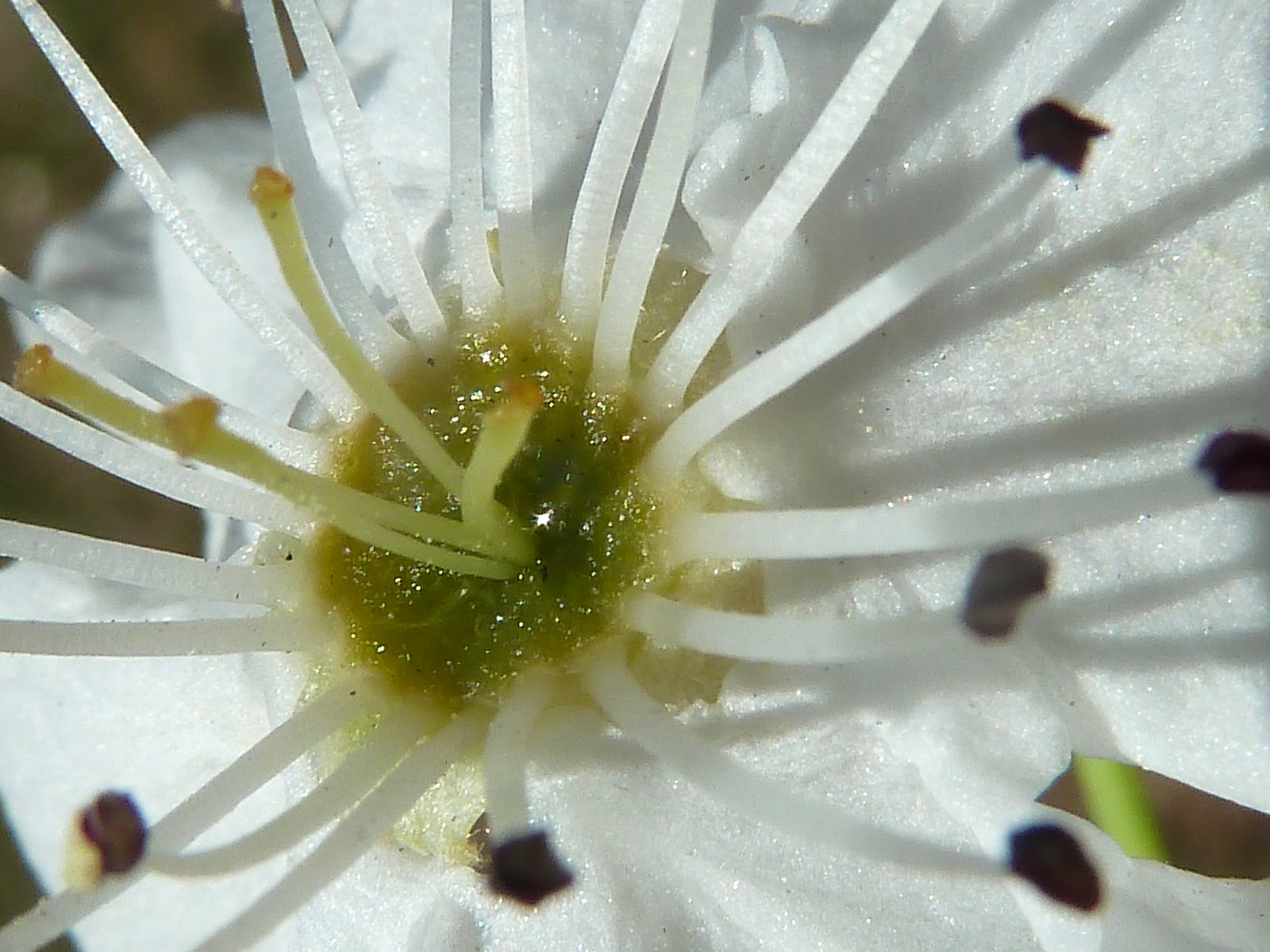
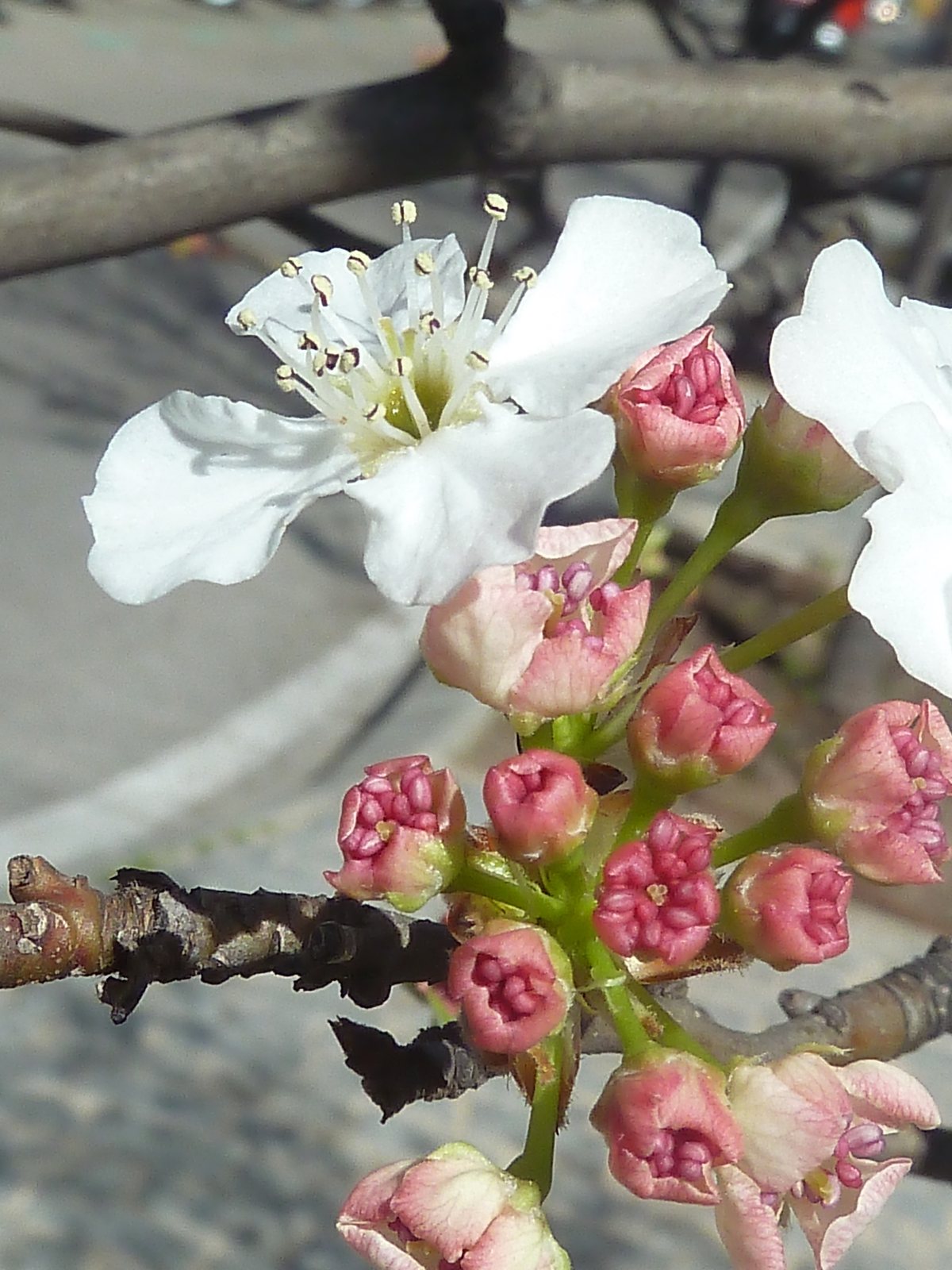
- Early to mid-spring: clusters of white flowers, often before the leaves expand; their strong smell is unpleasant to many people.
- Foliage
- Glossy, broadly oval, dark green leaves with finely toothed margins; autumn colour ranges from yellow and orange to red and purple, depending on climate and cultivar.
- Growth
- Fast when young, slowing with maturity.
- Care needed
- High
The year at a glance
- Pollinators
- Drought tolerant
- Heat tolerant
- Wildlife
- Low allergen
| J | F | M | A | M | J | J | A | S | O | N | D | |
|---|---|---|---|---|---|---|---|---|---|---|---|---|
| Flowers | ||||||||||||
| Fruit | ||||||||||||
| Plant |
Northern hemisphere months. In Australia, shift them by six.
- Difficulty
- Hard
- Toughness
- Fairly tough
Will it suit your garden?
Pick your zone, country, light and whether you have pets.
Full sun is 6 or more hours of direct sun a day, part shade 3 to 6 hours, shade under 3.
How it grows
Planting day
7 ft (2 m)
After 1 year
8 ft (2.5 m)
After 2 years
10 ft (3 m)
After 3 years
11 ft (3.5 m)
After 5 years
15 ft (4.5 m)
About 20 years to full size.
From a typical nursery size, at an average rate for this kind of plant. A rule of thumb, not a forecast.
Good to know
- Cats and dogs
- Toxic
- Invasive in
- the US and Australia
- In the garden
- Spreads vigorously: plan to contain it.
- Growth rate
- Moderate
Care
Jobs through the year
- ProtectMar–Apr, Oct–Nov
- Before planting, check invasive status and sale restrictions; choose another tree where invasive.
- WaterApr–May, Sep–Oct, every 14 days
- Water established trees only if soil is dry; young trees need regular deep watering for two years.
- WaterJun–Aug, every 14 days
- Deep-water established trees during prolonged drought; allow the surface to dry between soakings.
- MulchMar–Apr
- Maintain 5–8 cm of mulch over the roots, clear of the trunk and root flare.
- FeedMar–Apr
- Feed only for a soil-test-confirmed deficiency; excess nitrogen encourages weak growth.
- PruneFeb–Mar
- In dry weather, train young trees to one leader; leave large limbs and weak forks to an arborist.
- PruneApr–Sep
- Remove rootstock suckers promptly, especially thorny shoots below the graft.
- ProtectApr–Nov, every 30 days
- Remove volunteer seedlings with their roots before they establish; clear fruit from paths.
- ProtectJan–Feb, Nov–Dec
- Inspect after storms; have cracked forks, hanging limbs or changes in lean assessed professionally.
- Check local invasive-plant guidance and sale restrictions before planting; choose another tree where Callery pear is invasive.
- Water newly planted trees deeply through their first two growing seasons, allowing the soil surface to dry slightly between soakings.
- Keep a 2-3 in (5-8 cm) layer of mulch over the root zone, clear of the trunk.
- Avoid routine fertiliser unless a soil test identifies a deficiency; excessive feeding encourages weak, rapid growth.
- Remove root suckers and volunteer seedlings promptly; shoots from below a graft can become thorny.
- Have large trees with tight forks, cracks or storm damage assessed by a qualified arborist.
Pruning. Prune young trees during dry weather in late winter to develop one main leader and well-spaced branches, removing competing upright stems gradually. Never top the tree; leave large limbs, split forks and major corrective work to a qualified arborist.
Through the year
- Late winter
- Inspect branch unions and carry out light formative pruning on young trees.
- Spring
- Refresh mulch without covering the root flare, and check for seedlings beneath the canopy and nearby hedges.
- Late spring
- Watch for blackened blossom and shoot tips that may indicate fire blight; seek local advice before pruning suspected infections.
- Summer
- Deep-water young trees during dry spells and remove suckers below the graft.
- Autumn
- Clear fallen fruit from paths and remove volunteer seedlings before they establish.
- Winter
- Inspect after storms for cracked forks, hanging branches and changes in the tree's lean.
In the garden
- Historically used in avenues and formal rows for repeated spring blossom; choose a non-invasive alternative where it escapes cultivation.
- Narrow cultivars provide upright accents beside broad buildings, although mature width and branch safety still need consideration.
- Existing specimens can provide autumn colour above low grasses and herbaceous planting.
- White blossom contrasts with evergreen hedges, but the flower smell makes placement beside seating areas undesirable.
Garden styles it suits: Formal, Urban city garden, Traditional, Architectural minimal, White garden and Autumn colour.
Plant it with: Daffodils, Hellebores, Hardy geraniums, Epimediums, Japanese forest grass and Autumn moor grass.
Wildlife: Flowers attract visiting insects, and birds eat the small fruits. Birds also disperse the seeds into grassland, roadsides and woodland edges, where dense, sometimes thorny growth can displace native vegetation.
Problems to watch for
- Weak forks and storm breakage: develop a sound framework while young; have mature trees inspected and consider replacement where defects cannot be managed safely.
- Fire blight: blossom and shoots blacken and may curl at the tips; remove infected growth during suitable dry conditions using locally recommended sanitation practices, and avoid excessive nitrogen.
- Leaf spots and pear rust: remove fallen affected leaves and improve airflow; obtain a diagnosis if damage is severe or repeated.
- Suckers and self-sown seedlings: remove promptly, including their roots where practical; replacement may be the best option where seedlings spread beyond the garden.
Safety
Pear flesh is not generally considered poisonous to people, cats, dogs or horses. Seeds contain cyanogenic compounds and should not be deliberately eaten or fed to animals; a few accidentally swallowed whole seeds are unlikely to cause poisoning, but substantial quantities of chewed seeds may be dangerous. Small, hard fruits can also pose a choking risk, and some seedling trees have sharp thorns.
Where it spreads. Spreads aggressively across much of the eastern and central United States, especially the Southeast, Mid-Atlantic and Midwest; it is listed as invasive in many states, and sale or planting is prohibited in some. It also escapes cultivation in parts of southeastern Australia, including South Australia.
Easily confused with
Common pear (Pyrus communis)
Usually develops much larger, recognisably pear-shaped edible fruit; Callery pear typically bears small, round, hard fruits. Leaves and blossom alone can be difficult to distinguish.
Crab apple (Malus spp.)
Often has pink flower buds and larger, more colourful fruits with a persistent star-shaped calyx at the tip; Callery pear usually has small brown fruits and particularly glossy leaves.
Serviceberry (Amelanchier spp.)
Has narrow, strap-like white petals rather than broad, rounded pear petals, and its fruits ripen red to purple in early summer.
The name
Pyrus is the Latin name for pear, and calleryana honours Joseph-Marie Callery, a missionary and plant collector who worked in China.
Propagation. Named cultivars are usually grafted or budded onto pear rootstocks; seedlings do not come true and may be thorny. Do not propagate where the species is invasive or restricted.
Checked against open data
- Accepted botanical name
- Pyrus calleryana
- In the US and Canada
- Introduced in the lower 48 states.
- Native range
- China North-Central, China South-Central, China Southeast, Japan, Korea, Taiwan and Vietnam.
- Measured
- Soil pH 5 to 7.5. Average height 800 cm.
Sources: GBIF (CC BY 4.0), USDA PLANTS and Trefle (CC BY 4.0). The care and design notes are LandscapeGPT's own.
See it in your own yard.
Upload a photo of your yard and see it redesigned with plants that suit your climate, each checked against your zone.