Canary Island date palm
Phoenix canariensis. Family Arecaceae. Tree.
Also called Canary date palm, Pineapple palm.
A massive evergreen palm with a stout trunk and a broad crown of arching, feather-like leaves. It makes a strong focal point in warm-climate gardens, but its eventual size and sharply spined leaf bases require generous clearance from buildings and paths. In colder regions, young plants can be grown in containers and moved under cover for winter.
At a glance
- Sun
- Full sun; young plants tolerate light shade.
- Water
- Water deeply while establishing, letting the surface soil dry between waterings. Established palms tolerate drought but grow better with occasional deep watering during prolonged dry weather.
- Soil
- Well-drained sandy, loamy or gravelly soil; tolerates a range of soil pH and some coastal salt exposure. Avoid persistently waterlogged ground.
- Height
- 40-60 ft (12-18 m), occasionally taller
- Spread
- 20-40 ft (6-12 m)
- Flowers
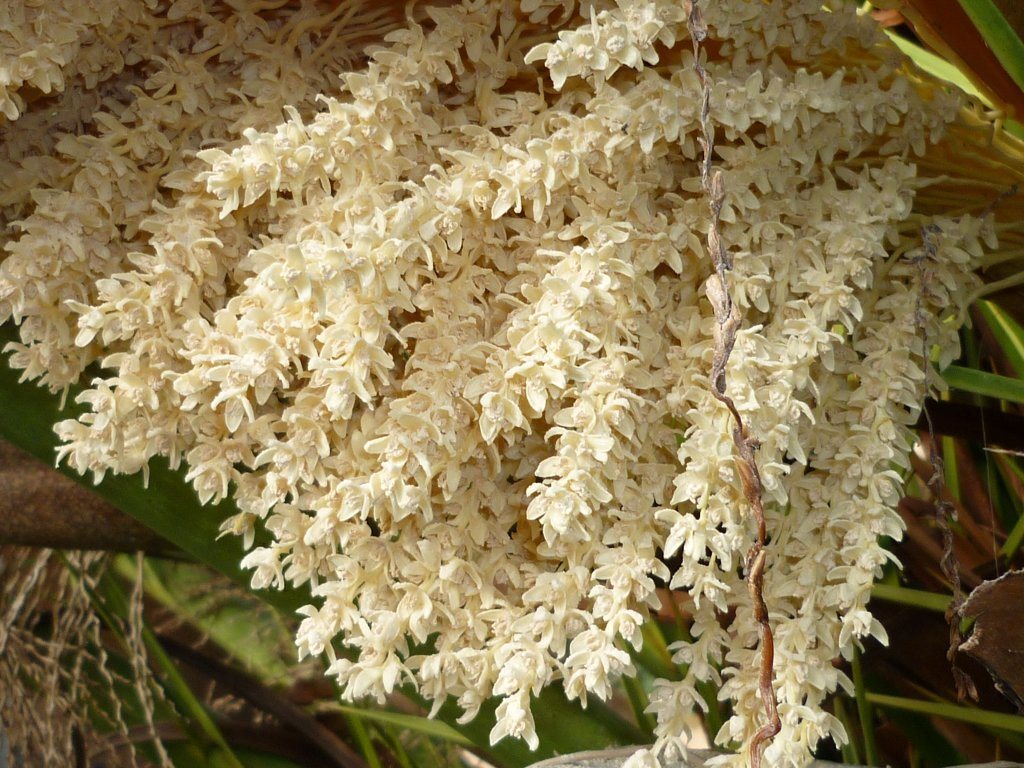
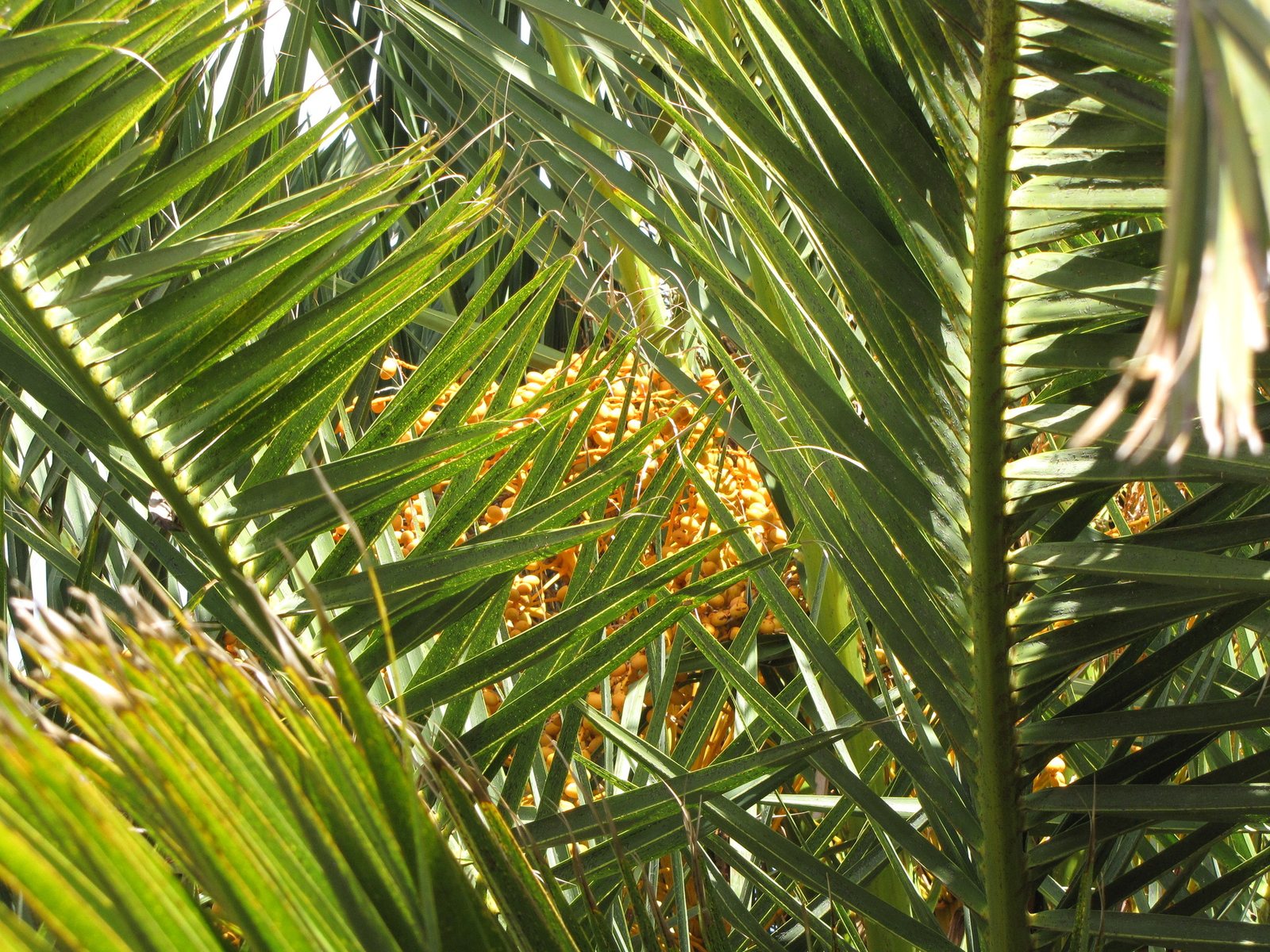
- Small cream to yellow flowers in large clusters, usually in spring or early summer. Male and female flowers grow on separate trees; pollinated female trees produce orange-yellow dates.
- Foliage
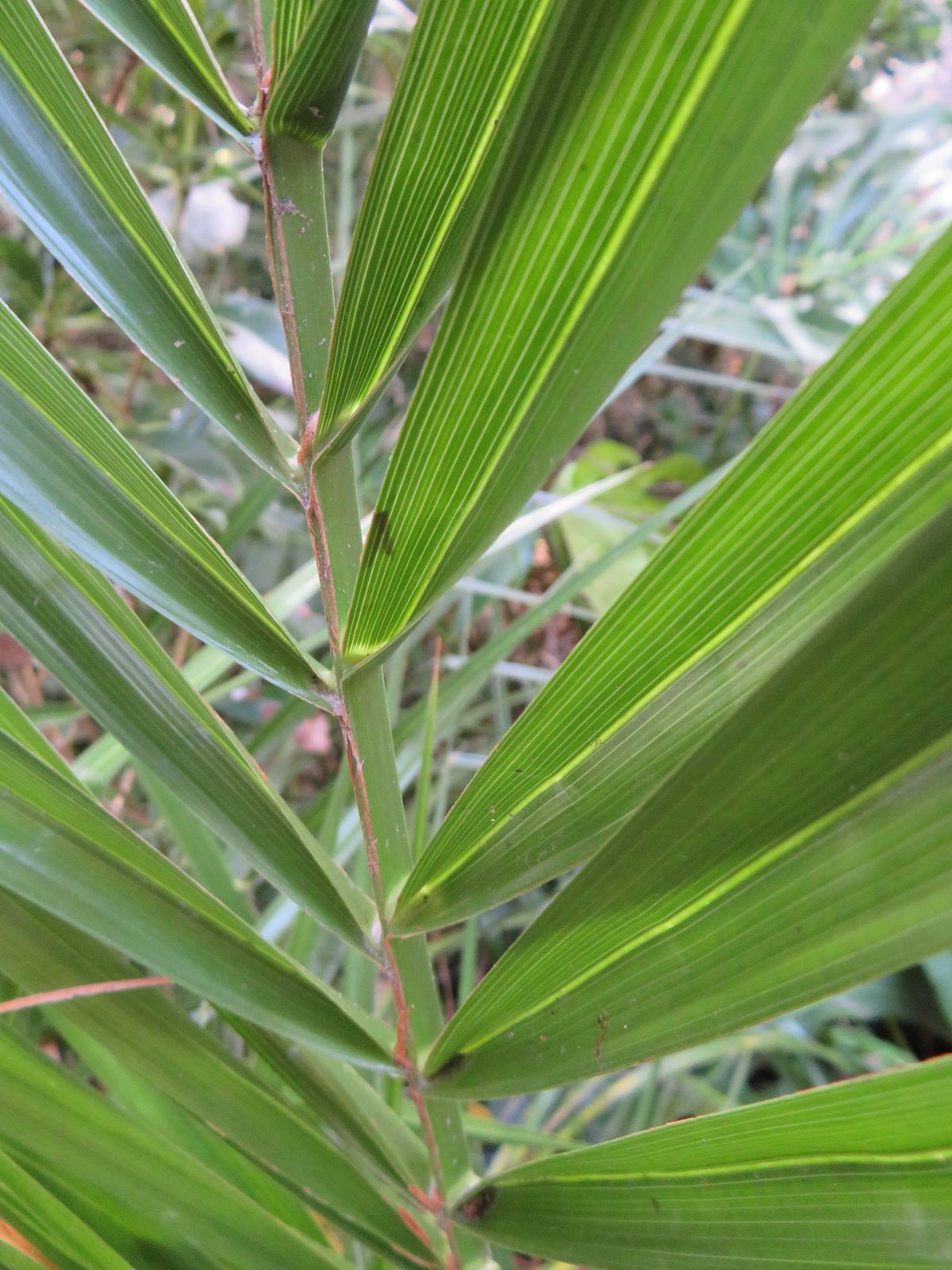
- Evergreen. Long, arching, dark green, feather-like leaves form a dense crown. Lower leaflets become stiff, sharp spines near the leaf stalk base.
- Growth
- Slow when young, becoming moderate in warm conditions with adequate water.
- Care needed
- Medium
The year at a glance
- Pollinators
- Drought tolerant
- Heat tolerant
- Wildlife
| J | F | M | A | M | J | J | A | S | O | N | D | |
|---|---|---|---|---|---|---|---|---|---|---|---|---|
| Flowers | ||||||||||||
| Fruit | ||||||||||||
| Plant |
Northern hemisphere months. In Australia, shift them by six.
- Difficulty
- Hard
- Toughness
- Needs looking after
Will it suit your garden?
Pick your zone, country, light and whether you have pets.
Full sun is 6 or more hours of direct sun a day, part shade 3 to 6 hours, shade under 3.
How it grows
Planting day
7 ft (2 m)
After 1 year
8 ft (2.5 m)
After 2 years
10 ft (3 m)
After 3 years
11 ft (3.5 m)
After 5 years
15 ft (4.5 m)
About 26 years to full size.
From a typical nursery size, at an average rate for this kind of plant. A rule of thumb, not a forecast.
Good to know
- Cats and dogs
- Safe
- Invasive in
- the US and Australia
- In the garden
- Spreads vigorously: plan to contain it.
- Growth rate
- Slow
Care
Jobs through the year
- WaterApr–May, Sep–Oct, every 14 days
- For established ground plants in frost-free climates, water only when dry; containers and young palms need more.
- WaterJun–Aug, every 14 days
- Deeply water established ground plants during prolonged drought; check containers more frequently.
- WaterJan–Mar, Nov–Dec, every 28 days
- Check sheltered containers and water sparingly only when needed to keep the root ball barely moist.
- FeedMay
- If needed, apply slow-release palm fertiliser with potassium, magnesium and micronutrients.
- MulchMay
- Mulch outdoor root zones lightly, keeping the trunk base uncovered.
- PruneMay–Jul
- Remove only fully brown fronds or hazardous stalks; use clean tools and an arborist for tall palms.
- ProtectJan–Apr, Oct–Dec
- Not reliably hardy in zone 6–7 or most UK gardens; keep movable specimens in bright, frost-free shelter.
- Choose a permanent position with room for the mature crown, well away from paths, play areas and overhead cables.
- Water new plantings deeply through their first two growing seasons; avoid keeping the root zone constantly wet.
- Where soil is nutrient-poor, apply a palm-specific slow-release fertiliser containing potassium, magnesium and micronutrients according to its label.
- Spread organic mulch over the root zone, keeping it clear of the trunk.
- Keep container plants in large pots with free drainage; overwinter them in a bright, frost-free place and reduce watering.
Pruning. In late spring or summer, remove only fully brown fronds and unwanted flower or fruit stalks; leave green and partly green leaves attached. Use a qualified arborist for tall palms, avoid cutting into the trunk, and disinfect pruning equipment between trees to reduce disease spread.
Through the year
- Spring
- Plant after frost risk has passed and the soil has warmed; begin regular watering for new palms.
- Late spring
- Apply palm fertiliser where needed and inspect older leaves for nutrient deficiency.
- Summer
- Water deeply during extended dry spells, especially for young or container-grown plants.
- Summer
- Arrange removal of dead fronds or fruit stalks if they present a falling hazard.
- Autumn
- Collect fallen dates and remove unwanted seedlings before they establish.
- Late autumn
- Move container palms into bright, frost-free shelter before freezing weather.
- Winter
- Keep sheltered container plants barely moist and check that outdoor planting areas drain freely.
In the garden
- Use as a solitary specimen in a large lawn or gravel garden, allowing its whole crown to remain visible.
- Plant in widely spaced rows along a broad drive for a formal avenue effect.
- Combine with low, drought-tolerant shrubs and groundcovers in Mediterranean or coastal gardens.
- Use young container-grown specimens on spacious terraces, with a plan for winter shelter and eventual replacement as they outgrow the space.
Garden styles it suits: Architectural minimal, Mediterranean, Coastal, Luxury resort, Formal and Spanish courtyard.
Plant it with: Lavender, Rosemary, African lily, Society garlic, Blue fescue and Dwarf olive.
Wildlife: Flowers attract insects, and ripe fruit is eaten by birds, which can disperse the seeds. Large crowns may provide nesting or roosting sites.
Problems to watch for
- Fusarium wilt causes progressive, often one-sided frond death and can kill the palm. There is no cure; obtain a professional diagnosis, remove affected trees as advised, and never share contaminated pruning equipment.
- Red palm weevil and palm-boring moth can destroy the growing point where these pests occur. Report suspicious crown collapse, boreholes or chewed fibres promptly to local plant-health authorities or a palm specialist.
- Potassium or magnesium deficiency causes spotting, yellow bands or premature decline of older leaves. Use an appropriate palm fertiliser and retain affected leaves until fully brown; recovery is slow.
- Hard frost and winter waterlogging can damage the crown or kill young palms. Choose a sheltered, freely draining site and grow in movable containers where winters are too cold.
Safety
Not known to be toxic to people, cats, dogs or horses. The fruit has little edible flesh and is not comparable with commercial dates; hard seeds can be a choking hazard. The sharp leaf-base spines are the main danger and can cause deep puncture wounds requiring medical attention.
Where it spreads. Invasive in parts of coastal California and southeastern Australia, including parts of New South Wales and Victoria. Bird-dispersed seedlings can establish in bushland, wetlands and waterways; remove fruit stalks where practical and pull seedlings promptly.
Easily confused with
Date palm (Phoenix dactylifera)
Usually has a slimmer trunk, a more open crown and greyer leaves, and often produces basal suckers. Its cultivated dates are much larger and fleshier.
Senegal date palm (Phoenix reclinata)
Usually forms a clump of several slender, sometimes leaning trunks rather than one massive trunk.
Mexican fan palm (Washingtonia robusta)
Has fan-shaped leaves rather than feather-like fronds, and a much narrower trunk when mature.
The name
The epithet canariensis means 'from the Canary Islands', the species' native home, while date palm refers to its relationship with the edible date palm.
Propagation. Grow from fresh seed with the fruit pulp removed, using a warm, moist but freely draining medium. Germination can take several weeks to months. This solitary-trunked species does not normally produce offsets.
Checked against open data
- Accepted botanical name
- Phoenix canariensis
- Native range
- Canary Is..
- Measured
- Average height 1900 cm.
Sources: GBIF (CC BY 4.0) and Trefle (CC BY 4.0). The care and design notes are LandscapeGPT's own.
See it in your own yard.
Upload a photo of your yard and see it redesigned with plants that suit your climate, each checked against your zone.