Cape plumbago
Plumbago auriculata. Family Plumbaginaceae. Shrub.
Also called Cape leadwort, Blue plumbago.
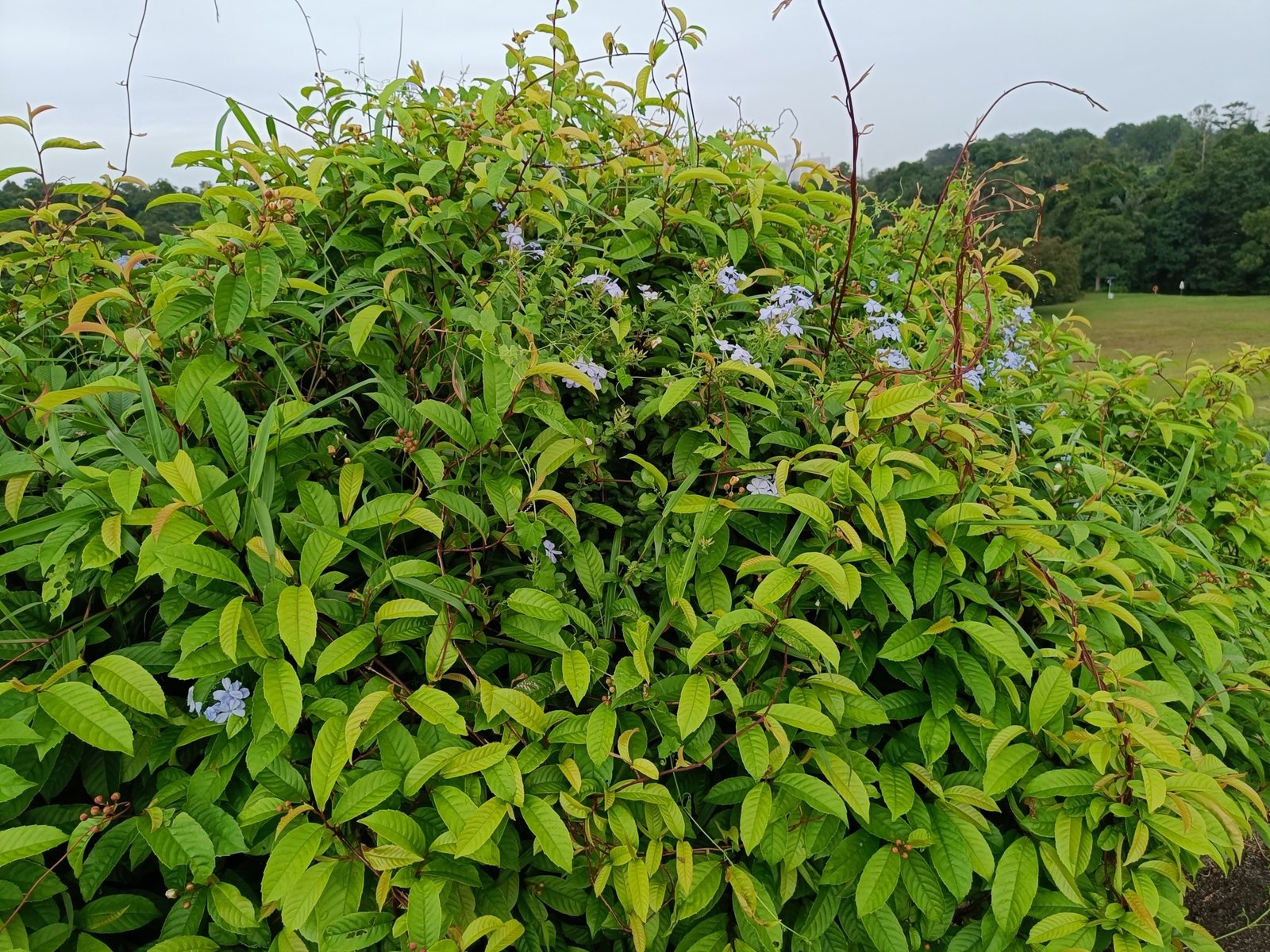
Cape plumbago is a sprawling South African shrub grown for clusters of pale blue flowers over a long warm season. It makes an informal hedge or can be tied against a sunny wall, but its stems do not climb unaided. In colder climates, grow it in a container and overwinter it somewhere bright and frost-free.
At a glance
- Sun
- Full sun for the best flowering; tolerates partial shade but becomes looser and flowers less.
- Water
- Water regularly while establishing. Established plants tolerate some drought, but flower better with deep watering during prolonged dry weather; avoid persistently wet roots.
- Soil
- Well-drained soil, including sandy or loamy soil. Tolerates a range of pH levels, though strongly alkaline conditions can cause yellow leaves.
- Height
- 6-10 ft (1.8-3 m), potentially taller when trained against a wall
- Spread
- 6-10 ft (1.8-3 m)
- Flowers
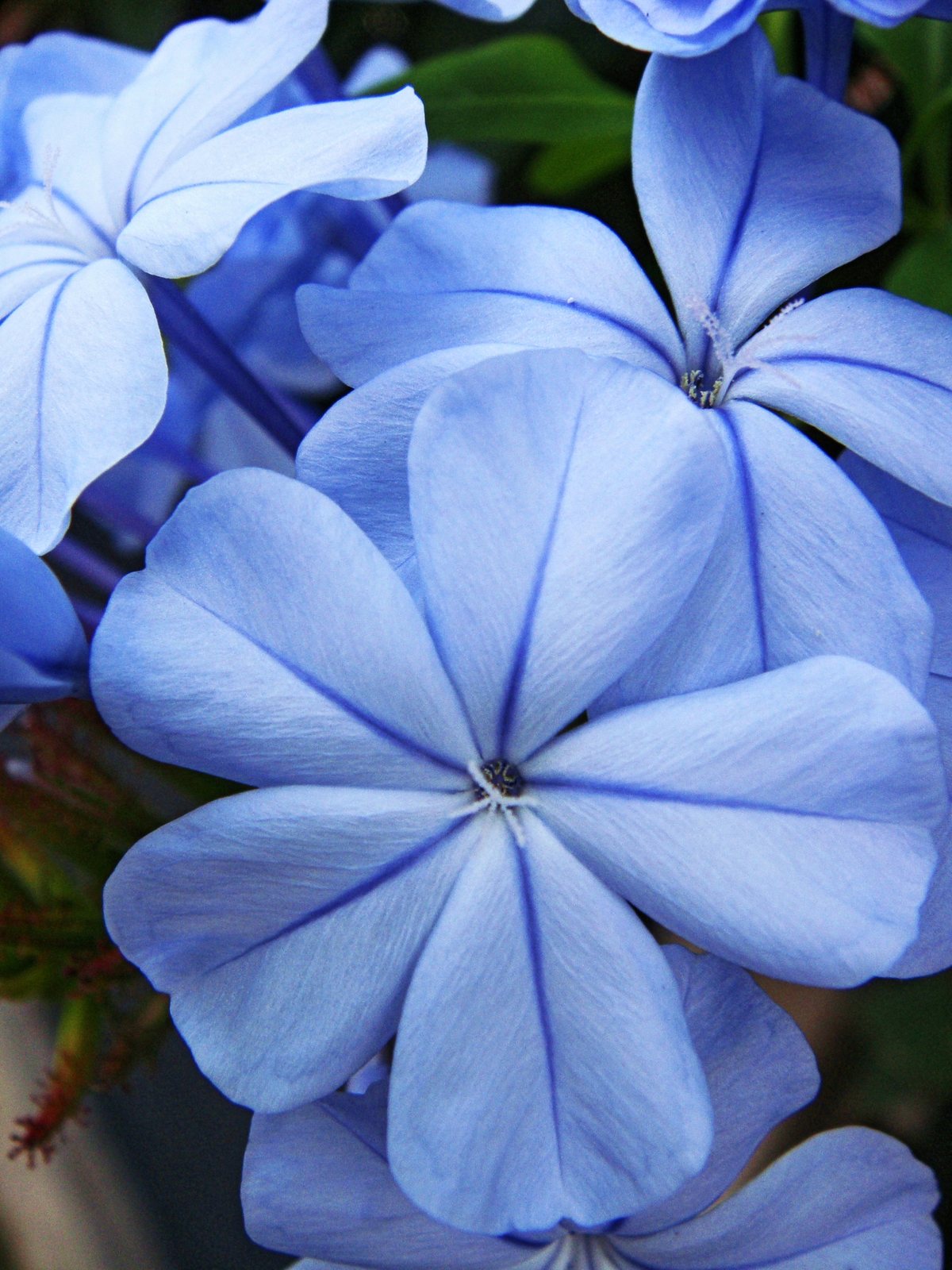
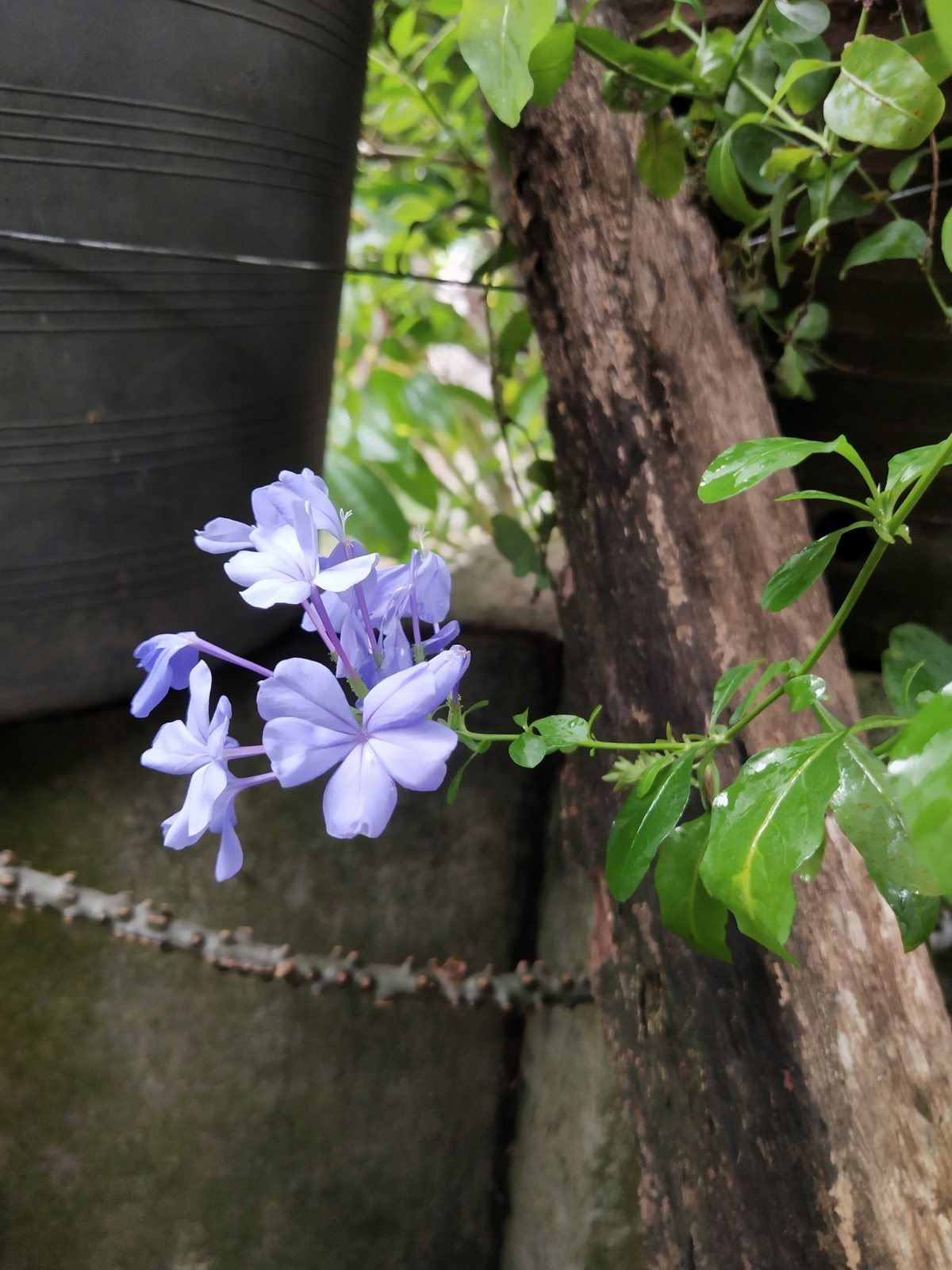
- Pale sky-blue flowers from late spring into autumn; flowering can continue for much of the year in frost-free climates. White-flowered forms are also available.
- Foliage
- Evergreen. Soft green, oblong leaves on slender, arching stems; small ear-like lobes occur at the leaf bases.
- Growth
- Fast in warm conditions.
- Care needed
- Medium
The year at a glance
- Pollinators
- Drought tolerant
- Heat tolerant
- Low allergen
| J | F | M | A | M | J | J | A | S | O | N | D | |
|---|---|---|---|---|---|---|---|---|---|---|---|---|
| Flowers | ||||||||||||
| Plant |
Northern hemisphere months. In Australia, shift them by six.
- Difficulty
- Hard
- Toughness
- Fairly tough
Will it suit your garden?
Pick your zone, country, light and whether you have pets.
Full sun is 6 or more hours of direct sun a day, part shade 3 to 6 hours, shade under 3.
How it grows
Planting day
1.6 ft (0.5 m)
After 1 year
4 ft (1.1 m)
After 2 years
5 ft (1.7 m)
After 3 years
7 ft (2.3 m)
After 5 years
8 ft (2.4 m)
full size
About 3 years to full size.
From a typical nursery size, at an average rate for this kind of plant. A rule of thumb, not a forecast.
Good to know
- Cats and dogs
- Toxic
- Invasive in
- Australia
- In the garden
- Spreads vigorously: plan to contain it.
- Growth rate
- Fast
Care
Jobs through the year
- WaterMay, Sep–Oct, every 14 days
- For established plants in frost-free ground, water if dry; pots and young plants need more frequent checks.
- WaterJun–Aug, every 7 days
- Water established in-ground plants deeply if dry; check pots more often and avoid waterlogging.
- WaterJan–Apr, Nov–Dec, every 21 days
- Check frost-free overwintering pots and water lightly only when the compost is nearly dry.
- FeedApr
- Apply a balanced fertiliser as growth resumes; avoid excessive nitrogen.
- MulchMay
- Mulch the root area without covering the main stems.
- PruneMar–Apr
- Under frost-free conditions, remove dead stems and shorten vigorous growth before moving outdoors.
- PruneJul–Sep
- Lightly shorten wayward stems after a flower flush; avoid repeated shearing.
- ProtectSep–Nov
- Not reliably hardy in zones 6–7 or most UK gardens; move pots to bright, frost-free shelter before frost.
- ProtectMay–Jun
- Gradually acclimatise overwintered plants outdoors after the last frost.
- Water new plants deeply whenever the root zone begins to dry; reduce watering once established.
- Grow container plants in pots with drainage holes and let the compost surface dry slightly between waterings.
- Apply a balanced fertiliser in spring; avoid heavy nitrogen feeding, which encourages leafy growth at the expense of flowers.
- Mulch the root area, keeping mulch clear of the main stems.
- Tie long stems to wires or a trellis if you want wall coverage; they will not attach themselves.
- Move containers under cover before frost, keeping them bright, cool and only lightly watered through winter.
Pruning. In late winter or early spring, after the risk of damaging frost has passed, remove dead stems and shorten vigorous growth to maintain the required size. Lightly trim wayward shoots after a flush of flowers; repeated shearing removes developing flower buds.
Through the year
- Late winter
- Check overwintering container plants for whitefly and spider mites; keep watering restrained.
- Early spring
- Prune established plants once damaging frosts are unlikely, then apply a balanced fertiliser.
- Late spring
- Plant out or move pots outdoors after frost risk has passed, gradually introducing sheltered plants to direct sun.
- Summer
- Water during dry spells and tie new stems into supports before they become tangled.
- Late summer
- Take semi-ripe cuttings from healthy, non-flowering shoots.
- Autumn
- In cold climates, bring pots into bright, frost-free shelter before the first frost; reduce feeding and watering.
In the garden
- Train against a sunny wall or fence for a loose covering of blue flowers.
- Use as an informal flowering hedge where there is room for arching stems.
- Let it spill over a retaining wall, keeping growth clear of paths.
- Grow in a large terrace container with white pelargoniums or silver-leaved plants.
- Combine with lavender and salvias in a sunny, well-drained border for a long blue-and-purple flowering season.
Garden styles it suits: Mediterranean, Coastal, Cottage garden, Modern tropical, Blues and silvers and Pastel border.
Plant it with: Lavender, Rosemary, Agapanthus, Salvias, Pelargoniums and Society garlic.
Wildlife: Flowers provide nectar for butterflies and other visiting insects. The sticky flower calyces can catch small insects and cling to clothing or animal fur.
Problems to watch for
- Whitefly, especially under glass: inspect leaf undersides, use insecticidal soap labelled for the pest, and repeat as directed.
- Spider mites in hot, dry sheltered conditions: look for fine webbing and stippled leaves; rinse foliage and use a labelled mite treatment if needed.
- Yellow leaves with green veins in alkaline soil: check drainage and soil pH; apply chelated iron suitable for alkaline conditions if iron deficiency is confirmed.
- Poor flowering: provide more direct sun, reduce nitrogen feeding and avoid frequent clipping of shoot tips.
Safety
Contains irritating compounds, including plumbagin, particularly in the roots; leaves and stems should also be treated as potentially harmful. Sap can cause skin irritation, and chewing or swallowing plant material can cause mouth irritation and digestive upset in people and pets, including cats and dogs. Horse-specific toxicity information is limited, so do not allow grazing. Wear gloves when pruning and seek medical or veterinary advice after ingestion.
Where it spreads. Can spread by suckers and escape gardens in warm climates. It is regarded as an environmental weed in parts of Queensland and New South Wales, Australia, and is naturalized in Hawaii. Check local guidance before planting near bushland or other natural areas.
Easily confused with
Hardy blue plumbago (Ceratostigma plumbaginoides)
A low, spreading herbaceous perennial rather than a tall, sprawling shrub; it has deeper blue flowers, reddish calyces and leaves that turn red in autumn.
Chinese plumbago (Ceratostigma willmottianum)
A smaller deciduous shrub with vivid blue flowers, reddish stems and strong autumn leaf colour; Cape plumbago has paler, long-tubed flowers and remains evergreen in frost-free conditions.
The name
Cape refers to its South African origin, while auriculata means 'eared', describing the small ear-like lobes at the leaf bases.
Propagation. Take softwood cuttings in spring or semi-ripe cuttings in late summer and root them in a free-draining propagation mix with gentle warmth. Rooted suckers can also be separated from established plants.
Checked against open data
- Accepted botanical name
- Plumbago auriculata
- In the US and Canada
- Introduced in Hawaii, the lower 48 states, Puerto Rico and US Virgin Islands.
- Native range
- Cape Provinces, Free State, KwaZulu-Natal, Mozambique and Northern Provinces.
Sources: GBIF (CC BY 4.0), USDA PLANTS and Trefle (CC BY 4.0). The care and design notes are LandscapeGPT's own.
See it in your own yard.
Upload a photo of your yard and see it redesigned with plants that suit your climate, each checked against your zone.