Caradonna salvia
Salvia nemorosa 'Caradonna'. Family Lamiaceae. Perennial.
Also called Caradonna woodland sage, Caradonna Balkan clary.
Caradonna salvia is a clump-forming perennial with slender violet-blue flower spikes held on distinctive dark purple stems. It brings upright structure to sunny borders, attracts bees and often flowers again after cutting back the first flush.
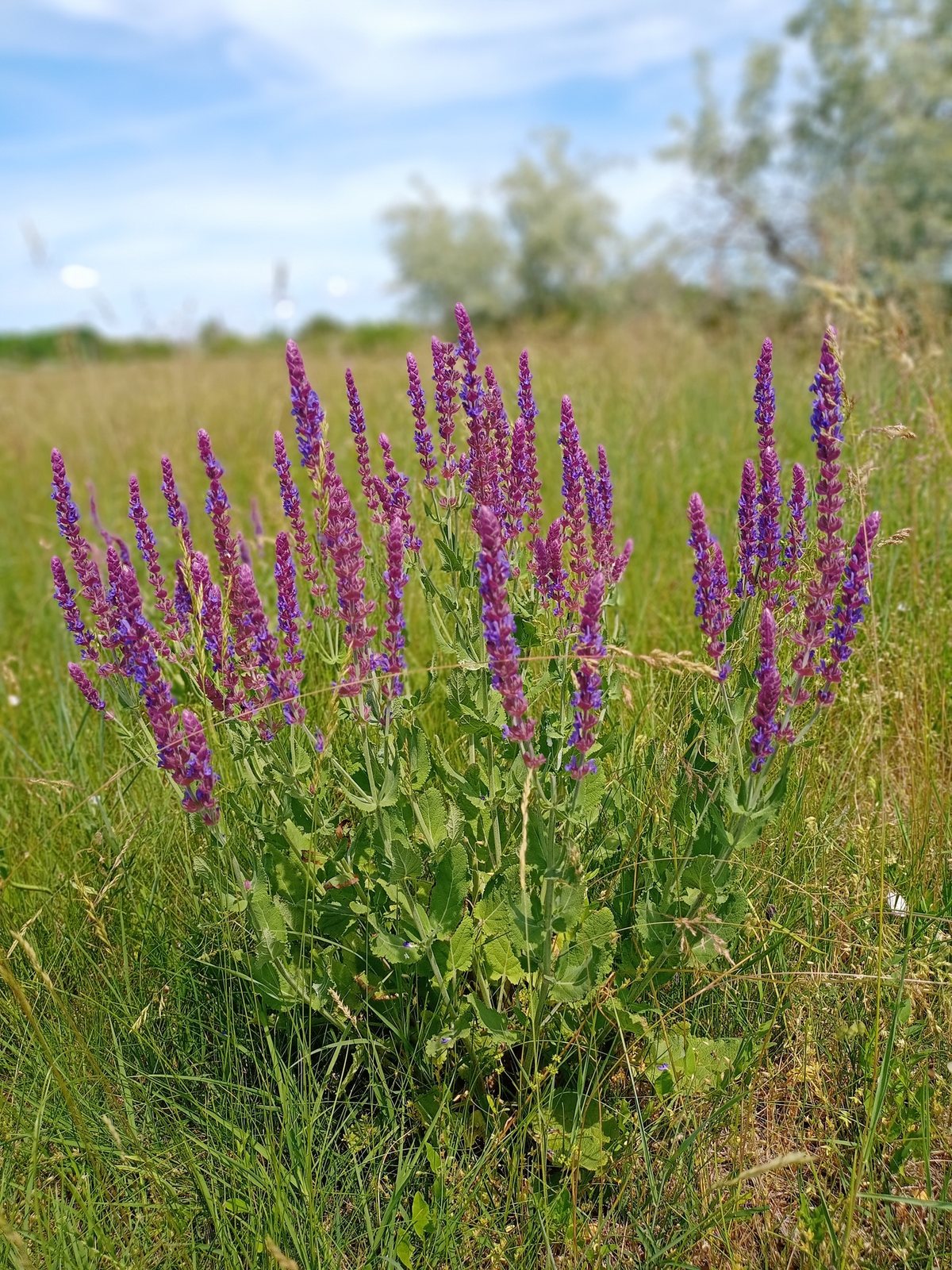
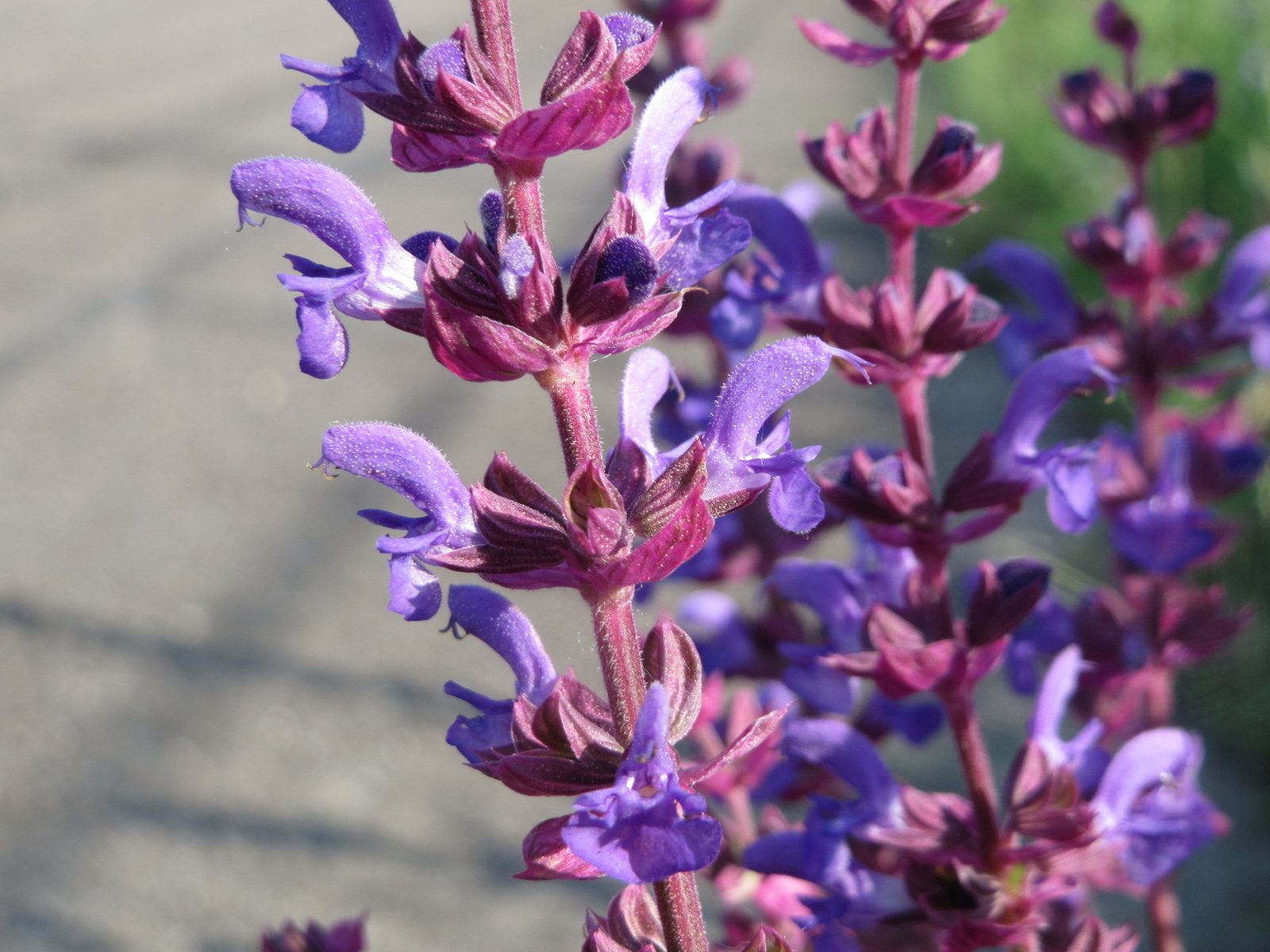
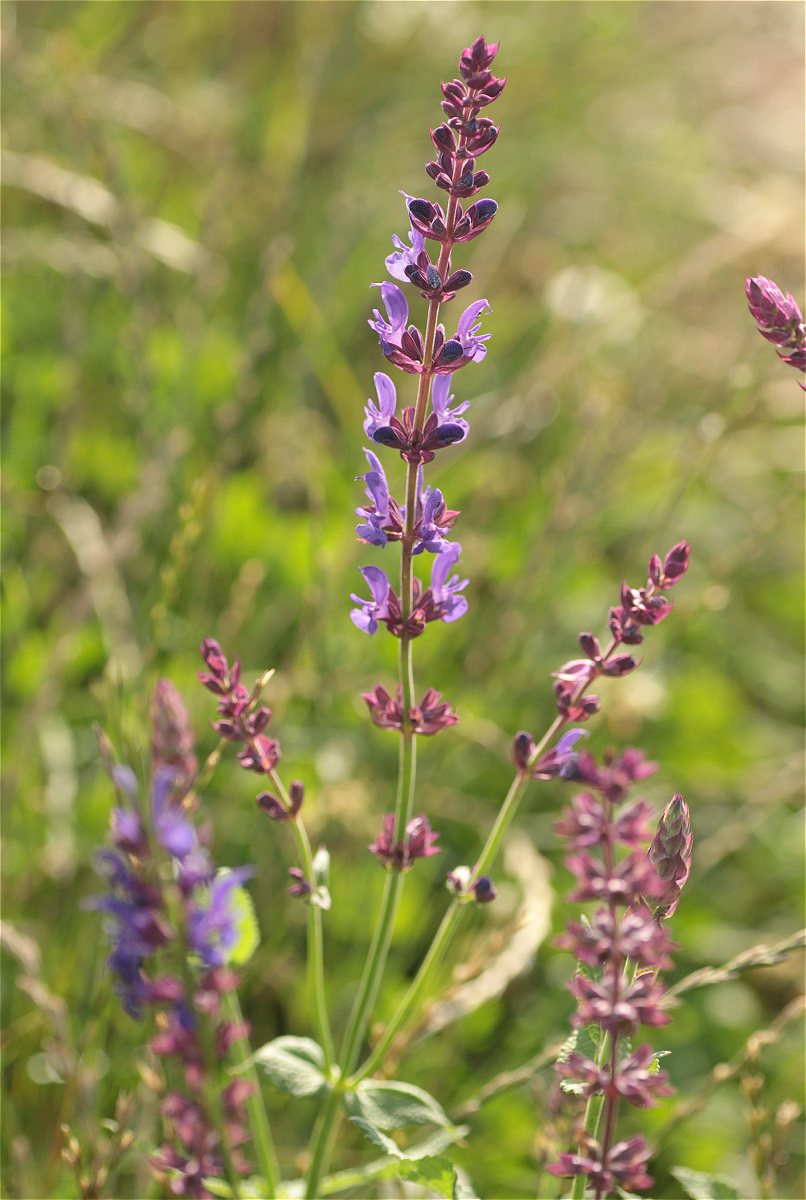
At a glance
- Sun
- Full sun; light shade is tolerated, but flowering is reduced and stems may lean.
- Water
- Water regularly during establishment. Once rooted, water during prolonged dry spells; avoid constantly wet soil.
- Soil
- Well-drained soil, including sandy, chalky or loamy ground; tolerates clay if drainage is good. Average fertility is sufficient.
- Height
- 1.5-2.5 ft (0.45-0.75 m)
- Spread
- 1-1.5 ft (0.3-0.45 m)
- Flowers
- Violet-blue flowers from late spring into summer, with a smaller repeat flush in late summer or early autumn after cutting back.
- Foliage
- Aromatic, grey-green to mid-green leaves with a wrinkled surface and toothed edges; mostly clustered near the base.
- Growth
- Moderate; usually forms a substantial flowering clump within two growing seasons.
- Care needed
- Low
The year at a glance
- Pollinators
- Deer resistant
- Drought tolerant
- Cold hardy
- Low allergen
| J | F | M | A | M | J | J | A | S | O | N | D | |
|---|---|---|---|---|---|---|---|---|---|---|---|---|
| Flowers | ||||||||||||
| Fruit | ||||||||||||
| Plant |
Northern hemisphere months. In Australia, shift them by six.
- Difficulty
- Easy
- Toughness
- Very tough
Will it suit your garden?
Pick your zone, country, light and whether you have pets.
Full sun is 6 or more hours of direct sun a day, part shade 3 to 6 hours, shade under 3.
How it grows
Planting day
1 ft (0.3 m)
After 1 year
1.3 ft (0.4 m)
After 2 years
1.6 ft (0.5 m)
After 3 years
2 ft (0.6 m)
full size
About 3 years to full size.
From a typical nursery size, at an average rate for this kind of plant. A rule of thumb, not a forecast.
Good to know
- Cats and dogs
- Safe
- Growth rate
- Moderate
Care
Jobs through the year
- WaterApr–May, Sep, every 14 days
- Water established clumps only if persistently dry; new plants need regular watering.
- WaterJun–Aug, every 14 days
- Soak established clumps during prolonged dry spells, allowing soil to drain between waterings.
- MulchMar–Apr
- Apply a thin compost dressing on poor soil, keeping the crown uncovered.
- PruneFeb–Mar
- Cut away dead stems before new shoots lengthen.
- DeadheadJun–Jul
- Cut faded main flower stems back to healthy basal leaves to encourage repeat flowering.
- DivideMar–Apr
- Divide congested clumps every three to four years if flowering declines.
- ProtectJan–Feb, Nov–Dec
- Clear sodden leaves from the crown and prevent standing winter water.
- Water deeply after planting and during dry weather in the first growing season.
- Keep the crown out of standing water, especially through winter; improve drainage or use a raised bed on wet sites.
- Apply a thin layer of compost in spring if soil is poor; avoid heavy feeding, which encourages floppy growth.
- Keep mulch clear of the crown rather than burying the basal shoots.
- Divide congested clumps in spring, usually every three to four years if flowering declines.
- Staking is rarely needed in full sun; use a discreet support if stems lean in an exposed position.
Pruning. After the main flower spikes fade, cut the flowering stems back to healthy basal leaves to encourage another flush. Remove remaining dead stems in late winter or early spring before new shoots lengthen.
Through the year
- Late winter
- Cut away dead stems and check that wet leaves or mulch are not smothering the crown.
- Spring
- Plant or divide clumps when the ground is workable, then water them in thoroughly.
- Mid-spring
- Add a light compost dressing if needed and check emerging shoots for slugs.
- Early summer
- Water during prolonged dry spells and enjoy the main flowering display.
- Midsummer
- Cut faded flower stems back to the basal foliage and water if the soil is dry.
- Autumn
- Leave some late flower heads for structure, but remove collapsed or diseased growth.
In the garden
- Repeat small groups along a sunny path to create a steady rhythm of dark stems and violet flowers.
- Plant among ornamental grasses for upright flower spikes against fine, moving foliage.
- Combine with roses and catmint to soften the front of a mixed border without hiding taller plants.
- Use in a sunny gravel garden with yarrow and stonecrop, provided the roots have free drainage.
Garden styles it suits: New perennial (prairie), Cottage garden, Pollinator garden, Dry gravel garden, Blues and silvers and Modern Mediterranean.
Plant it with: Catmint, Roses, Yarrow, Coneflower, Feather reed grass and Autumn stonecrop.
Wildlife: Flowers provide nectar and pollen for bees, including bumblebees, and are also visited by butterflies. Deer and rabbits often leave the aromatic foliage alone, but browsing is still possible.
Problems to watch for
- Crown or root rot in waterlogged soil: improve drainage, keep mulch away from the crown and replace badly rotted plants.
- Slugs and snails eating spring shoots: check young growth regularly and use barriers, hand removal or labelled slug controls where needed.
- Powdery mildew in crowded or stressed plants: improve spacing, water the soil during drought and remove badly affected foliage.
- Floppy stems and weak flowering: move to fuller sun, reduce fertiliser and avoid excessive watering.
Safety
Not known to be toxic to cats, dogs, horses or people. No part is recognised as a significant poisoning hazard, but this ornamental salvia is not a substitute for culinary sage and should not be treated as a food plant.
Easily confused with
East Friesland salvia (Salvia nemorosa 'Ostfriesland')
Usually has a shorter, bushier outline and denser flower spikes; Caradonna has particularly conspicuous dark purple stems and a slimmer, more upright appearance.
Catmint (Nepeta × faassenii)
Forms a softer, spreading mound with grey-green leaves and loose sprays of lavender flowers rather than Caradonna's narrow, upright spikes.
Russian sage (Salvia yangii)
Usually grows taller and woodier, with silvery, deeply divided leaves and airy branched flower sprays rather than broad basal leaves and compact spikes.
The name
Salvia comes from the Latin salvare, meaning to heal or save, while nemorosa means of woods or groves.
Propagation. Divide healthy clumps in spring or take basal cuttings from young shoots. Seedlings may differ from the parent, so use vegetative propagation to retain Caradonna's dark stems and upright habit.
Checked against open data
- Accepted botanical name
- Salvia nemorosa
- In the US and Canada
- Introduced in Canada and the lower 48 states.
- Native range
- Afghanistan, Albania, Austria, Bulgaria, Central European Rus, Czechoslovakia, East European Russia, France, Greece, Hungary, Iran and Italy.
- Measured
- Average height 45 cm.
Sources: GBIF (CC BY 4.0), USDA PLANTS and Trefle (CC BY 4.0). The care and design notes are LandscapeGPT's own.
See it in your own yard.
Upload a photo of your yard and see it redesigned with plants that suit your climate, each checked against your zone.