Caricature plant
Graptophyllum pictum. Family Acanthaceae. Shrub.
Also called Caricature bush, Painted-leaf plant.
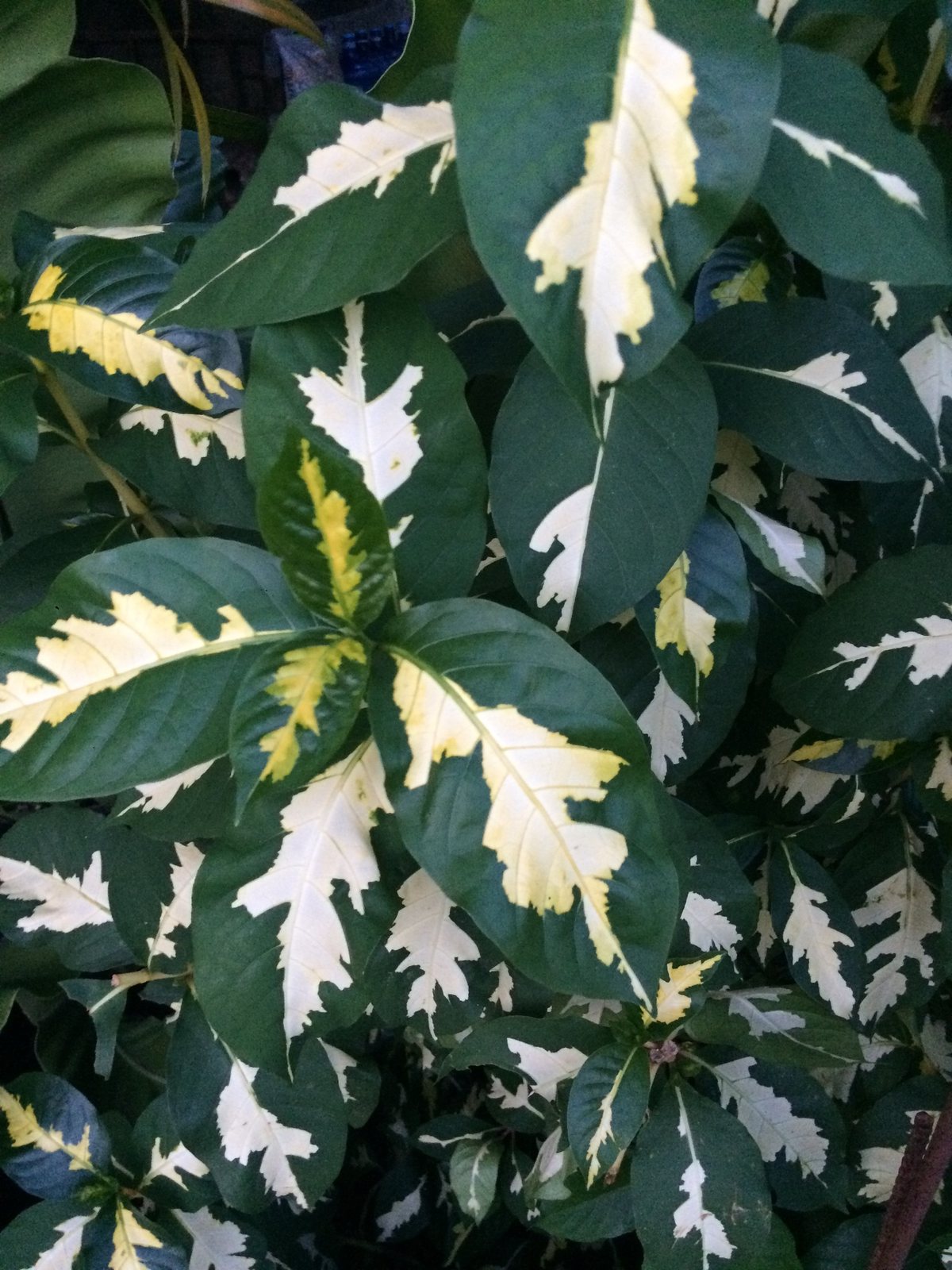
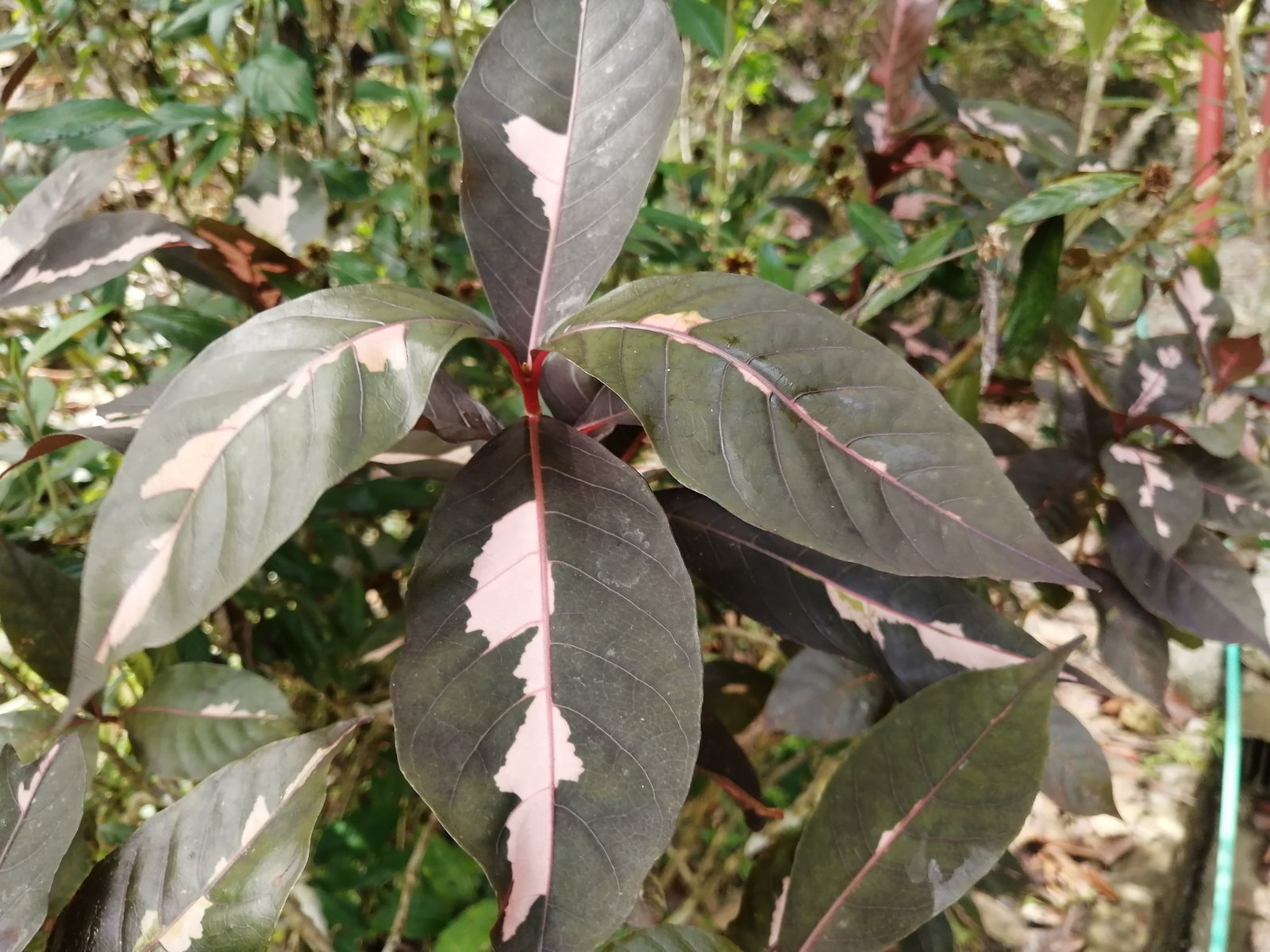
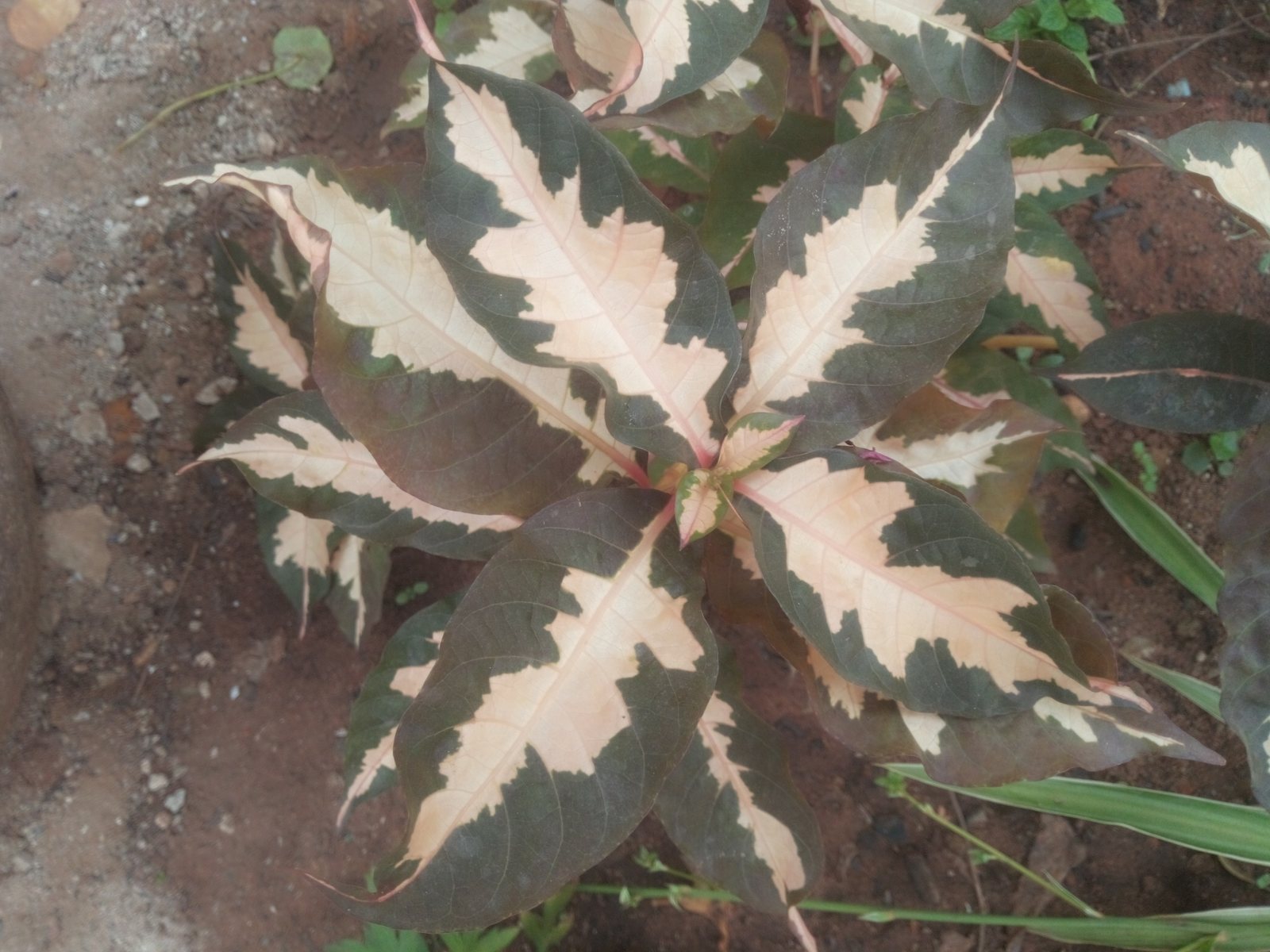
Caricature plant (Graptophyllum pictum) is a tropical evergreen shrub grown for glossy leaves marked with irregular cream, pink or bronze patches, depending on the variety. It makes a colourful hedge or foliage accent in frost-free gardens; in colder climates, grow it in a container and overwinter it indoors.
At a glance
- Sun
- Partial shade or filtered sun; morning sun is useful, but strong afternoon sun can scorch pale leaf markings.
- Water
- Keep the root zone evenly moist during active growth, without leaving it waterlogged. Water less in winter, especially indoors.
- Soil
- Fertile, moisture-retentive soil with good drainage; use a free-draining potting mix in containers.
- Height
- 6-10 ft (1.8-3 m)
- Spread
- 4-6 ft (1.2-1.8 m)
- Flowers
- Clusters of tubular reddish-purple flowers, usually in summer; flowering can be irregular and is less conspicuous than the foliage.
- Foliage
- Evergreen. Large, glossy, oval leaves arranged in opposite pairs. Garden selections commonly have green or bronze backgrounds with irregular cream or pink markings.
- Growth
- Moderate to fast in warm, humid conditions.
- Care needed
- Medium
The year at a glance
- Pollinators
- Heat tolerant
- Low allergen
| J | F | M | A | M | J | J | A | S | O | N | D | |
|---|---|---|---|---|---|---|---|---|---|---|---|---|
| Flowers | ||||||||||||
| Plant |
Northern hemisphere months. In Australia, shift them by six.
- Difficulty
- Moderate
- Toughness
- Needs looking after
Will it suit your garden?
Pick your zone, country, light and whether you have pets.
Full sun is 6 or more hours of direct sun a day, part shade 3 to 6 hours, shade under 3.
How it grows
Planting day
1.6 ft (0.5 m)
After 1 year
3 ft (0.98 m)
After 2 years
5 ft (1.5 m)
After 3 years
6 ft (1.9 m)
After 5 years
8 ft (2.4 m)
full size
About 4 years to full size.
From a typical nursery size, at an average rate for this kind of plant. A rule of thumb, not a forecast.
Good to know
- Cats and dogs
- Safe
- Growth rate
- Fast
Care
Jobs through the year
- WaterJun–Aug, every 3 days
- Grow in a movable pot here; water when the surface starts drying, then drain freely.
- WaterMar–May, Sep–Oct, every 7 days
- Check compost and keep roots evenly moist without leaving standing water.
- WaterJan–Feb, Nov–Dec, every 10 days
- Check indoor pots; reduce watering but do not dry the whole root ball.
- FeedApr–Aug, every 30 days
- Apply balanced fertiliser during active growth, following the label.
- PruneMar–Apr
- Shorten leggy stems as active growth resumes.
- PruneMay–Jul
- Pinch young tips if a bushier shape is wanted; frequent clipping reduces flowers.
- ProtectJan–May, Sep–Dec
- Keep indoors in bright warmth before nights fall below 10°C; inspect for mites and scale.
- ProtectJun
- Acclimatise outdoor pots gradually in filtered light and shelter from drying winds.
- Water when the soil surface begins to dry; do not let the whole root ball dry out.
- Apply a balanced fertiliser at the label rate during spring and summer.
- Mulch garden plants to conserve moisture, keeping mulch clear of the stems.
- Shelter from drying winds and strong afternoon sun.
- Bring containers indoors before frost, preferably before nights regularly fall below 50°F (10°C), and provide bright light.
Pruning. Pinch young shoot tips during spring and summer to encourage branching. Shorten leggy stems in spring as active growth resumes, and remove frost-damaged growth only after the risk of further frost has passed.
Through the year
- Spring
- Prune leggy growth and repot container plants if roots fill the pot.
- Late spring
- Move overwintered plants outside once nights are reliably warm, gradually increasing their light exposure.
- Summer
- Water regularly, feed during active growth and pinch shoots to maintain a bushy shape.
- Summer
- Take stem cuttings from healthy, non-flowering shoots.
- Autumn
- In frost-prone areas, inspect plants for pests and bring containers indoors before cold nights.
- Winter
- Keep indoor plants warm and bright; reduce watering and stop feeding if growth slows.
In the garden
- Use as a loose, colourful hedge in a sheltered, frost-free garden.
- Plant behind lower foliage plants to create a layered tropical border.
- Grow in a large patio container where the patterned leaves can be seen closely.
- Pair cream-marked forms with dark green foliage to brighten a lightly shaded courtyard.
Garden styles it suits: Tropical, Modern tropical, Modern courtyard, Luxury resort, Caribbean and Balinese.
Plant it with: Cordyline, Shell ginger, Elephant's ear, Coleus, Bird's-nest fern and Bromeliads.
Wildlife: The tubular flowers can provide nectar for visiting insects and, where present, hummingbirds. Plants kept clipped or grown indoors may flower little.
Problems to watch for
- Spider mites in dry indoor air: rinse leaf undersides regularly and treat persistent infestations with a labelled insecticidal soap.
- Scale insects or mealybugs: inspect stems and leaf undersides, remove small infestations by hand and use an appropriate labelled treatment if needed.
- Root rot in soggy soil: improve drainage, empty saucers and allow the surface to begin drying between waterings.
- Leaf scorch or cold damage: provide afternoon shade and move container plants into warm shelter before cold weather.
Safety
Not known to be toxic to people, cats, dogs or horses, but reliable species-specific safety information is limited. No particular poisonous part is established; do not treat the leaves, stems or flowers as edible, and discourage chewing.
Easily confused with
Croton (Codiaeum variegatum)
Croton has alternate rather than opposite leaves, often with stronger yellow, orange or red colouring and more varied leaf shapes.
Polka dot plant (Hypoestes phyllostachya)
Polka dot plant is much smaller and softer-stemmed, with small, thin leaves covered in numerous spots rather than the large, glossy, irregularly patched leaves of caricature plant.
The name
Graptophyllum means 'written leaf' and pictum means 'painted', while 'caricature plant' refers to leaf markings that can suggest a face or figure.
Propagation. Take softwood or semi-ripe stem cuttings in spring or summer. Remove the lower leaves and root in a moist, airy propagation mix with warmth, bright indirect light and high humidity; cuttings preserve the parent's leaf colouring.
Checked against open data
- Accepted botanical name
- Graptophyllum pictum
- In the US and Canada
- Introduced in the lower 48 states and Pacific Basin.
- Native range
- New Guinea.
Sources: GBIF (CC BY 4.0), USDA PLANTS and Trefle (CC BY 4.0). The care and design notes are LandscapeGPT's own.
See it in your own yard.
Upload a photo of your yard and see it redesigned with plants that suit your climate, each checked against your zone.