Carissa holly
Ilex cornuta 'Carissa'. Family Aquifoliaceae. Shrub.
Also called Carissa Chinese holly.
Carissa holly is a compact, broadleaf evergreen shrub grown for its dense shape and glossy, dark green leaves. It makes a dependable low hedge or foundation shrub in warm-temperate gardens and normally produces little or no fruit.
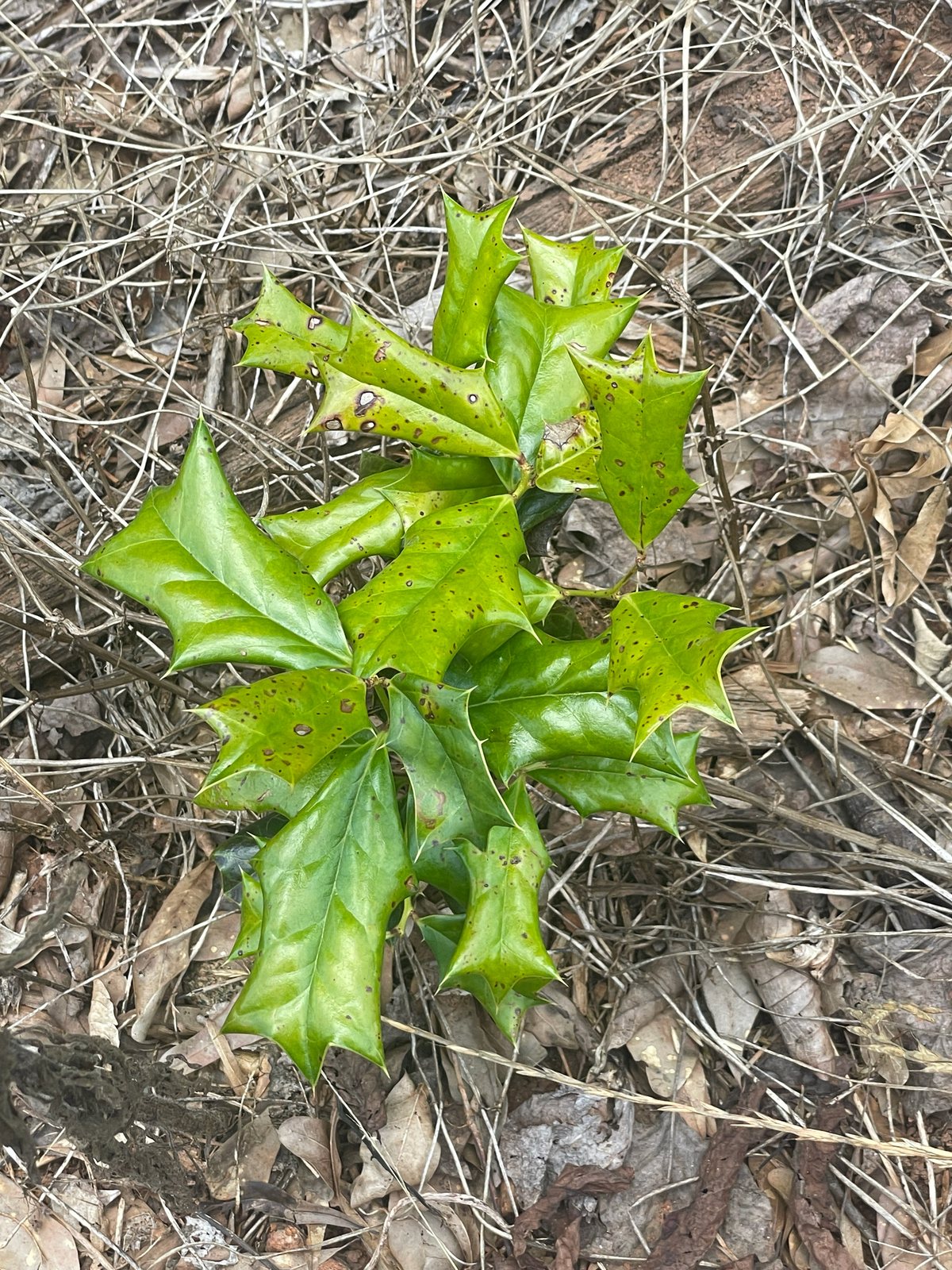
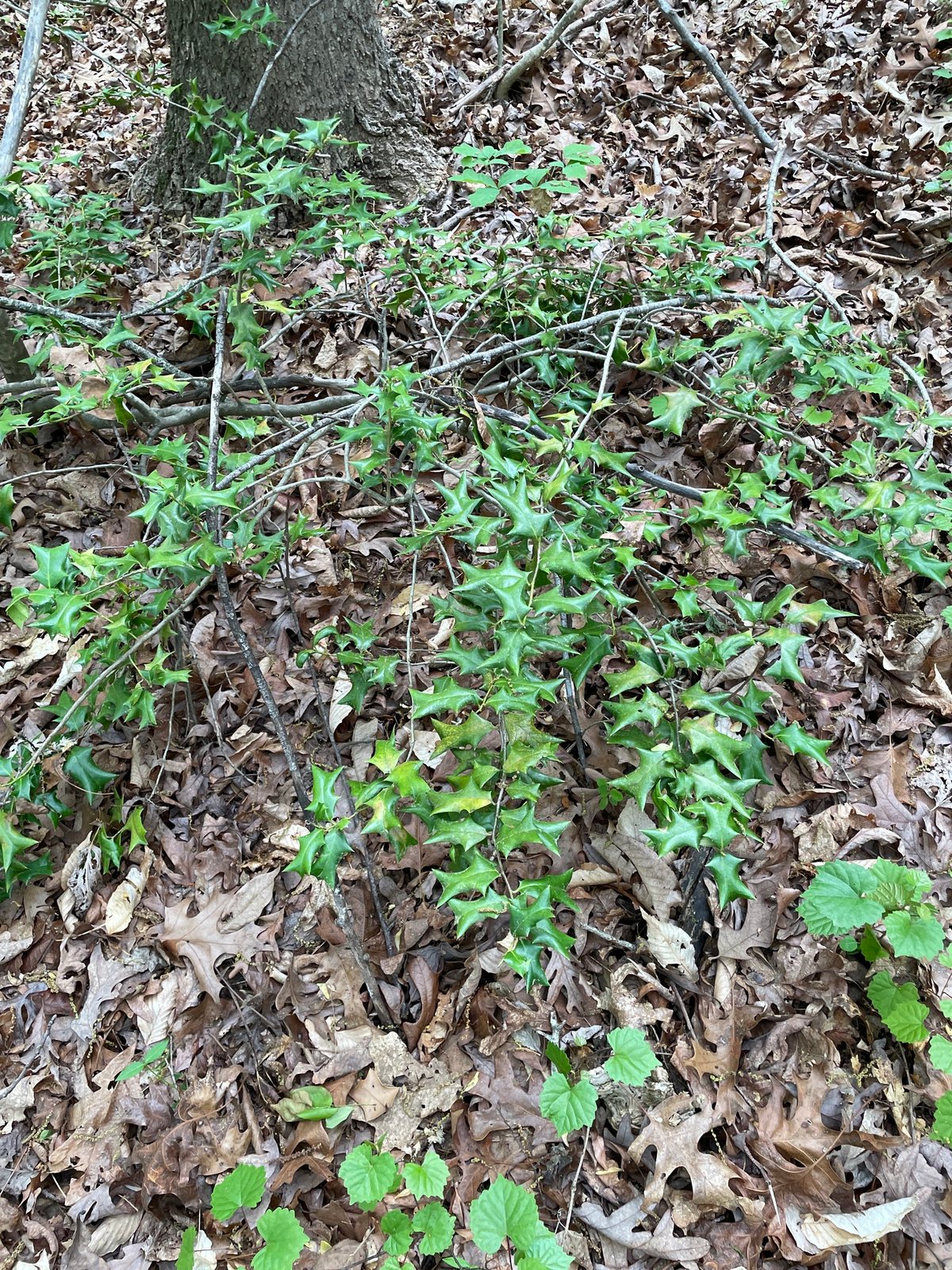
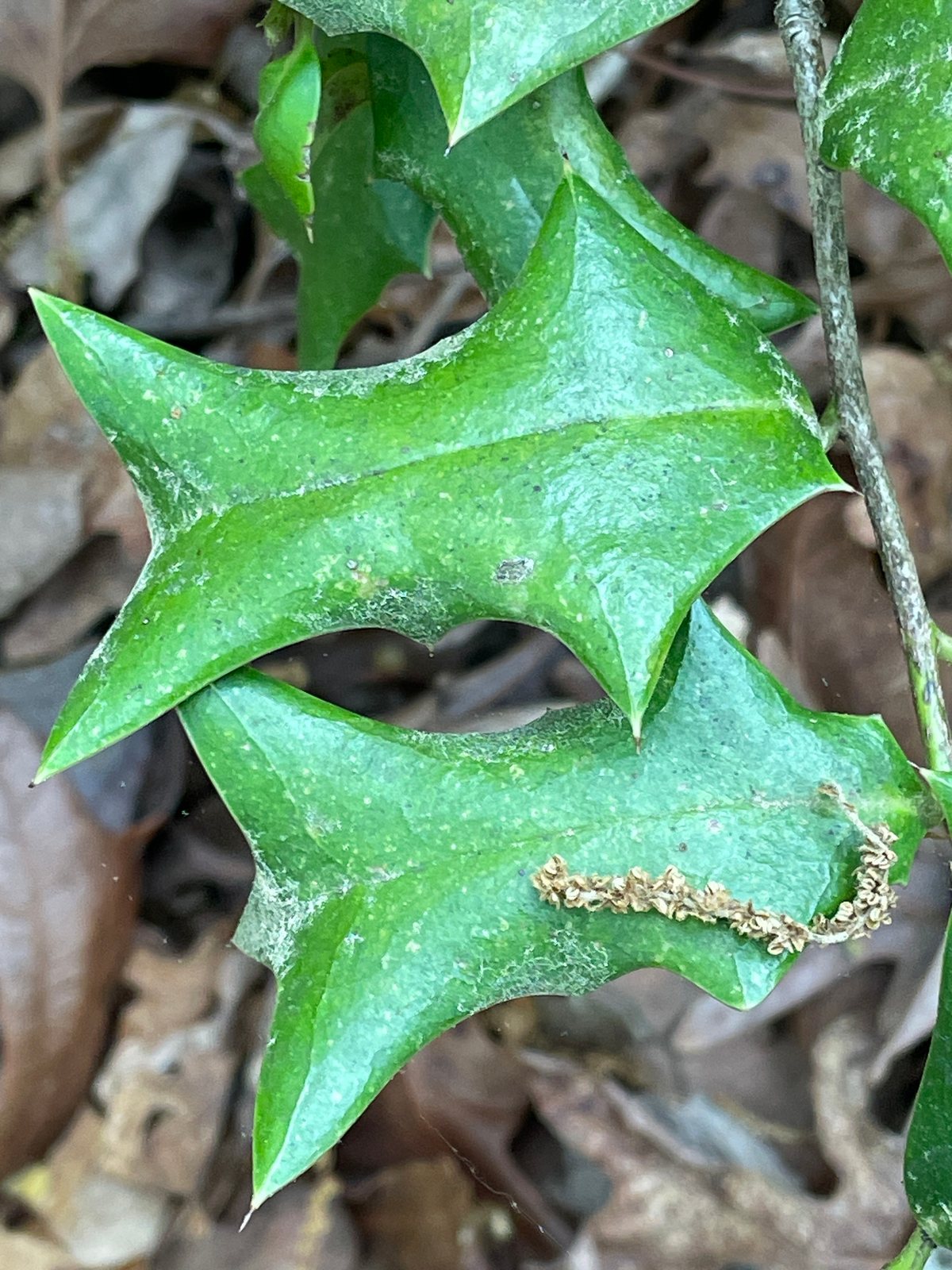
At a glance
- Sun
- Full sun to partial shade; growth is densest with at least 4-6 hours of direct sun.
- Water
- Water regularly while establishing; once established, water during prolonged dry spells. Avoid constantly wet soil.
- Soil
- Well-drained, slightly acidic soil; tolerates clay if drainage is adequate. Alkaline soil can cause yellow leaves.
- Height
- 3-4 ft (0.9-1.2 m)
- Spread
- 4-6 ft (1.2-1.8 m)
- Flowers
- Small, inconspicuous white flowers in spring; flowering may be sparse.
- Foliage
- Evergreen. Thick, glossy, dark green leaves, usually with one sharp spine at the tip rather than the several prominent spines typical of Chinese holly.
- Growth
- Slow to moderate.
- Care needed
- Low
The year at a glance
- Pollinators
- Deer resistant
- Drought tolerant
- Heat tolerant
- Wildlife
- Low allergen
| J | F | M | A | M | J | J | A | S | O | N | D | |
|---|---|---|---|---|---|---|---|---|---|---|---|---|
| Flowers | ||||||||||||
| Plant |
Northern hemisphere months. In Australia, shift them by six.
- Difficulty
- Moderate
- Toughness
- Fairly tough
Will it suit your garden?
Pick your zone, country, light and whether you have pets.
Full sun is 6 or more hours of direct sun a day, part shade 3 to 6 hours, shade under 3.
How it grows
Planting day
1.6 ft (0.5 m)
After 1 year
1.9 ft (0.58 m)
After 2 years
2.2 ft (0.67 m)
After 3 years
2.5 ft (0.75 m)
After 5 years
3 ft (0.92 m)
About 7 years to full size.
From a typical nursery size, at an average rate for this kind of plant. A rule of thumb, not a forecast.
Good to know
- Cats and dogs
- Toxic
- Invasive in
- the US
- Growth rate
- Slow
Care
Jobs through the year
- WaterMar–May, Sep–Oct, every 21 days
- Water established shrubs deeply only during prolonged dry spells; young plants need more frequent watering.
- WaterJun–Aug, every 14 days
- Water deeply if the root zone is dry and rain is insufficient; avoid constantly wet soil.
- WaterJan–Feb, Nov–Dec, every 30 days
- During prolonged winter drought, water only when soil is dry and unfrozen.
- MulchMar–Apr
- Maintain 5–8 cm of organic mulch, keeping it clear of stems.
- FeedMar–Apr
- Feed lightly only if growth is weak or a soil test identifies a deficiency.
- PruneFeb–Mar
- Remove dead or crossing branches and shorten stray shoots before new growth.
- PruneMay–Jun
- If grown as a hedge, trim lightly after the spring flush.
- ProtectJan–Feb, Nov–Dec
- Shelter from drying winds; not reliably hardy in zone 6, so use a hardier alternative there.
- Water deeply through the first growing season, allowing the soil surface to begin drying between waterings.
- Spread 2-3 in (5-8 cm) of organic mulch over the root area, keeping it clear of the stems.
- Plant with the root flare at soil level; use a raised bed where drainage is poor.
- Feed lightly in spring only if growth is weak or a soil test indicates a deficiency.
- Allow space for its mature width rather than relying on frequent shearing to keep it small.
Pruning. Prune in late winter or early spring before new growth, removing dead or crossing branches and shortening stray shoots individually. For a clipped hedge, trim lightly after the spring flush and keep the base wider than the top.
Through the year
- Late winter
- Remove dead or damaged branches and make any necessary shaping cuts before new growth.
- Spring
- Plant where drainage is good, water thoroughly, and apply mulch.
- Late spring
- Lightly trim hedges after the first flush of growth, if needed.
- Summer
- Check newly planted shrubs during dry weather and water deeply when the root area begins to dry.
- Autumn
- Plant in mild climates while the soil is still warm; avoid heavy feeding or pruning.
- Winter
- During frost-free dry spells, water young plants if the soil is dry, especially in exposed positions.
In the garden
- Plant as a low evergreen hedge along a boundary, allowing room for its natural width.
- Use beneath windows as a compact foundation shrub, set far enough from walls to avoid repeated cutting.
- Repeat rounded plants through a mixed border to provide structure among flowering perennials.
- Combine with fine-textured grasses and broad-leaved perennials for foliage contrast.
- Use as a low backdrop to seasonal flowers in a formal or courtyard garden.
Garden styles it suits: Formal, Traditional, Southern, Low-maintenance, Green on green and Winter interest.
Plant it with: Azalea, Camellia, Japanese forest grass, Lenten rose, Lilyturf and Oakleaf hydrangea.
Wildlife: Flowers, when present, attract bees and other small insects. Dense foliage offers cover for small birds, but this cultivar normally provides little or no fruit for them.
Problems to watch for
- Root rot in waterlogged soil: improve drainage before planting and avoid frequent watering of already damp soil.
- Scale insects: inspect stems and leaf undersides; treat affected plants with a horticultural oil labelled for holly, following temperature restrictions.
- Spider mites in hot, dry conditions: look for fine stippling and webbing, rinse foliage thoroughly, and avoid broad-spectrum insecticides that kill predatory mites.
- Yellow leaves with green veins in alkaline soil: test soil pH, correct unsuitable conditions where practical, and use chelated iron as a temporary treatment if iron deficiency is confirmed.
Safety
Holly is considered toxic to people, cats, dogs and horses if eaten, particularly the berries; leaves should not be eaten either. Ingestion can cause vomiting, diarrhoea and abdominal pain, with greater risk from larger amounts. Carissa normally bears little or no fruit, but it should not be treated as an edible plant; its leaf tips are also sharp.
Where it spreads. Chinese holly (Ilex cornuta) has escaped cultivation and is listed as invasive in parts of the southeastern United States, including North Carolina. Carissa normally produces little or no fruit, so its seed-spread risk is much lower than that of fruiting forms.
Easily confused with
Chinese holly (Ilex cornuta)
Typical Chinese holly grows much larger and usually has several conspicuous, horn-like leaf spines; Carissa is compact and generally has just one terminal spine.
Dwarf Burford holly (Ilex cornuta 'Burfordii Nana')
It also has glossy leaves with a terminal spine, but usually becomes taller and commonly carries red berries; Carissa stays lower and normally has little or no fruit.
Japanese holly (Ilex crenata)
Japanese holly has smaller, finely scalloped leaves without Carissa's sharp terminal spine, and fruiting plants bear black rather than red berries.
The name
Ilex is the Latin name for holm oak, applied to hollies because of their similar evergreen leaves, while cornuta means horned and refers to the leaf spines.
Propagation. Take semi-ripe cuttings in late summer and root them in a moist, free-draining medium with high humidity. Rooting can be slow; seed does not reliably reproduce the cultivar.
Checked against open data
- Accepted botanical name
- Ilex cornuta
- In the US and Canada
- Introduced in the lower 48 states.
- Native range
- China North-Central, China South-Central, China Southeast, Hainan and Korea.
- Measured
- Soil pH 4.5 to 5.5. Average height 305 cm.
Sources: GBIF (CC BY 4.0), USDA PLANTS and Trefle (CC BY 4.0). The care and design notes are LandscapeGPT's own.
See it in your own yard.
Upload a photo of your yard and see it redesigned with plants that suit your climate, each checked against your zone.