Carolina silverbell
Halesia carolina. Family Styracaceae. Tree.
Also called Silverbell, Little silverbell, Snowdrop tree.
Carolina silverbell (Halesia carolina) is a deciduous tree native to the southeastern United States, grown for white, bell-shaped flowers that hang beneath its branches in spring. It makes a graceful small shade tree for a sheltered garden with moist, acidic soil, but struggles in dry ground or alkaline soil.
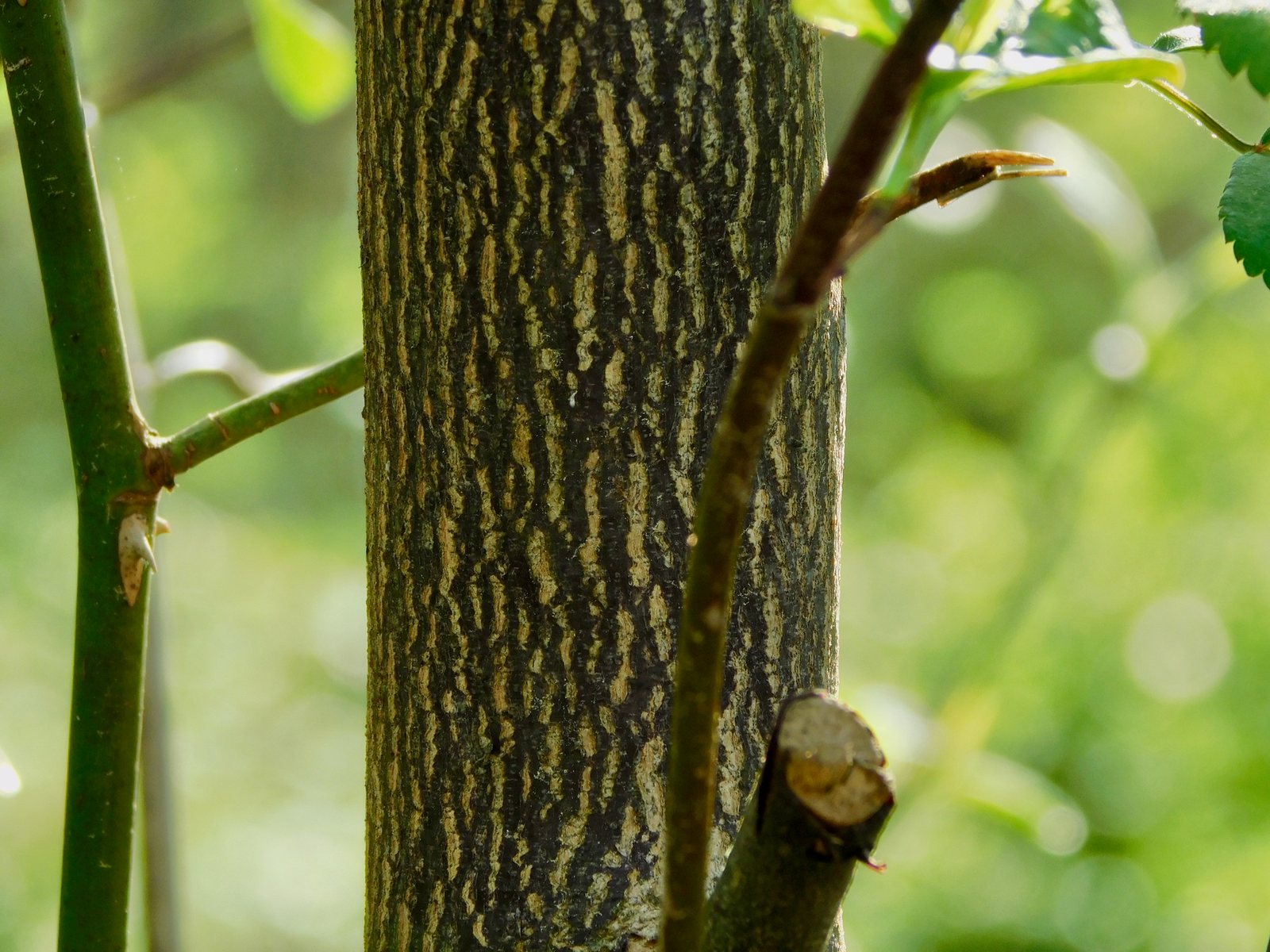
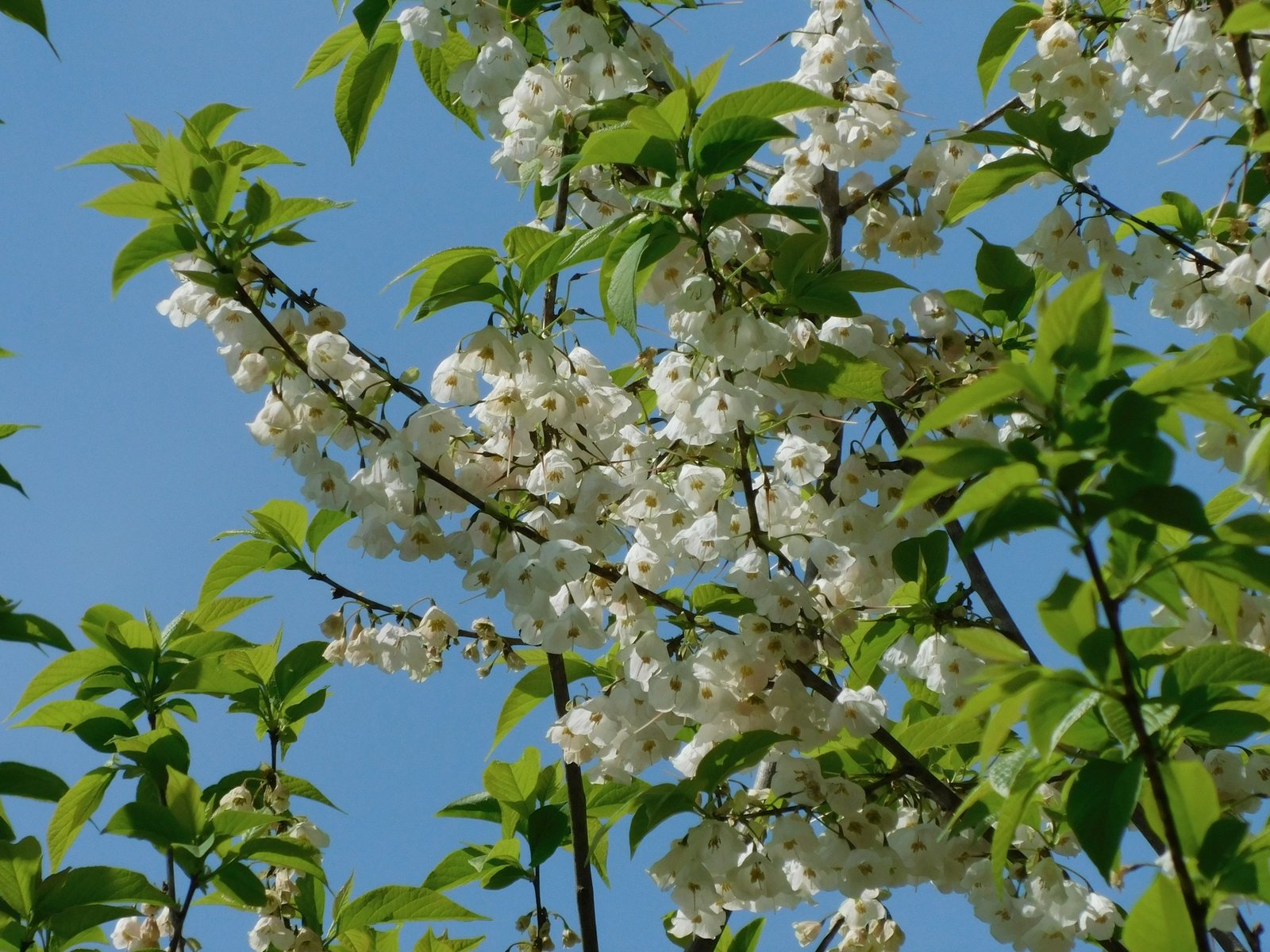
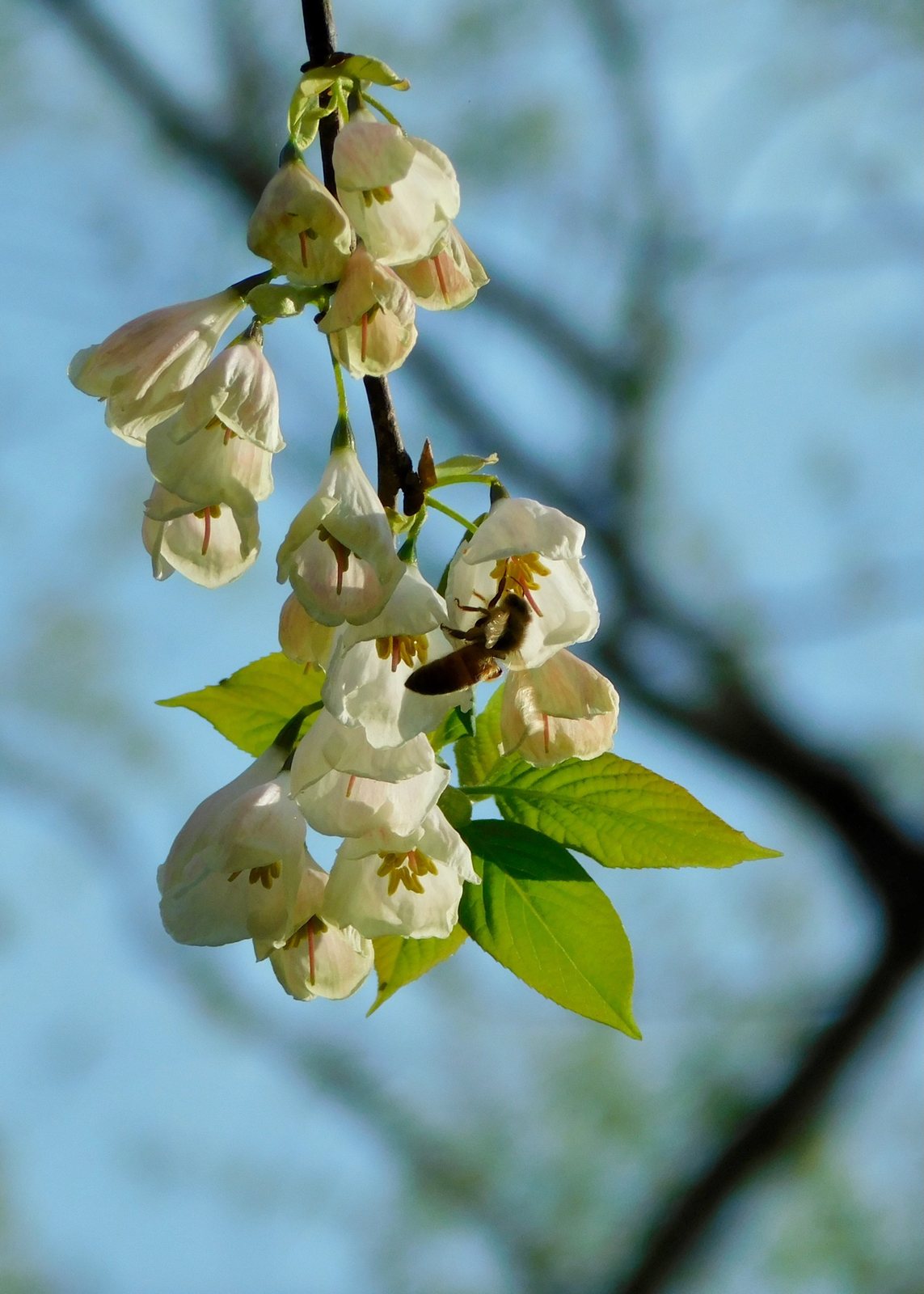
At a glance
- Sun
- Full sun to partial shade; afternoon shade is helpful in hot climates.
- Water
- Keep the root zone evenly moist, especially during establishment and summer drought; avoid waterlogged soil.
- Soil
- Humus-rich, acidic, well-drained soil; tolerates loam and well-structured clay but dislikes chalk and compacted ground.
- Height
- 20-40 ft (6-12 m)
- Spread
- 15-30 ft (4.5-9 m)
- Flowers
- Mid- to late spring; white, dangling bells appear just before or with the emerging leaves.
- Foliage
- Oval, finely toothed green leaves turn yellow in autumn, though the colour can be brief.
- Growth
- Moderate
- Care needed
- Low
The year at a glance
- Pollinators
- Cold hardy
- Wildlife
- Low allergen
| J | F | M | A | M | J | J | A | S | O | N | D | |
|---|---|---|---|---|---|---|---|---|---|---|---|---|
| Flowers | ||||||||||||
| Fruit | ||||||||||||
| Plant |
Northern hemisphere months. In Australia, shift them by six.
- Difficulty
- Easy
- Toughness
- Fairly tough
Will it suit your garden?
Pick your zone, country, light and whether you have pets.
Full sun is 6 or more hours of direct sun a day, part shade 3 to 6 hours, shade under 3.
How it grows
Planting day
7 ft (2 m)
After 1 year
8 ft (2.3 m)
After 2 years
9 ft (2.7 m)
After 3 years
10 ft (3.1 m)
After 5 years
12 ft (3.7 m)
About 20 years to full size.
From a typical nursery size, at an average rate for this kind of plant. A rule of thumb, not a forecast.
Good to know
- Cats and dogs
- Safe
- Native to
- the US
- Growth rate
- Moderate
Care
Jobs through the year
- WaterApr–May, Sep–Oct, every 14 days
- Check established trees and soak during dry spells; water young trees more frequently for three years.
- WaterJun–Aug, every 7 days
- Water deeply during dry weather, keeping soil moist but not saturated.
- MulchMar–Apr
- Refresh a 5–8 cm layer of leaf mould or bark, keeping the trunk clear.
- PruneMay–Jun
- After flowering, remove damaged or crossing branches and shape young trees lightly.
- Plant while dormant, keeping the root flare at soil level; choose the site carefully because established trees dislike transplanting.
- Water deeply during dry spells for the first two or three growing seasons, and during prolonged drought thereafter.
- Spread 2-3 in (5-8 cm) of leaf mould or composted bark over the root zone, keeping it clear of the trunk.
- Avoid digging or compacting soil beneath the canopy.
- Feed only if growth is weak and a soil test indicates a deficiency; do not routinely apply lime.
Pruning. Prune lightly just after flowering to remove dead, damaged or crossing branches. Establish either a single trunk or a small group of main stems while young, rather than cutting large limbs later.
Through the year
- Autumn
- Plant in workable, moist soil in milder regions and water thoroughly.
- Early spring
- Plant in colder regions once the ground is workable; refresh mulch around established trees.
- Spring
- Check emerging leaves for yellowing between green veins; test soil pH if this persists.
- Late spring
- After flowering, remove damaged or crossing growth and make any minor shaping cuts.
- Summer
- Water deeply during dry weather, especially while the tree is young.
- Late autumn
- Check that mulch is not touching the trunk and that the planting area drains freely.
In the garden
- Use as a specimen beside a path or terrace where the hanging flowers can be seen from below.
- Plant at a woodland edge with rhododendrons and ferns in moist, acidic soil.
- Set against dark evergreen shrubs to make the white spring flowers stand out.
- Grow as a multi-stemmed tree above a loose carpet of woodland perennials.
Garden styles it suits: Woodland, English country, Traditional, Southern, White garden and Romantic rose garden.
Plant it with: Rhododendrons, Azaleas, Japanese pieris, Witch hazel, Christmas fern and Foamflower.
Wildlife: Spring flowers provide nectar and pollen for bees. The canopy offers shelter and nesting sites for birds.
Problems to watch for
- Yellow leaves with green veins usually indicate iron chlorosis in alkaline soil: test the soil, avoid lime, and use a soil-test-based treatment; severely unsuitable sites are better replanted with a lime-tolerant tree.
- Leaf scorch and premature leaf drop can follow drought or hot, exposed conditions: water deeply, mulch and provide afternoon shelter.
- Root decline can develop in waterlogged or compacted soil: improve drainage before planting and keep vehicles and heavy foot traffic off the root zone.
- Late frost can damage flowers and tender new leaves: choose a sheltered site away from frost pockets; established trees usually recover without treatment.
Safety
Not known to be toxic to people, cats, dogs or horses. Species-specific poisoning information is limited, particularly for horses; the leaves, bark and fruits are not intended as food.
Easily confused with
Two-winged silverbell (Halesia diptera)
Its fruits have two broad wings, whereas Carolina silverbell fruits normally have four wings.
Japanese snowbell (Styrax japonicus)
Usually flowers later, after the leaves expand, and produces small, unwinged, olive-shaped fruits rather than four-winged fruits.
The name
Halesia honours the English clergyman and naturalist Stephen Hales, while carolina refers to the Carolinas and silverbell describes the pale, hanging flowers.
Propagation. Raise from seed, allowing for complex dormancy and germination that may take two years or longer. Softwood cuttings taken in early summer can root under mist, but success is variable; named forms are usually propagated professionally by cuttings or grafting.
Checked against open data
- Accepted botanical name
- Halesia carolina
- In the US and Canada
- Native in the lower 48 states.
- Native range
- Alabama, Arkansas, Florida, Georgia, Illinois, Indiana, Kentucky, Louisiana, Mississippi, North Carolina, Oklahoma and South Carolina.
- Measured
- Soil pH 4.7 to 7. Average height 1000 cm.
Sources: GBIF (CC BY 4.0), USDA PLANTS and Trefle (CC BY 4.0). The care and design notes are LandscapeGPT's own.
See it in your own yard.
Upload a photo of your yard and see it redesigned with plants that suit your climate, each checked against your zone.