Carthusian pink
Dianthus carthusianorum. Family Caryophyllaceae. Perennial.
Also called Carthusian dianthus.
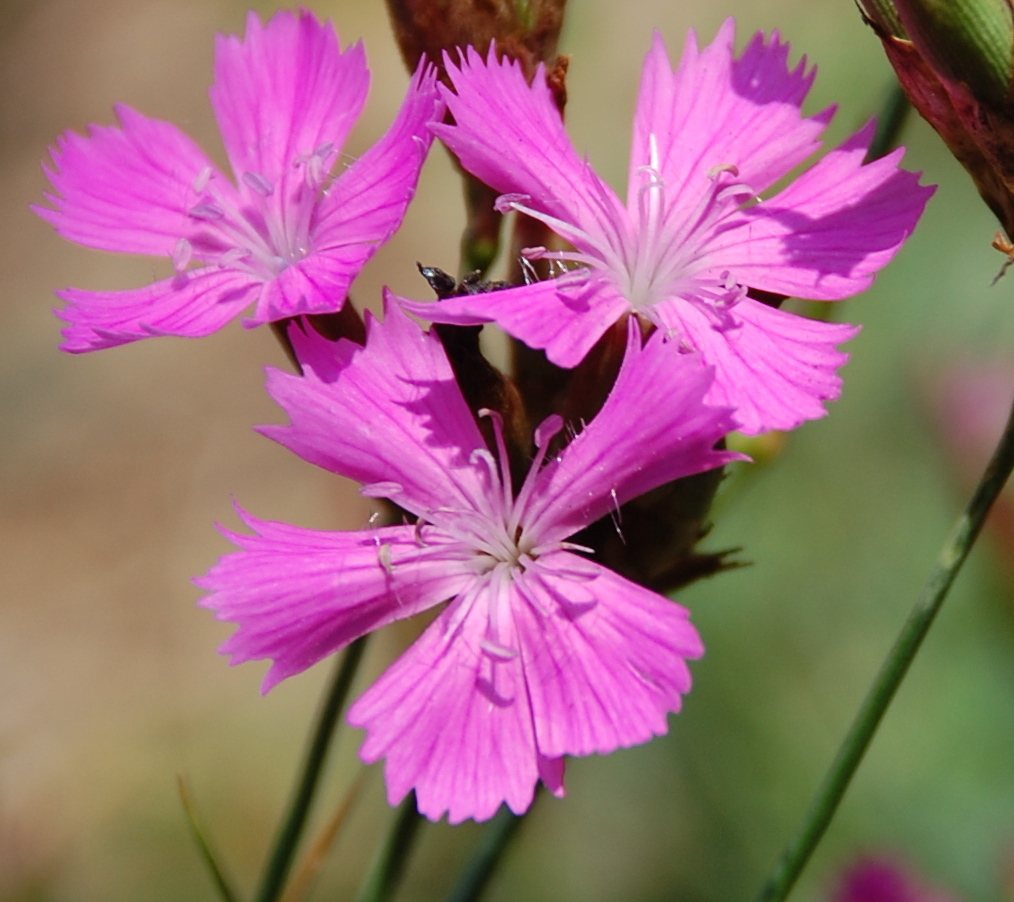
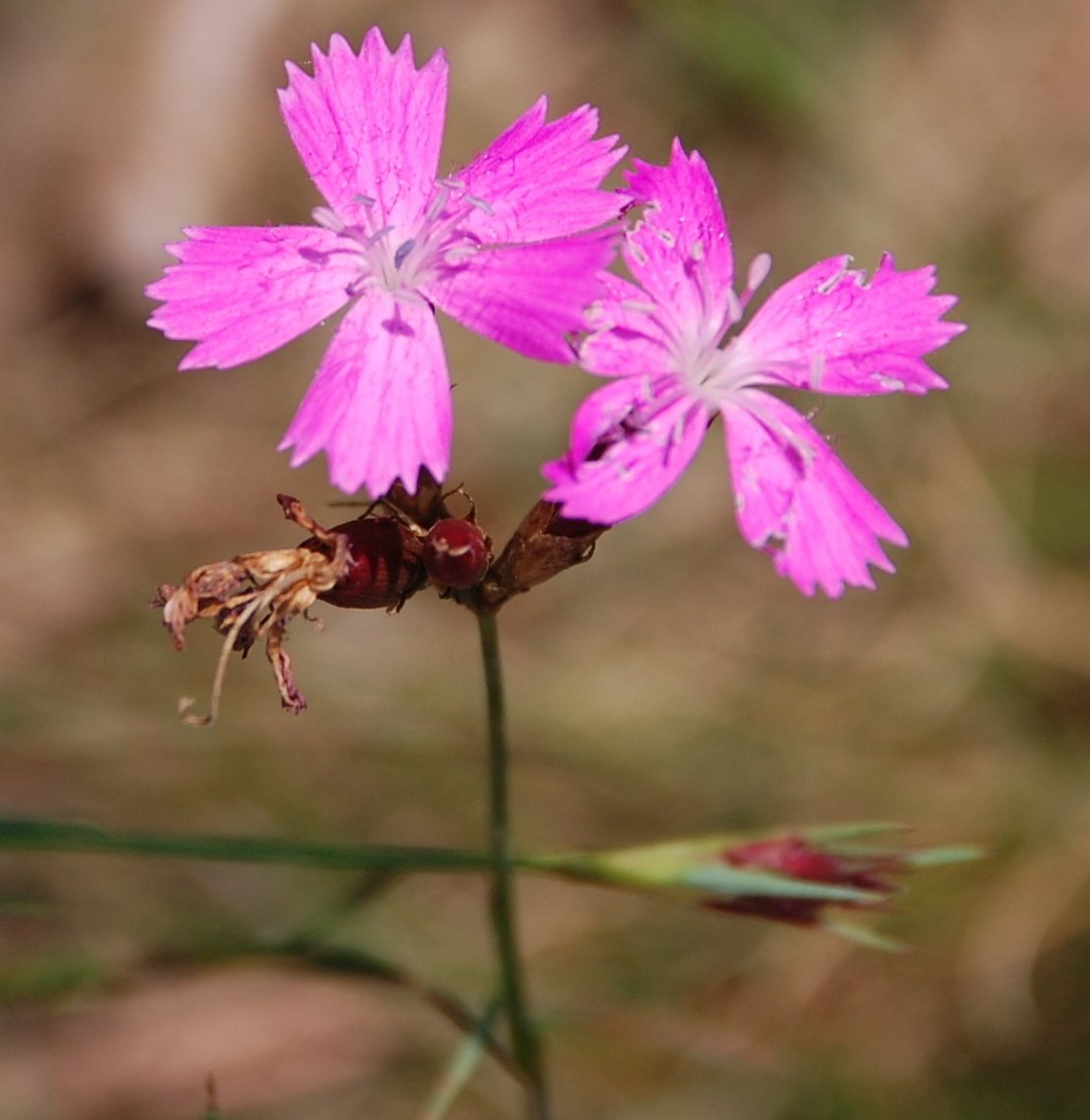
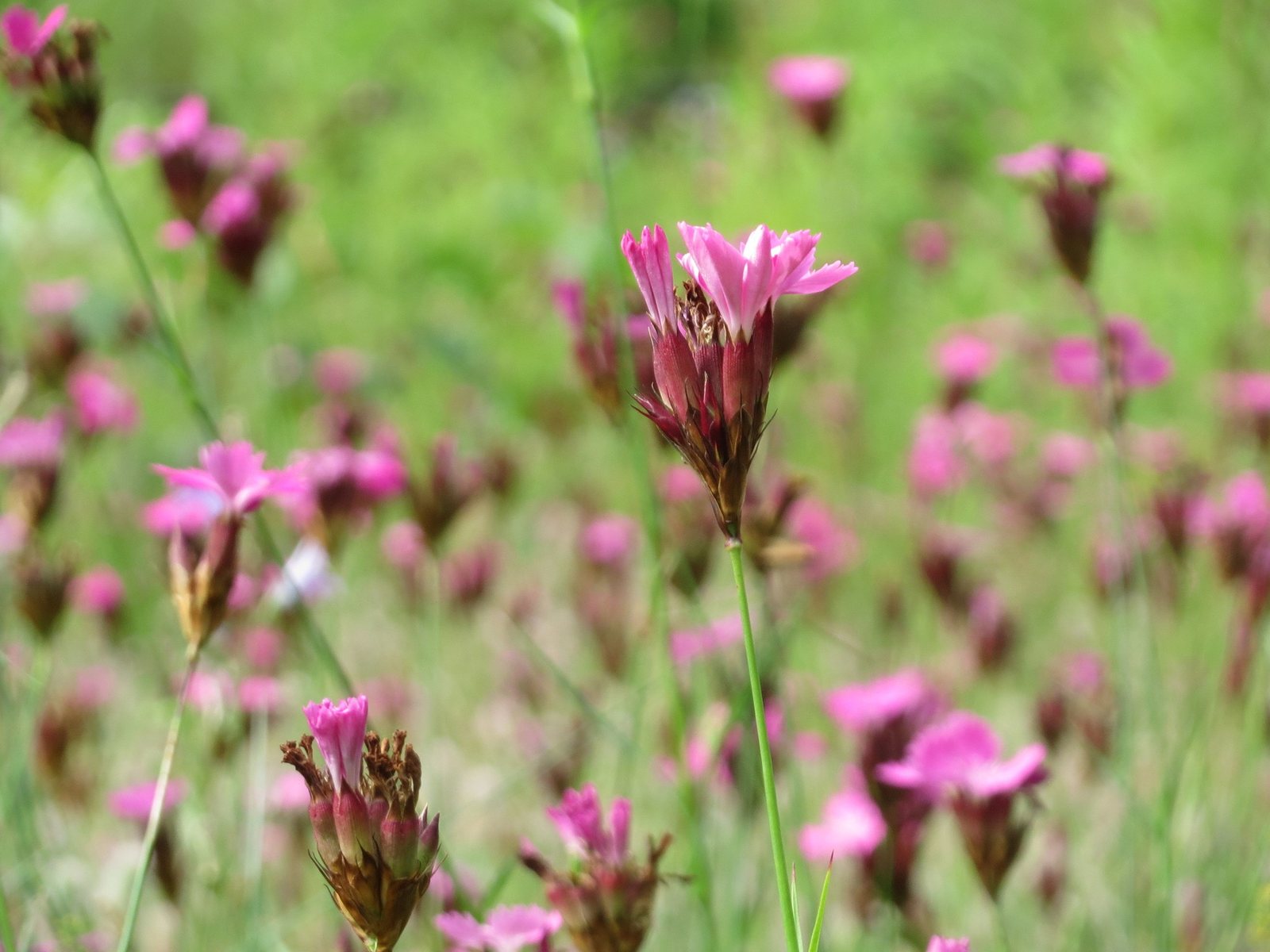
Carthusian pink is a slender, clump-forming perennial with small clusters of vivid pink flowers held above narrow, grassy leaves. Gardeners grow it for its airy outline, summer colour and appeal to butterflies, especially in sunny gravel gardens and informal perennial borders.
At a glance
- Sun
- Full sun; flowering and stem strength decline in shade.
- Water
- Low to moderate. Water regularly while establishing, then during prolonged dry spells; avoid persistently damp soil.
- Soil
- Well-drained, lean to moderately fertile soil, preferably neutral to alkaline. Tolerates sandy, stony and chalky ground; struggles in wet clay.
- Height
- 1.5-2.5 ft (0.45-0.75 m)
- Spread
- 0.5-1 ft (0.15-0.3 m)
- Flowers
- Early to late summer; deep pink to magenta flowers in tight clusters at the tips of slender stems.
- Foliage
- Narrow, green, grass-like leaves form a low tuft. Basal foliage can persist through mild winters but may die back in colder climates.
- Growth
- Moderate
- Care needed
- Low
The year at a glance
- Pollinators
- Deer resistant
- Drought tolerant
- Cold hardy
- Wildlife
- Low allergen
| J | F | M | A | M | J | J | A | S | O | N | D | |
|---|---|---|---|---|---|---|---|---|---|---|---|---|
| Flowers | ||||||||||||
| Plant |
Northern hemisphere months. In Australia, shift them by six.
- Difficulty
- Easy
- Toughness
- Very tough
Will it suit your garden?
Pick your zone, country, light and whether you have pets.
Full sun is 6 or more hours of direct sun a day, part shade 3 to 6 hours, shade under 3.
How it grows
Planting day
1 ft (0.3 m)
After 1 year
1.3 ft (0.4 m)
After 2 years
1.6 ft (0.5 m)
After 3 years
2 ft (0.6 m)
full size
About 3 years to full size.
From a typical nursery size, at an average rate for this kind of plant. A rule of thumb, not a forecast.
Good to know
- Cats and dogs
- Mildly toxic: may upset a stomach
- Invasive in
- the US
- In the garden
- Spreads vigorously: plan to contain it.
- Growth rate
- Moderate
Care
Jobs through the year
- WaterApr–May, Sep, every 21 days
- Water established clumps only during prolonged dry spells; water new plants more often until rooted.
- WaterJun–Aug, every 14 days
- Water established clumps only during prolonged drought, allowing soil to dry between waterings.
- MulchMar–Apr
- Apply a light gravel mulch, leaving the crown exposed.
- DivideMar–Apr
- Divide congested or thinning clumps, retaining well-rooted outer sections.
- PruneFeb–Mar
- Remove dead stems and damaged foliage without cutting into the crown.
- DeadheadJun–Aug, every 7 days
- Cut spent flower stems to the basal leaves before seed ripens.
- ProtectOct–Nov
- Remove unwanted seedlings and clear fallen leaves from the crowns.
- Plant with the crown at soil level in a sunny position with sharp drainage.
- Water new plants when the root zone begins to dry; established clumps need little supplementary watering.
- Avoid rich manure and heavy feeding, which encourage soft, floppy growth.
- Use a light gravel mulch rather than piling organic mulch around the crown.
- Divide congested or thinning clumps in spring, keeping well-rooted outer sections.
Pruning. Cut spent flower stems back to the basal leaves during summer to limit seeding and sometimes encourage further flowers. Remove dead stems and damaged foliage in late winter or early spring without cutting into the crown.
Through the year
- Early spring
- Remove dead foliage and check that winter debris has not buried the crown.
- Spring
- Plant nursery-grown plants or divide established clumps; water until rooted.
- Late spring
- Weed around the low leaf tufts before flower stems rise.
- Summer
- Deadhead spent stems and water during prolonged drought.
- Late summer
- Where local regulations allow, collect ripe seed as capsules turn brown, or remove heads before seeds escape.
- Autumn
- Remove unwanted seedlings and keep fallen leaves away from the crowns.
In the garden
- Repeat small groups through a sunny gravel garden for bright flowers above a low, open planting.
- Weave among fine ornamental grasses to create a light, meadow-like effect.
- Plant near the front of a perennial border, where its transparent stems will not hide neighbouring plants.
- Combine with blue catmint, white yarrow and purple salvias for a long-flowering, drought-tolerant border.
Garden styles it suits: Cottage garden, Dry gravel garden, New perennial (prairie), Pollinator garden, Low-maintenance and Wildflower.
Plant it with: Catmint, Meadow sage, Yarrow, Blue fescue, Small scabious and Creeping thyme.
Wildlife: Flowers provide nectar for butterflies and other long-tongued insects. It is native to parts of Europe, not to North America or Australia; use locally native alternatives where restoring native grassland is the goal.
Problems to watch for
- Crown or root rot in wet ground: improve drainage or move plants to a raised, gritty bed; discard badly rotted clumps.
- Rust, seen as orange-brown pustules on leaves: remove affected foliage, improve air circulation and avoid wetting the leaves when watering.
- Slugs and snails damaging young growth: inspect after dark, remove them and clear damp hiding places near the crown.
- Floppy stems or poor flowering: provide more sun and stop high-nitrogen feeding; support temporarily with twiggy stems if needed.
Safety
Dianthus plants can cause mild vomiting or diarrhoea in cats and dogs if eaten, and contact may irritate skin. Sap may also irritate sensitive human skin; do not treat this ornamental species as food. It is not known to be toxic to horses, but species-specific evidence is limited.
Where it spreads. Listed as a restricted invasive plant in Wisconsin, USA, where planting and movement are regulated. It can self-seed into open, dry grassland; check local restrictions before planting and remove seed heads where escape is a concern.
Easily confused with
Sweet William (Dianthus barbatus)
Sweet William has broader leaves and much larger, flatter flower heads on sturdier, leafier stems.
Deptford pink (Dianthus armeria)
Deptford pink is noticeably hairy and usually has smaller, white-speckled pink flowers with long, narrow green bracts;
Maiden pink (Dianthus deltoides)
Maiden pink makes a lower, spreading mat with flowers borne singly or in loose groups rather than compact terminal clusters.
The name
The epithet carthusianorum and the common name refer to the Carthusian religious order, traditionally associated with growing the plant in monastery gardens.
Propagation. Sow seed in spring in a free-draining seed mix, covering lightly, or divide established clumps in spring. Flowering from seed may begin in the first year but often starts in the second; do not propagate where local invasive-plant rules prohibit it.
Checked against open data
- Accepted botanical name
- Dianthus carthusianorum
- In the US and Canada
- Introduced in the lower 48 states.
- Native range
- Albania, Austria, Belarus, Belgium, Bulgaria, Czechoslovakia, France, Germany, Hungary, Italy, Poland and Romania.
- Measured
- Soil pH 7 to 7.5. Average height 44 cm.
Sources: GBIF (CC BY 4.0), USDA PLANTS and Trefle (CC BY 4.0). The care and design notes are LandscapeGPT's own.
See it in your own yard.
Upload a photo of your yard and see it redesigned with plants that suit your climate, each checked against your zone.