Caucasian scabious
Lomelosia caucasica. Family Caprifoliaceae. Perennial.
Also called Pincushion flower, Caucasian pincushion flower, Scabiosa caucasica.
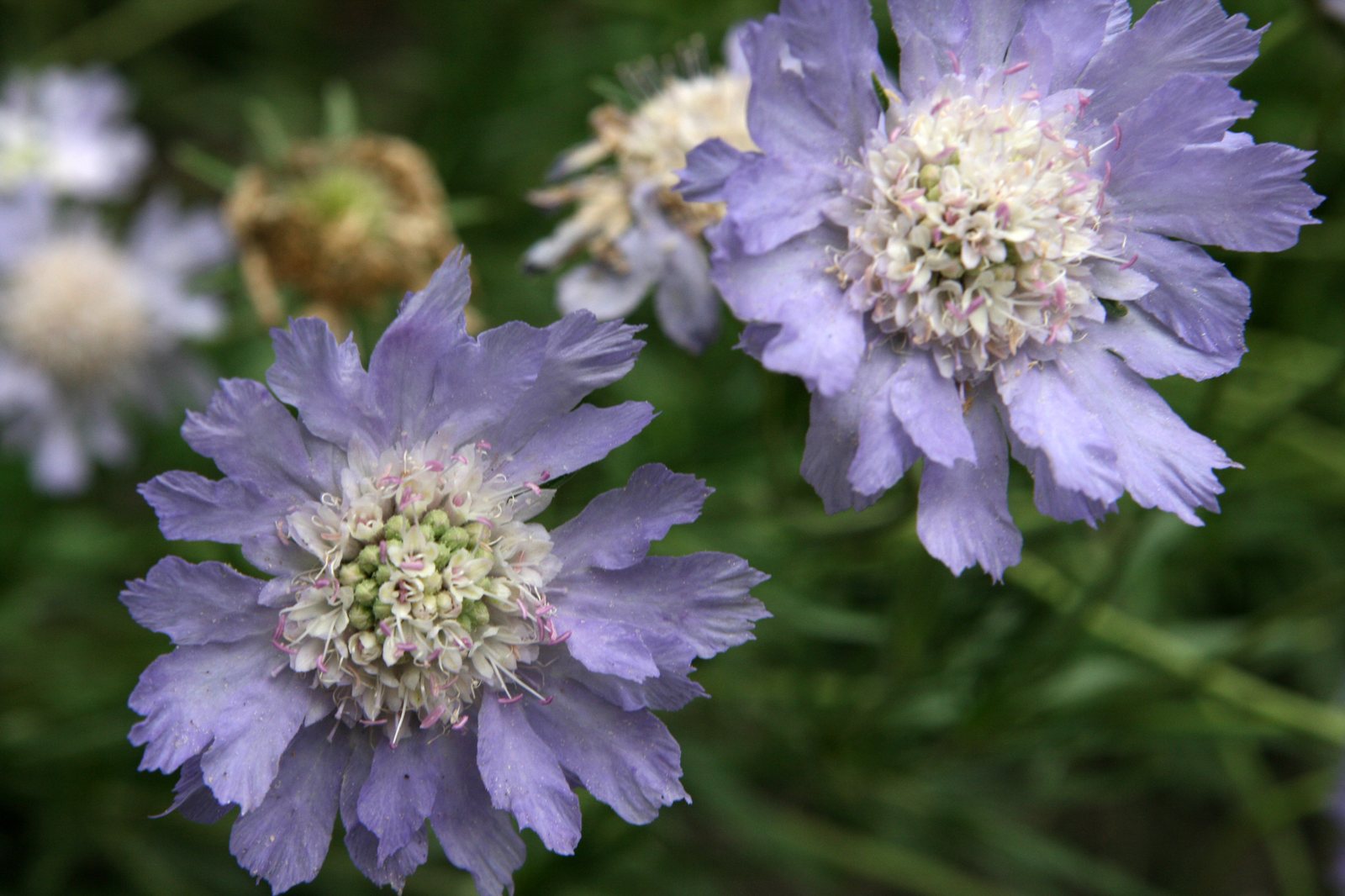
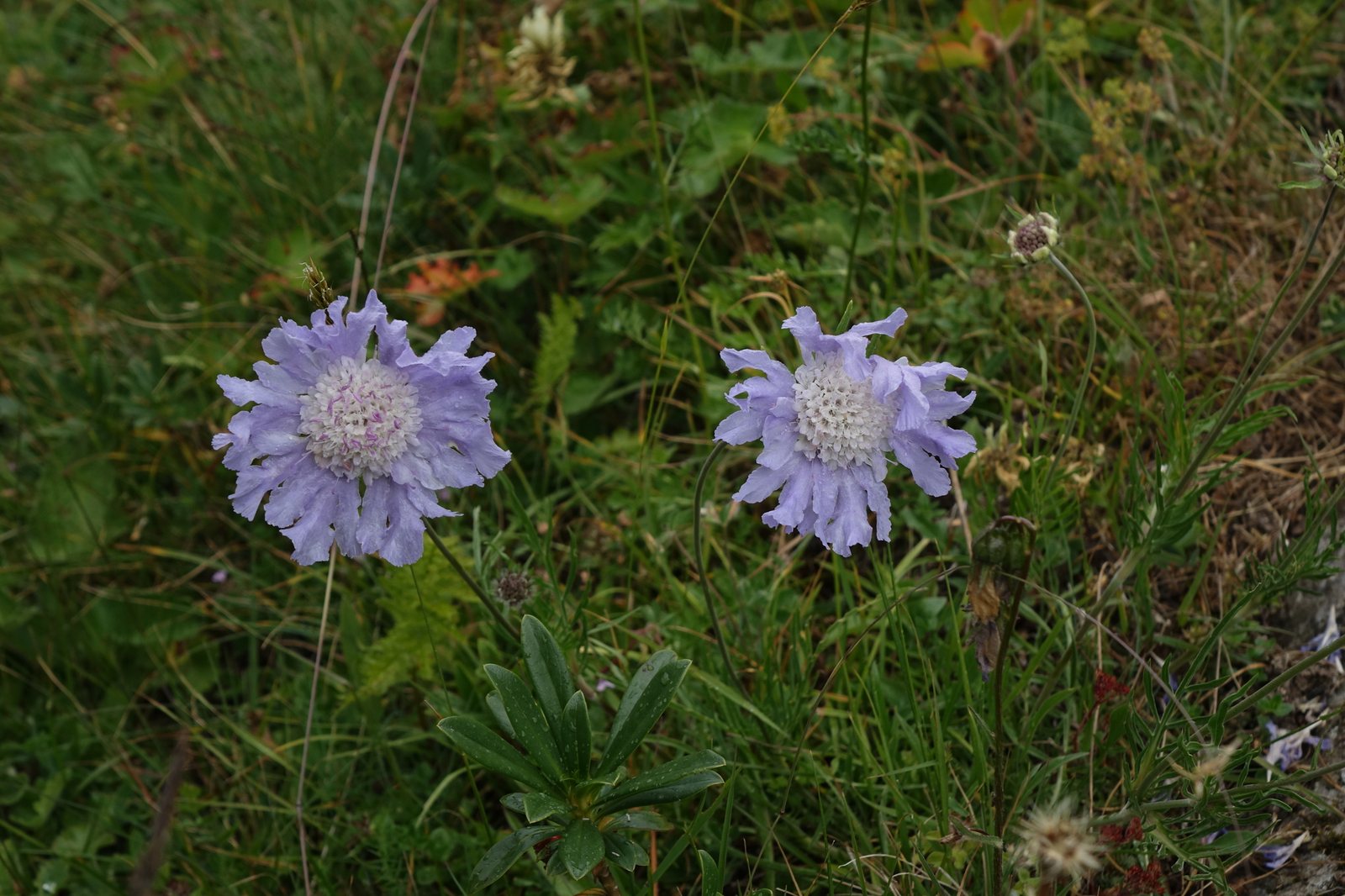
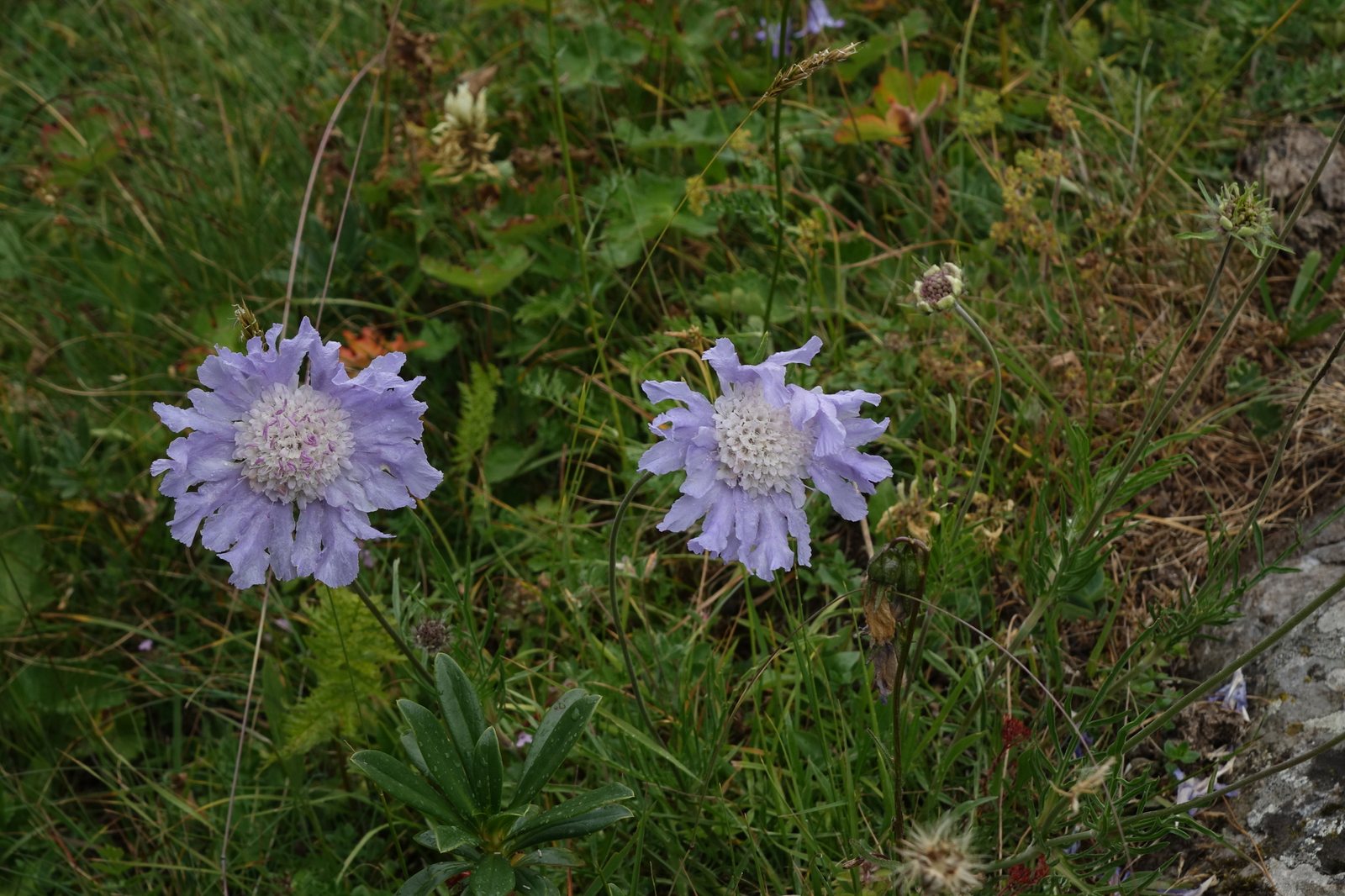
Caucasian scabious is a clump-forming perennial with broad, frilled pincushion flowers held above a low mound of leaves. Gardeners grow it for its long summer flowering season, useful cut flowers and appeal to pollinators. It performs best where summers are not excessively hot or humid and the soil drains freely in winter.
At a glance
- Sun
- Full sun; light afternoon shade can help in warmer gardens.
- Water
- Moderate; keep evenly moist while establishing, then water during prolonged dry spells. Avoid persistently wet soil.
- Soil
- Well-drained, moderately fertile soil, preferably neutral to alkaline. Improve heavy clay drainage before planting.
- Height
- 1.5-2.5 ft (0.45-0.75 m)
- Spread
- 1-1.5 ft (0.3-0.45 m)
- Flowers
- Early summer to early autumn with deadheading; usually lavender-blue to violet-blue, with white and paler blue cultivated forms.
- Foliage
- Grey-green to green leaves form a basal clump; basal leaves are narrow and mostly undivided, while upper stem leaves are often divided.
- Growth
- Moderate
- Care needed
- Medium
The year at a glance
- Pollinators
- Deer resistant
- Cold hardy
- Low allergen
| J | F | M | A | M | J | J | A | S | O | N | D | |
|---|---|---|---|---|---|---|---|---|---|---|---|---|
| Flowers | ||||||||||||
| Fruit | ||||||||||||
| Plant |
Northern hemisphere months. In Australia, shift them by six.
- Difficulty
- Moderate
- Toughness
- Fairly tough
Will it suit your garden?
Pick your zone, country, light and whether you have pets.
Full sun is 6 or more hours of direct sun a day, part shade 3 to 6 hours, shade under 3.
How it grows
Planting day
1 ft (0.3 m)
After 1 year
1.3 ft (0.4 m)
After 2 years
1.6 ft (0.5 m)
After 3 years
2 ft (0.6 m)
full size
About 3 years to full size.
From a typical nursery size, at an average rate for this kind of plant. A rule of thumb, not a forecast.
Good to know
- Cats and dogs
- Safe
- Growth rate
- Moderate
Care
Jobs through the year
- WaterApr–May, Sep, every 21 days
- Water established plants during prolonged dry spells; keep young plants evenly moist.
- WaterJun–Aug, every 14 days
- Water established plants deeply in dry weather, allowing the surface soil to dry between soakings.
- MulchMar–Apr
- Apply a thin compost dressing, keeping the crown uncovered.
- PruneMar
- Remove dead stems and foliage without damaging fresh crown growth.
- DivideMar–Apr
- Divide congested or weakening clumps every three or four years.
- ProtectMar–May
- Check emerging shoots for slugs and snails and remove pests.
- ProtectMay
- Install twiggy supports before flower stems become tall in exposed sites.
- DeadheadJun–Sep, every 7 days
- Cut faded flower stems back to a leaf or side shoot; retain a few late seed heads if wanted.
- ProtectOct–Nov
- Clear collapsed foliage and wet debris from the crown to reduce winter rot.
- Plant with the crown at soil level in a sunny position with good drainage.
- Water deeply during dry spells, allowing the surface soil to dry between waterings.
- Apply a thin layer of compost in spring; avoid heavy feeding, which encourages floppy growth.
- Keep mulch clear of the crown, especially through wet winters.
- Use discreet twiggy supports if flower stems lean in exposed sites.
- Divide congested or weakening clumps in spring, usually every three or four years.
Pruning. Remove faded flower stems back to a leaf or side shoot throughout summer to encourage more blooms. Cut dead stems and foliage back to the crown in late autumn or early spring.
Through the year
- Early spring
- Remove dead growth and check that the crown has not become buried under mulch.
- Spring
- Plant new plants or divide established clumps as fresh growth begins.
- Late spring
- Add discreet supports before flower stems become tall.
- Summer
- Deadhead regularly and water deeply during prolonged dry weather.
- Early autumn
- Leave a few seedheads if you want seed; named varieties may not come true.
- Late autumn
- Clear collapsed foliage and keep the crown free of wet debris.
In the garden
- Plant in small groups near the front or middle of a sunny border, where the flowers can rise above lower foliage.
- Combine with roses, catmint and hardy geraniums for a soft blue-and-pink cottage border.
- Thread through low ornamental grasses to give an airy, informal effect.
- Use in a sunny cutting bed for long-stemmed summer flowers.
Garden styles it suits: Cottage garden, English country, Romantic rose garden, Pollinator garden, Blues and silvers and Pastel border.
Plant it with: Catmint, Hardy geranium, Roses, Garden sage, Yarrow and Lamb's ear.
Wildlife: Open flowers attract bees, butterflies and other nectar-feeding insects.
Problems to watch for
- Crown or root rot in wet soil: improve drainage, keep mulch away from the crown and replace badly rotted plants.
- Powdery mildew in crowded or stressed plants: increase airflow, water during drought and remove badly affected foliage.
- Slugs and snails damaging young shoots: inspect emerging growth and use barriers, hand removal or locally approved iron phosphate bait.
- Flopping stems or poor flowering: provide more sun, avoid nitrogen-rich feeding and support stems before they lean.
Safety
Not known to be toxic to people, cats, dogs or horses. No part is recognized as a significant poisoning hazard, but it is an ornamental plant rather than a food plant.
Easily confused with
Small scabious (Scabiosa columbaria)
Usually has smaller, less broadly frilled flowerheads and more finely divided foliage; Caucasian scabious has conspicuously large outer florets.
Sweet scabious (Scabiosa atropurpurea)
Usually grown as an annual or short-lived perennial, with smaller, more domed flowerheads in colours including burgundy, pink and white; Caucasian scabious has broad, flatter heads and a persistent basal clump.
The name
The epithet caucasica refers to the Caucasus region, while pincushion flower describes the head's cushion-like centre with projecting floral parts.
Propagation. Divide healthy clumps in spring. Sow seed in spring for variable offspring; use division or basal cuttings in spring to preserve the characteristics of named varieties.
Checked against open data
- Accepted botanical name
- Lomelosia caucasica
- Native range
- Iran, North Caucasus, Transcaucasus and Turkey.
- Measured
- Average height 48 cm.
Sources: GBIF (CC BY 4.0) and Trefle (CC BY 4.0). The care and design notes are LandscapeGPT's own.
See it in your own yard.
Upload a photo of your yard and see it redesigned with plants that suit your climate, each checked against your zone.