Center Glow ninebark
Physocarpus opulifolius 'Center Glow'. Family Rosaceae. Shrub.
Also called Physocarpus opulifolius 'Center Glow', Eastern ninebark 'Center Glow'.
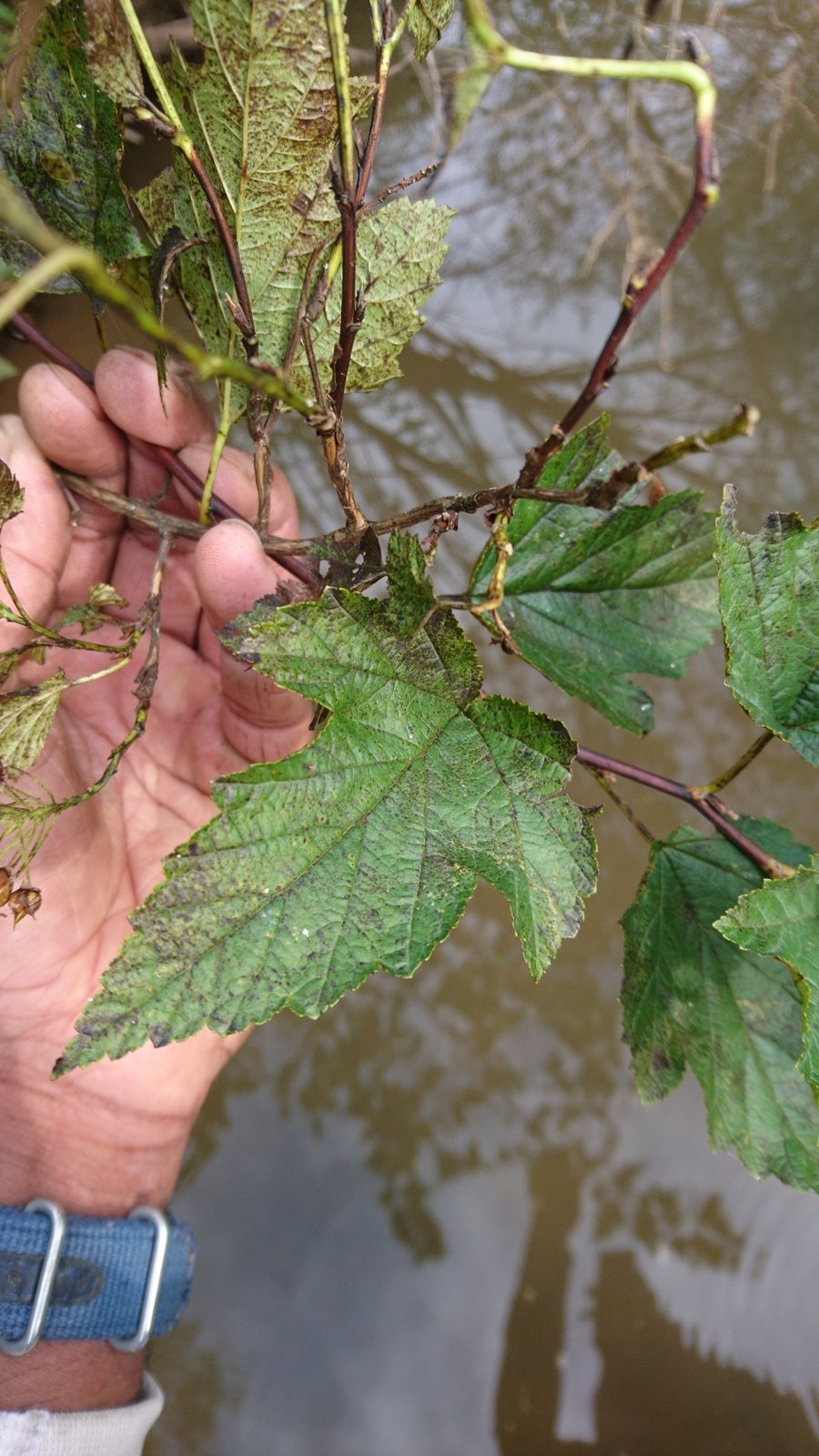
Center Glow is a deciduous ninebark grown for leaves that open golden-green with reddish edges and mature to deep burgundy. It makes a substantial, arching shrub with late-spring flowers and peeling bark on older stems. It performs best in cool to moderately warm climates rather than hot, humid or subtropical gardens.
At a glance
- Sun
- Full sun to partial shade; foliage colour is strongest in sun, but light afternoon shade helps in hot regions.
- Water
- Water regularly during the first growing season; once established, water during prolonged dry spells. Avoid persistently waterlogged ground.
- Soil
- Adaptable to clay, loam and sandy soils, including alkaline soil, provided drainage is reasonable. Moist, well-drained soil gives the best growth.
- Height
- 6-8 ft (1.8-2.4 m)
- Spread
- 6-8 ft (1.8-2.4 m)
- Flowers
- Late spring to early summer; rounded clusters of pink buds opening to white or pale pink flowers.
- Foliage
- Lobed leaves emerge with golden-green centres and reddish-purple margins, then deepen to burgundy-purple; deciduous.
- Growth
- Moderate to fast
- Care needed
- Low
The year at a glance
- Pollinators
- Drought tolerant
- Cold hardy
- Wildlife
- Low allergen
| J | F | M | A | M | J | J | A | S | O | N | D | |
|---|---|---|---|---|---|---|---|---|---|---|---|---|
| Flowers | ||||||||||||
| Fruit | ||||||||||||
| Plant |
Northern hemisphere months. In Australia, shift them by six.
- Difficulty
- Easy
- Toughness
- Very tough
Will it suit your garden?
Pick your zone, country, light and whether you have pets.
Full sun is 6 or more hours of direct sun a day, part shade 3 to 6 hours, shade under 3.
How it grows
Planting day
1.6 ft (0.5 m)
After 1 year
3 ft (0.9 m)
After 2 years
4 ft (1.3 m)
After 3 years
6 ft (1.7 m)
After 5 years
7 ft (2.1 m)
full size
About 4 years to full size.
From a typical nursery size, at an average rate for this kind of plant. A rule of thumb, not a forecast.
Good to know
- Cats and dogs
- Safe
- Native to
- the US and Canada
- Growth rate
- Fast
Care
Jobs through the year
- WaterApr–May, Sep–Oct, every 21 days
- Water established shrubs only during prolonged dry spells; water young plants more frequently.
- WaterJun–Aug, every 14 days
- Water established shrubs deeply during drought; shorten the interval if hot conditions cause scorch.
- MulchMar–Apr
- Maintain 5–8 cm of organic mulch, keeping stem bases clear.
- FeedMar–Apr
- Add compost on poor soil; avoid heavy nitrogen feeding.
- PruneFeb–Mar
- Remove dead, damaged or crossing branches; reserve hard renovation for overgrown shrubs.
- PruneJun
- After flowering, remove up to one-third of old stems if needed and selectively shorten awkward branches.
- Allow room for its full spread rather than relying on frequent clipping.
- Water deeply during dry weather in the first growing season.
- Apply 2-3 in (5-8 cm) of organic mulch, keeping it clear of the stem bases.
- Add compost in spring on poor soil; avoid heavy nitrogen feeding.
- Water at soil level and maintain airflow around the branches to reduce leaf disease.
Pruning. Prune just after flowering, removing up to one-third of the oldest stems at ground level and shortening awkward branches selectively. Hard renovation pruning in late winter is possible, but sacrifices that year's flowers.
Through the year
- Late winter
- Remove dead, damaged or crossing branches; reserve hard renovation for an overgrown shrub.
- Spring
- Plant while conditions are cool, water thoroughly and mulch around the root area.
- Late spring
- Enjoy the flowers and inspect new leaves for aphids or powdery mildew.
- Early summer
- Thin older stems after flowering if needed, preserving the natural arching shape.
- Summer
- Water young plants during dry spells and check for leaf scorch in exposed, hot positions.
- Autumn
- Plant where winters allow roots to establish before the ground freezes; remove diseased fallen leaves.
In the garden
- Use as a burgundy foliage anchor near the back of a mixed border.
- Plant as an informal hedge or screen, allowing space for arching branches.
- Combine with golden grasses and pale-flowered perennials for foliage contrast.
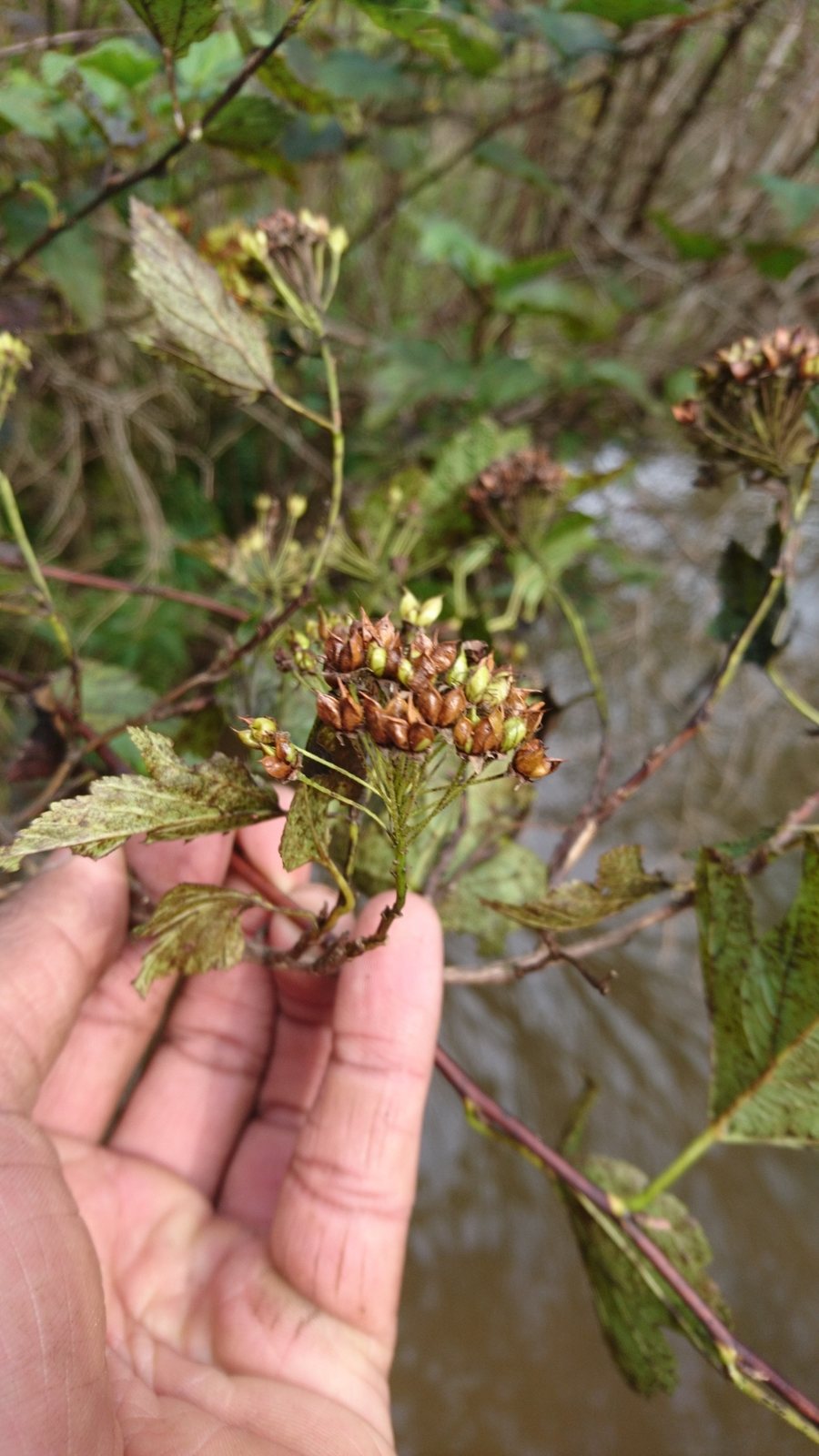
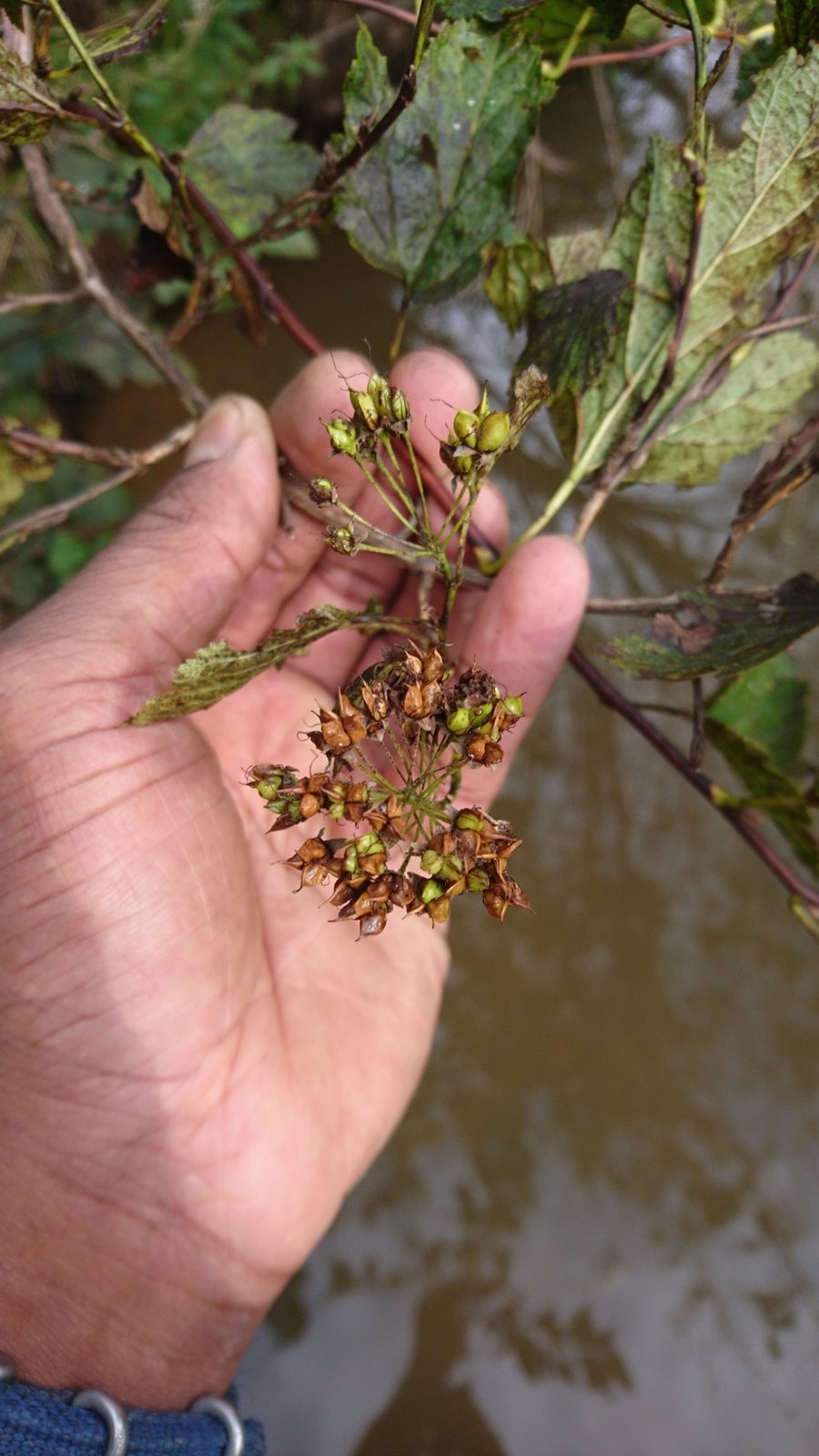
- Include in a mixed shrub boundary where flowers, seed clusters and peeling bark provide seasonal interest.
Garden styles it suits: English country, Cottage garden, Modern rustic, Wildlife garden, Low-maintenance and New perennial (prairie).
Plant it with: Purple coneflower, Black-eyed Susan, Switchgrass, Feather reed grass, Catmint and Oakleaf hydrangea.
Wildlife: The flowers provide pollen and nectar for bees and other insects. Dense branching offers shelter for small birds; this cultivar is derived from a species native to eastern and central North America.
Problems to watch for
- Powdery mildew can coat and distort leaves: provide sun and airflow, avoid crowding, and remove badly affected shoots.
- Aphids may gather on soft growth: wash them off with water and encourage ladybirds and other predators.
- Leaf scorch can occur in hot, dry sites: mulch, water deeply during drought and provide afternoon shade in hot regions.
- Root decline can follow prolonged waterlogging: improve drainage or move the shrub to better-drained ground.
Safety
Not known to be toxic to people, cats, dogs or horses, and no particular part is recognized as poisonous. Specific safety information is limited, so do not treat the leaves, bark or seed clusters as food.
Easily confused with
Diabolo ninebark (Physocarpus opulifolius 'Monlo')
Its leaves emerge more uniformly dark purple, without the conspicuous golden-green centres of young Center Glow leaves.
Dart's Gold ninebark (Physocarpus opulifolius 'Dart's Gold')
Its foliage is predominantly yellow to lime-green rather than maturing to burgundy-purple.
Purple-leaved Japanese spiraea (Spiraea japonica)
Spiraea has unlobed leaves and usually flatter clusters of pink summer flowers; ninebark has lobed leaves, rounded flower clusters and peeling mature bark.
The name
Ninebark refers to the multiple peeling layers of mature bark, while 'Center Glow' describes the bright centres of its newly emerging leaves.
Propagation. Propagate by softwood cuttings in early summer or hardwood cuttings during dormancy. Seedlings will not reliably retain the cultivar's foliage colours; check current plant breeders' rights or patent restrictions before propagation.
Checked against open data
- Accepted botanical name
- Physocarpus opulifolius
- In the US and Canada
- Native in Canada and the lower 48 states.
- Native range
- Alabama, Arizona, Connecticut, Delaware, District of Columbia, Florida, Georgia, Illinois, Indiana, Iowa, Kansas and Kentucky.
- Measured
- Soil pH 4.5 to 6.5. Average height 300 cm.
Sources: GBIF (CC BY 4.0), USDA PLANTS and Trefle (CC BY 4.0). The care and design notes are LandscapeGPT's own.
See it in your own yard.
Upload a photo of your yard and see it redesigned with plants that suit your climate, each checked against your zone.