Charity mahonia
Mahonia × media 'Charity'. Family Berberidaceae. Shrub.
Also called Mahonia × media 'Charity', Charity Oregon grape.
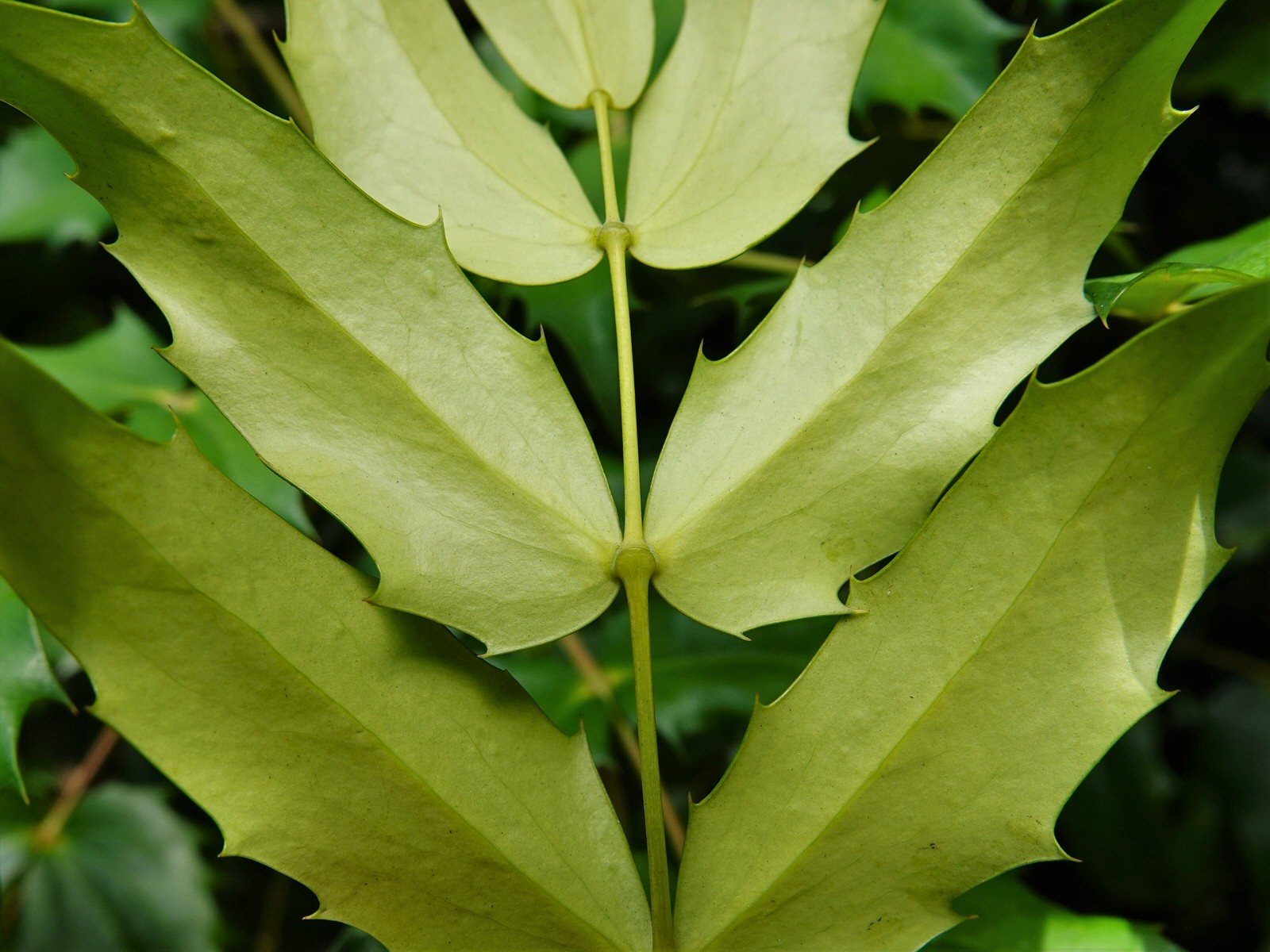
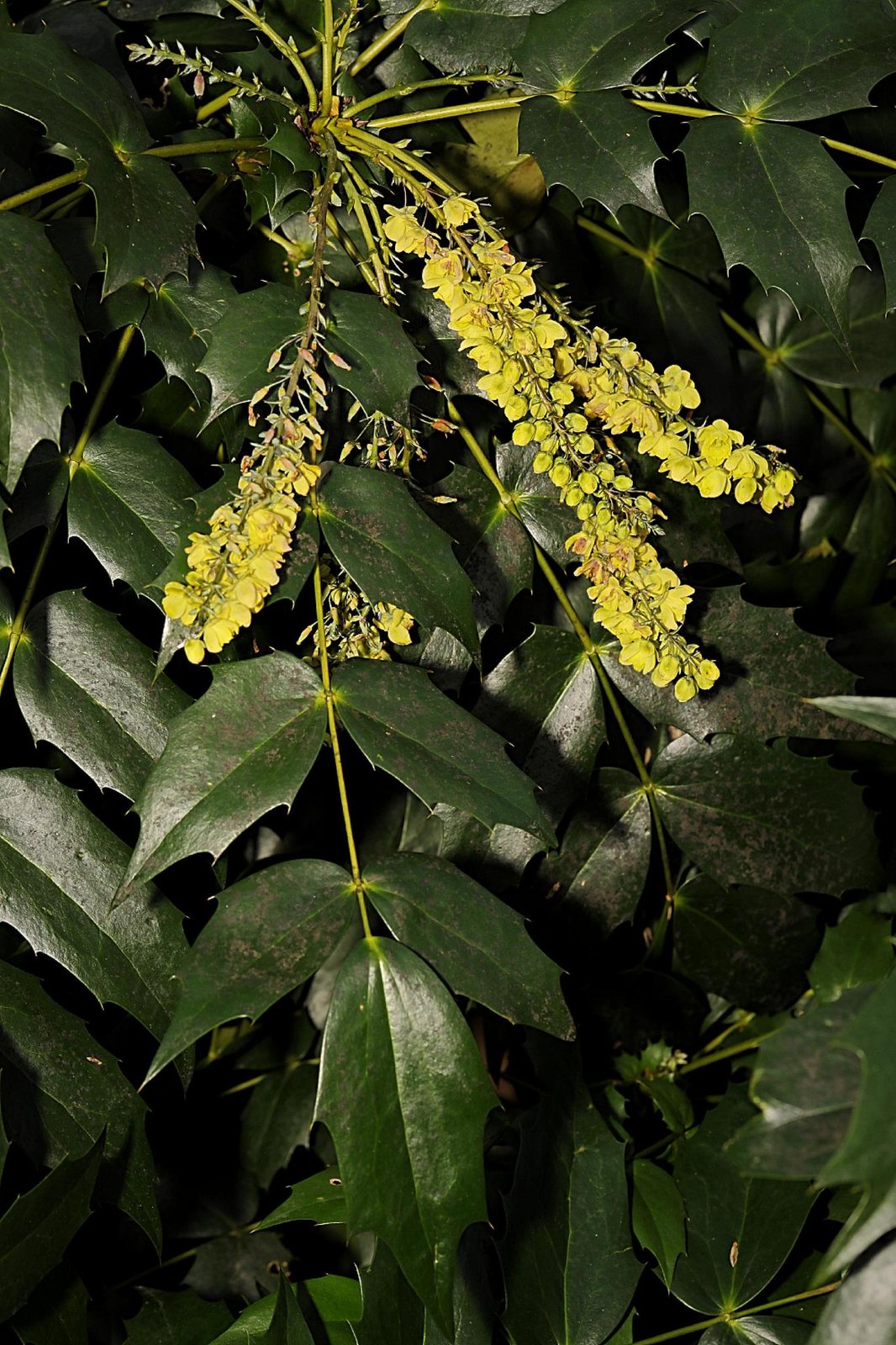
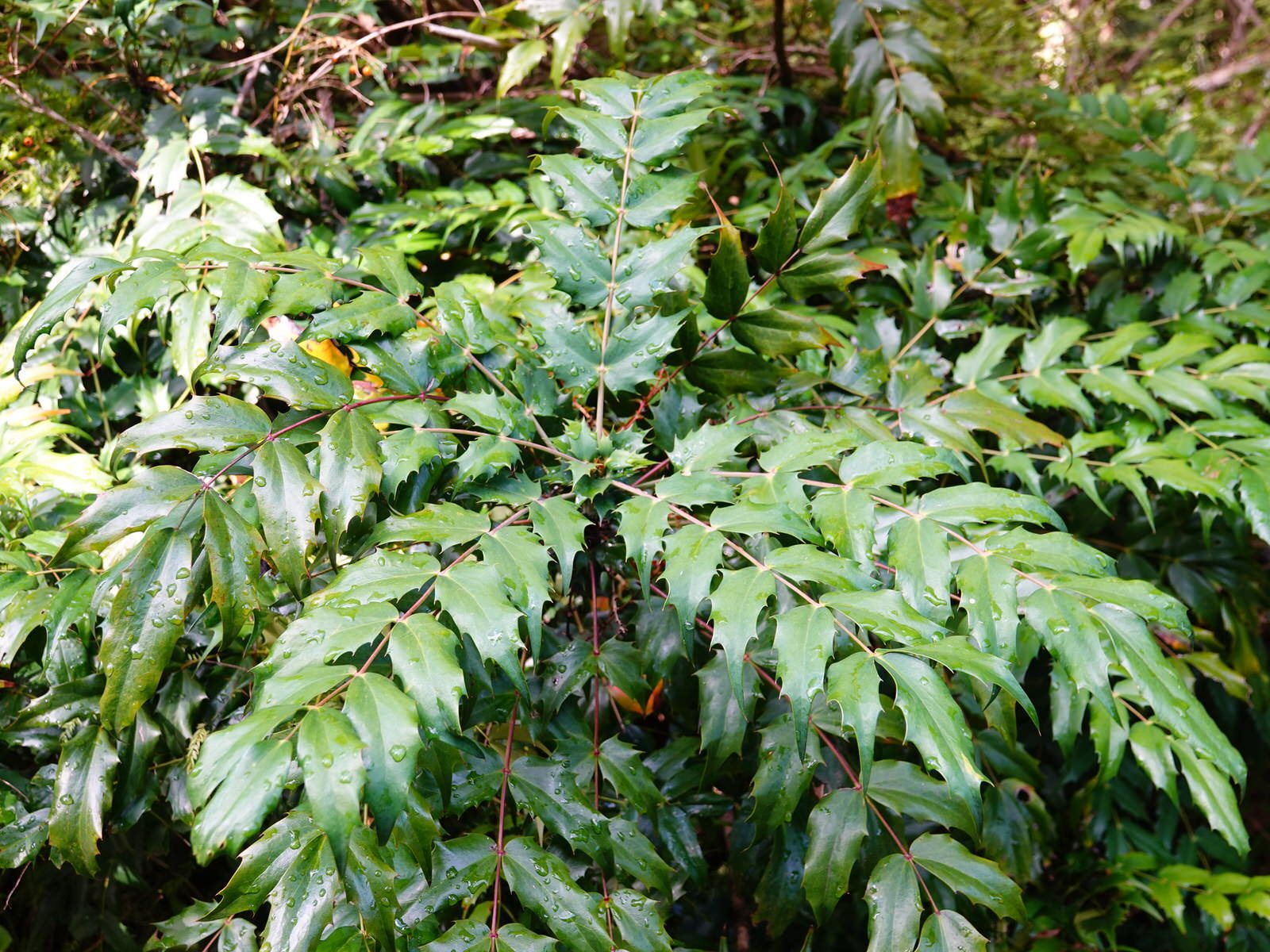
An upright evergreen shrub with long, spiny leaves and fragrant yellow flower spikes from late autumn into winter. Grow it for winter flowers, bold foliage and shelter for birds, allowing enough room for it to become a substantial shrub.
At a glance
- Sun
- Partial shade is ideal; tolerates deeper shade and full sun where the soil stays moist. Protect from strong afternoon sun in hot climates.
- Water
- Water regularly while establishing. Once established, water during prolonged dry spells, especially under trees or beside walls.
- Soil
- Humus-rich, moist but well-drained soil; tolerates clay, loam and sandy soil improved with organic matter, and a broad range of soil pH.
- Height
- 10-15 ft (3-4.5 m)
- Spread
- 8-12 ft (2.4-3.7 m)
- Flowers
- Fragrant yellow flowers in upright spikes, usually from late autumn through winter; timing varies with climate.
- Foliage
- Evergreen. Long, leathery, dark green leaves divided into sharply toothed, holly-like leaflets; some foliage may bronze in cold weather.
- Growth
- Moderate
- Care needed
- Low
The year at a glance
- Pollinators
- Deer resistant
- Heat tolerant
- Wildlife
- Low allergen
- Fragrant
| J | F | M | A | M | J | J | A | S | O | N | D | |
|---|---|---|---|---|---|---|---|---|---|---|---|---|
| Flowers | ||||||||||||
| Fruit | ||||||||||||
| Plant |
Northern hemisphere months. In Australia, shift them by six.
- Difficulty
- Easy
- Toughness
- Very tough
Will it suit your garden?
Pick your zone, country, light and whether you have pets.
Full sun is 6 or more hours of direct sun a day, part shade 3 to 6 hours, shade under 3.
How it grows
Planting day
1.6 ft (0.5 m)
After 1 year
4 ft (1.2 m)
After 2 years
6 ft (1.8 m)
After 3 years
8 ft (2.5 m)
After 5 years
12 ft (3.8 m)
full size
About 5 years to full size.
From a typical nursery size, at an average rate for this kind of plant. A rule of thumb, not a forecast.
Good to know
- Cats and dogs
- Safe
- Growth rate
- Moderate
Care
Jobs through the year
- WaterApr–May, Sep–Oct, every 21 days
- Water established shrubs only if dry; young plants need more for two seasons.
- WaterJun–Aug, every 14 days
- Water deeply during prolonged drought, especially under trees or beside walls.
- MulchMar–Apr
- Apply 5–8 cm of compost or leaf mould, keeping stems clear.
- FeedApr
- Apply a light balanced feed only if growth is weak or soil is poor.
- PruneMar
- Prune after flowering only if needed; renew a few old stems, accepting fewer berries.
- ProtectJan–Mar, Nov–Dec
- Shelter young plants from cold winds; prefer spring planting near its zone 7 hardiness limit.
- Water deeply during dry weather for the first two growing seasons.
- Apply a 2-3 in (5-8 cm) layer of compost or leaf mould in spring, keeping it clear of the stems.
- Water established plants during prolonged drought rather than giving frequent light sprinklings.
- Use a light application of balanced shrub fertiliser in spring only if growth is weak or the soil is poor.
- Choose a position sheltered from cold, drying winds, and keep the spiny foliage away from narrow paths.
Pruning. Prune just after flowering, removing dead or damaged wood and shortening overlong stems to a strong bud or side shoot. To renew a leggy shrub, cut back a few of the oldest stems low down each year; pruning removes some potential berries.
Through the year
- Spring
- Plant in colder regions once the soil is workable, and water thoroughly.
- Spring
- Mulch with compost or leaf mould and feed lightly only if needed.
- Late winter to spring
- After flowering, prune only where needed to control size or renew bare stems.
- Summer
- Check soil moisture during dry spells, particularly around young plants.
- Autumn
- Plant in mild regions while the soil is still warm; leave space for the mature spread.
- Winter
- Check young plants after severe weather and firm back any roots lifted by frost.
In the garden
- Place at the back of a shaded border, with hellebores and ferns beneath its upright stems.
- Use as an evergreen screen where there is room for its broad mature canopy.
- Make it a winter focal point visible from a window, with snowdrops or cyclamen below.
- Use its bold leaves to contrast with fine-textured grasses and softer woodland planting.
Garden styles it suits: Architectural minimal, Woodland, Winter interest, Wildlife garden, Low-maintenance and Pacific Northwest woodland.
Plant it with: Hellebores, Epimediums, Bergenias, Hardy ferns, Snowdrops and Hardy cyclamen.
Wildlife: Flowers provide nectar and pollen for insects active during mild winter weather. Birds eat the blue-black berries, when produced, and use the evergreen foliage for cover.
Problems to watch for
- Brown or scorched leaves: shelter from cold winds and harsh afternoon sun, and water during drought; remove badly damaged leaves in spring.
- Powdery mildew: reduce drought stress and improve air circulation without opening the shrub to excessive sun.
- Rust, seen as orange-brown pustules on leaves: remove badly affected foliage and clear fallen leaves.
- Root rot in waterlogged soil: improve drainage or move to a better-drained position; do not leave roots standing in water.
Safety
Not known to be toxic to people, cats, dogs or horses, although specific animal data are limited. It is not a food plant: discourage eating any part, as ingestion may cause stomach upset. The sharp leaf teeth can scratch skin and injure eyes.
Easily confused with
Japanese mahonia (Mahonia japonica)
Usually has more arching or spreading flower racemes and flowers later, mainly in late winter and spring; 'Charity' typically has strongly upright flower spikes.
Oregon grape (Mahonia aquifolium)
Generally smaller, with shorter leaves containing fewer leaflets and compact clusters of yellow spring flowers rather than long winter spikes.
The name
Mahonia honours Bernard McMahon, an Irish-born American horticulturist, while × media identifies its hybrid origin between Mahonia japonica and Mahonia lomariifolia.
Propagation. Take semi-ripe cuttings in late summer or early autumn, or layer a low branch. Seedlings will not reliably retain the characteristics of 'Charity'.
Checked against open data
- Accepted botanical name
- Berberis hortensis Mahonia × media 'Charity' is an older name for Berberis hortensis.
Sources: GBIF (CC BY 4.0). The care and design notes are LandscapeGPT's own.
See it in your own yard.
Upload a photo of your yard and see it redesigned with plants that suit your climate, each checked against your zone.