Chaste tree
Vitex agnus-castus. Family Lamiaceae. Shrub.
Also called Chasteberry, Monk's pepper.
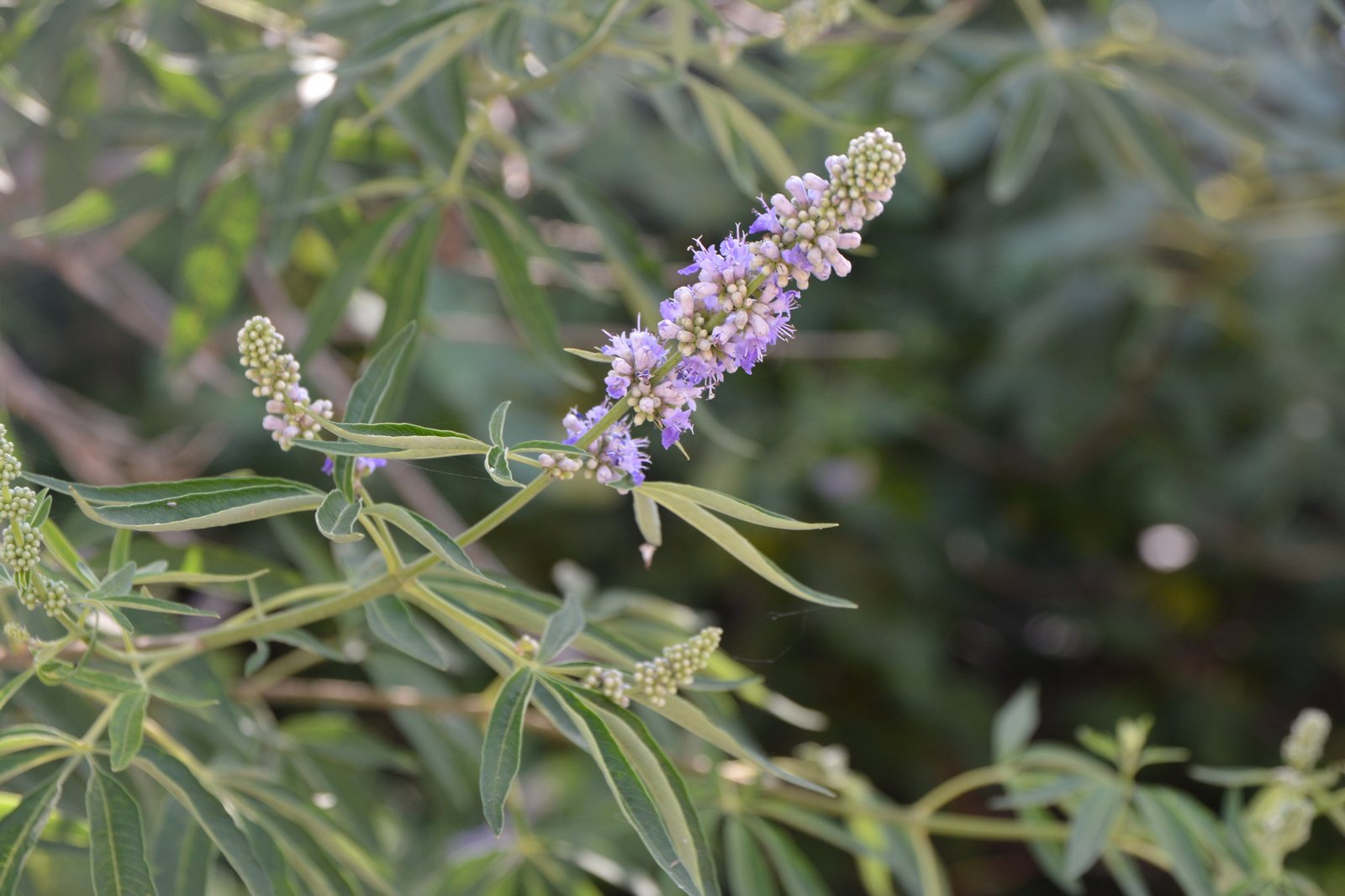
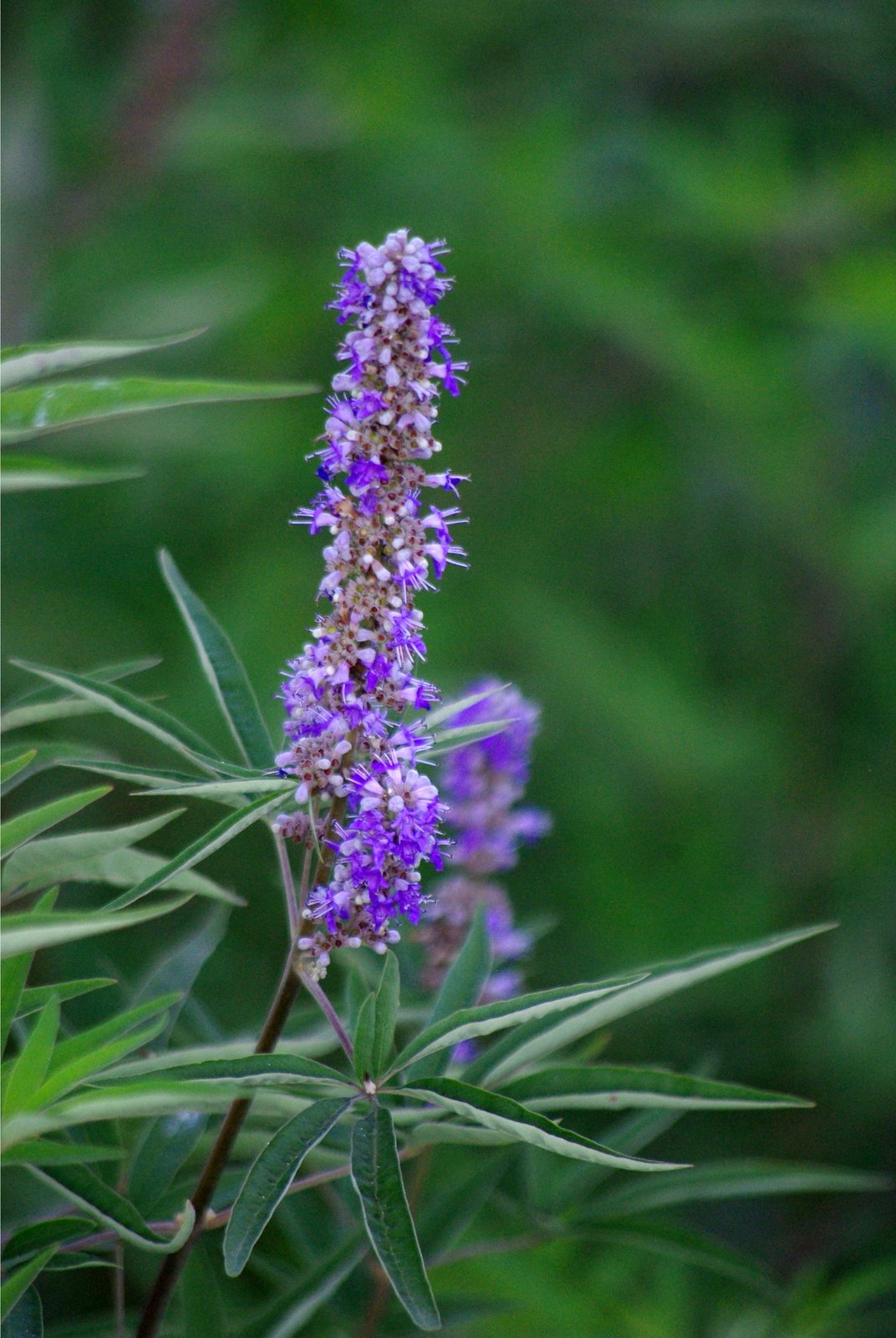
Chaste tree is a deciduous, aromatic shrub or small multi-stemmed tree grown for upright spikes of violet-blue flowers in summer. It suits sunny, well-drained gardens and tolerates drought once established, but needs summer warmth to flower well. Near its cold limit, stems may die back in winter and regrow from the base.
At a glance
- Sun
- Full sun; choose a warm, sheltered position in cooler climates.
- Water
- Moderate while establishing; low once established, with occasional deep watering during prolonged drought.
- Soil
- Well-drained sandy, loamy or gravelly soil; tolerates alkaline soil and relatively poor ground. Avoid waterlogged sites.
- Height
- 10-20 ft (3-6 m)
- Spread
- 10-20 ft (3-6 m)
- Flowers
- Summer to early autumn; upright spikes of fragrant violet-blue to lavender flowers.
- Foliage
- Opposite, hand-shaped leaves with usually five to seven narrow leaflets; grey-green and aromatic when crushed.
- Growth
- Fast in warm climates; slower where summers are cool.
- Care needed
- Low
The year at a glance
- Pollinators
- Deer resistant
- Drought tolerant
- Heat tolerant
- Wildlife
- Low allergen
- Fragrant
| J | F | M | A | M | J | J | A | S | O | N | D | |
|---|---|---|---|---|---|---|---|---|---|---|---|---|
| Flowers | ||||||||||||
| Fruit | ||||||||||||
| Plant |
Northern hemisphere months. In Australia, shift them by six.
- Difficulty
- Easy
- Toughness
- Very tough
Will it suit your garden?
Pick your zone, country, light and whether you have pets.
Full sun is 6 or more hours of direct sun a day, part shade 3 to 6 hours, shade under 3.
How it grows
Planting day
1.8 ft (0.54 m)
After 1 year
4 ft (1.3 m)
After 2 years
7 ft (2.1 m)
After 3 years
10 ft (2.9 m)
After 5 years
15 ft (4.5 m)
full size
About 5 years to full size.
From a typical nursery size, at an average rate for this kind of plant. A rule of thumb, not a forecast.
Good to know
- Cats and dogs
- Safe
- Invasive in
- the US
- In the garden
- Spreads vigorously: plan to contain it.
- Growth rate
- Moderate
Care
Jobs through the year
- WaterApr–May, Sep, every 21 days
- Water established shrubs only during prolonged drought; water new plants more regularly.
- WaterJun–Aug, every 14 days
- Give an occasional deep soak during prolonged drought; allow soil to dry between waterings.
- PruneMar–Apr
- Wait for buds in cold areas, then remove dead wood and shorten growth to a healthy framework.
- MulchApr
- Apply 5–8 cm of mulch, keeping stem bases clear.
- FeedApr
- Feed lightly only if growth is weak on poor soil; avoid rich nitrogen feeding.
- DeadheadAug–Oct, every 14 days
- Remove fading flower spikes before seeds mature if self-seeding is unwanted.
- ProtectNov
- In zone 6, renew root-zone mulch for winter without burying stem bases.
- Water deeply during dry spells through the first growing season, allowing the soil surface to dry between waterings.
- Once established, water only during prolonged drought rather than keeping the soil constantly moist.
- Apply 2-3 in (5-8 cm) of mulch over the root area, keeping it clear of the stems.
- Avoid rich feeding; use a light spring feed only if growth is weak on poor soil.
- Remove seedlings promptly where self-seeding is unwanted.
Pruning. Prune in late winter or early spring, removing dead wood and shortening last year's growth to a healthy framework; flowers form on new growth. Where winter kills the stems, wait until buds show, then cut back to living wood or close to ground level.
Through the year
- Late winter
- In mild regions, remove dead or crossing branches and prune to maintain a shrub or small-tree framework.
- Spring
- In cold regions, wait for buds to reveal surviving wood before removing winter-killed stems.
- Spring
- Plant after severe frost risk has passed and refresh mulch without covering the stem bases.
- Summer
- Water newly planted specimens deeply during dry weather.
- Late summer
- If practical, remove fading flower spikes before seeds mature to reduce self-seeding.
- Autumn
- Pull unwanted seedlings and avoid hard pruning before winter.
In the garden
- Use as a loose, multi-stemmed focal point in a sunny gravel garden with lavender and ornamental grasses.
- Place behind lower perennials to provide summer flower colour above the border.
- Train as a small tree beside a terrace where there is room for its broad canopy.
- Include in a sunny pollinator border with salvias, coneflowers and yarrow.
Garden styles it suits: Mediterranean, Dry gravel garden, Pollinator garden, Desert / xeriscape, Cottage garden and Southern.
Plant it with: Lavender, Russian sage, Catmint, Purple coneflower, Yarrow and Switchgrass.
Wildlife: Flowers attract bees, butterflies and other nectar-feeding insects. Its branching canopy provides shelter for small birds.
Problems to watch for
- Winter dieback: choose a sheltered site near its cold limit and remove dead stems in spring once new growth is visible.
- Poor flowering: provide full sun and summer warmth, and avoid heavy nitrogen feeding.
- Root rot in wet soil: improve drainage or replant on higher ground; do not keep the root zone constantly wet.
- Leaf spot in humid conditions: remove fallen affected leaves, improve airflow and avoid overhead watering.
Safety
Not generally known to be toxic to cats, dogs or horses, although species-specific safety information is limited. No part is generally regarded as highly poisonous to people, but the fruits are medicinally active and can affect hormones or interact with medicines; do not use them as a home remedy, particularly during pregnancy or breastfeeding. Eating plant material may cause stomach upset.
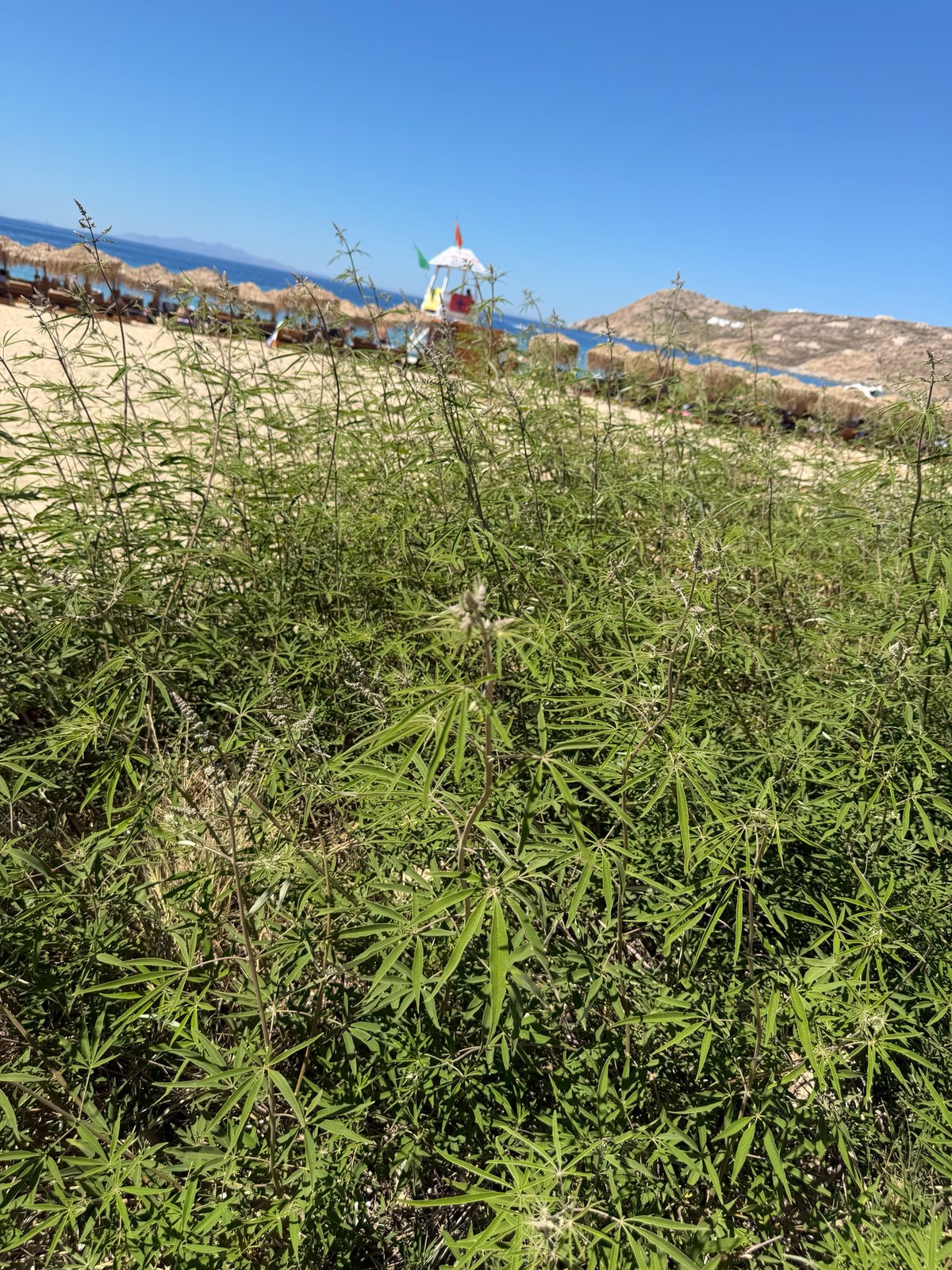
Where it spreads. Can self-seed freely in warm climates and is listed as invasive in Texas. It has also escaped cultivation in parts of the southeastern United States; check local invasive-plant guidance before planting.
Easily confused with
Chinese chaste tree (Vitex negundo)
Usually has three to five leaflets with more clearly toothed edges; chaste tree usually has five to seven narrower, mostly smooth-edged leaflets.
Butterfly bush (Buddleja davidii)
Has similar purple flower clusters but simple, elongated leaves rather than hand-shaped leaves divided into separate leaflets.
The name
The names chaste tree and agnus-castus reflect the historical belief that the plant reduced sexual desire.
Propagation. Take softwood cuttings in late spring or early summer, or semi-ripe cuttings later in summer. Seed can also be used, but seedlings may differ from the parent; use cuttings to preserve a named variety.
Checked against open data
- Accepted botanical name
- Vitex agnus-castus
- In the US and Canada
- Introduced in the lower 48 states, Puerto Rico and US Virgin Islands.
- Native range
- Afghanistan, Albania, Algeria, Baleares, Bulgaria, Corse, Cyprus, East Aegean Is., Egypt, France, Greece and Gulf States.
- Measured
- Soil pH 7 to 7.5. Average height 300 cm.
Sources: GBIF (CC BY 4.0), USDA PLANTS and Trefle (CC BY 4.0). The care and design notes are LandscapeGPT's own.
See it in your own yard.
Upload a photo of your yard and see it redesigned with plants that suit your climate, each checked against your zone.