Chestnut dioon
Dioon edule. Family Zamiaceae. Shrub.
Also called Chestnut cycad, Mexican cycad, Virgin's palm.
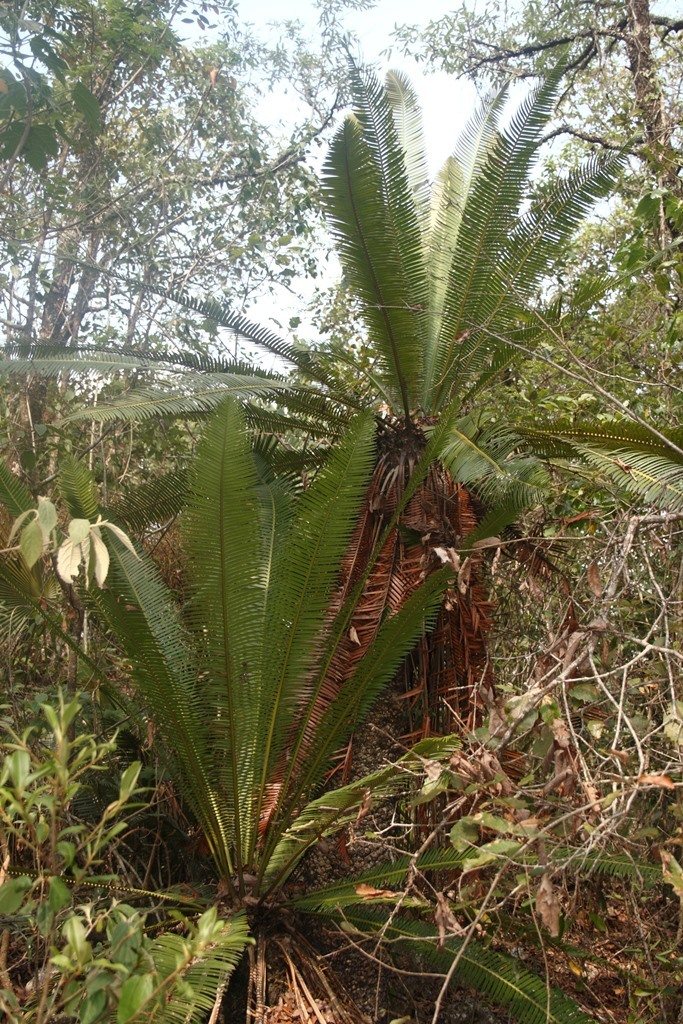
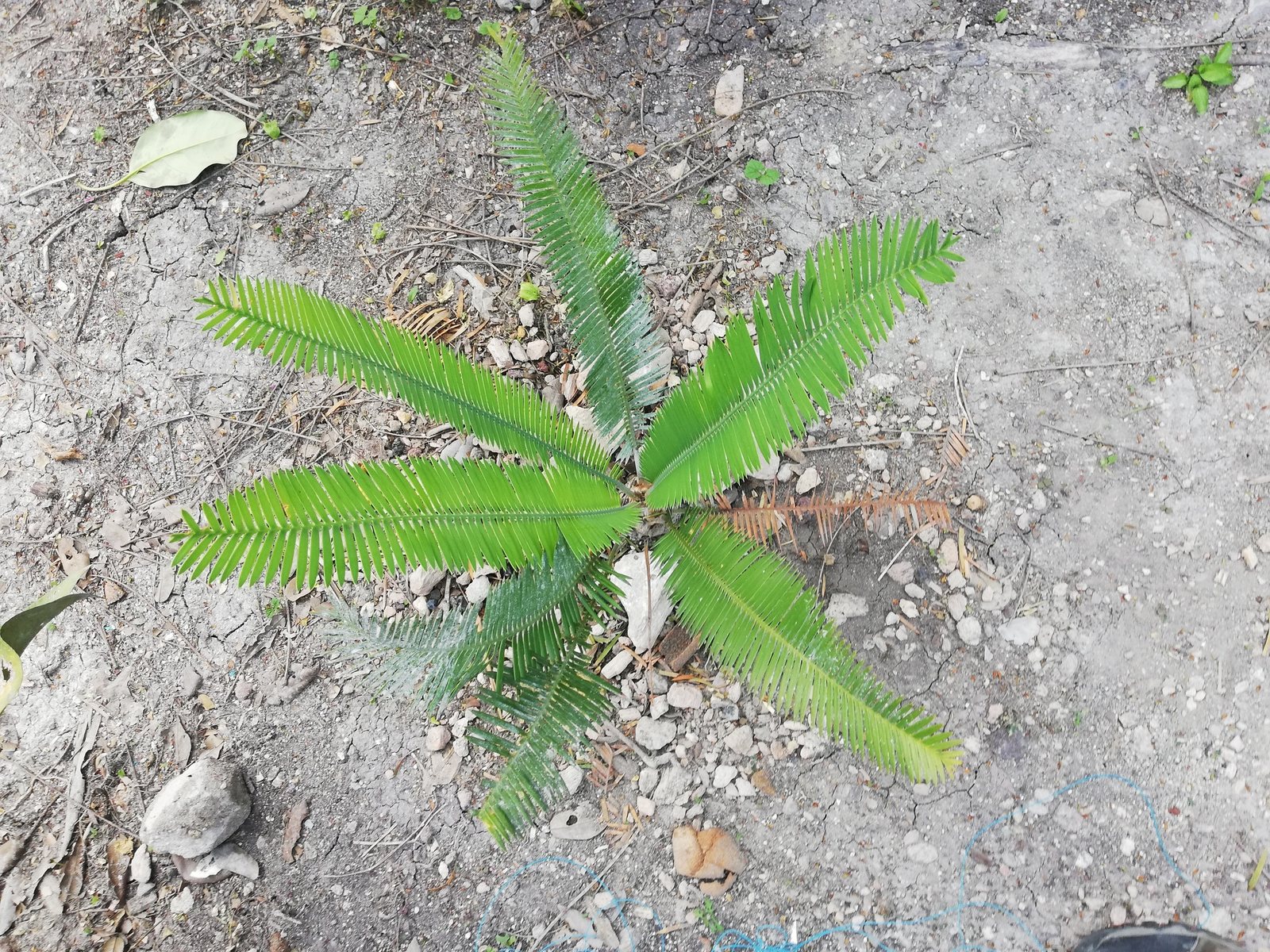
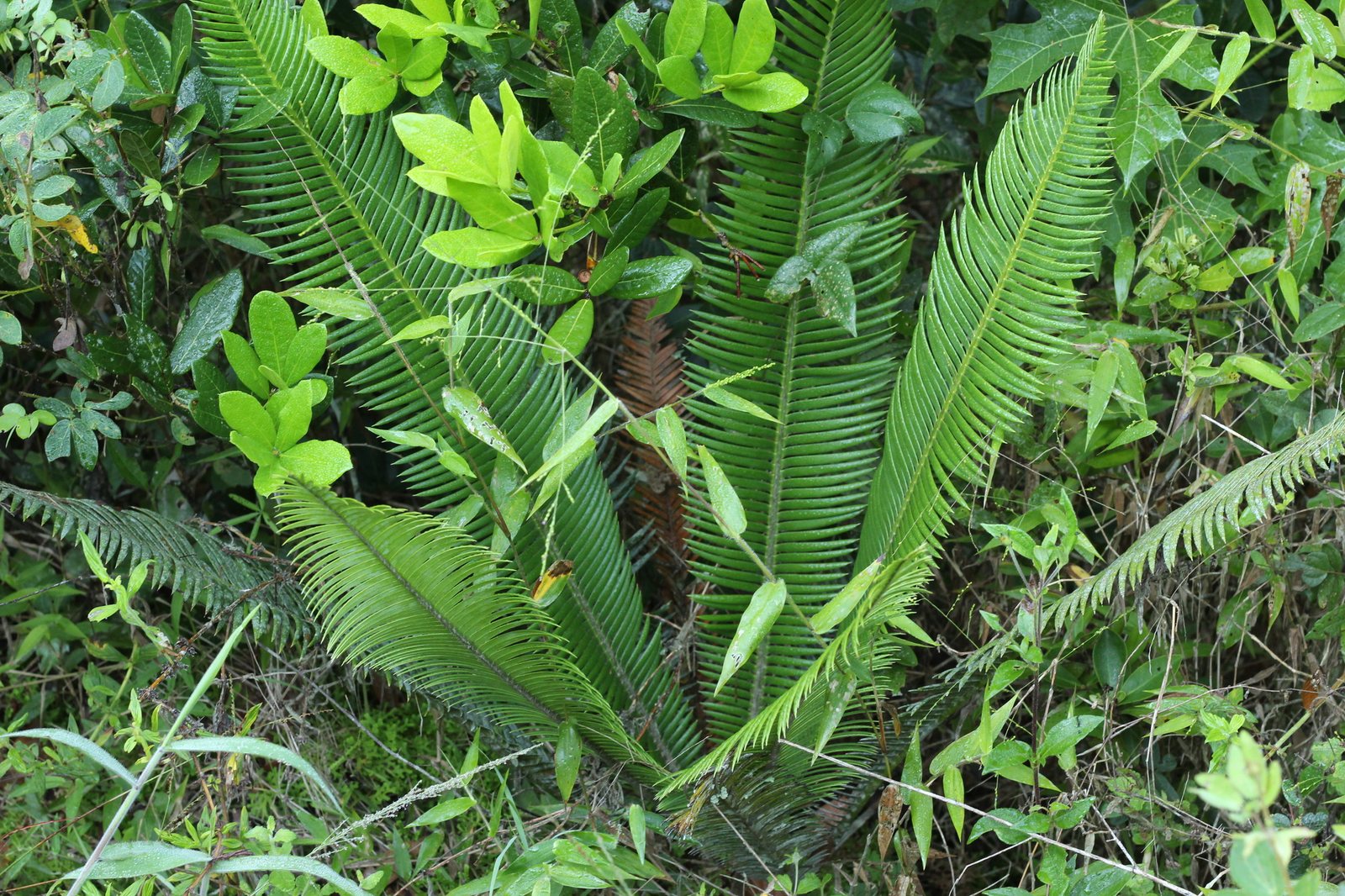
Chestnut dioon is a slow-growing, evergreen cycad from Mexico, with stiff, feather-like leaves arranged around a stout trunk. Gardeners grow it for its architectural shape and drought tolerance once established. It suits warm gardens; in most of the UK and Canada, grow it in a container moved into bright, frost-free shelter for winter.
At a glance
- Sun
- Full sun to partial shade; give young plants light afternoon shade in very hot climates.
- Water
- Water regularly while establishing, allowing the soil to dry partly between waterings. Established plants tolerate drought but dislike persistently wet roots, especially in winter.
- Soil
- Sharply drained sandy, gravelly or loamy soil; tolerates limestone soils. Use a gritty, free-draining mix in containers.
- Height
- 6-10 ft (1.8-3 m), usually much smaller for many years
- Spread
- 6-8 ft (1.8-2.4 m)
- Foliage
- Evergreen. Long, stiff, blue-green to dark green leaves with narrow, pointed leaflets. New growth is softly hairy before it hardens.
- Growth
- Very slow; trunk development takes decades, and new leaves emerge in occasional flushes.
- Care needed
- Low
The year at a glance
- Drought tolerant
- Heat tolerant
| J | F | M | A | M | J | J | A | S | O | N | D | |
|---|---|---|---|---|---|---|---|---|---|---|---|---|
| Plant |
Northern hemisphere months. In Australia, shift them by six.
- Difficulty
- Hard
- Toughness
- Needs looking after
Will it suit your garden?
Pick your zone, country, light and whether you have pets.
Full sun is 6 or more hours of direct sun a day, part shade 3 to 6 hours, shade under 3.
How it grows
Planting day
1.6 ft (0.5 m)
After 1 year
2.4 ft (0.74 m)
After 2 years
3 ft (0.98 m)
After 3 years
4 ft (1.2 m)
After 5 years
6 ft (1.7 m)
About 8 years to full size.
From a typical nursery size, at an average rate for this kind of plant. A rule of thumb, not a forecast.
Good to know
- Cats and dogs
- Toxic
- Growth rate
- Slow
Care
Jobs through the year
- WaterApr–May, Sep–Oct, every 21 days
- For established plants in frost-free ground, water only after upper soil dries; locally use a movable pot and check it more often.
- WaterJun–Aug, every 14 days
- Water established plants deeply only if upper soil is dry; young and potted plants need more frequent checks.
- WaterJan–Mar, Nov–Dec, every 30 days
- In winter shelter, check monthly and water sparingly only when compost is largely dry; never leave the pot standing in water.
- FeedMay
- Apply a light slow-release fertiliser containing trace elements.
- PruneApr–May
- Remove only fully brown or badly damaged leaves with gloves; retain green leaves and never cut the central growing point.
- ProtectMay–Jun
- Move outdoors only after frost risk passes, gradually acclimatising leaves to sunshine.
- ProtectJan–May, Sep–Dec
- Not reliably hardy in zone 6–7 or most UK gardens: keep in a movable pot and provide bright, frost-free shelter before frost.
- Plant with the crown above the soil surface and keep mulch clear of the trunk.
- Water deeply, then allow the upper soil to dry before watering again; reduce watering substantially in winter.
- Feed lightly in spring with a slow-release fertiliser containing trace elements.
- Acclimatise sheltered plants gradually to outdoor sunshine to prevent leaf scorch.
- Move container plants into bright, frost-free shelter before freezing weather; protect outdoor crowns during exceptional cold.
Pruning. Remove fully brown or badly damaged leaves close to their bases in spring, using clean secateurs and gloves. Keep healthy green leaves and never cut out the central growing point.
Through the year
- Spring
- Remove dead leaves and check the crown and leaf undersides for scale insects.
- Late spring
- Apply a light feed and gradually move sheltered container plants outdoors once frost risk has passed.
- Summer
- Water during prolonged dry spells and keep emerging leaves clear of obstructions.
- Early autumn
- Reduce watering as growth slows and check that pots and planting beds drain freely.
- Late autumn
- Move pots under bright, frost-free cover in cold climates.
- Winter
- Keep sheltered plants on the dry side and protect outdoor plants from exceptional freezes.
In the garden
- Use as a single architectural specimen in a gravel courtyard, leaving room for the full leaf spread.
- Plant among low succulents and ornamental grasses for contrasting leaf shapes in warm, dry gardens.
- Grow in a broad, stable container beside a sunny terrace, away from circulation routes.
- Repeat widely spaced plants in a warm-climate border for a strong, formal rhythm.
Garden styles it suits: Architectural minimal, Desert modern, Modern Mediterranean, Modern courtyard, Dry gravel garden and Desert / xeriscape.
Plant it with: Red yucca, Blue fescue, Society garlic, Foxtail agave and Bulbine.
Wildlife: In its native range, specialised insects pollinate its cones. It offers little nectar or pollen value to typical garden pollinators; male and female cones occur on separate plants.
Problems to watch for
- Root or crown rot in wet soil: improve drainage, keep the crown exposed and avoid frequent winter watering.
- Scale insects: inspect leaf undersides and treat affected areas with horticultural oil labelled for the plant and pest; avoid spraying in strong sun or extreme heat.
- Freeze damage: protect the crown during cold snaps and wait until spring to remove browned leaves.
- Scorched foliage after a sudden move into sun: increase sun exposure gradually, especially for plants overwintered indoors.
Safety
All parts are poisonous to people, cats, dogs and horses, especially the seeds. Ingestion can cause severe poisoning, including liver damage, and may be fatal. Do not eat any part; keep seeds and fallen plant material away from children and animals, and seek urgent medical or veterinary advice after ingestion.
Easily confused with
Sago palm (Cycas revoluta)
Sago palm has glossy, darker green leaflets with strongly rolled-under edges; chestnut dioon has flatter, usually duller or blue-green leaflets.
Giant dioon (Dioon spinulosum)
Giant dioon develops much longer, more arching leaves with broader leaflets bearing conspicuous marginal teeth; mature chestnut dioon leaflets are narrower and mostly smooth-edged.
The name
Dioon means 'two eggs', referring to the paired ovules on each female cone scale, while edule means 'edible', reflecting historical use after extensive processing rather than indicating that the plant is safe to eat.
Propagation. Propagate from fresh, legally sourced seed in a warm, well-drained medium; germination and subsequent growth are slow. Mature plants sometimes produce basal offsets, but removing and rooting them is difficult and risks rot. Buy nursery-propagated plants rather than wild-collected specimens.
Checked against open data
- Accepted botanical name
- Dioon edule
- Native range
- Mexico Gulf and Mexico Northeast.
Sources: GBIF (CC BY 4.0) and Trefle (CC BY 4.0). The care and design notes are LandscapeGPT's own.
See it in your own yard.
Upload a photo of your yard and see it redesigned with plants that suit your climate, each checked against your zone.