Chilean guava
Ugni molinae. Family Myrtaceae. Shrub.
Also called Strawberry myrtle, Ugni, Tazziberry, Murta.
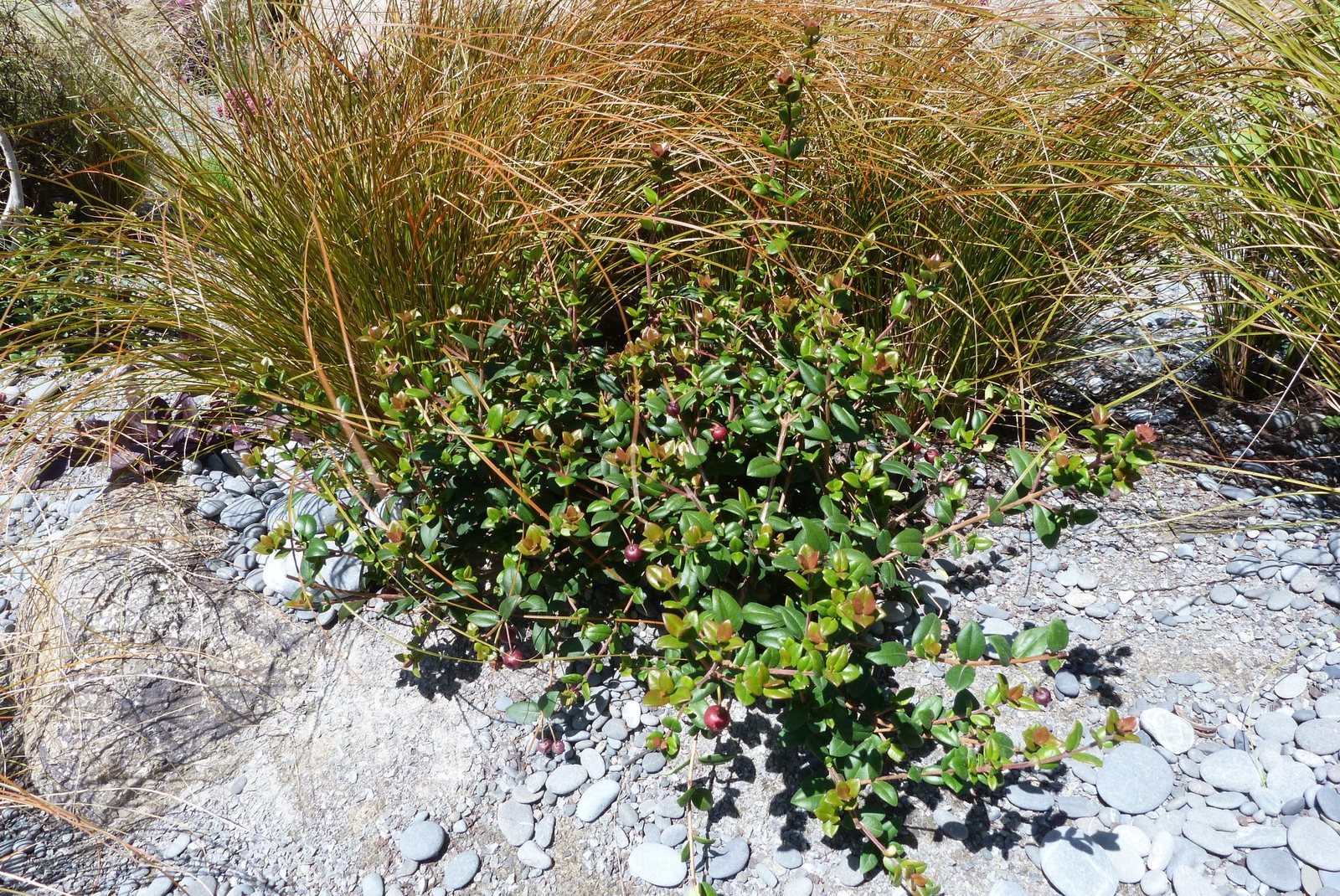
Chilean guava is a compact evergreen shrub grown for its small, aromatic berries, which have a strawberry-like flavour. Its glossy leaves and nodding flowers also suit sheltered borders and containers, especially in mild climates with cool summers.
At a glance
- Sun
- Full sun to partial shade; provide afternoon shade in hot climates and shelter from cold, drying winds.
- Water
- Keep evenly moist but not waterlogged, especially during flowering and fruit development. Water containers whenever the surface begins to dry.
- Soil
- Humus-rich, well-drained, acidic to neutral soil. Avoid chalky soil and sites that stay wet in winter.
- Height
- 3-6 ft (0.9-1.8 m)
- Spread
- 3-5 ft (0.9-1.5 m)
- Flowers
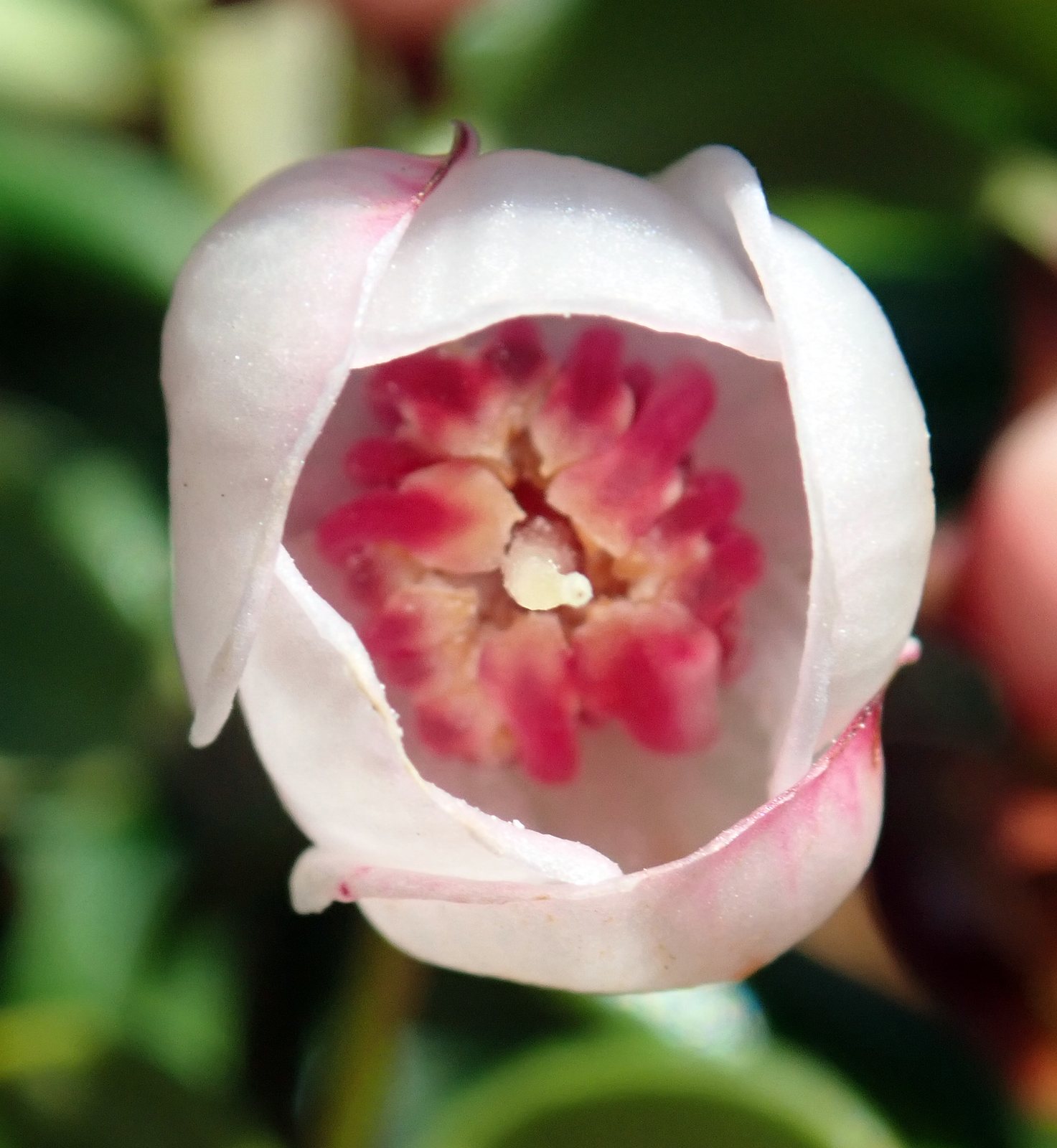
- Late spring to early summer; small, nodding, bell-shaped flowers in white to pale pink.
- Foliage
- Evergreen. Small, opposite, leathery, glossy dark-green leaves, aromatic when crushed; young growth may be bronze-tinted.
- Growth
- Slow to moderate
- Care needed
- Medium
The year at a glance
- Pollinators
- Wildlife
- Low allergen
- Fragrant
- Edible
| J | F | M | A | M | J | J | A | S | O | N | D | |
|---|---|---|---|---|---|---|---|---|---|---|---|---|
| Flowers | ||||||||||||
| Fruit | ||||||||||||
| Plant |
Northern hemisphere months. In Australia, shift them by six.
- Difficulty
- Moderate
- Toughness
- Needs looking after
Will it suit your garden?
Pick your zone, country, light and whether you have pets.
Full sun is 6 or more hours of direct sun a day, part shade 3 to 6 hours, shade under 3.
How it grows
Planting day
1.6 ft (0.5 m)
After 1 year
2.1 ft (0.63 m)
After 2 years
2.5 ft (0.76 m)
After 3 years
2.9 ft (0.89 m)
After 5 years
4 ft (1.2 m)
About 7 years to full size.
From a typical nursery size, at an average rate for this kind of plant. A rule of thumb, not a forecast.
Good to know
- Cats and dogs
- Safe
- Growth rate
- Slow
Care
Jobs through the year
- WaterApr–May, Oct, every 14 days
- Water established outdoor plants when soil begins drying; young plants and containers need more frequent checks.
- WaterJun–Sep, every 7 days
- Keep roots evenly moist during flowering and fruiting; water pots whenever the surface begins drying.
- WaterJan–Mar, Nov–Dec, every 14 days
- Check sheltered overwintering pots and water sparingly as needed without allowing roots to dry out.
- FeedApr
- Apply a light dressing of balanced fertilizer; avoid heavy feeding.
- MulchApr–May
- Apply leaf mould or composted bark, keeping it clear of stems.
- PruneApr–May
- After hard frost risk passes, remove damaged or crossing stems and lightly shorten stray shoots.
- HarvestAug–Nov
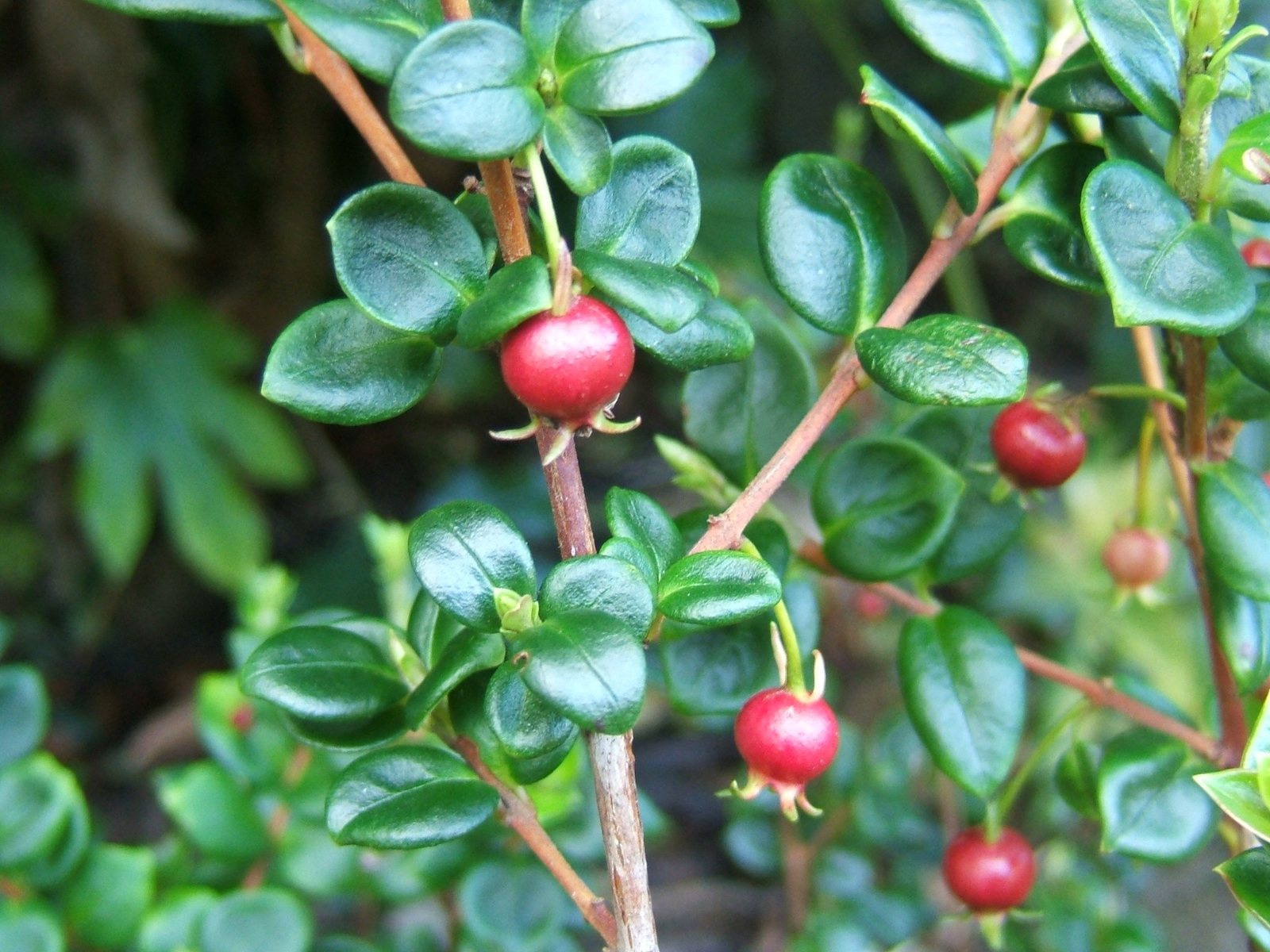
- Pick fragrant, slightly soft red-purple berries that detach easily; taste to confirm ripeness.
- ProtectOct–Nov
- In zones 6–7, move pots into bright, frost-free shelter; outdoor wrapping alone is unreliable.
- ProtectApr–May
- Acclimatise overwintered plants outdoors after hard frosts, choosing shelter from cold winds.
- Water deeply during dry spells; do not let developing fruit or container roots dry out.
- Mulch in spring with leaf mould or composted bark, keeping it clear of the stems.
- Apply a light dressing of balanced fertiliser in spring; avoid heavy feeding that encourages leafy growth.
- Use acidic or ericaceous potting mix in containers with clear drainage holes.
- Protect young plants from hard frost; move pots to a bright, frost-free place where winters exceed its hardiness.
Pruning. Prune lightly in spring after the risk of hard frost, removing dead, damaged and crossing stems. Shorten stray shoots rather than shearing the whole shrub, which can reduce flowering and fruiting.
Harvest
Pick berries in late summer and autumn when they are deep red to purple, fragrant, slightly soft and detach easily; taste one, as colour alone is not a reliable guide. Fruit ripens unevenly, so pick repeatedly by hand. Established nursery plants usually give their first worthwhile crop about 2-3 years after planting, though seedlings and plants in cool or shaded sites can take longer.
Through the year
- Spring
- Plant once severe frost has passed; choose a sheltered position with free-draining soil.
- Spring
- Remove frost-damaged growth, feed lightly and refresh the mulch.
- Late spring
- Keep roots moist during flowering and avoid spraying open flowers with insecticides.
- Summer
- Water during dry weather, checking container plants frequently.
- Late summer to autumn
- Harvest ripe berries in several passes.
- Late autumn
- Move containers under cover in cold regions and shelter outdoor plants from drying winds.
In the garden
- Plant beside a sheltered path where the flowers, aromatic foliage and berries are easy to enjoy.
- Use as a low, informal evergreen hedge around an edible garden; avoid frequent clipping if fruit is the priority.
- Grow in a large container on a sheltered patio, allowing winter protection in colder regions.
- Combine with blueberries and other acid-soil shrubs for an evergreen layer in a small edible border.
Garden styles it suits: Edible landscape, Potager (kitchen garden), Modern courtyard, Cottage garden, Sensory garden and Small-space.
Plant it with: Blueberries, Camellias, Japanese pieris, Heathers and Strawberries.
Wildlife: Flowers attract bees and other pollinating insects. Birds may eat the berries; use taut, wildlife-safe mesh if you need to protect the crop.
Problems to watch for
- Yellow leaves on alkaline soil: check soil pH and grow in an acidic container mix if the ground is chalky.
- Root rot in wet soil: improve drainage or move the plant to a raised bed or freely draining container.
- Frost scorch and shoot dieback: provide wind shelter and winter protection; remove dead growth in spring after new buds show.
- Poor fruit ripening in cool or shaded sites: give the shrub a warmer, sunnier position and keep it watered through fruit development.
Safety
Not known to be toxic to people, cats, dogs or horses. The ripe berries are edible; safety information for pets eating substantial amounts of leaves or stems is limited.
Where it spreads. Invasive on Robinson Crusoe Island in Chile's Juan Fernández archipelago, where it spreads into native vegetation. Do not plant it there.
Easily confused with
Common myrtle (Myrtus communis)
Usually has larger, more pointed leaves and open white flowers with conspicuous spreading stamens, rather than small, nodding bell-shaped flowers.
Strawberry guava (Psidium cattleyanum)
Has much larger leaves and round fruits roughly 1-2 in (2.5-5 cm) across; Chilean guava has tiny leaves and berries generally under 0.5 in (1.3 cm) across.
The name
Ugni comes from a Mapuche name for the plant, while molinae honours the Chilean naturalist Juan Ignacio Molina.
Propagation. Take semi-ripe cuttings in summer and root in a moist, free-draining medium under cover. Seed is also possible, but germination can be slow and seed-grown plants vary in fruit quality.
Checked against open data
- Accepted botanical name
- Ugni molinae
- Native range
- Argentina South, Chile Central and Chile South.
Sources: GBIF (CC BY 4.0) and Trefle (CC BY 4.0). The care and design notes are LandscapeGPT's own.
See it in your own yard.
Upload a photo of your yard and see it redesigned with plants that suit your climate, each checked against your zone.