China pink
Dianthus chinensis. Family Caryophyllaceae. Perennial.
Also called Chinese pink, Rainbow pink.
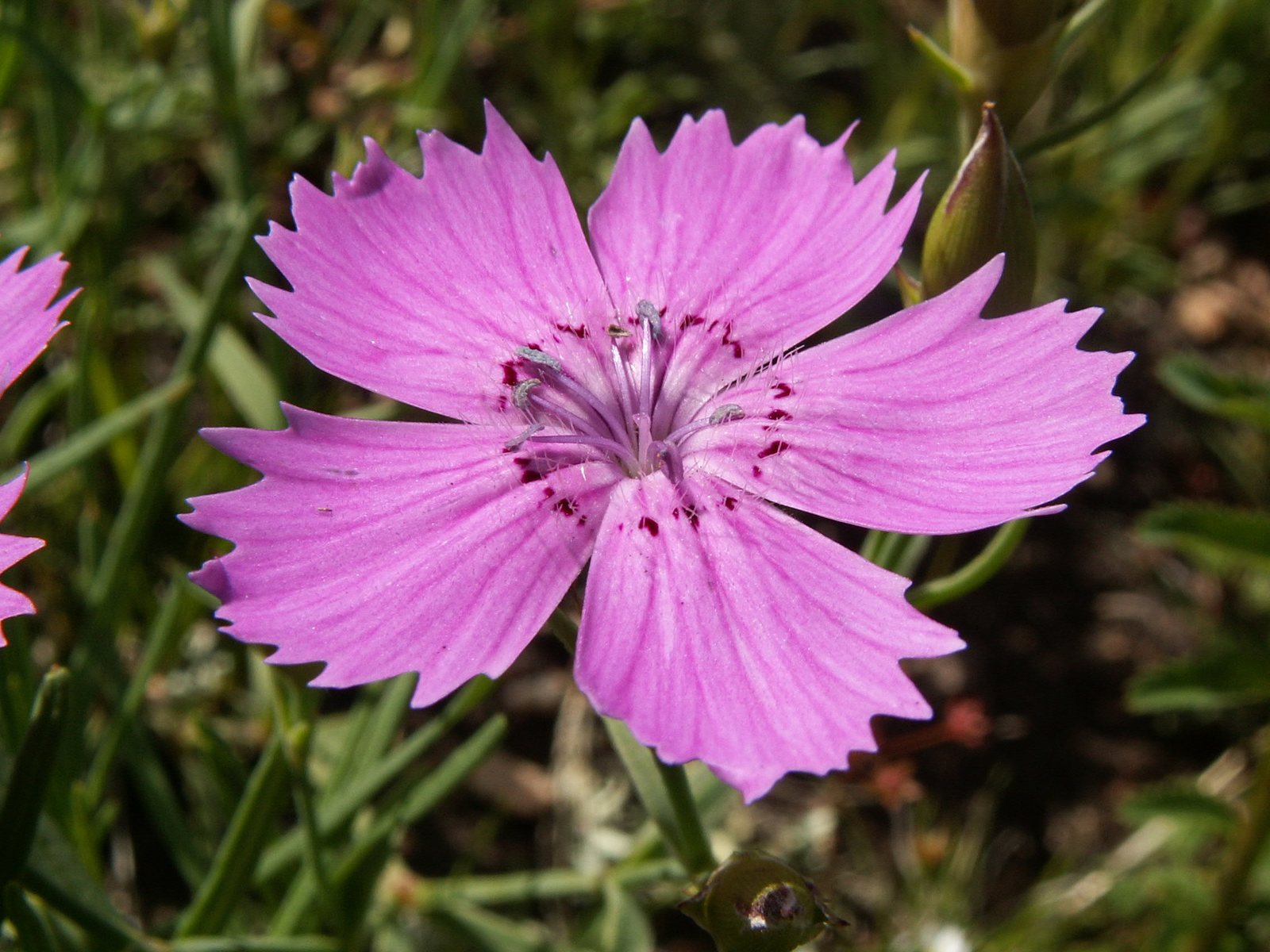
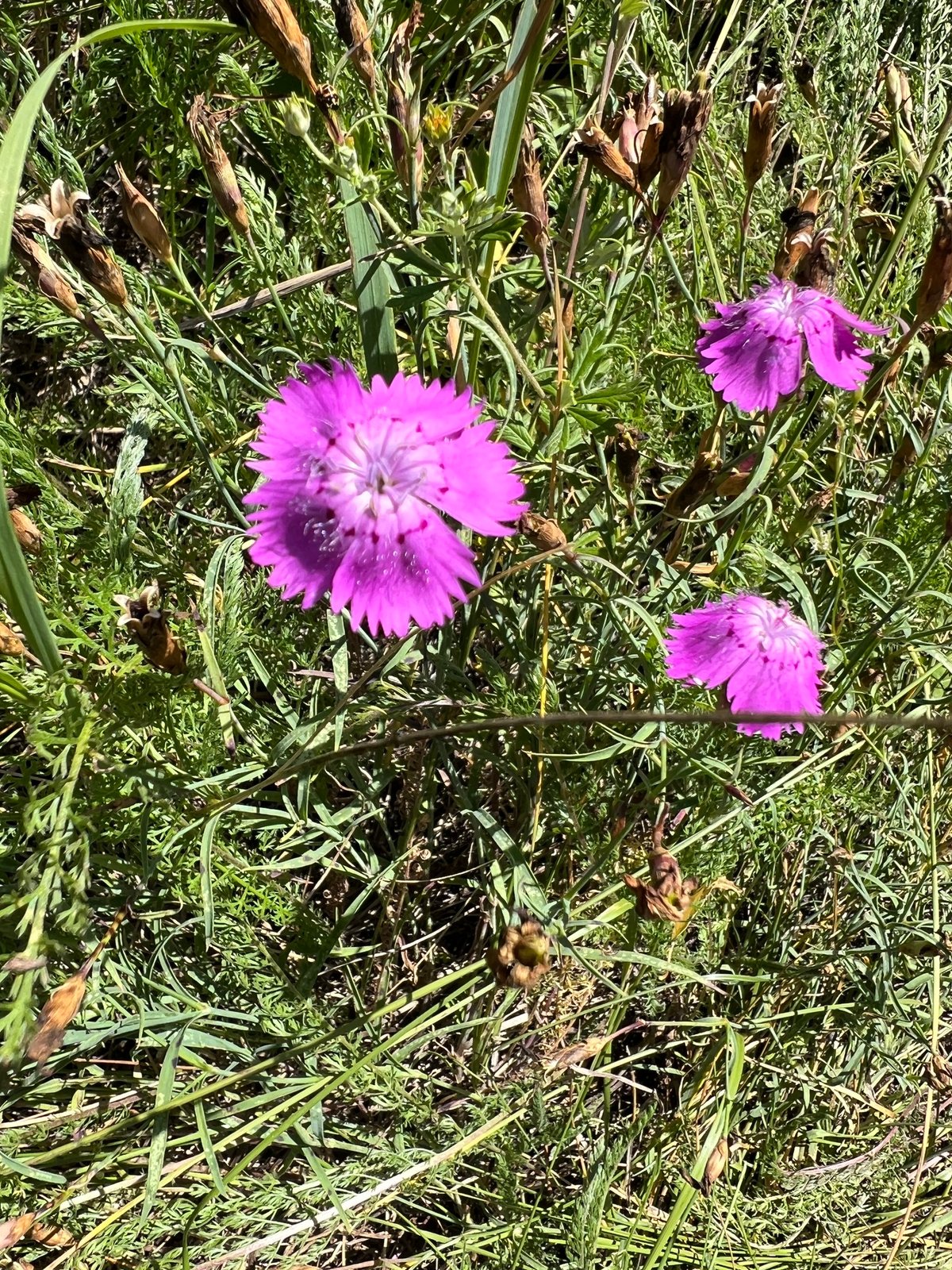
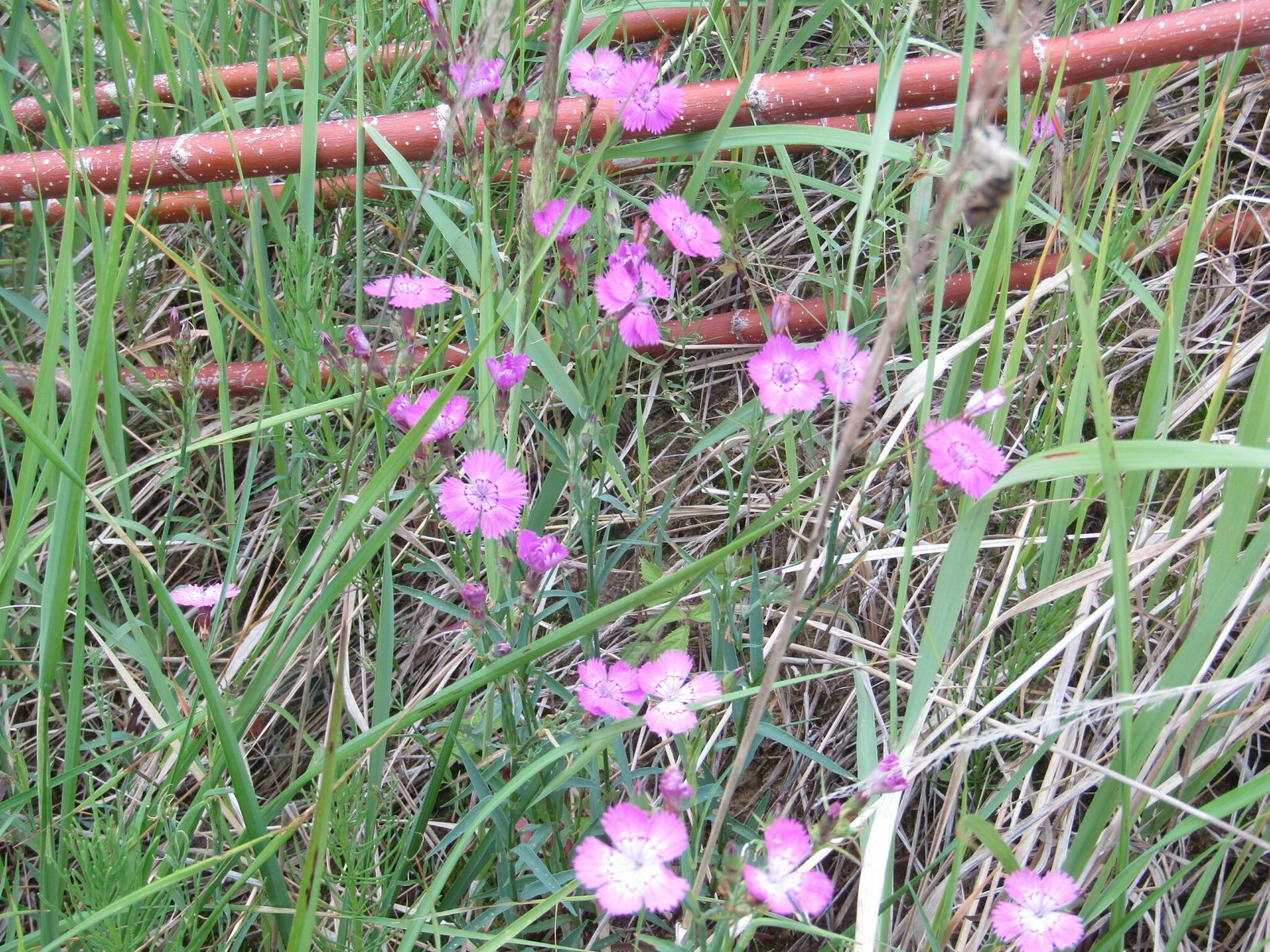
China pink is a short-lived perennial, often grown as an annual, with narrow leaves and fringed flowers in pink, red, purple or white. Gardeners grow it for colour along sunny borders and in containers; it flowers best in mild weather and well-drained soil.
At a glance
- Sun
- Full sun; light afternoon shade can help in hot climates.
- Water
- Moderate; water when the surface soil dries, keeping the root zone moist but never waterlogged.
- Soil
- Well-drained sandy or loamy soil with modest fertility; neutral to slightly alkaline soil is ideal.
- Height
- 0.5-1.5 ft (0.15-0.45 m)
- Spread
- 0.5-1 ft (0.15-0.3 m)
- Flowers
- Late spring through summer, sometimes into autumn in mild conditions; pink, red, purple and white, often with contrasting eyes or patterned petals.
- Foliage
- Narrow, pointed green to grey-green leaves in opposite pairs; foliage may persist through mild winters.
- Growth
- Fast; plants can flower in their first year from seed.
- Care needed
- Low
The year at a glance
- Pollinators
- Deer resistant
- Low allergen
| J | F | M | A | M | J | J | A | S | O | N | D | |
|---|---|---|---|---|---|---|---|---|---|---|---|---|
| Flowers | ||||||||||||
| Plant |
Northern hemisphere months. In Australia, shift them by six.
- Difficulty
- Easy
- Toughness
- Fairly tough
Will it suit your garden?
Pick your zone, country, light and whether you have pets.
Full sun is 6 or more hours of direct sun a day, part shade 3 to 6 hours, shade under 3.
How it grows
Planting day
1 ft (0.3 m)
full size
About 2 years to full size.
From a typical nursery size, at an average rate for this kind of plant. A rule of thumb, not a forecast.
Good to know
- Cats and dogs
- Mildly toxic: may upset a stomach
- Growth rate
- Fast
Care
Jobs through the year
- WaterApr–May, Sep–Oct, every 14 days
- Water established plants if the surface dries and rain is insufficient; water young plants more often.
- WaterJun–Aug, every 7 days
- Water at soil level when the surface dries; avoid saturated soil.
- FeedApr
- Apply a light spring feed; avoid excess nitrogen.
- DeadheadMay–Sep, every 7 days
- Cut faded flowers back to a leaf pair.
- PruneJul–Aug
- Lightly shear leggy stems after the main flowering flush.
- ProtectJan–Feb, Nov–Dec
- Keep crowns clear of wet leaves and ensure excellent winter drainage.
- Plant after hard frosts have passed, spacing plants about 6-12 in (15-30 cm) apart.
- Water at soil level when the surface dries; avoid repeatedly wetting the foliage.
- Feed lightly in spring; use a dilute flowering-plant fertiliser for containers according to its label.
- Keep mulch away from the crown and avoid heavy, moisture-holding mulch.
- Use containers or raised beds if your garden soil stays wet in winter.
Pruning. Remove faded flowers regularly, cutting back to a leaf pair rather than leaving seed heads. After the main flush, lightly shear leggy stems to encourage fresh growth and possible repeat flowering.
Through the year
- Late winter
- Sow seed indoors in bright light about 6-8 weeks before your last expected hard frost.
- Spring
- Harden off seedlings and plant in a sunny, freely draining position once hard frosts have passed.
- Late spring
- Begin deadheading as flowers fade and check young growth for aphids.
- Summer
- Water during dry spells and lightly shear plants after their main flowering flush.
- Autumn
- Remove exhausted annual-grown plants, or leave healthy perennial crowns where winters and drainage are suitable.
- Winter
- Keep surviving crowns free of wet leaves and check that containers drain freely.
In the garden
- Edge sunny paths and small beds with compact plants for a low band of colour.
- Plant in pots or window boxes with sweet alyssum and annual lobelia for a long-flowering display.
- Use among lavender and compact salvias in well-drained borders for contrasting flower shapes.
- Repeat small groups through cottage borders to connect taller summer flowers with the front edge.
Garden styles it suits: Cottage garden, Traditional, Modern courtyard, Small-space, Pastel border and Dry gravel garden.
Plant it with: Sweet alyssum, Annual lobelia, Lavender, Catmint, Salvia and Creeping thyme.
Wildlife: Open, single flowers provide nectar for butterflies and some bees. Double-flowered forms are generally less accessible to pollinators.
Problems to watch for
- Crown and root rot: improve drainage, keep the crown clear of mulch and discard badly affected plants.
- Aphids on buds and soft shoots: wash off small colonies with water; use insecticidal soap if needed, following the label.
- Slugs and snails eating seedlings: inspect after dark, remove hiding places and protect young plants with suitable barriers or labelled bait.
- Poor flowering or summer decline: provide more sun if shaded, avoid high-nitrogen feeding and expect flowering to slow during prolonged heat.
Safety
Treat leaves, stems and flowers as mildly toxic to cats and dogs: chewing may cause vomiting, diarrhoea or skin irritation. In people, sap can irritate sensitive skin, and the plant should not be eaten. Toxicity to horses is not well established.
Easily confused with
Sweet William (Dianthus barbatus)
Sweet William usually has broader leaves and dense, flat-topped clusters of many small flowers; China pink has fewer, larger flowers on each stem.
Garden pink (Dianthus plumarius)
Garden pink usually forms a more persistent grey-blue mat and has strongly scented flowers with more deeply cut petals; China pink is generally greener and less fragrant.
Carnation (Dianthus caryophyllus)
Carnations generally have longer stems, greyer leaves and a longer flower calyx; many cultivated forms have large, densely double flowers.
The name
Dianthus comes from Greek words meaning 'divine flower', while chinensis means 'of China'.
Propagation. Sow seed indoors before spring planting or directly outdoors after hard frosts. Seedlings from named varieties may differ from their parents; take non-flowering softwood cuttings in late spring or early summer to preserve a particular plant.
Checked against open data
- Accepted botanical name
- Dianthus chinensis
- Native range
- Altay, Amur, Assam, Buryatiya, Central European Rus, China North-Central, China Southeast, Chita, East European Russia, East Himalaya, India and Inner Mongolia.
- Measured
- Average height 43 cm.
Sources: GBIF (CC BY 4.0), USDA PLANTS and Trefle (CC BY 4.0). The care and design notes are LandscapeGPT's own.
See it in your own yard.
Upload a photo of your yard and see it redesigned with plants that suit your climate, each checked against your zone.