Chinese Virginia creeper
Parthenocissus henryana. Family Vitaceae. Climber.
Also called Chinese creeper, Silver-veined Virginia creeper.
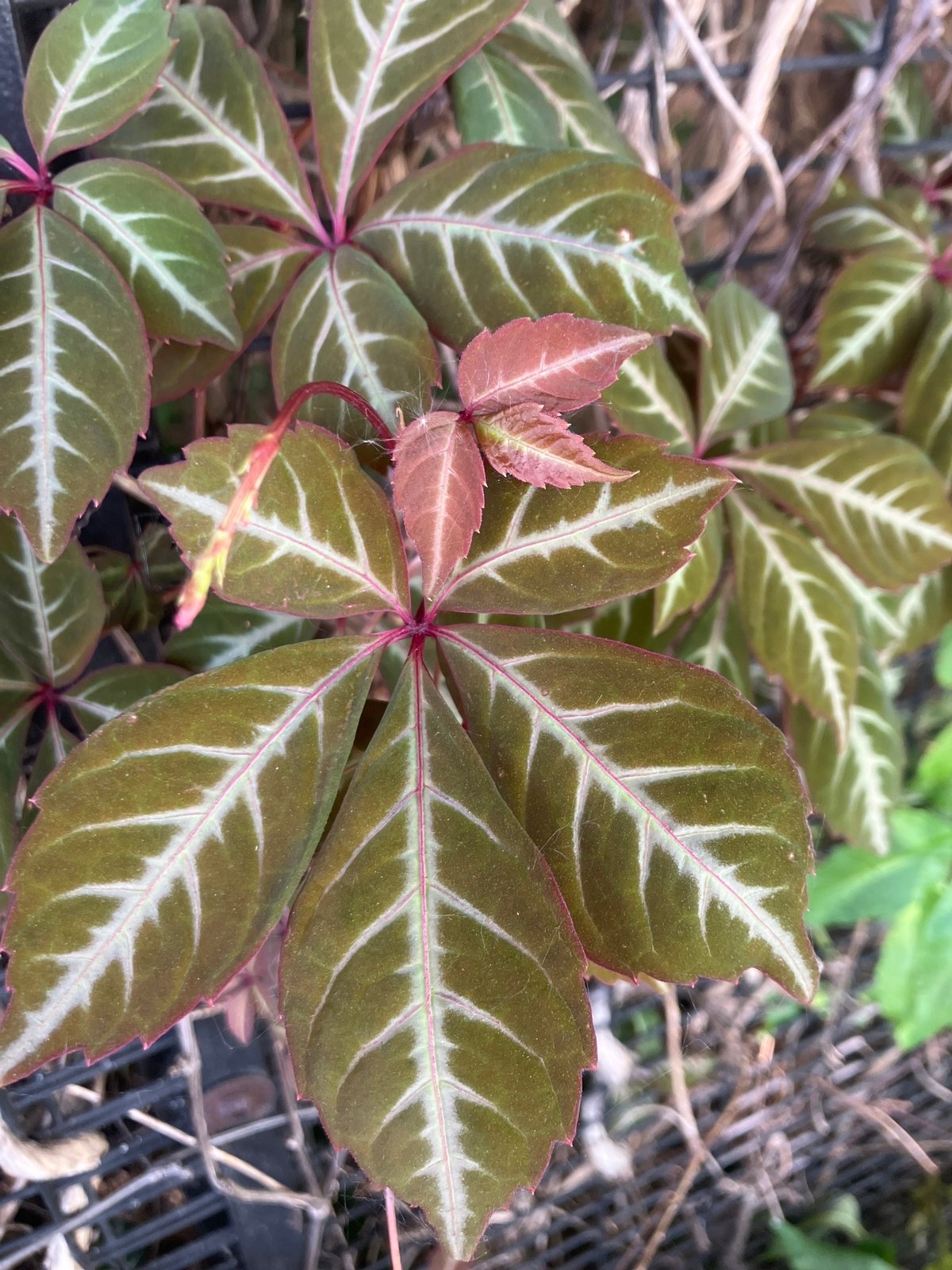
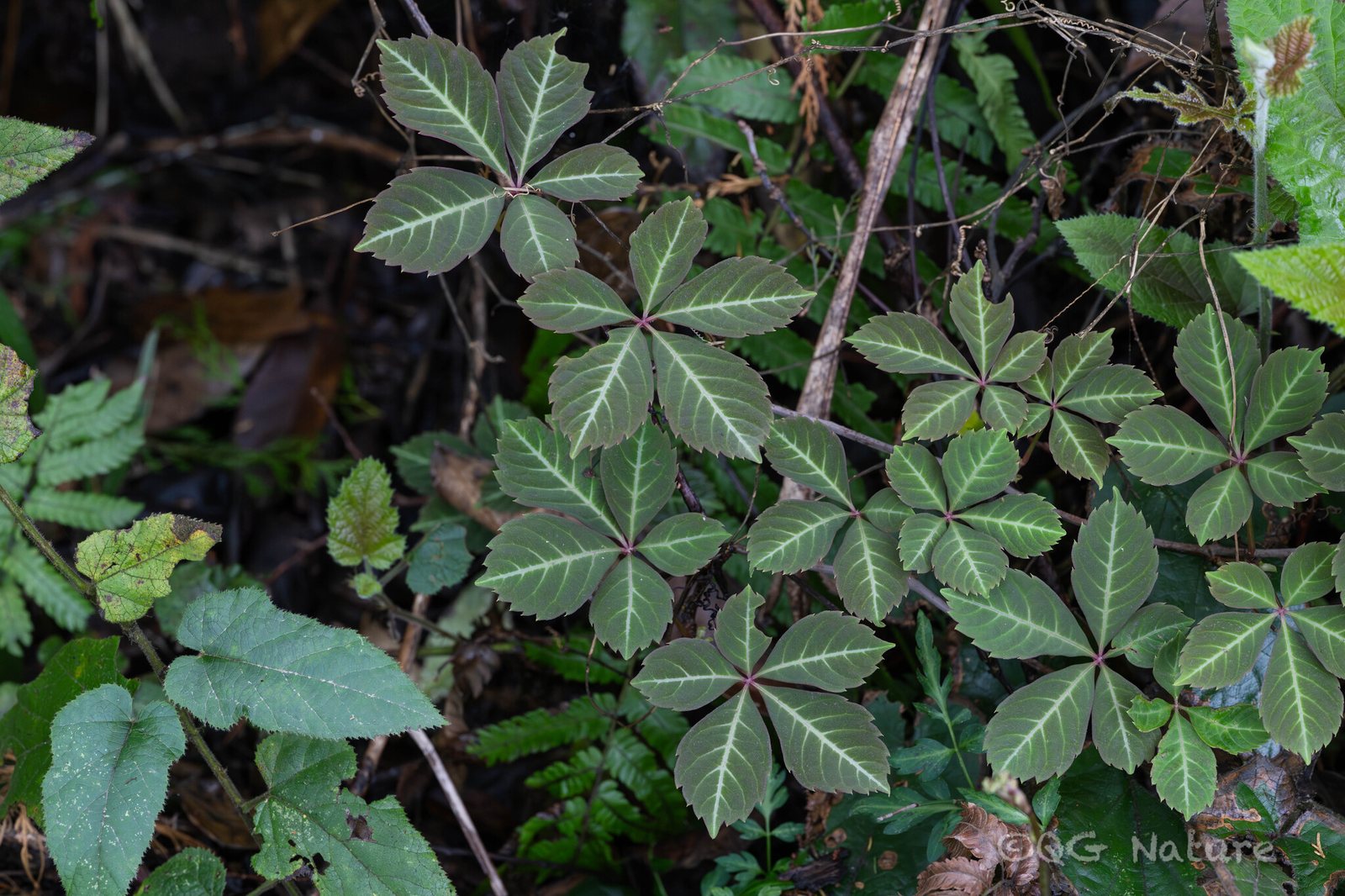
Chinese Virginia creeper is a deciduous, self-clinging climber grown for its dark leaves with contrasting silver-white veins and red autumn colour. It is generally less vigorous than common Virginia creeper and is useful for covering a shaded wall, though it still needs regular boundary pruning.
At a glance
- Sun
- Partial shade is ideal; tolerates full shade and full sun where the soil stays moist. Give it afternoon shade in hot climates.
- Water
- Water regularly during establishment, keeping the root zone moist but not waterlogged. Once established, water deeply during prolonged dry spells.
- Soil
- Moist, well-drained soil enriched with organic matter; tolerates clay, loam and sandy soil, and a broad pH range.
- Height
- 20-30 ft (6-9 m), potentially taller on a large support
- Spread
- 8-15 ft (2.4-4.6 m), depending on support and pruning
- Foliage
- Five-part leaves with dark green to bronze-green leaflets, prominent silver-white veins and often reddish-purple undersides; turning red to crimson in autumn.
- Growth
- Moderate; often slow to establish, then faster once rooted
- Care needed
- Medium
The year at a glance
- Pollinators
- Wildlife
- Low allergen
| J | F | M | A | M | J | J | A | S | O | N | D | |
|---|---|---|---|---|---|---|---|---|---|---|---|---|
| Fruit | ||||||||||||
| Plant |
Northern hemisphere months. In Australia, shift them by six.
- Difficulty
- Moderate
- Toughness
- Fairly tough
Will it suit your garden?
Pick your zone, country, light and whether you have pets.
Full sun is 6 or more hours of direct sun a day, part shade 3 to 6 hours, shade under 3.
How it grows
Planting day
2 ft (0.6 m)
After 1 year
3 ft (0.9 m)
After 2 years
4 ft (1.2 m)
After 3 years
5 ft (1.5 m)
After 5 years
6 ft (1.8 m)
full size
About 4 years to full size.
From a typical nursery size, at an average rate for this kind of plant. A rule of thumb, not a forecast.
Good to know
- Cats and dogs
- Toxic
- Growth rate
- Moderate
Care
Jobs through the year
- WaterApr–May, Sep–Oct, every 14 days
- Water established plants deeply during dry spells; provide more regular water for the first two years.
- WaterJun–Aug, every 10 days
- Water established plants if the root zone dries, especially near walls; skip after soaking rain.
- MulchMar–Apr
- Apply 5-8 cm of organic mulch over the roots, keeping stems clear.
- PruneFeb–Mar
- Remove dead or crowded stems and shorten growth to fit its support.
- PruneJun–Sep, every 28 days
- Trim wandering shoots before they attach to gutters, roofs or window frames.
- ProtectMay–Jun
- Guide and loosely tie young shoots until their adhesive tendrils attach.
- ProtectOct–Nov
- Clear leaves from drains and check support ties for rubbing or constriction.
- Plant with compost mixed into the surrounding soil and water thoroughly.
- Guide and loosely tie young shoots to their support until the adhesive tendrils take hold.
- Water deeply during dry weather for the first two growing seasons.
- Apply a 2-3 in (5-8 cm) organic mulch each spring, keeping it away from the stems.
- Keep shoots out of gutters, roof spaces and window frames; use only sound masonry or a sturdy support.
Pruning. Prune in late winter or early spring, removing dead or crowded stems and shortening growth to fit its support. Trim wandering shoots during summer before they attach to unwanted surfaces.
Through the year
- Late winter
- Prune to control size and remove dead, damaged or badly placed stems.
- Spring
- Plant new specimens when the soil is workable, then water well and mulch.
- Late spring
- Guide new shoots across the support and tie in any that have not attached.
- Summer
- Water during prolonged dry spells and trim shoots away from gutters, roofs and windows.
- Early autumn
- Check the support and remove unwanted growth before leaf fall hides where stems are attached.
- Late autumn
- Clear fallen leaves from drains and check ties for rubbing or constriction.
In the garden
- Cover a shaded brick or stone wall with silver-veined foliage and red autumn colour.
- Train over a sturdy fence behind hostas and ferns to create a layered, leafy boundary.
- Clothe a substantial pergola for seasonal shade, accepting that the canopy is bare in winter.
- Use against pale masonry where its dark leaves and contrasting veins can be seen clearly.
Garden styles it suits: Woodland, Modern courtyard, Arts and Crafts, Traditional, Secret garden and Autumn colour.
Plant it with: Hostas, Japanese painted fern, Hellebores, Japanese anemones, Bigroot geranium and Oakleaf hydrangea.
Wildlife: Small, inconspicuous flowers attract visiting insects, and birds may eat the blue-black berries. Dense mature growth can provide shelter and nesting cover.
Problems to watch for
- Leaf scorch or premature leaf drop in hot, dry positions: water deeply, mulch the root zone and provide afternoon shade.
- Powdery mildew in dry, crowded conditions: improve airflow, avoid drought stress and remove badly affected fallen leaves.
- Vine weevil, especially in containers: inspect damaged plants for root-feeding grubs and use a suitable biological control where available.
- Shoots entering gutters or attaching to unsuitable surfaces: inspect during the growing season and cut them back before they establish.
Safety
Do not eat the berries or foliage. Parthenocissus contains calcium oxalate crystals that can irritate the mouth and digestive tract; ingestion may cause drooling, vomiting or diarrhoea in people, cats and dogs. Sap can also irritate sensitive skin. Species-specific information for horses is limited, so keep it away from grazing areas and seek veterinary advice after ingestion.
Easily confused with
Virginia creeper (Parthenocissus quinquefolia)
Also has five leaflets, but they are usually plain green without the conspicuous silver-white veins of Chinese Virginia creeper; growth is generally more vigorous.
Boston ivy (Parthenocissus tricuspidata)
Mature leaves are usually single, three-lobed blades rather than five separate leaflets, and lack the distinctive silver-white vein pattern.
The name
The species name henryana honours the Irish plant collector Augustine Henry, while Chinese Virginia creeper refers to its Chinese origin and resemblance to Virginia creeper.
Propagation. Layer a low-growing stem in spring, or take semi-ripe cuttings in summer. Seed is possible but slower and usually needs a period of cold, moist conditions before germination.
Checked against open data
- Accepted botanical name
- Parthenocissus henryana
- Native range
- China North-Central, China South-Central, China Southeast and East Himalaya.
Sources: GBIF (CC BY 4.0) and Trefle (CC BY 4.0). The care and design notes are LandscapeGPT's own.
See it in your own yard.
Upload a photo of your yard and see it redesigned with plants that suit your climate, each checked against your zone.