Chocolate mint
Mentha × piperita 'Chocolate'. Family Lamiaceae. Perennial.
Also called Chocolate peppermint.
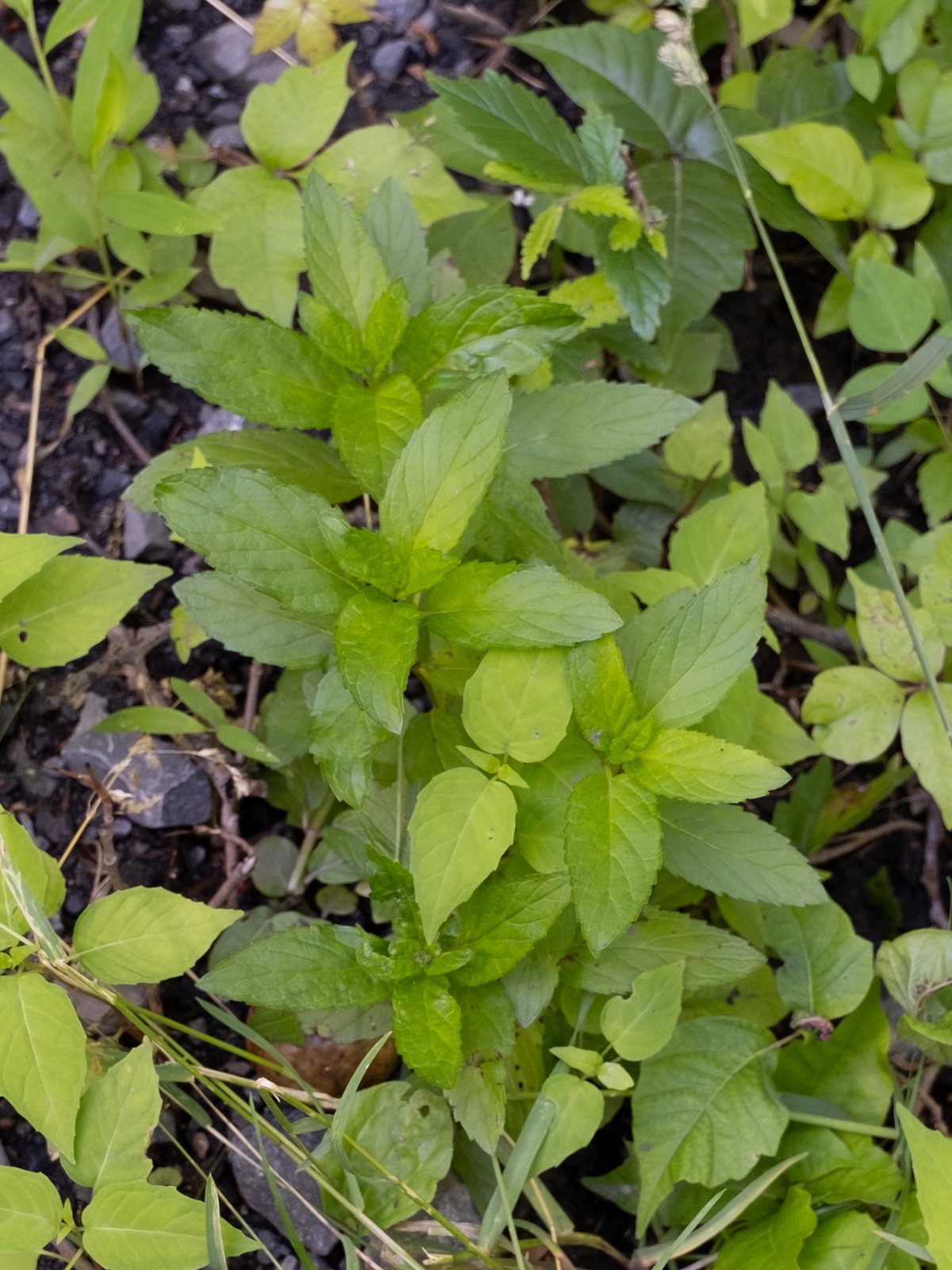
Chocolate mint is a spreading culinary herb with dark stems and peppermint-scented leaves that some people detect as having a chocolate note. Grow it for teas, desserts and fragrant foliage, preferably in a container because its underground runners quickly invade nearby planting.
At a glance
- Sun
- Full sun to partial shade; afternoon shade helps in hot climates.
- Water
- Keep evenly moist but not waterlogged. Containers may need daily watering during hot, dry weather.
- Soil
- Moist, fertile, well-drained soil; tolerates clay if it does not remain waterlogged. Use ordinary peat-free potting mix in containers.
- Height
- 1-2 ft (0.3-0.6 m)
- Spread
- 2-3 ft (0.6-0.9 m), spreading farther over time if unrestricted
- Flowers
- Small pale lilac flowers in spikes from mid- to late summer.
- Foliage
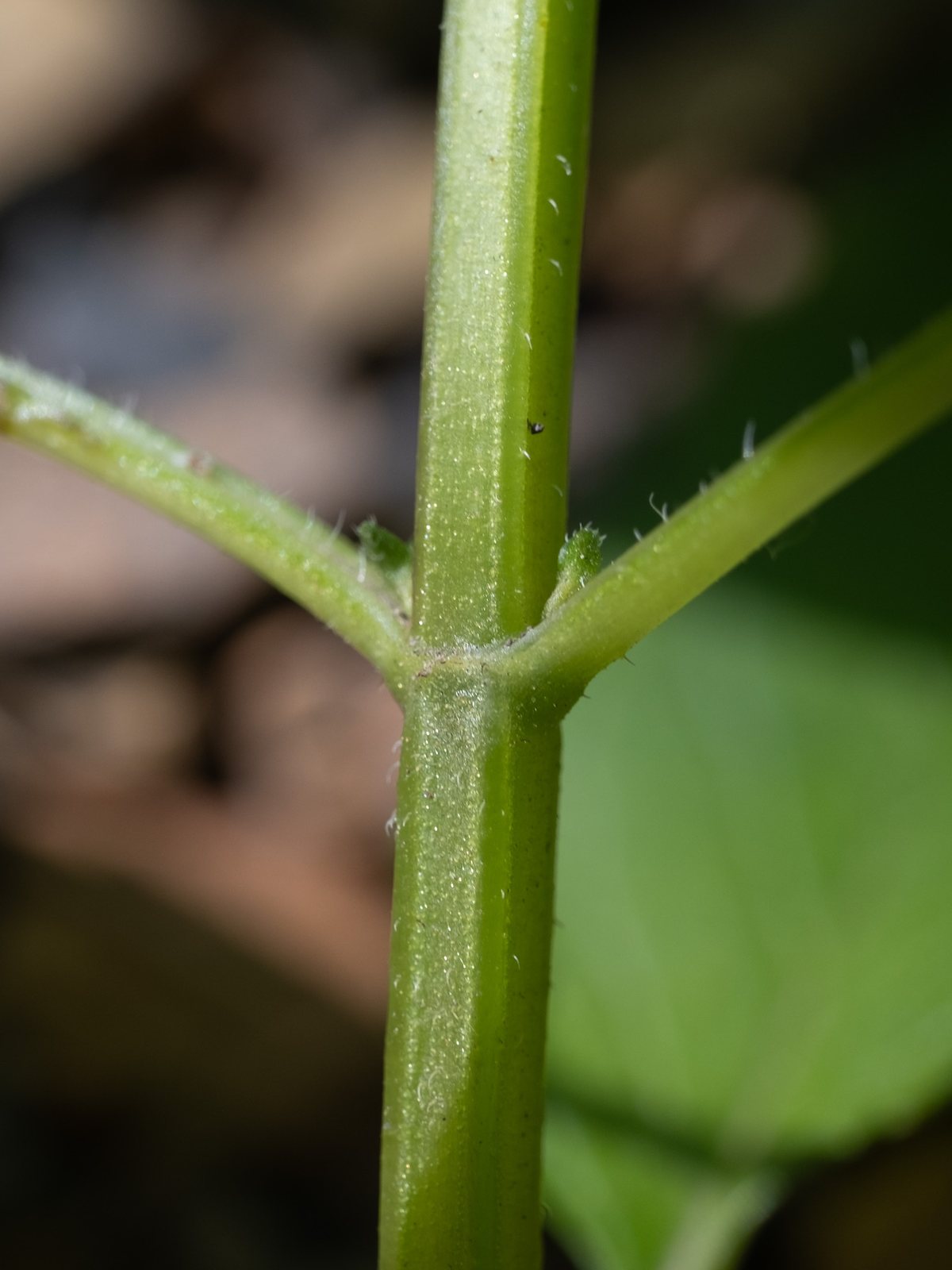
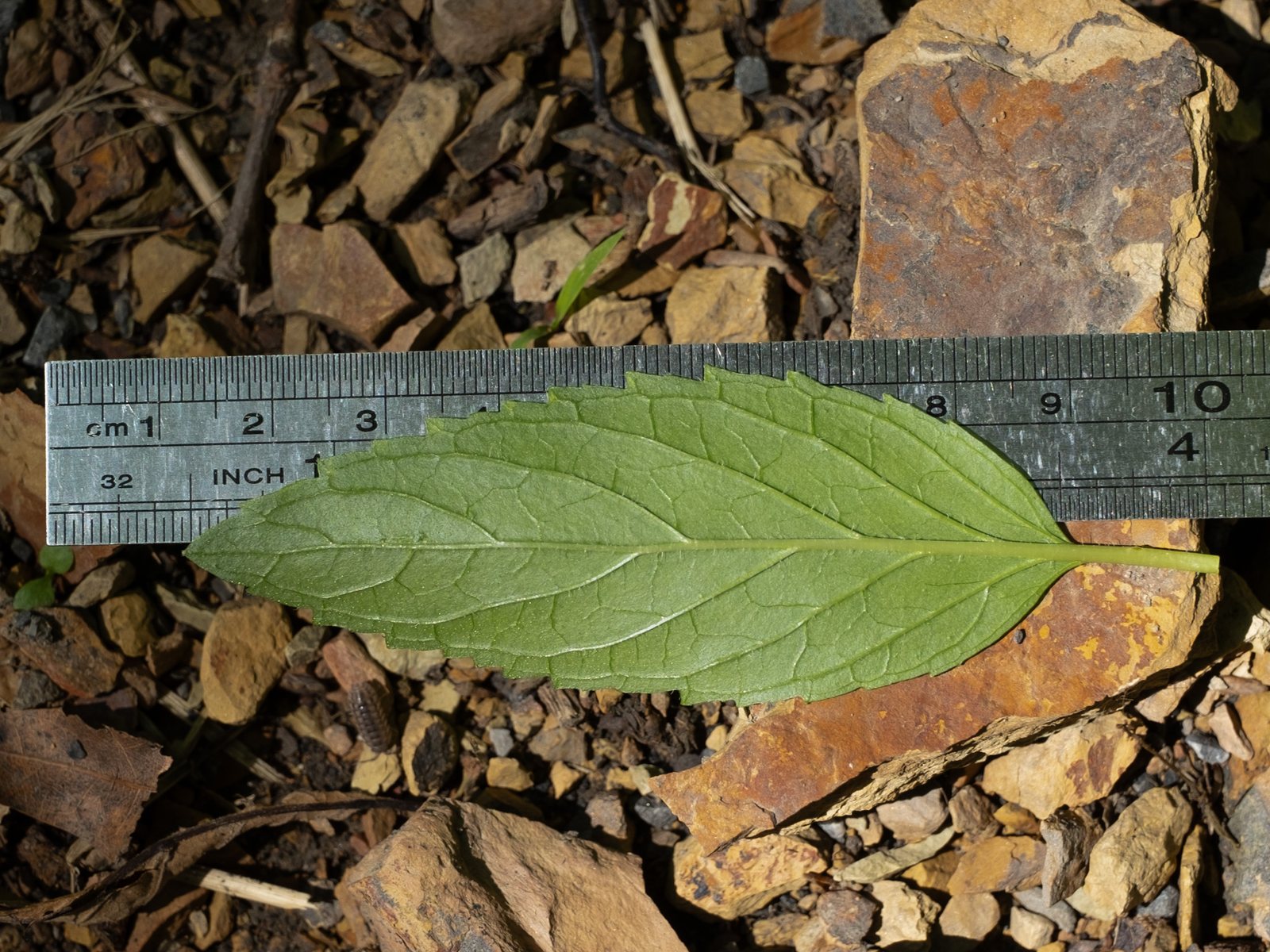
- Opposite, toothed, dark green leaves, often bronze-flushed, on dark purple-brown stems; strongly aromatic when rubbed.
- Growth
- Fast
- Care needed
- Medium
The year at a glance
- Pollinators
- Deer resistant
- Heat tolerant
- Low allergen
- Fragrant
- Edible
| J | F | M | A | M | J | J | A | S | O | N | D | |
|---|---|---|---|---|---|---|---|---|---|---|---|---|
| Flowers | ||||||||||||
| Fruit | ||||||||||||
| Plant |
Northern hemisphere months. In Australia, shift them by six.
- Difficulty
- Easy
- Toughness
- Very tough
Will it suit your garden?
Pick your zone, country, light and whether you have pets.
Full sun is 6 or more hours of direct sun a day, part shade 3 to 6 hours, shade under 3.
How it grows
Planting day
1 ft (0.3 m)
After 1 year
1.2 ft (0.38 m)
After 2 years
1.5 ft (0.45 m)
full size
About 2 years to full size.
From a typical nursery size, at an average rate for this kind of plant. A rule of thumb, not a forecast.
Good to know
- Cats and dogs
- Toxic
- In the garden
- Spreads vigorously: plan to contain it.
- Growth rate
- Fast
Care
Jobs through the year
- WaterApr–May, Sep–Oct, every 7 days
- For established in-ground plants, water if the surface dries; check containers and young plants more often.
- WaterJun–Aug, every 3 days
- Keep established in-ground plants moist during dry weather; containers may need daily watering.
- FeedApr
- Refresh container compost and feed lightly only if growth is weak.
- DivideMar–Apr
- Divide congested plants every one or two years, retaining vigorous outer sections in separate pots.
- HarvestApr–Oct, every 7 days
- Pick healthy tips after dew dries, leaving enough leaves for recovery; flavour is best before flowering.
- PruneJul–Sep
- Cut back tired flowering stems for fresh leaves; leave some flowers for pollinators.
- PruneNov
- Cut dead stems to ground level and remove runners escaping from containers.
- ProtectJan–Feb, Nov–Dec
- Shelter or insulate exposed pots during severe cold without blocking drainage.
- Grow in a separate container at least 12 in (30 cm) wide with drainage holes to contain the runners.
- Water when the surface begins to dry; do not let the root ball dry out completely.
- Refresh container compost in spring and apply a light feed if growth is weak; avoid heavy feeding.
- Divide congested container plants every one or two years, keeping vigorous outer sections.
- In cold regions, shelter pots against a wall or insulate them over winter because exposed roots are less hardy than roots in the ground.
Pruning. Pinch or harvest shoot tips regularly during the growing season to encourage branching, and cut back flowering or tired stems to encourage fresh leaves. Cut dead stems to ground level in late autumn or early spring.
Harvest
Pick healthy leaves and tender shoot tips once the plant is well established and producing new growth. Leaves usually have their best flavour before flowering; harvest in the morning after dew has dried, leaving enough leafy growth for recovery.
Through the year
- Early spring
- Remove dead stems and divide crowded clumps or pot-bound plants.
- Spring
- Plant rooted divisions in containers and refresh the compost around established plants.
- Late spring
- Begin regular tip harvesting once plants are growing strongly.
- Summer
- Keep compost moist and check drainage holes for escaping runners.
- Late summer
- Cut back tired flowering stems for fresh leaves, leaving some flowers if wanted for pollinators.
- Late autumn
- Remove dead growth and protect exposed containers where winters are severe.
In the garden
- Keep in a dedicated pot beside a kitchen door for convenient harvesting.
- Place containers along a path or seating area where brushing the leaves releases their scent.
- Use dark stems and bronze-flushed leaves as a contrast beside parsley and chives in separate pots.
- Include a contained clump in a herb garden or potager, allowing a few flower spikes to feed pollinators.
Garden styles it suits: Cottage garden, Potager (kitchen garden), Sensory garden, Edible landscape, Herb parterre and Small-space.
Plant it with: Parsley, Chives, Lettuce and Calendula.
Wildlife: Flowers provide nectar for bees and other pollinating insects. Frequent harvesting prevents flowering, so leave a few stems uncut if pollinator value is important.
Problems to watch for
- Mint rust: orange pustules develop beneath leaves. Remove affected shoots, avoid wetting foliage and discard badly infected plants rather than propagating them.
- Aphids: inspect soft shoot tips and wash colonies off with water; pinch out heavily infested tips.
- Dry, scorched foliage: check the root ball, water thoroughly and move containers out of strong afternoon sun.
- Aggressive spread: keep plants in separate pots, check for runners escaping through drainage holes and remove unwanted growth promptly.
Safety
Leaves are not known to be toxic to people in normal culinary quantities. Mint is considered toxic to cats, dogs and horses because its essential oils can cause vomiting, diarrhoea or other digestive upset, particularly when substantial amounts are eaten. Concentrated mint essential oil is much more hazardous than a small nibble of foliage and should not be given to pets.
Where it spreads. Spreads aggressively by underground runners in suitable moist gardens across the United States, Canada, the United Kingdom and temperate Australia. Peppermint can escape cultivation; this is a containment warning, not a claim that this cultivar is officially listed as invasive in all these regions.
Easily confused with
Peppermint (Mentha × piperita)
Ordinary peppermint can look almost identical, including having dark stems. Chocolate mint is selected for its particular aroma, but scent varies with growing conditions;
Spearmint (Mentha spicata)
Usually has brighter green, more pointed leaves and a sweet spearmint scent rather than the sharper, cooling peppermint aroma.
Apple mint (Mentha suaveolens)
Has rounded, noticeably hairy, softer grey-green leaves and a fruity mint scent rather than smooth-looking dark foliage.
The name
Mentha comes from the Greek name associated with the nymph Minthe, piperita means peppery, and 'Chocolate' refers to the perceived chocolate note in the leaves' mint aroma.
Propagation. Divide rooted runners in spring or take soft stem cuttings during the growing season. Propagate vegetatively to retain the cultivar; seed will not reliably produce chocolate mint.
Checked against open data
- Accepted botanical name
- Mentha piperita
Sources: GBIF (CC BY 4.0). The care and design notes are LandscapeGPT's own.
See it in your own yard.
Upload a photo of your yard and see it redesigned with plants that suit your climate, each checked against your zone.