Cinnamon fern
Osmundastrum cinnamomeum. Family Osmundaceae. Fern.
Also called Osmunda cinnamomea.
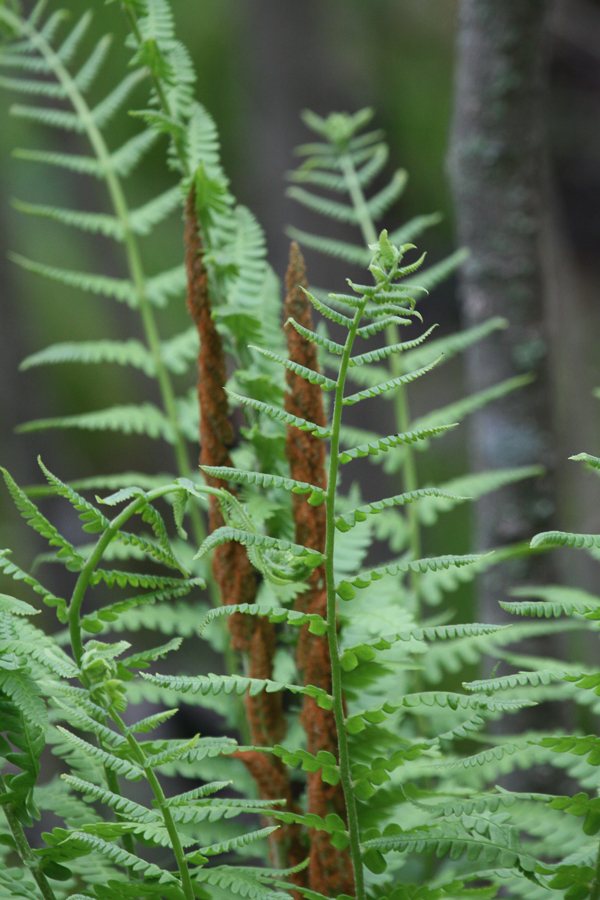
Cinnamon fern is a large, deciduous fern with upright, arching green fronds and separate cinnamon-brown, spore-bearing fronds in spring. Grow it for its strong vase-shaped outline in damp woodland gardens, rain gardens and pond margins.
At a glance
- Sun
- Partial shade is ideal; tolerates deeper shade. Full sun is suitable only where the soil stays consistently wet.
- Water
- High; keep the root zone consistently moist. Established plants tolerate wet soil, but drying out causes browning and early dormancy.
- Soil
- Humus-rich, acidic to neutral soil that holds moisture; tolerates boggy ground. Avoid dry, chalky soil.
- Height
- 2-5 ft (0.6-1.5 m)
- Spread
- 2-3 ft (0.6-0.9 m)
- Foliage
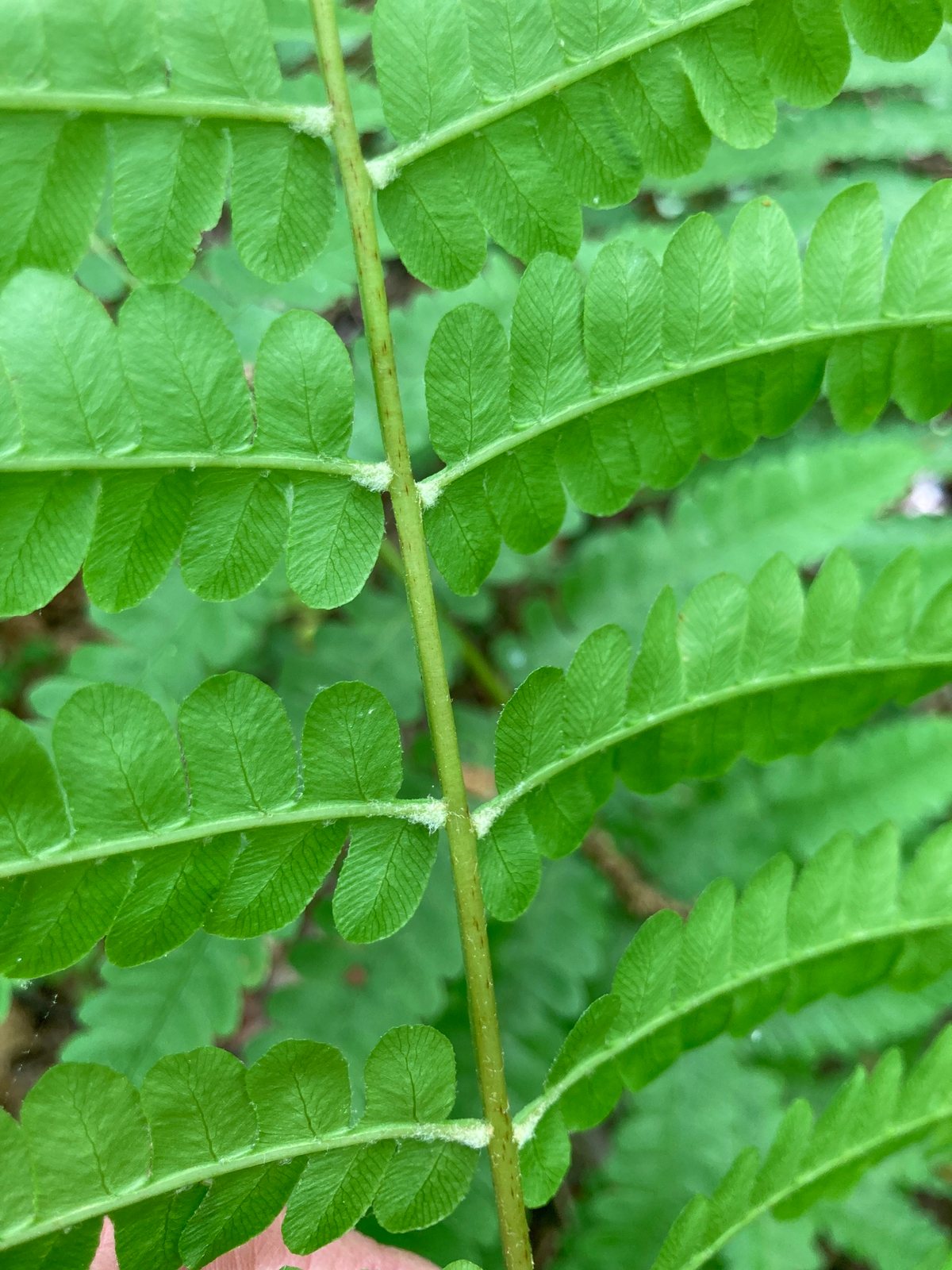
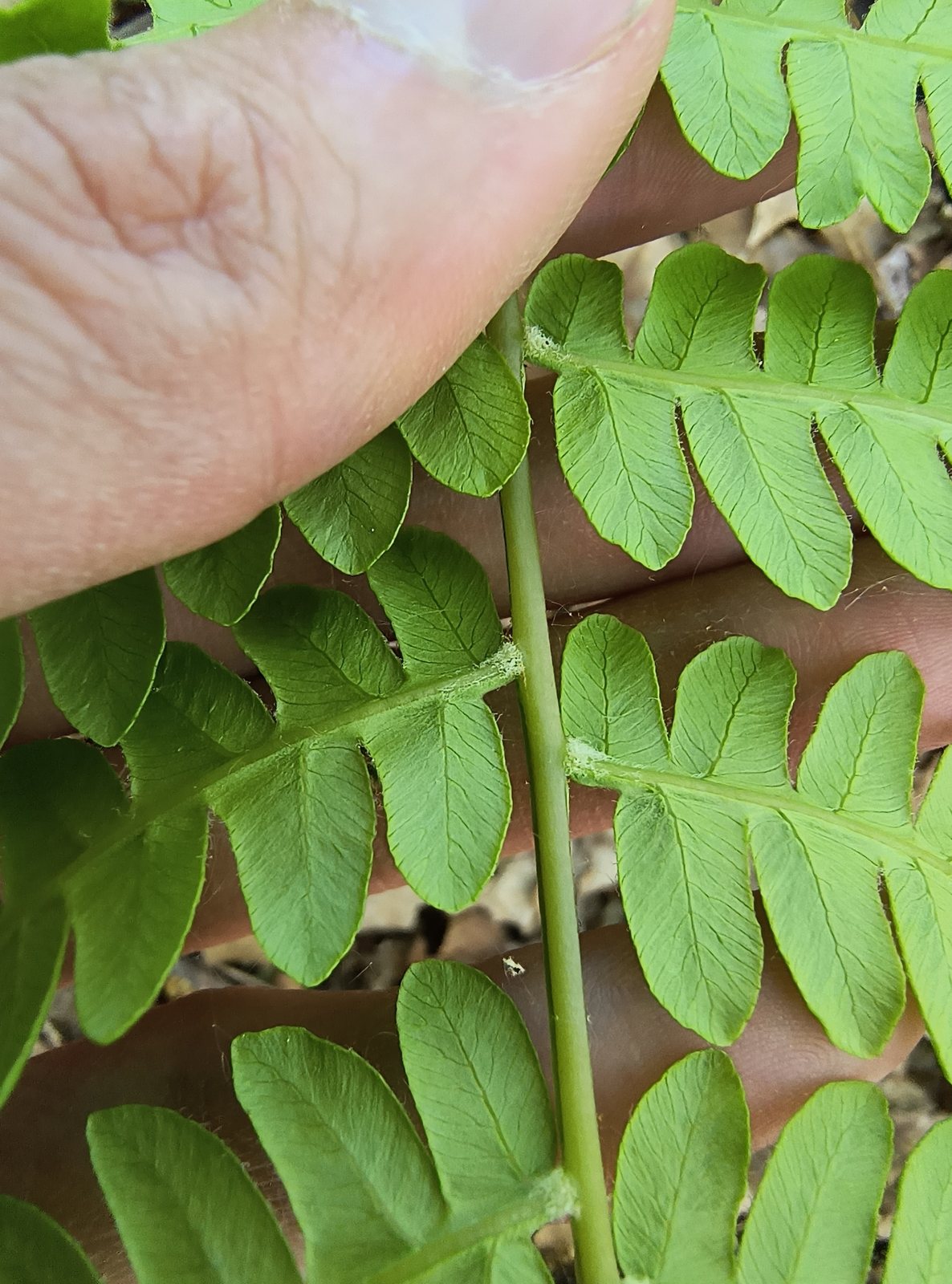
- Large, finely divided green fronds form an upright vase, arching outward with age. Separate fertile fronds rise near the centre, turn cinnamon brown as spores mature, then wither; the leafy fronds turn yellow to bronze before dying back in autumn.
- Growth
- Moderate; forms a substantial clump over several years.
- Care needed
- Low
The year at a glance
- Deer resistant
- Cold hardy
- Heat tolerant
- Wildlife
- Low allergen
| J | F | M | A | M | J | J | A | S | O | N | D | |
|---|---|---|---|---|---|---|---|---|---|---|---|---|
| Plant |
Northern hemisphere months. In Australia, shift them by six.
- Difficulty
- Easy
- Toughness
- Fairly tough
Will it suit your garden?
Pick your zone, country, light and whether you have pets.
Full sun is 6 or more hours of direct sun a day, part shade 3 to 6 hours, shade under 3.
How it grows
Planting day
1 ft (0.3 m)
After 1 year
1.8 ft (0.55 m)
After 2 years
2.6 ft (0.8 m)
After 3 years
3 ft (1.1 m)
full size
About 3 years to full size.
From a typical nursery size, at an average rate for this kind of plant. A rule of thumb, not a forecast.
Good to know
- Cats and dogs
- Safe
- Native to
- the US and Canada
- Growth rate
- Moderate
Care
Jobs through the year
- WaterApr–May, Sep–Oct, every 7 days
- Keep established root zones consistently moist; skip watering if soil remains wet.
- WaterJun–Aug, every 3 days
- In dry weather, water deeply before soil dries; young plants need closer checks.
- MulchMar–Apr
- Spread leaf mould or compost around the clump without burying the crown.
- PruneFeb–Mar
- Remove dead fronds before new growth, avoiding curled emerging fronds.
- DivideMar–Apr
- Divide only when needed, before fronds unfurl, and keep divisions moist.
- ProtectApr–May
- Inspect emerging fronds for slugs and protect vulnerable young plants if needed.
- Plant with the crown at soil level in a moist, sheltered position.
- Water deeply during dry spells; do not let newly planted crowns dry out.
- Apply leaf mould or compost around the clump each spring, keeping it clear of the crown.
- Feed only if growth is weak; a light spring application of balanced fertiliser is enough.
- Divide only when needed, preferably in early spring before the fronds unfurl.
Pruning. Remove dead fronds in late winter or early spring before new growth emerges. Leave green fronds intact, and avoid damaging the tightly curled new fronds at the crown.
Through the year
- Late winter
- Cut away dead fronds before new shoots begin to expand.
- Early spring
- Plant or divide clumps while growth is just starting, then water thoroughly.
- Spring
- Mulch with leaf mould or compost, leaving the crown uncovered.
- Late spring
- Check emerging fronds for slug damage and protect vulnerable new plants if necessary.
- Summer
- Water during dry weather and watch for browning caused by dry soil or strong sun.
- Autumn
- Allow yellowing fronds to die back naturally; leave them over winter if they are not obstructing paths.
In the garden
- Plant in groups beneath deciduous trees where the soil remains moist, pairing it with smaller woodland perennials.
- Use beside ponds or in bog gardens, with the crown above the usual water level.
- Place behind hostas and astilbes to contrast its upright, finely divided foliage with broader leaves and flowers.
- Use repeated clumps along a shaded path to give a damp border structure without relying on flowers.
Garden styles it suits: Woodland, Bog garden, Japanese, Green on green, Wildlife garden and New England.
Plant it with: Hostas, Astilbes, Rodgersias, Siberian irises, Marsh marigolds and Foamflowers.
Wildlife: Dense clumps provide shelter for small animals and invertebrates. It has no flowers or nectar, so it is not a direct food source for pollinating insects.
Problems to watch for
- Brown, scorched fronds usually indicate dry soil, hot wind or excessive sun; water deeply, mulch and provide afternoon shade.
- Slugs and snails may chew tender emerging fronds; hand-pick them or use a labelled iron-phosphate bait where needed.
- Poor growth or pale foliage can result from dry, alkaline soil; improve moisture retention with organic matter or move the plant to a more suitable site.
- Crown rot can follow deep planting or burying the crown under mulch; keep the crown at soil level and clear away material piled over it.
Safety
Not known to be toxic to cats, dogs or horses. It is not generally regarded as poisonous to people, but reliable information on eating it is limited; do not treat the fiddleheads or other parts as food. Eating plant material may still cause digestive upset in pets.
Easily confused with
Interrupted fern (Osmunda claytoniana)
Its brown spore-bearing sections interrupt the middle of otherwise leafy fronds. Cinnamon fern carries its spores on separate, narrow fertile fronds.
Royal fern (Osmunda regalis)
Royal fern has broader, more widely spaced leaflets and branched fertile tips at the tops of some leafy fronds, rather than separate cinnamon-coloured fertile fronds.
Ostrich fern (Matteuccia struthiopteris)
Its leafy fronds narrow strongly towards the base, and its dark fertile fronds commonly persist through winter. It also spreads much more readily by underground runners.
The name
The common name and the species name cinnamomeum refer to the cinnamon-brown colour of the mature spore-bearing fronds.
Propagation. Divide established crowns in early spring, retaining roots and at least one healthy growing point on each division. It can also be raised from fresh spores, which are short-lived and should be sown promptly on a clean, moist growing medium.
Checked against open data
- Accepted botanical name
- Osmundastrum cinnamomeum
- In the US and Canada
- Native in Canada, the lower 48 states, Puerto Rico and St. Pierre and Miquelon.
- Native range
- Alabama, Amur, Argentina Northeast, Arkansas, Assam, Bermuda, Bolivia, Brazil Northeast, Brazil South, Brazil Southeast, China South-Central and China Southeast.
- Measured
- Soil pH 4.5 to 7.
Sources: GBIF (CC BY 4.0), USDA PLANTS and Trefle (CC BY 4.0). The care and design notes are LandscapeGPT's own.
See it in your own yard.
Upload a photo of your yard and see it redesigned with plants that suit your climate, each checked against your zone.