Clematis 'Nelly Moser'
Clematis 'Nelly Moser'. Family Ranunculaceae. Climber.
Also called Nelly Moser clematis.
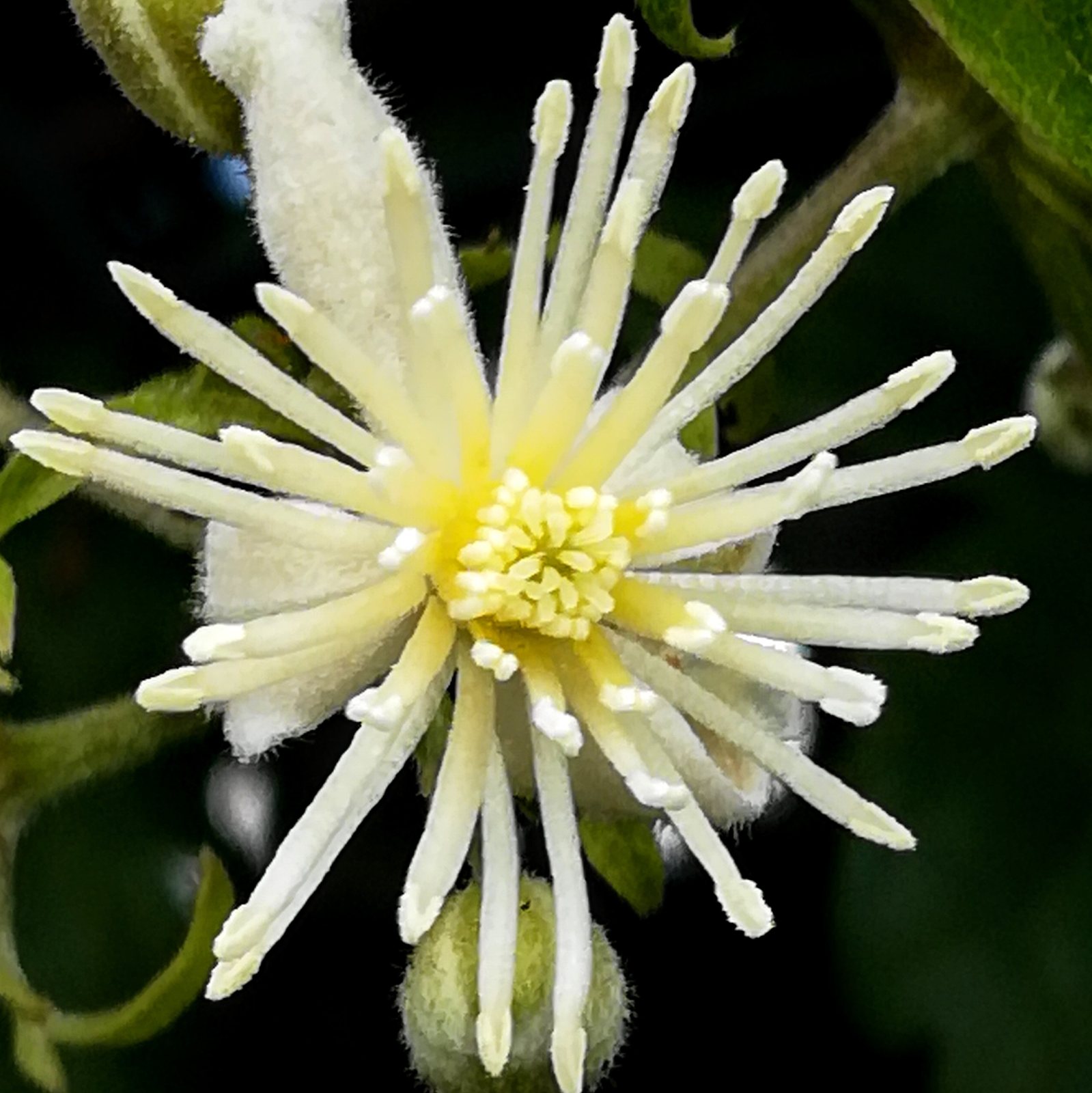
'Nelly Moser' is a deciduous climber grown for large, pale pink flowers with a deeper pink stripe down each petal-like sepal. It flowers most heavily in late spring and early summer, often repeating more lightly in late summer. Give it a trellis or shrub to climb through and some protection from strong afternoon sun, which fades the flowers.
At a glance
- Sun
- Partial shade is ideal, especially morning sun with afternoon shade; tolerates full sun in cooler climates.
- Water
- Keep the root zone evenly moist but not waterlogged; water deeply during dry spells, especially while establishing.
- Soil
- Fertile, humus-rich, well-drained soil; neutral to slightly alkaline is ideal, but mildly acidic soil is suitable.
- Height
- 6-10 ft (1.8-3 m)
- Spread
- 3-4 ft (0.9-1.2 m)
- Flowers
- Large, pale pink to pinkish-lilac flowers with broad, deeper pink central bars and reddish-brown anthers; late spring to early summer, with a lighter late-summer repeat.
- Foliage
- Green leaves, usually divided into three leaflets; leaf stalks coil around slender supports.
- Growth
- Moderate; often takes two or three growing seasons to establish strongly.
- Care needed
- Medium
The year at a glance
- Pollinators
- Cold hardy
- Low allergen
| J | F | M | A | M | J | J | A | S | O | N | D | |
|---|---|---|---|---|---|---|---|---|---|---|---|---|
| Flowers | ||||||||||||
| Fruit | ||||||||||||
| Plant |
Northern hemisphere months. In Australia, shift them by six.
- Difficulty
- Moderate
- Toughness
- Fairly tough
Will it suit your garden?
Pick your zone, country, light and whether you have pets.
Full sun is 6 or more hours of direct sun a day, part shade 3 to 6 hours, shade under 3.
How it grows
Planting day
2 ft (0.6 m)
After 1 year
3 ft (0.9 m)
After 2 years
4 ft (1.2 m)
After 3 years
5 ft (1.5 m)
After 5 years
6 ft (1.8 m)
full size
About 4 years to full size.
From a typical nursery size, at an average rate for this kind of plant. A rule of thumb, not a forecast.
Good to know
- Cats and dogs
- Toxic
- Growth rate
- Moderate
Care
Jobs through the year
- WaterApr–May, Sep–Oct, every 14 days
- Water established plants deeply if soil is drying; young plants need more frequent watering.
- WaterJun–Aug, every 7 days
- Water deeply during dry weather to maintain an evenly moist root zone.
- FeedMar–Apr
- Apply balanced fertiliser at the label rate as spring growth begins.
- MulchMar–Apr
- Apply compost or leaf mould around the root zone, keeping stems clear.
- PruneFeb–Mar
- Group 2: remove dead or weak stems and shorten others only to the highest healthy bud pair.
- PruneJun–Jul
- After the first flush, trim spent flowering shoots to strong buds for repeat bloom.
- ProtectMar–May
- Protect emerging shoots from slugs and guide growth onto secure slender supports.
- ProtectOct–Nov
- Remove diseased fallen leaves and ensure the root zone drains freely.
- Plant with the crown about 2-3 in (5-8 cm) below the soil surface in freely draining ground.
- Provide trellis wires, mesh or slender canes that the leaf stalks can grip, and guide young shoots onto them.
- Water deeply during dry weather rather than repeatedly wetting only the soil surface.
- Apply a balanced fertiliser in spring at the label rate.
- Mulch annually with compost or leaf mould, keeping the mulch clear of the stems.
Pruning. Pruning group 2: in late winter or early spring, remove dead or weak stems and shorten remaining stems only to the highest healthy pair of buds. After the first flush, trim spent flowering shoots back to strong buds to encourage another flush; hard annual pruning sacrifices the early flowers.
Through the year
- Late winter
- Check supports and prune lightly before vigorous new growth begins.
- Spring
- Apply balanced fertiliser and refresh the organic mulch.
- Mid-spring
- Guide new shoots onto supports and protect tender growth from slugs and snails.
- Early summer
- After the main flowering flush, trim spent shoots back to healthy buds.
- Summer
- Water deeply during dry spells and check container-grown plants frequently.
- Autumn
- Remove fallen diseased leaves and check that the root zone drains freely before winter.
In the garden
- Train over a trellis beside a doorway where the striped flowers can be seen closely.
- Grow through an open-branched shrub to add flowers above the border without taking much ground space.
- Combine with a climbing rose for overlapping flowers and contrasting flower shapes.
- Use on a partly shaded fence behind hostas or hardy geraniums for a layered border.
Garden styles it suits: English country, Cottage garden, Romantic rose garden, Secret garden, Pastel border and Small-space.
Plant it with: Climbing roses, Hardy geraniums, Hostas, Lady's mantle, Foxgloves and Japanese anemones.
Wildlife: The open flowers can be visited by bees and other insects, though this large-flowered cultivar is not a particularly rich wildlife planting. Mature growth provides shelter for small invertebrates.
Problems to watch for
- Clematis wilt can cause sudden collapse of individual stems: cut affected stems back to healthy tissue or ground level, remove infected material and avoid damaging stems; established roots may reshoot.
- Slugs and snails eat emerging shoots: inspect at dusk, remove pests and use wildlife-conscious controls where necessary.
- Powdery mildew produces a white coating on leaves: maintain steady soil moisture, improve air circulation and remove badly affected foliage.
- Few flowers can follow hard winter pruning or deep shade: retain healthy older stems and provide more light while avoiding fierce afternoon sun.
Safety
All parts are toxic to people, cats, dogs and horses if eaten, particularly fresh leaves and stems. Chewing can cause mouth irritation, drooling, vomiting or diarrhoea; serious poisoning is uncommon, but seek medical or veterinary advice after ingestion. Sap can irritate skin, so wear gloves when pruning.
Easily confused with
Clematis 'Bees' Jubilee' (Clematis 'Bees' Jubilee')
Also has pale pink flowers with a deeper central stripe, but is generally more compact with somewhat smaller flowers; use a reliable label because flower appearance overlaps.
Clematis 'Dr. Ruppel' (Clematis 'Dr. Ruppel')
Usually has more strongly coloured pink flowers with a broad carmine stripe and more noticeably wavy sepal edges.
The name
Clematis comes from the Greek word klema, meaning a vine branch or tendril.
Propagation. Layer a low-growing stem in spring or take softwood to semi-ripe cuttings in late spring or early summer. Seed will not reliably produce plants identical to 'Nelly Moser'.
Checked against open data
- Accepted botanical name
- Clematis
Sources: GBIF (CC BY 4.0). The care and design notes are LandscapeGPT's own.
See it in your own yard.
Upload a photo of your yard and see it redesigned with plants that suit your climate, each checked against your zone.