Columbine meadow rue
Thalictrum aquilegiifolium. Family Ranunculaceae. Perennial.
Also called French meadow rue, Greater meadow rue.
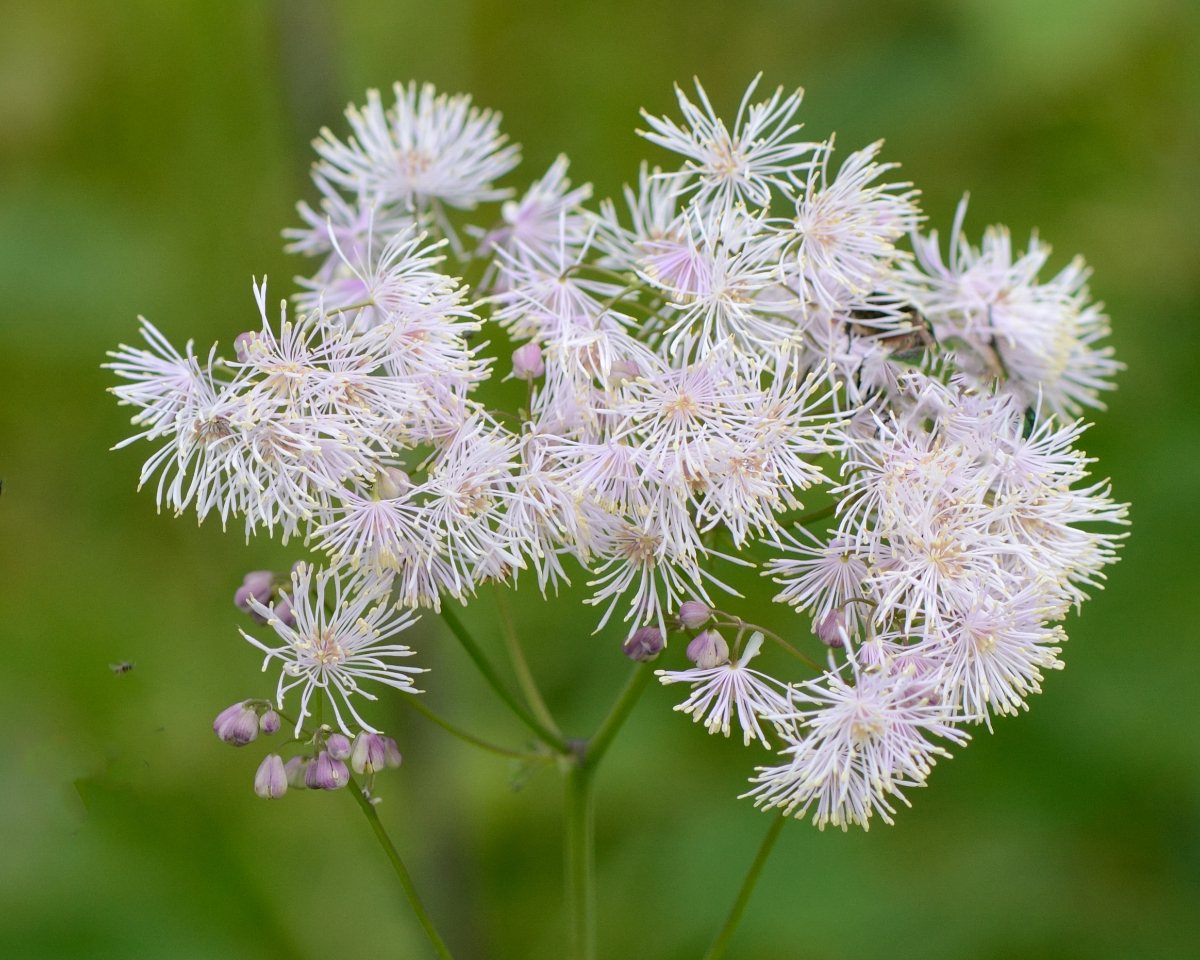
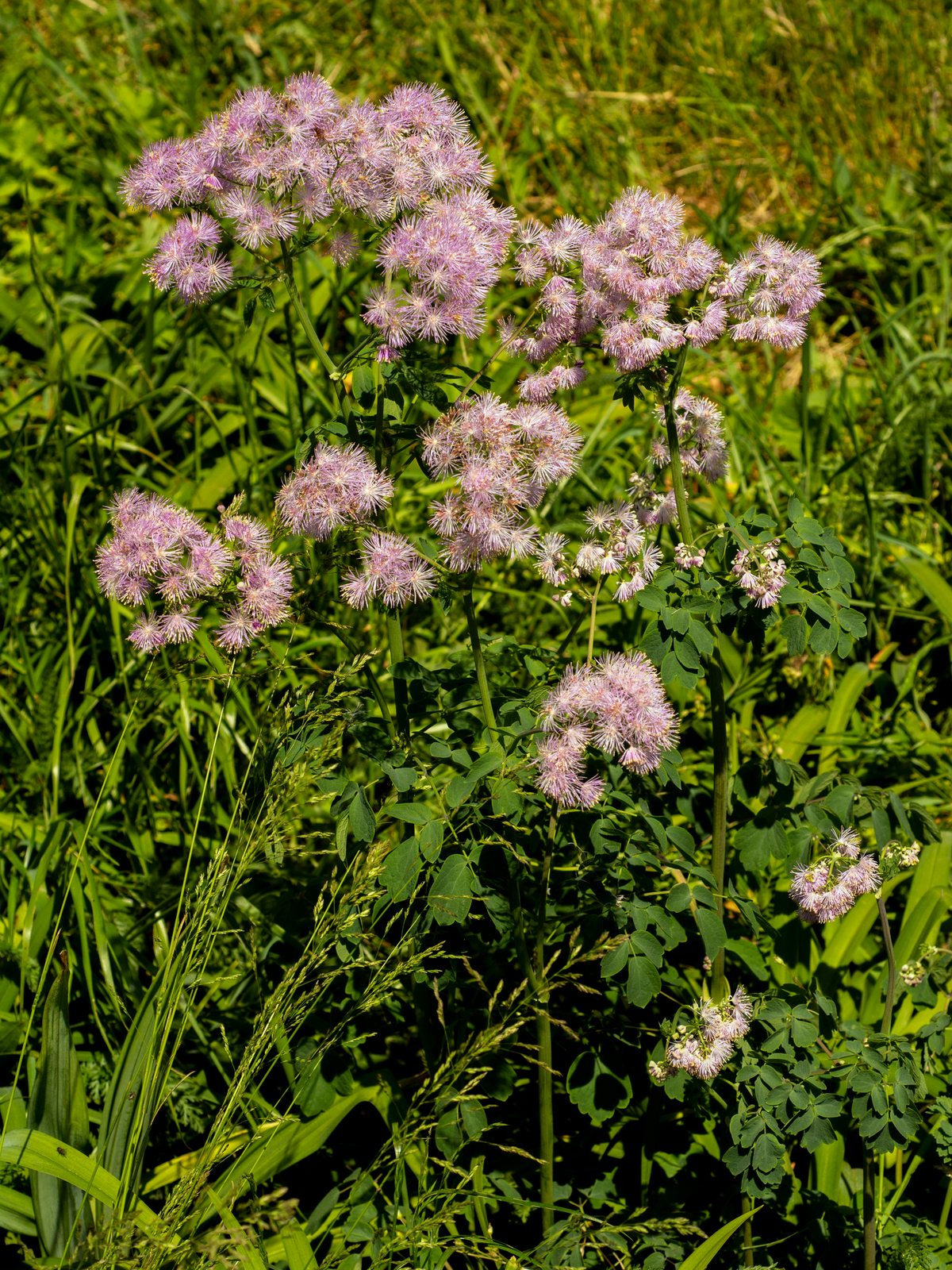
Columbine meadow rue is a clump-forming perennial grown for its finely divided foliage and airy clouds of fluffy flowers. It brings height without much visual weight to moist borders and woodland edges, and performs best where summers are not excessively hot or dry.
At a glance
- Sun
- Partial shade, or full sun where the soil stays moist and summers are cool; provide afternoon shade in hotter districts.
- Water
- Keep evenly moist, especially during establishment and dry weather; avoid prolonged waterlogging.
- Soil
- Humus-rich, moisture-retentive but well-drained soil; tolerates acidic, neutral and alkaline conditions.
- Height
- 2-4 ft (0.6-1.2 m)
- Spread
- 1-2 ft (0.3-0.6 m)
- Flowers
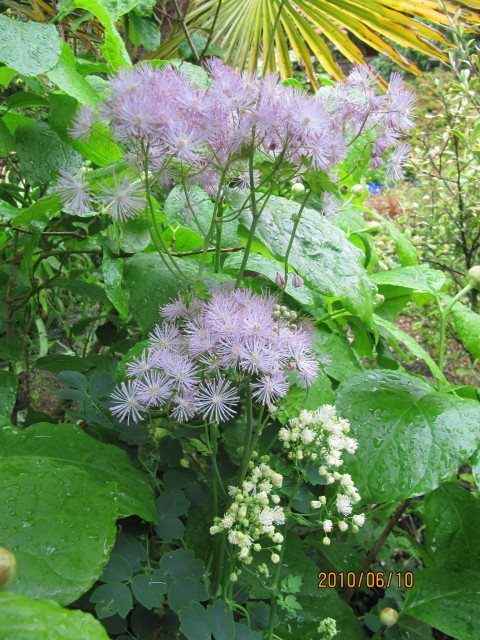
- Late spring to early summer; fluffy clusters of pinkish lilac to mauve flowers, with white-flowered forms also available.
- Foliage
- Blue-green, divided leaves with rounded, lobed leaflets resembling columbine foliage; dies back in winter.
- Growth
- Moderate
- Care needed
- Low
The year at a glance
- Pollinators
- Deer resistant
| J | F | M | A | M | J | J | A | S | O | N | D | |
|---|---|---|---|---|---|---|---|---|---|---|---|---|
| Flowers | ||||||||||||
| Plant |
Northern hemisphere months. In Australia, shift them by six.
- Difficulty
- Easy
- Toughness
- Fairly tough
Will it suit your garden?
Pick your zone, country, light and whether you have pets.
Full sun is 6 or more hours of direct sun a day, part shade 3 to 6 hours, shade under 3.
How it grows
Planting day
1 ft (0.3 m)
After 1 year
1.6 ft (0.5 m)
After 2 years
2.3 ft (0.7 m)
After 3 years
3 ft (0.9 m)
full size
About 3 years to full size.
From a typical nursery size, at an average rate for this kind of plant. A rule of thumb, not a forecast.
Good to know
- Cats and dogs
- Toxic
- Growth rate
- Moderate
Care
Jobs through the year
- WaterApr–May, Sep–Oct, every 7 days
- Water established clumps if rain is insufficient; check new plants more frequently.
- WaterJun–Aug, every 5 days
- During dry weather, water deeply to keep the root zone evenly moist but not saturated.
- MulchMar–Apr
- Apply compost or leaf mould around the clump, keeping it clear of the crown.
- PruneFeb–Mar
- Cut remaining dead stems to ground level before new shoots emerge.
- DivideMar–Apr
- Divide established clumps only when crowded; otherwise leave undisturbed.
- ProtectApr–May
- Check shoots for slugs and install discreet supports in exposed positions.
- DeadheadJun–Jul
- Remove finished flower stems to prevent self-seeding, leaving healthy basal foliage.
- Water deeply during dry spells so the root zone does not dry out completely.
- Apply a layer of garden compost or leaf mould in spring, keeping it clear of the crown.
- Avoid heavy nitrogen feeding, which can encourage weak, floppy stems.
- Support taller plants early with twiggy branches or a discreet plant ring in exposed positions.
- Divide established clumps in early spring only when needed; they can remain undisturbed for several years.
Pruning. After flowering, remove spent flower stems if you want to prevent self-seeding, leaving healthy basal foliage. Cut dead stems to ground level in late autumn or late winter before new growth starts.
Through the year
- Late winter
- Cut down any remaining dead stems before new shoots emerge.
- Early spring
- Plant or divide clumps and water them in thoroughly.
- Spring
- Mulch with compost or leaf mould and install supports where needed.
- Late spring
- Check emerging foliage for slug and snail damage.
- Summer
- Water during dry spells and remove faded flower stems to limit seedlings.
- Autumn
- Collect ripe seed if wanted, or remove unwanted seedlings while small.
In the garden
- Plant in loose groups through partially shaded borders for a light canopy of flowers above lower foliage.
- Combine with ferns and hostas at woodland edges, where its divided leaves contrast with broader shapes.
- Mix with astrantias and hardy geraniums in moist cottage-garden borders.
- Use among other moisture-loving perennials beside a pond, above the waterlogged margin.
Garden styles it suits: Woodland, Cottage garden, Romantic rose garden, English country, New perennial (prairie) and Blues and silvers.
Plant it with: Hostas, Lady fern, Astrantias, Hardy geraniums, Siberian iris and Astilbes.
Wildlife: Flowers provide pollen for bees and other visiting insects. It is not a native plant in the United States, Canada, the United Kingdom or Australia.
Problems to watch for
- Powdery mildew can affect foliage, especially when roots are dry; maintain soil moisture, improve airflow and remove badly affected leaves.
- Slugs and snails may eat young shoots; inspect at dusk, remove pests and use wildlife-conscious controls where necessary.
- Dry soil and strong afternoon sun can scorch leaves or cause early dieback; water deeply, mulch and provide afternoon shade.
- Tall stems may flop in wind or rich soil; provide early support and avoid excessive fertiliser.
Safety
Do not eat any part: meadow rues are considered potentially harmful if ingested. Species-specific information on poisoning severity in people, cats, dogs and horses is limited, so keep all parts, including roots, away from children and grazing or chewing animals.
Easily confused with
Columbine (Aquilegia vulgaris)
The foliage is similar, but columbine has distinct flowers with backward-pointing spurs rather than fluffy clusters dominated by stamens.
Chinese meadow rue (Thalictrum delavayi)
Usually flowers later in summer, with finer foliage and loose sprays of small lilac flowers showing conspicuous yellow stamens rather than dense, fluffy heads.
Yellow meadow rue (Thalictrum flavum)
Has creamy-yellow flower clusters rather than lilac or white ones, and generally narrower leaflets.
The name
The epithet aquilegiifolium means 'with leaves like Aquilegia', referring to the columbine-like foliage.
Propagation. Divide established clumps carefully in early spring. Sow fresh seed outdoors in autumn; winter chilling can help germination, which may be slow and uneven. Seedlings from named cultivars may differ from the parent.
Checked against open data
- Accepted botanical name
- Thalictrum aquilegiifolium
- Native range
- Albania, Amur, Austria, Baltic States, Belarus, Bulgaria, Buryatiya, Central European Rus, China North-Central, China Southeast, Chita and Czechoslovakia.
- Measured
- Soil pH 7 to 7.5. Average height 66 cm.
Sources: GBIF (CC BY 4.0) and Trefle (CC BY 4.0). The care and design notes are LandscapeGPT's own.
See it in your own yard.
Upload a photo of your yard and see it redesigned with plants that suit your climate, each checked against your zone.