Columnar hornbeam
Carpinus betulus 'Fastigiata'. Family Betulaceae. Tree.
Also called Upright European hornbeam, Pyramidal European hornbeam.
A deciduous European hornbeam with a dense, upright crown, neatly pleated leaves and yellow autumn colour. Young trees look narrow, but the crown becomes broadly oval with age, so allow more space than the name suggests. Gardeners grow it as a specimen, an avenue tree or a clipped architectural feature.
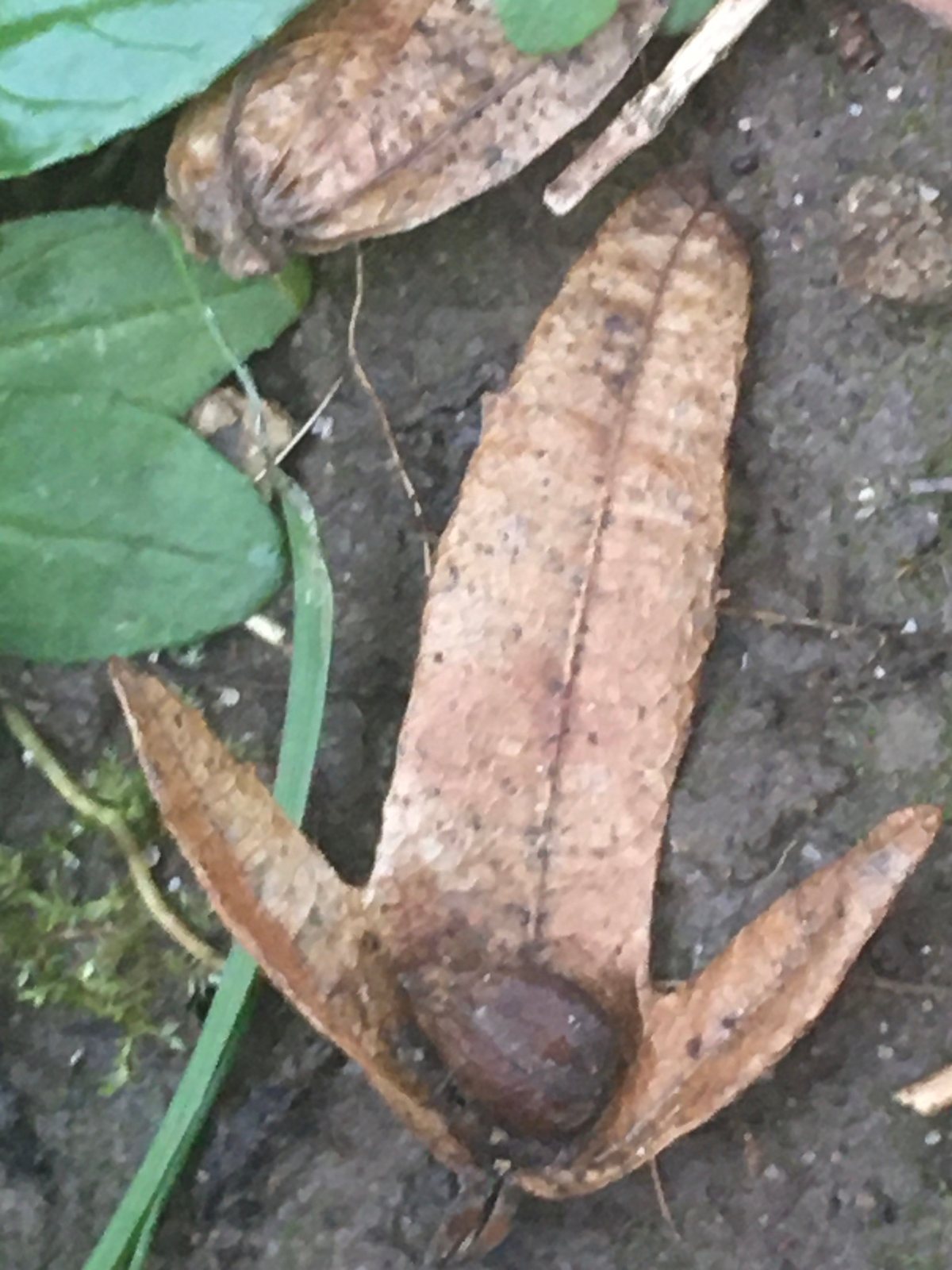
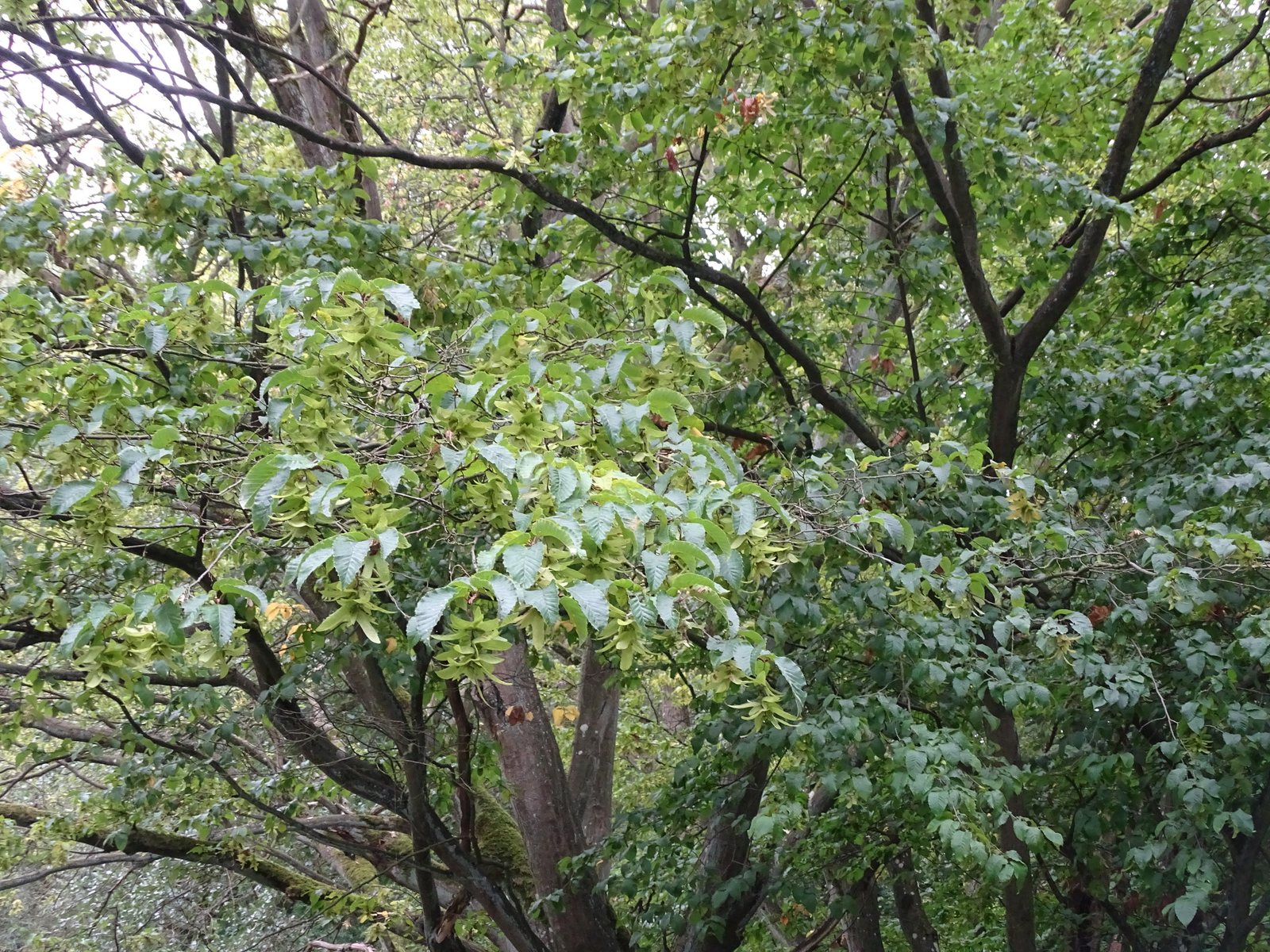
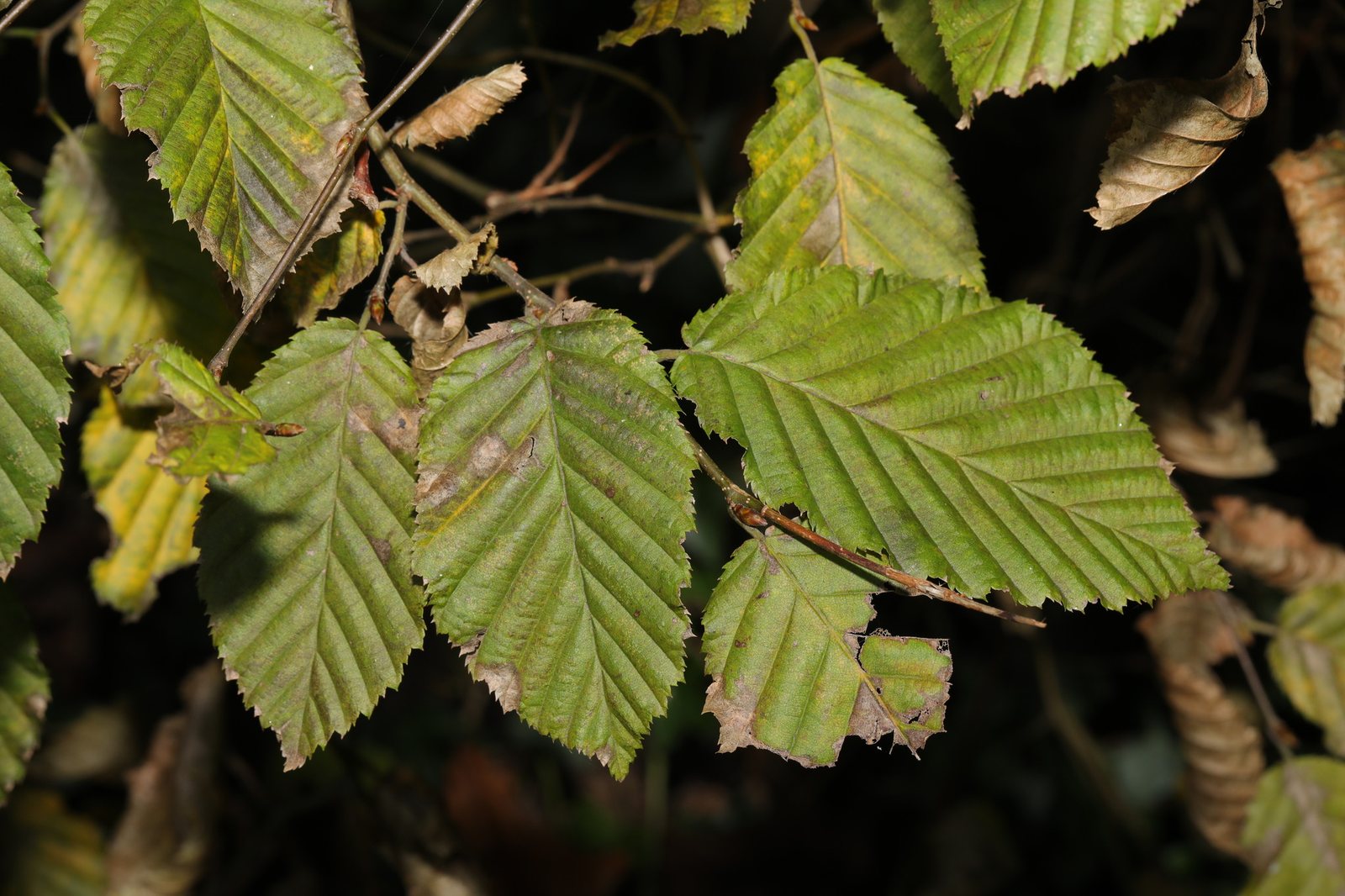
At a glance
- Sun
- Full sun to partial shade; the crown is densest in good light.
- Water
- Moderate; water regularly while establishing and during prolonged dry spells. Established trees tolerate some drought but perform best with consistent soil moisture.
- Soil
- Moist, well-drained soil, including clay, loam and chalk; tolerates acidic to alkaline conditions. Avoid persistently waterlogged ground.
- Height
- 30-50 ft (9.1-15.2 m)
- Spread
- 20-35 ft (6.1-10.7 m)
- Flowers
- Spring; inconspicuous yellow-green male catkins and small green female catkins appear as the leaves open.
- Foliage
- Oval, sharply toothed green leaves with prominent veins and a pleated surface; turns yellow to gold in autumn. Some brown leaves may remain on young trees or regularly clipped growth through winter.
- Growth
- Moderate, often 12-24 in (30-60 cm) a year while young in suitable conditions.
- Care needed
- Low
The year at a glance
- Cold hardy
- Wildlife
| J | F | M | A | M | J | J | A | S | O | N | D | |
|---|---|---|---|---|---|---|---|---|---|---|---|---|
| Flowers | ||||||||||||
| Fruit | ||||||||||||
| Plant |
Northern hemisphere months. In Australia, shift them by six.
- Difficulty
- Easy
- Toughness
- Very tough
Will it suit your garden?
Pick your zone, country, light and whether you have pets.
Full sun is 6 or more hours of direct sun a day, part shade 3 to 6 hours, shade under 3.
How it grows
Planting day
7 ft (2 m)
After 1 year
8 ft (2.5 m)
After 2 years
10 ft (3 m)
After 3 years
12 ft (3.5 m)
After 5 years
15 ft (4.5 m)
About 20 years to full size.
From a typical nursery size, at an average rate for this kind of plant. A rule of thumb, not a forecast.
Good to know
- Cats and dogs
- Safe
- Native to
- the UK
- Growth rate
- Moderate
Care
Jobs through the year
- WaterApr–May, Sep–Oct, every 21 days
- Water established trees only if soil is dry; young trees need regular deep watering.
- WaterJun–Aug, every 14 days
- Deeply water established trees during prolonged dry spells; check young trees more often.
- MulchMar–Apr
- Maintain 5–8 cm of organic mulch over the root area, keeping the trunk clear.
- PruneAug–Sep
- Make light corrective cuts or trim trained forms; avoid heavy spring pruning.
- ProtectJan–Feb, Dec
- Check guards and ties for rubbing or constriction; remove stakes once roots hold firmly.
- Water deeply during dry weather for the first two or three growing seasons, checking moisture beneath the surface before watering.
- Apply 2-3 in (5-8 cm) of organic mulch over the root area, keeping it clear of the trunk.
- Keep grass and weeds away from the base while the tree establishes.
- Stake only if the root ball is unstable; use flexible ties and remove the support once the roots hold firmly.
- Do not feed routinely; use a soil test to guide feeding if growth is weak.
Pruning. Prune lightly in late summer to remove damaged, crossing or poorly placed shoots; little pruning is needed for a free-growing tree. Trim trained forms at the same time, avoiding heavy spring pruning because cuts can bleed sap.
Through the year
- Autumn
- Plant while the soil is workable, allowing for the broad mature crown; in very cold regions, plant in spring instead.
- Winter
- Check stakes, ties and guards, and loosen anything rubbing or constricting the trunk.
- Spring
- Renew mulch and clear weeds from around young trees.
- Summer
- Water establishing trees deeply during dry spells and check for leaf scorch.
- Late summer
- Make light corrective cuts or trim clipped forms without cutting unnecessarily into large branches.
- Late autumn
- Collect fallen leaves for leaf mould; remove leaves affected by substantial disease rather than leaving them beneath the tree.
In the garden
- Plant in matching rows along a drive or broad path for a formal avenue.
- Use as a lawn specimen where its rounded mature crown has room to develop.
- Train into a pleached screen to define a boundary or create an elevated garden wall.
- Place behind a mixed border to provide a quiet green backdrop and yellow autumn colour.
Garden styles it suits: Formal, Architectural minimal, Grand estate, English country, Contemporary minimal and Autumn colour.
Plant it with: Hellebores, Snowdrops, Hardy geraniums, Hostas, Lady fern and Japanese anemones.
Wildlife: The dense crown provides nesting cover. Leaves support some moth caterpillars, and the small nuts are eaten by birds and small mammals. Flowers are wind-pollinated rather than a significant nectar source.
Problems to watch for
- Drought scorch: brown leaf edges and early leaf drop can follow dry soil, especially after planting. Water deeply and maintain mulch rather than adding fertiliser.
- Aphids: colonies may curl young leaves and leave sticky honeydew. On reachable shoots, wash them off with water and encourage natural predators.
- Powdery mildew: a white coating can develop on leaves. Reduce drought stress and improve airflow; established trees rarely need treatment.
- Waterlogged roots: persistent saturation can cause poor growth, yellowing and dieback. Correct drainage or choose a better-drained planting site.
Safety
Not known to be toxic to people, cats, dogs or horses; no parts are recognised as a significant poisoning hazard. It is not an edible plant, and eating plant material can still cause stomach upset.
Easily confused with
Frans Fontaine hornbeam (Carpinus betulus 'Frans Fontaine')
Has very similar leaves but usually retains a narrower, more consistently upright crown with age; 'Fastigiata' broadens substantially.
European beech (Fagus sylvatica)
Beech leaves have mostly smooth or gently wavy edges rather than the hornbeam's conspicuous double teeth; beech winter buds are much longer and more pointed.
American hornbeam (Carpinus caroliniana)
Usually forms a smaller, more irregular tree with conspicuously muscular, fluted grey trunks rather than the dense, upright crown of this cultivar.
The name
Carpinus is the Latin name for hornbeam, betulus refers to its birch-like appearance, and 'Fastigiata' describes its upright branching habit.
Propagation. Usually propagated commercially by grafting onto European hornbeam seedlings. Seedlings do not reliably retain the cultivar's upright habit, and cuttings are difficult to root.
Checked against open data
- Accepted botanical name
- Carpinus betulus
- In the US and Canada
- Introduced in the lower 48 states.
- Native range
- Albania, Austria, Baltic States, Belarus, Belgium, Bulgaria, Central European Rus, Czechoslovakia, Denmark, France, Germany and Great Britain.
- Measured
- Soil pH 5.5 to 6.5. Average height 1740 cm.
Sources: GBIF (CC BY 4.0), USDA PLANTS and Trefle (CC BY 4.0). The care and design notes are LandscapeGPT's own.
See it in your own yard.
Upload a photo of your yard and see it redesigned with plants that suit your climate, each checked against your zone.