Common dogwood
Cornus sanguinea. Family Cornaceae. Shrub.
Also called Bloodtwig dogwood, European dogwood.
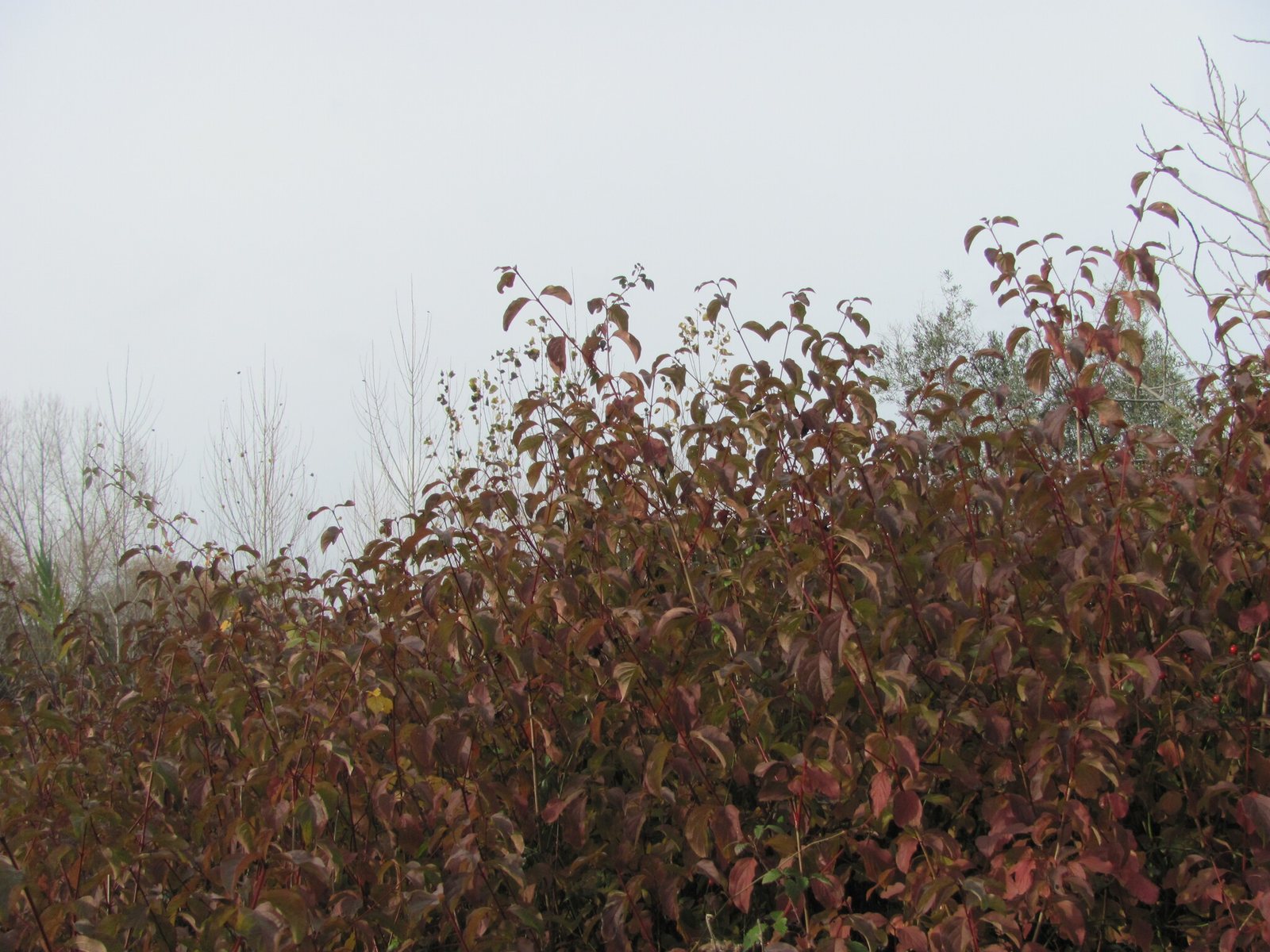
Common dogwood is a large, deciduous shrub native to Europe and western Asia, grown for its reddish winter stems, autumn foliage and value to wildlife. It suits informal hedges and roomy borders, but spreads by suckers and needs regular pruning if you want a compact display of colourful young stems.
At a glance
- Sun
- Full sun to partial shade; stem colour is usually strongest in sun.
- Water
- Moderate; keep newly planted shrubs evenly moist. Established plants tolerate occasional dry spells, but grow best with consistent moisture.
- Soil
- Moist, well-drained soil, including clay and chalk; tolerates a wide range of soil pH.
- Height
- 8-15 ft (2.4-4.5 m)
- Spread
- 8-15 ft (2.4-4.5 m), potentially wider through suckering
- Flowers
- Late spring to early summer; small creamy-white flowers in flat-topped clusters.
- Foliage
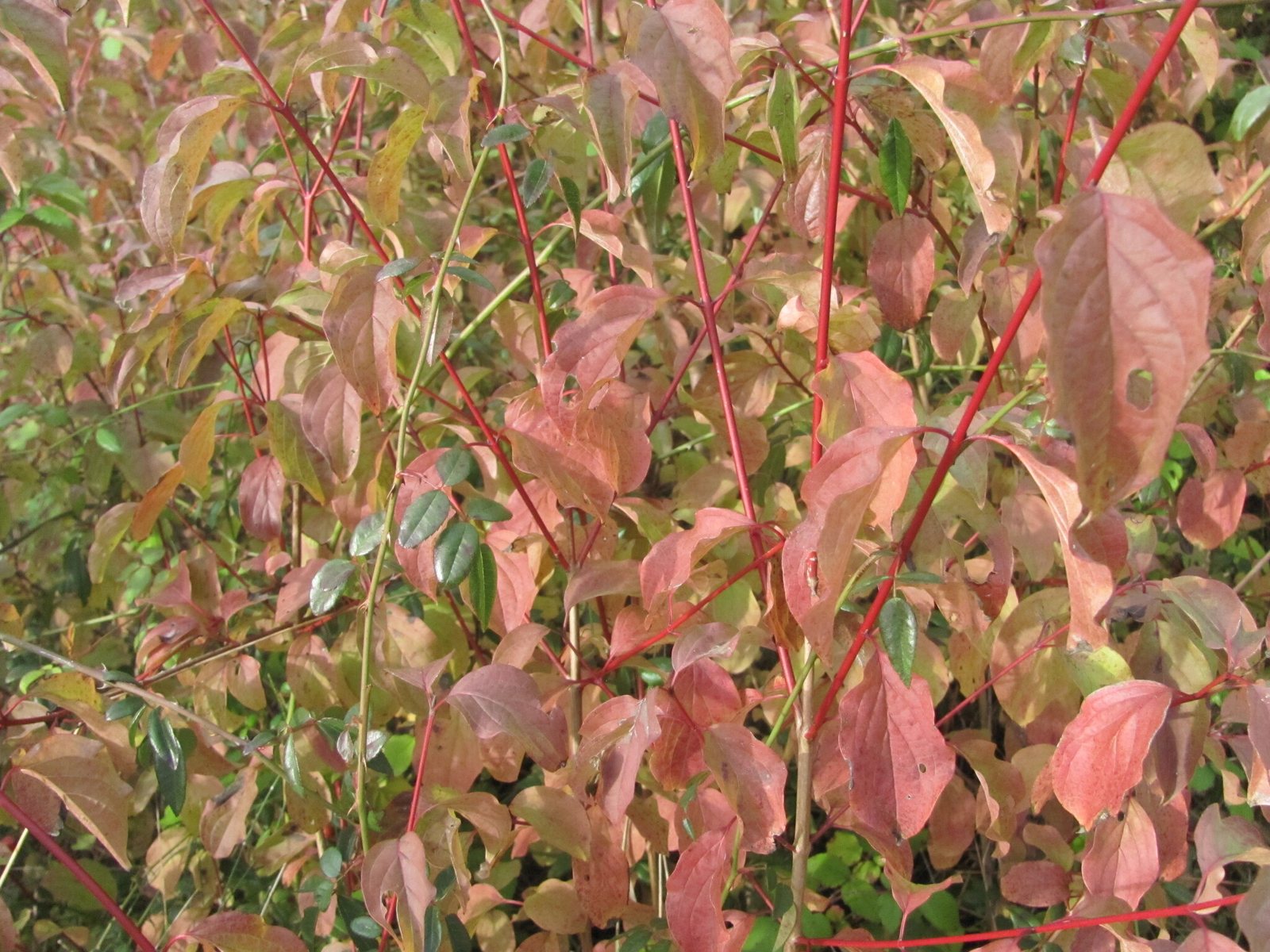
- Opposite, oval green leaves with curved veins; often turn red or purple in autumn. Young stems become reddish in winter, though colour varies between plants.
- Growth
- Moderate to fast
- Care needed
- Medium
The year at a glance
- Pollinators
- Cold hardy
- Wildlife
- Low allergen
| J | F | M | A | M | J | J | A | S | O | N | D | |
|---|---|---|---|---|---|---|---|---|---|---|---|---|
| Flowers | ||||||||||||
| Fruit | ||||||||||||
| Plant |
Northern hemisphere months. In Australia, shift them by six.
- Difficulty
- Easy
- Toughness
- Very tough
Will it suit your garden?
Pick your zone, country, light and whether you have pets.
Full sun is 6 or more hours of direct sun a day, part shade 3 to 6 hours, shade under 3.
How it grows
Planting day
1.6 ft (0.5 m)
After 1 year
4 ft (1.2 m)
After 2 years
6 ft (2 m)
After 3 years
9 ft (2.7 m)
After 5 years
11 ft (3.5 m)
full size
About 4 years to full size.
From a typical nursery size, at an average rate for this kind of plant. A rule of thumb, not a forecast.
Good to know
- Cats and dogs
- Mildly toxic: may upset a stomach
- Native to
- the UK
- In the garden
- Spreads vigorously: plan to contain it.
- Growth rate
- Fast
Care
Jobs through the year
- WaterApr–May, Sep–Oct, every 21 days
- Water established shrubs only during dry weather; keep young plants evenly moist for two years.
- WaterJun–Aug, every 14 days
- Water deeply during prolonged dry spells; skip if the root zone remains moist.
- PruneFeb–Mar
- Remove one-third of the oldest stems at ground level before growth starts to renew stem colour.
- PruneApr–Sep, every 30 days
- Remove unwanted suckers at their point of origin.
- MulchMar–Apr
- Spread 5–8 cm of compost or organic mulch without covering stem bases.
- FeedApr
- Use balanced fertiliser only if growth is poor and soil is deficient.
- Water deeply during dry spells for the first two growing seasons.
- Spread 2-3 in (5-8 cm) of compost or organic mulch over the root area in spring, keeping it clear of the stems.
- Avoid routine heavy feeding; use a balanced fertiliser only where growth is poor and soil is deficient.
- Remove unwanted suckers at their point of origin before the shrub expands beyond its space.
- Choose a sunny position if winter stem colour is your main reason for growing it.
Pruning. In late winter or early spring, remove about one-third of the oldest stems at ground level to encourage colourful new growth. Alternatively, cut an established shrub back to 2-4 in (5-10 cm) every two or three years, accepting fewer flowers and berries after cutting.
Through the year
- Autumn
- Plant while the soil is moist and workable; allow room for its mature spread.
- Winter
- Take hardwood cuttings from healthy, dormant shoots.
- Late winter
- Thin out old stems or coppice an established plant before new growth starts.
- Spring
- Refresh the mulch and remove unwanted suckers.
- Summer
- Water young plants during dry weather and check leaves for mildew.
- Early autumn
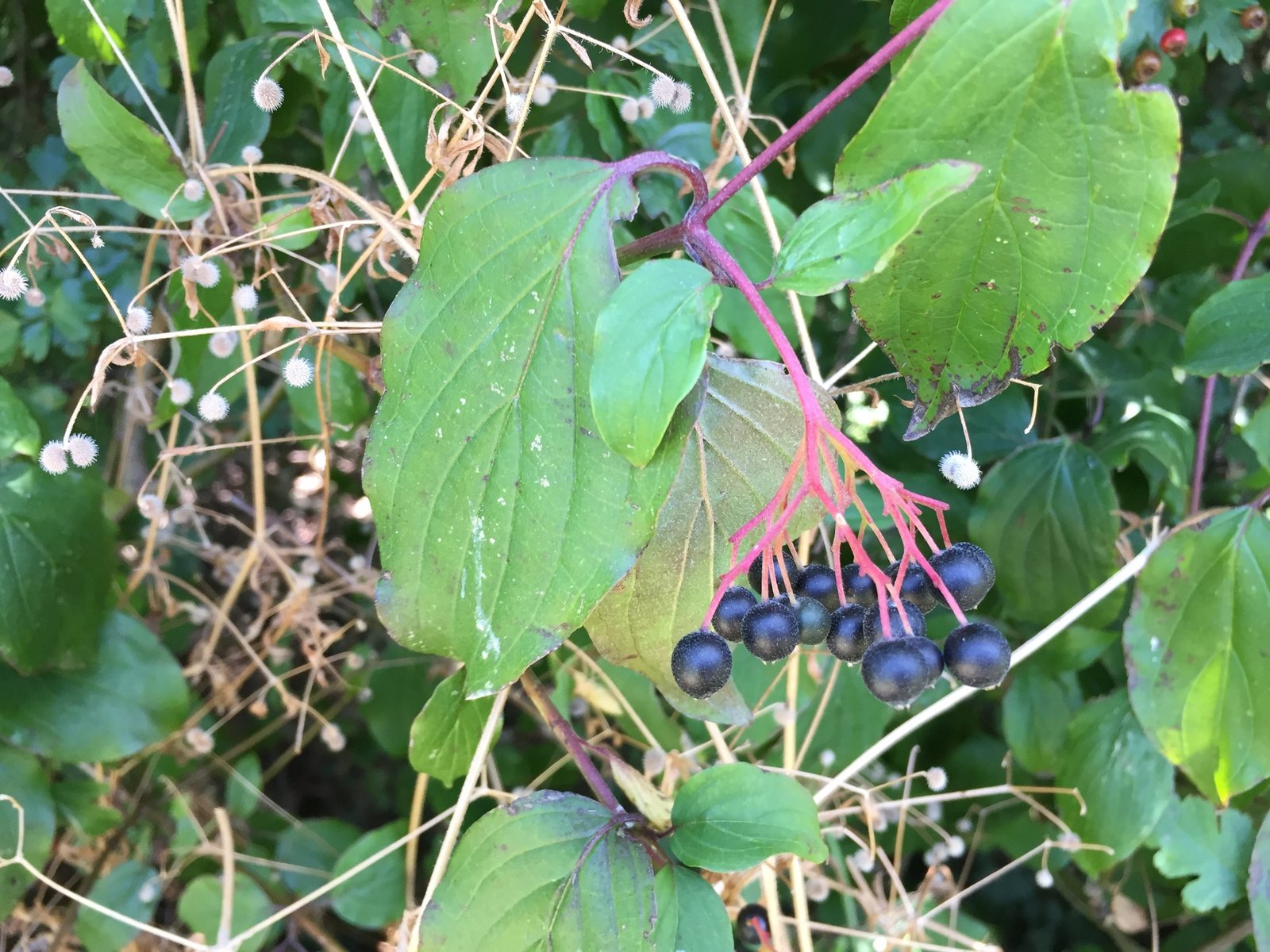
- Leave the black berries for birds rather than clipping the shrub after flowering.
In the garden
- Plant in an informal mixed hedge with hawthorn and hazel for shelter, flowers and wildlife food.
- Group several shrubs where low winter sunlight can catch their young red stems.
- Use behind pale hellebores, snowdrops and evergreen sedges for winter contrast.
- Plant at a woodland edge or beside a pond above the permanently waterlogged margin.
Garden styles it suits: Woodland, Wildlife garden, Native hedgerow, Winter interest, English country and Rewilded.
Plant it with: Snowdrops, Hellebores, Witch hazel, Hazel, Hawthorn and Tufted hair grass.
Wildlife: Flowers provide pollen and nectar for insects, while birds eat the black berries and use dense growth for cover and nesting. It is a native wildlife shrub in much of Europe, but is not native to the United States, Canada or Australia.
Problems to watch for
- Dull winter stems: older wood loses colour; remove the oldest stems and provide more sun where possible.
- Excessive suckering: remove shoots at their origin and avoid planting beside small beds or sensitive natural habitats.
- Powdery mildew: improve airflow, water the soil rather than the leaves and avoid excessive nitrogen feeding.
- Leaf spots: collect badly affected fallen leaves and reduce overhead watering; established shrubs usually need no chemical treatment.
Safety
The berries are not edible for people and may cause stomach upset if swallowed. Reliable species-specific information for cats, dogs and horses is limited, so do not assume the fruit or other parts are safe; prevent pets and livestock from eating them.
Where it spreads. Can spread aggressively by suckers and form dense thickets, including within its native range in the UK and continental Europe. Keep it away from small beds and remove unwanted suckers; check local restrictions before planting outside its native range.
Easily confused with
Red-osier dogwood (Cornus sericea)
Also has red winter stems, but its ripe berries are white rather than black; it is native to North America.
White dogwood (Cornus alba)
A similar red-stemmed shrub with white to bluish-white berries rather than black berries.
Cornelian cherry (Cornus mas)
Produces yellow flowers on bare stems in late winter or early spring, followed by elongated red fruits rather than clusters of small black berries.
The name
The Latin epithet sanguinea means blood-red, referring to the reddish stems.
Propagation. Take hardwood cuttings in late autumn or winter, or lift rooted suckers while dormant. Seed germination can be slow and requires seasonal temperature changes; named cultivars should be propagated vegetatively to retain their characteristics.
Checked against open data
- Accepted botanical name
- Cornus sanguinea
- In the US and Canada
- Introduced in the lower 48 states.
- Native range
- Albania, Austria, Baltic States, Belarus, Belgium, Bulgaria, Central European Rus, Corse, Czechoslovakia, Denmark, East European Russia and France.
- Measured
- Soil pH 7 to 7.5. Average height 325 cm.
Sources: GBIF (CC BY 4.0), USDA PLANTS and Trefle (CC BY 4.0). The care and design notes are LandscapeGPT's own.
See it in your own yard.
Upload a photo of your yard and see it redesigned with plants that suit your climate, each checked against your zone.