Common evening primrose
Oenothera biennis. Family Onagraceae. Perennial.
Also called Evening primrose, Common evening-primrose.
Common evening primrose is usually a biennial, making a leafy rosette in its first year and tall flowering stems in its second before dying. Gardeners grow it for fragrant yellow flowers that open towards evening, attract moths and give informal borders a loose, upright shape. It readily seeds itself, so allow space for seedlings or remove the seed capsules.
At a glance
- Sun
- Full sun; tolerates light partial shade but flowers best in an open position.
- Water
- Low to moderate; water seedlings while they establish, then water only during prolonged dry spells.
- Soil
- Well-drained sandy, gravelly or loamy soil, including relatively poor ground; avoid soil that stays wet in winter.
- Height
- 3-6 ft (0.9-1.8 m)
- Spread
- 1-3 ft (0.3-0.9 m)
- Flowers
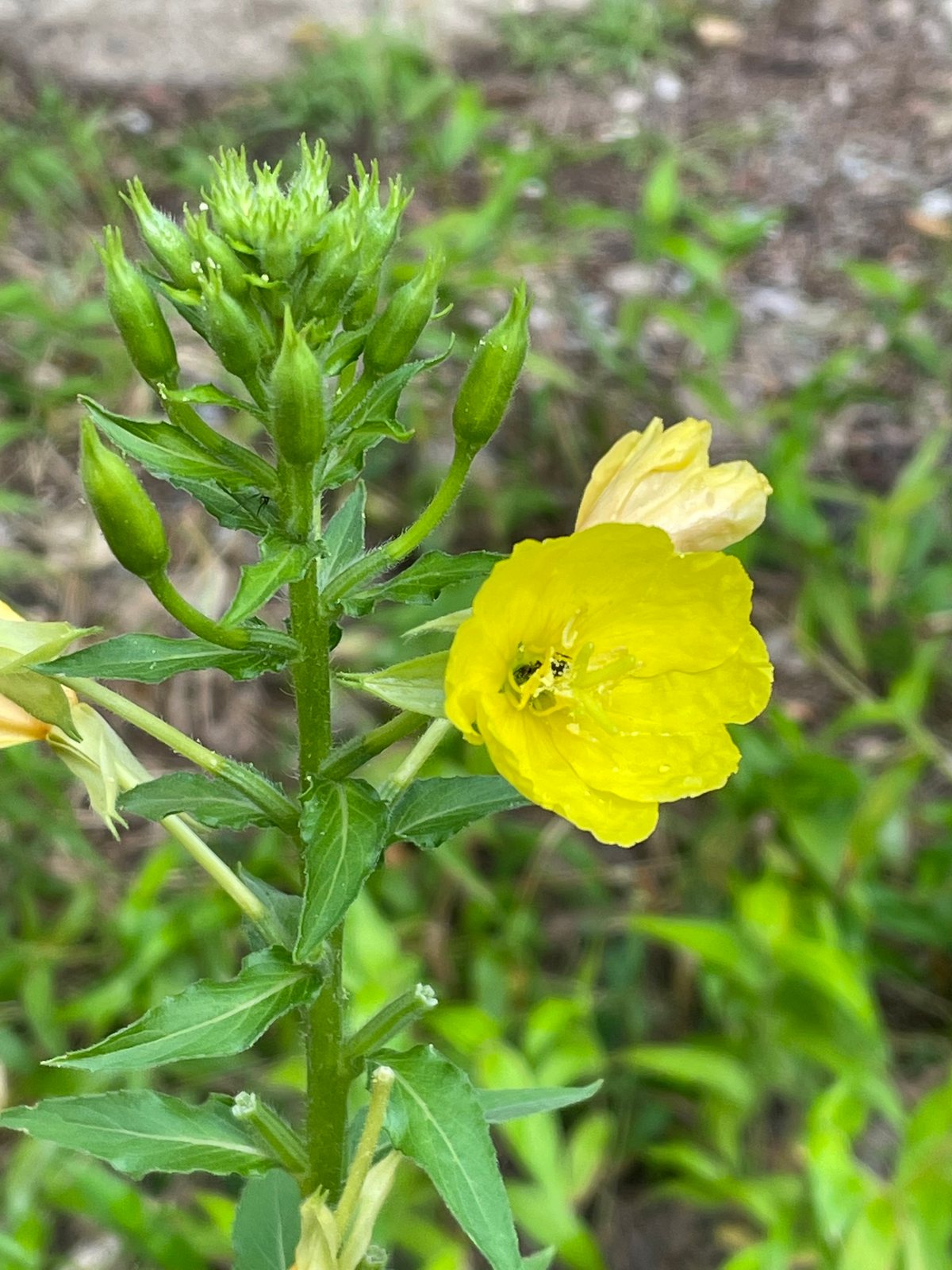
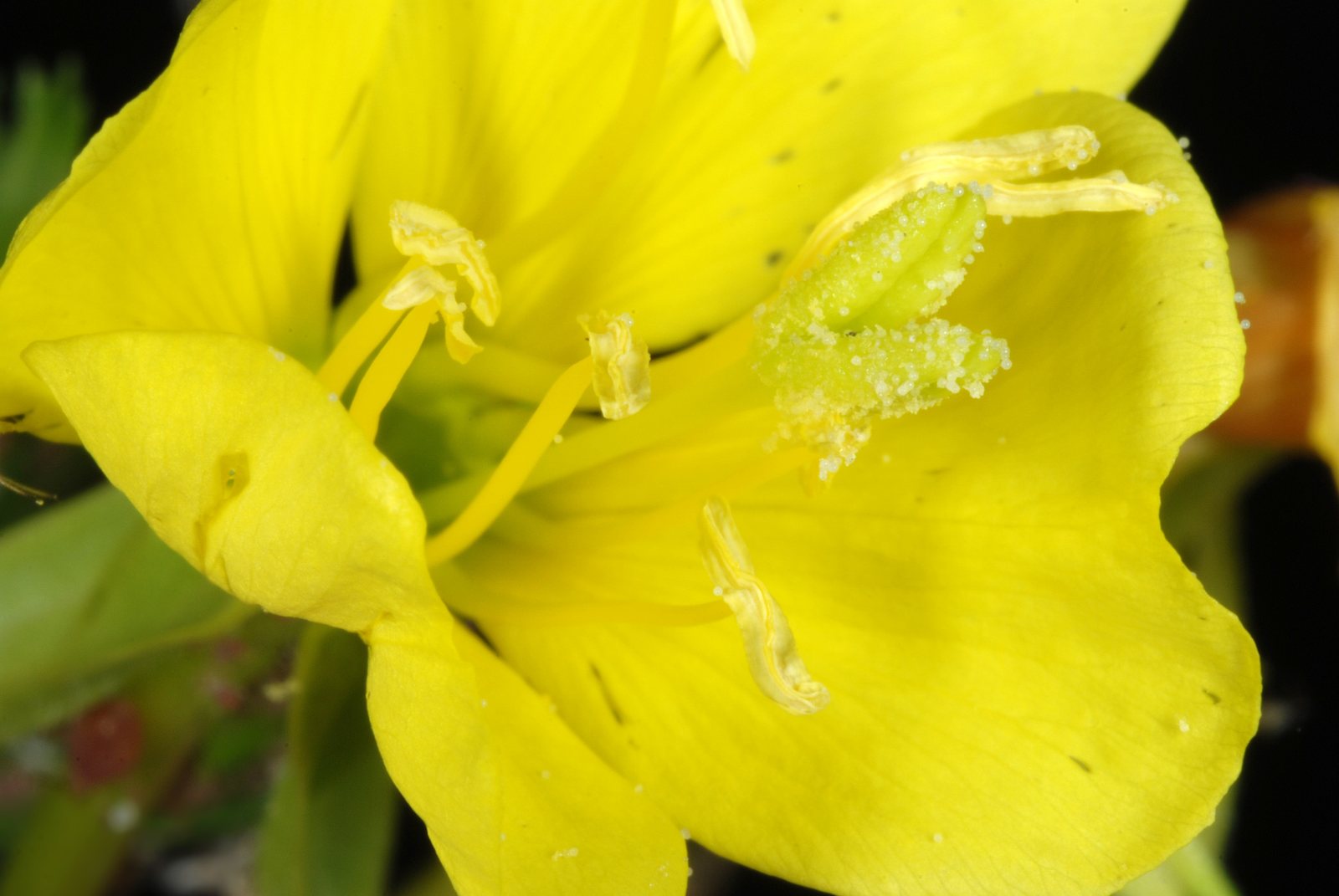
- Yellow flowers from summer into early autumn; individual flowers open towards evening and usually fade the following day.
- Foliage
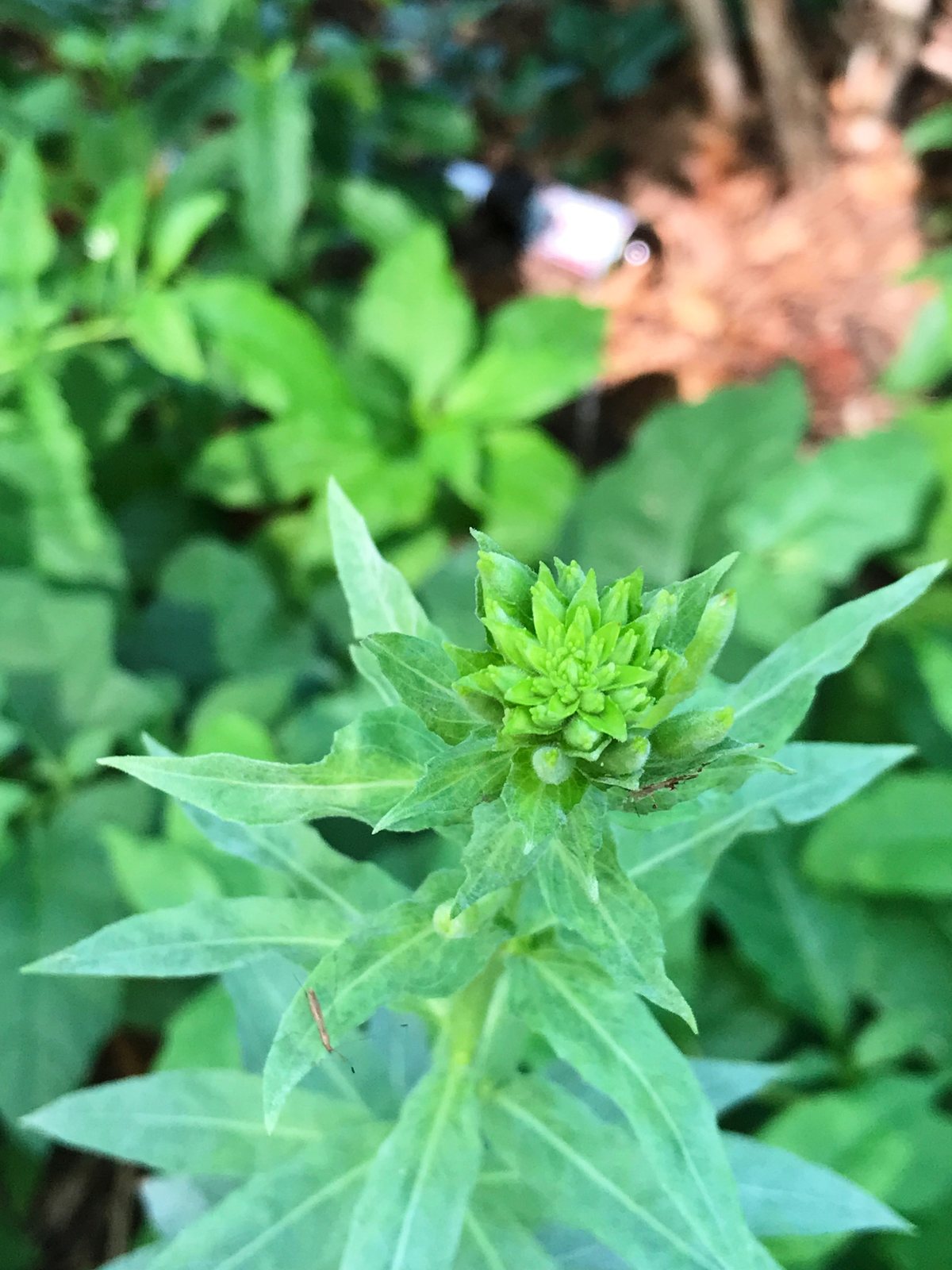
- A first-year rosette of long, narrow green leaves, followed by leafy upright stems; leaves often have a pale or reddish midrib.
- Growth
- Fast once flowering stems develop in the second year.
- Care needed
- Low
The year at a glance
- Pollinators
- Drought tolerant
- Cold hardy
- Heat tolerant
- Wildlife
- Low allergen
- Fragrant
| J | F | M | A | M | J | J | A | S | O | N | D | |
|---|---|---|---|---|---|---|---|---|---|---|---|---|
| Flowers | ||||||||||||
| Fruit | ||||||||||||
| Plant |
Northern hemisphere months. In Australia, shift them by six.
- Difficulty
- Easy
- Toughness
- Very tough
Will it suit your garden?
Pick your zone, country, light and whether you have pets.
Full sun is 6 or more hours of direct sun a day, part shade 3 to 6 hours, shade under 3.
How it grows
Planting day
1 ft (0.3 m)
After 1 year
2.8 ft (0.84 m)
After 2 years
4 ft (1.4 m)
full size
About 2 years to full size.
From a typical nursery size, at an average rate for this kind of plant. A rule of thumb, not a forecast.
Good to know
- Cats and dogs
- Safe
- Native to
- the US and Canada
- Invasive in
- Australia
- In the garden
- Spreads vigorously: plan to contain it.
- Growth rate
- Fast
Care
Jobs through the year
- WaterApr–May, Sep, every 21 days
- Water established plants only in prolonged drought; keep newly sown patches gently moist until established.
- WaterJun–Aug, every 14 days
- Deeply water established plants only during prolonged drought; young rosettes need more frequent checks.
- DeadheadJul–Sep, every 14 days
- Remove spent spikes before capsules ripen to limit self-seeding, or leave selected stems for birds.
- PruneFeb
- Cut dead stems to ground level without damaging overwintering rosettes.
- ProtectMar–May, every 7 days
- Inspect young rosettes for slugs and snails and hand-pick pests where needed.
- Water newly sown patches gently until seedlings are established; avoid keeping the soil constantly wet.
- Do not routinely feed; rich soil can produce tall, floppy stems.
- Thin seedlings to roughly 18-24 in (45-60 cm) apart.
- Stake tall flowering stems early if the site is exposed to wind.
- Remove unwanted seedlings while small, before their taproots become difficult to lift.
Pruning. Remove spent flower spikes before the capsules ripen if you want to limit self-seeding. Otherwise leave some seedheads for birds, then cut the dead stems to ground level in late winter.
Through the year
- Spring
- Sow seed thinly on prepared soil, pressing it into the surface with little or no covering.
- Late spring
- Thin seedlings and remove unwanted volunteers while their roots are small.
- Early summer
- Stake developing flowering stems where wind is likely to bend them.
- Summer
- Water young rosettes during prolonged drought; established plants usually need little extra water.
- Late summer
- Remove developing seed capsules to control spread, or leave a few selected stems to replenish the planting.
- Late winter
- Cut down dead stems, taking care not to damage overwintering rosettes.
In the garden
- Place behind shorter plants in an informal sunny border for tall yellow flowering spikes.
- Combine with purple coneflowers, black-eyed Susans and grasses in a meadow-style planting.
- Use near an evening seating area where the opening flowers and their scent can be noticed.
- Let a few plants seed into a sunny gravel garden, removing excess seedlings to retain open space.
Garden styles it suits: Cottage garden, Wildflower, Wildlife garden, Pollinator garden, Dry gravel garden and Evening garden.
Plant it with: Purple coneflower, Black-eyed Susan, Little bluestem, Yarrow and New England aster.
Wildlife: The evening-opening flowers provide nectar for moths, including hawkmoths, and are also visited by bees. Seed-eating birds take the small seeds from mature capsules.
Problems to watch for
- Excessive self-seeding: remove flower spikes before capsules mature and pull unwanted seedlings promptly.
- Root or crown rot in wet soil: improve drainage or move the planting to a drier position; avoid heavy winter mulch over rosettes.
- Powdery mildew: thin crowded plants, keep roots from becoming severely drought-stressed and remove badly affected foliage.
- Slugs and snails eating young rosettes: inspect after dark, remove them by hand and protect seedlings where damage is persistent.
Safety
Not known to be toxic to people, cats, dogs or horses. No part is generally regarded as poisonous, although this does not make garden plants suitable as unrestricted food or livestock forage.
Where it spreads. Native to much of North America and naturalised in the UK and Australia. It can spread aggressively by seed on open, disturbed ground and is treated as an environmental weed in parts of southeastern Australia, including New South Wales and Victoria; check local guidance before planting near bushland.
Easily confused with
Large-flowered evening primrose (Oenothera glazioviana)
Usually has noticeably larger yellow flowers and red-striped or reddish sepals around the buds. Identification can be difficult where evening primroses hybridise.
Missouri evening primrose (Oenothera macrocarpa)
A low, sprawling perennial with very large yellow flowers and conspicuously winged seed capsules, rather than tall upright flowering stems.
The name
The species name biennis means two-year, referring to its usual biennial life cycle, while evening primrose describes its evening-opening flowers.
Propagation. Grow from seed sown directly outdoors in spring or early summer for flowering the following year. Press seed onto the soil surface, keep it lightly moist until germination and transplant only very young seedlings because older plants develop a substantial taproot.
Checked against open data
- Accepted botanical name
- Oenothera biennis
- In the US and Canada
- Native in Canada and the lower 48 states.
- Native range
- Alabama, Alberta, Arkansas, British Columbia, California, Connecticut, Delaware, District of Columbia, Florida, Georgia, Idaho and Illinois.
- Measured
- Soil pH 5 to 7. Average height 82 cm.
Sources: GBIF (CC BY 4.0), USDA PLANTS and Trefle (CC BY 4.0). The care and design notes are LandscapeGPT's own.
See it in your own yard.
Upload a photo of your yard and see it redesigned with plants that suit your climate, each checked against your zone.