Common privet
Ligustrum vulgare. Family Oleaceae. Shrub.
Also called European privet, Wild privet.
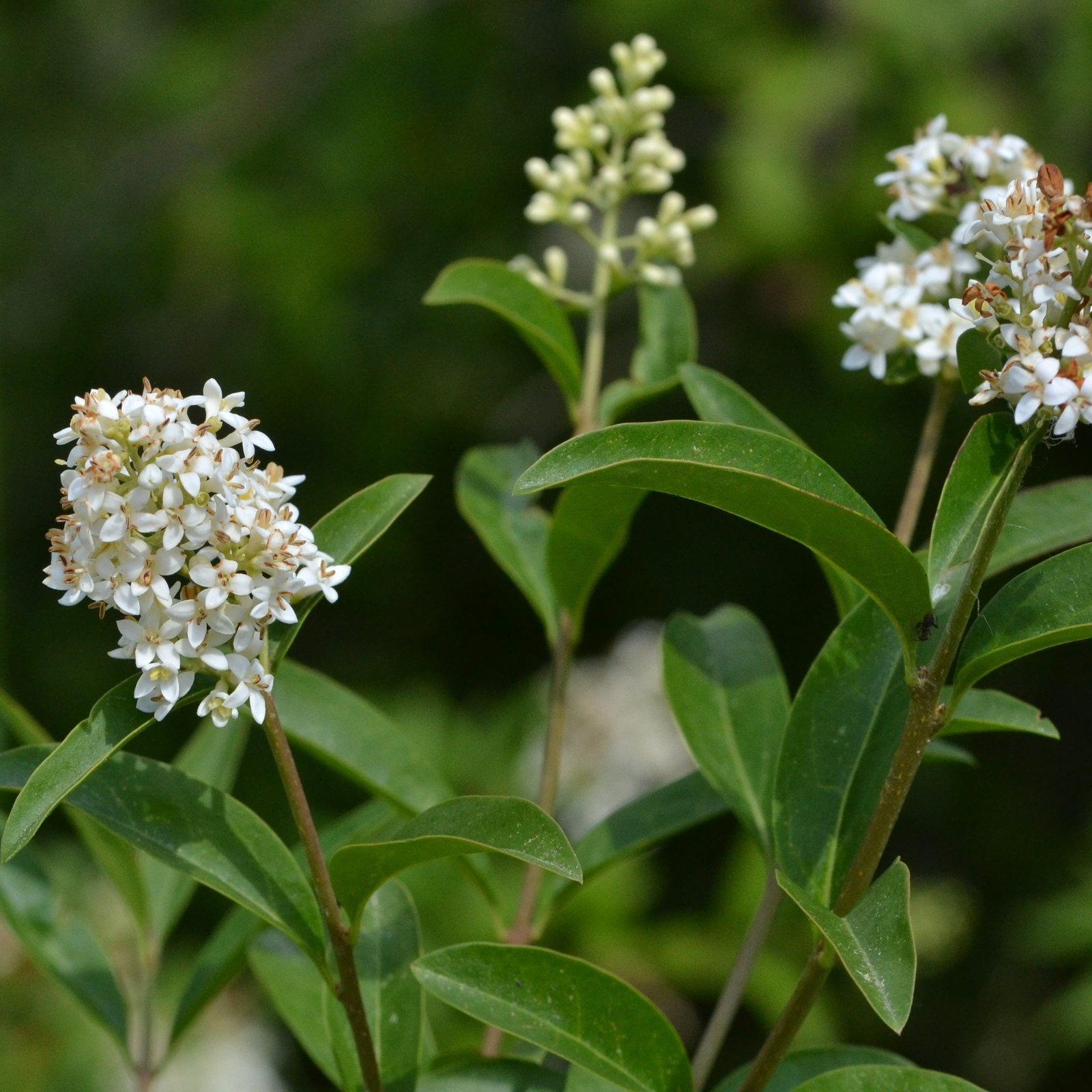
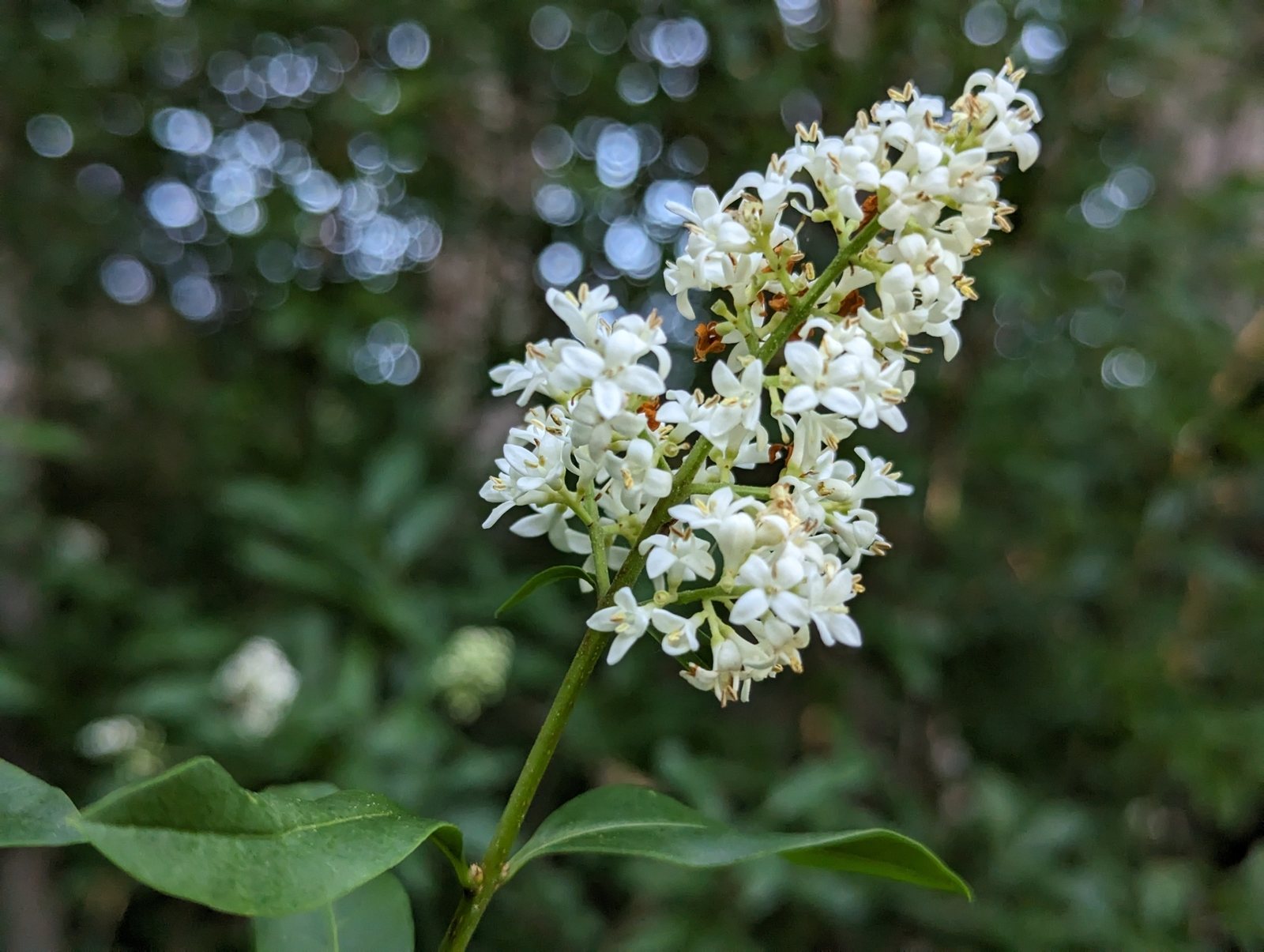
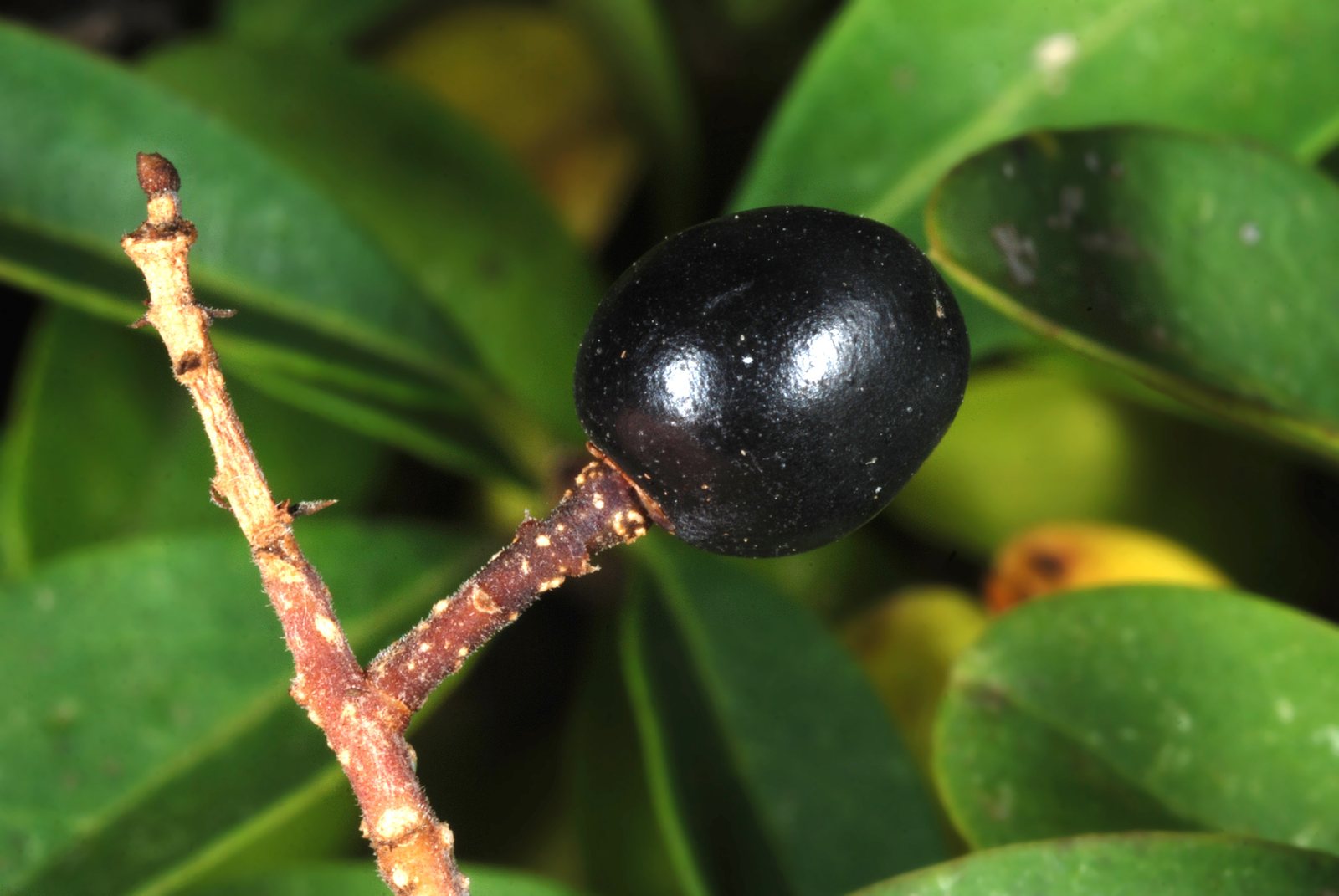
Common privet is a densely branched shrub grown mainly for clipped hedges, screens and simple topiary. Unclipped plants produce scented white flowers followed by black berries; it usually loses its leaves in winter but may retain some in mild climates. Check local invasive-plant guidance before planting, especially outside its native European range.
At a glance
- Sun
- Full sun to partial shade; tolerates deeper shade but grows less densely and flowers less.
- Water
- Water regularly during establishment; established plants tolerate moderate drought but benefit from deep watering during prolonged dry spells.
- Soil
- Most well-drained soils, including clay and chalk; tolerates acidic to alkaline conditions. Avoid persistently waterlogged ground.
- Height
- 10-15 ft (3-4.6 m) unclipped
- Spread
- 8-15 ft (2.4-4.6 m) unclipped
- Flowers
- Late spring to early summer; small creamy-white flowers in terminal clusters, with a strong scent some people find unpleasant.
- Foliage
- Opposite pairs of small, narrow, dark green leaves; deciduous to semi-evergreen, depending on winter temperatures.
- Growth
- Fast when young, commonly 12-24 in (30-60 cm) a year in suitable conditions.
- Care needed
- Medium
The year at a glance
- Pollinators
- Deer resistant
- Drought tolerant
- Cold hardy
- Wildlife
- Fragrant
| J | F | M | A | M | J | J | A | S | O | N | D | |
|---|---|---|---|---|---|---|---|---|---|---|---|---|
| Flowers | ||||||||||||
| Fruit | ||||||||||||
| Plant |
Northern hemisphere months. In Australia, shift them by six.
- Difficulty
- Easy
- Toughness
- Very tough
Will it suit your garden?
Pick your zone, country, light and whether you have pets.
Full sun is 6 or more hours of direct sun a day, part shade 3 to 6 hours, shade under 3.
How it grows
Planting day
1.6 ft (0.5 m)
After 1 year
5 ft (1.5 m)
After 2 years
8 ft (2.5 m)
After 3 years
12 ft (3.5 m)
After 5 years
12 ft (3.8 m)
full size
About 3 years to full size.
From a typical nursery size, at an average rate for this kind of plant. A rule of thumb, not a forecast.
Good to know
- Cats and dogs
- Toxic
- Native to
- the UK
- Invasive in
- the US, Canada and Australia
- In the garden
- Spreads vigorously: plan to contain it.
- Growth rate
- Fast
Care
Jobs through the year
- WaterApr–May, Sep–Oct, every 21 days
- Water established plants only if the root zone is dry; young plants need more frequent watering.
- WaterJun–Aug, every 14 days
- Water established plants deeply during prolonged dry spells; skip after substantial rain.
- MulchMar–Apr
- Apply 5–8 cm of organic mulch, keeping it clear of the stems.
- FeedMar–Apr
- Feed lightly only if soil is poor or growth is weak.
- PruneFeb–Mar
- Remove damaged wood; renovate overgrown hedges in stages before growth begins.
- PruneMay, Jul
- Trim formal hedges with a wider base; check for active nests and leave informal shrubs untrimmed.
- PruneAug–Sep
- Where invasive spread is a concern, remove berry clusters before birds disperse the seeds.
- Water deeply through the first growing season whenever the root zone starts to dry.
- Apply 2-3 in (5-8 cm) of organic mulch, keeping it clear of the stems.
- Feed lightly in spring only if growth is weak or the soil is poor; established hedges rarely need heavy feeding.
- Keep grass and weeds away from the base of young plants.
- Remove unwanted seedlings and rooted shoots promptly, especially near woodland or natural areas.
Pruning. Trim formal hedges in late spring and again in midsummer as needed, keeping the base wider than the top; check carefully for active bird nests before cutting. Renovate an overgrown hedge in late winter by cutting it back hard, preferably in stages if you still need screening.
Through the year
- Late winter
- Remove dead or damaged stems and renovate overgrown hedges before new growth starts.
- Spring
- Plant when the ground is workable, water well and mulch the root zone.
- Late spring
- Give formal hedges their first trim after checking for active nests; leave informal shrubs untrimmed if flowers are wanted.
- Summer
- Water young plants during dry weather and check foliage for pests or mildew.
- Midsummer
- Trim formal hedges again if needed; avoid cutting during extreme heat or drought.
- Autumn
- Where spread is a concern, remove berry clusters before birds disperse the seeds and pull nearby seedlings.
In the garden
- Clip into a boundary hedge to divide garden rooms and provide a green backdrop for flowering borders.
- Use as a formal enclosure around roses, lavender or herbaceous planting where regular trimming is practical.
- Train into simple geometric topiary for traditional paths and entrances.
- Within its native range, include in an informal mixed hedge with hawthorn, hazel and dog rose for seasonal flowers and wildlife cover.
Garden styles it suits: Formal, Traditional, English country, Topiary garden, Native hedgerow and Grand estate.
Plant it with: English lavender, Catmint, Hardy geranium, Roses, Hawthorn and Dog rose.
Wildlife: Flowers provide nectar and pollen for insects, and dense branches offer nesting cover. Birds eat the berries and disperse the seeds, which is a concern where privet is invasive; frequent clipping greatly reduces flowers and fruit.
Problems to watch for
- Honey fungus can cause dieback and death, sometimes with white fungal sheets beneath bark. Remove affected plants and as much infected root material as practical; seek local advice before replanting.
- Powdery mildew causes white patches on leaves, especially in dry, crowded conditions. Improve airflow, water the root zone during drought and avoid excessive nitrogen feeding.
- Aphids or scale insects can weaken new growth and leave sticky honeydew. Encourage natural predators, wash off aphids and use a locally approved horticultural oil for persistent scale, following the label.
- A bare hedge base often results from shading by a wider top. Reshape the hedge so its base is wider, and renovate neglected growth in late winter.
Safety
Leaves and berries are toxic to people, cats, dogs and horses. Eating them can cause vomiting, abdominal pain and diarrhoea; substantial ingestion can be serious, particularly in horses. Keep hedge clippings away from grazing animals, and contact a poison service or veterinarian after suspected ingestion.
Where it spreads. Invasive in parts of the eastern and central United States, including northeastern, midwestern and some southeastern states. It also escapes cultivation in southern Canada, including southern Ontario, and is an environmental weed in parts of southeastern Australia, including Victoria and Tasmania. Birds spread its seeds into woodland, scrub and disturbed ground;
Easily confused with
Oval-leaved privet (Ligustrum ovalifolium)
Usually has broader, thicker, glossier oval leaves and retains more foliage through mild winters; common privet has narrower, generally duller leaves.
Chinese privet (Ligustrum sinense)
Usually has smaller, broader leaves and fine hairs on young shoots and the undersides of leaf midribs; common privet is generally hairless.
Box (Buxus sempervirens)
Has smaller, rounded, leathery evergreen leaves and inconspicuous flowers; it does not produce privet's conspicuous clusters of white flowers and black berries.
The name
The species name vulgare is Latin for 'common'.
Propagation. Take semi-ripe cuttings in summer or hardwood cuttings in late autumn or winter. Seed also germinates, but seedlings may vary; avoid propagating or distributing it where it is invasive or restricted.
Checked against open data
- Accepted botanical name
- Ligustrum vulgare
- In the US and Canada
- Introduced in Canada and the lower 48 states.
- Native range
- Albania, Austria, Belgium, Bulgaria, Czechoslovakia, Denmark, France, Germany, Great Britain, Greece, Hungary and Iran.
- Measured
- Average height 300 cm.
Sources: GBIF (CC BY 4.0), USDA PLANTS and Trefle (CC BY 4.0). The care and design notes are LandscapeGPT's own.
See it in your own yard.
Upload a photo of your yard and see it redesigned with plants that suit your climate, each checked against your zone.