Compacta Japanese holly
Ilex crenata 'Compacta'. Family Aquifoliaceae. Shrub.
Also called Ilex crenata 'Compacta', Compact Japanese holly, Box-leaved holly 'Compacta'.
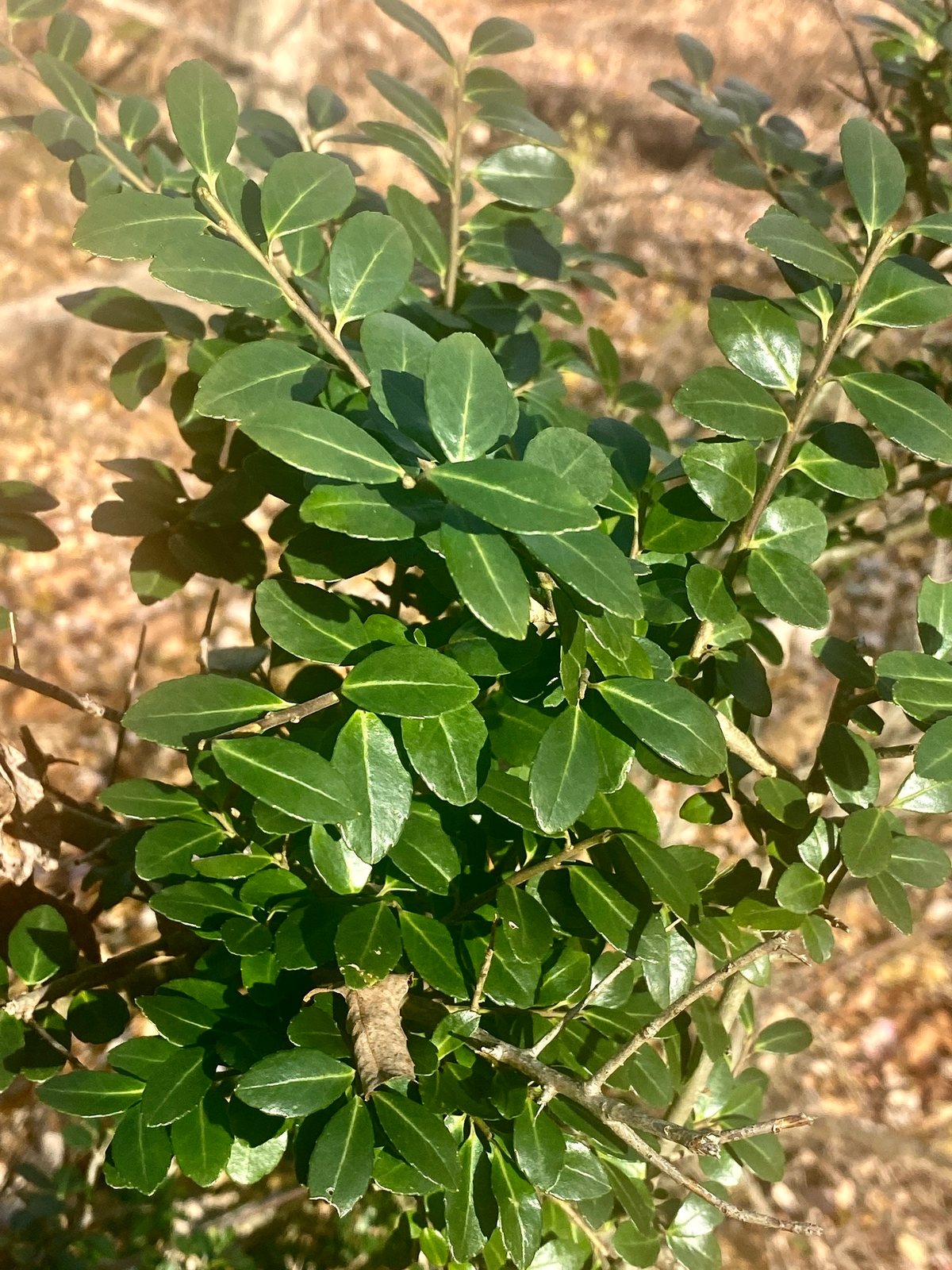
A dense, rounded evergreen shrub with small, glossy leaves, grown for low hedges, clipped shapes and year-round structure. It resembles boxwood but needs acidic, well-drained soil; alkaline ground, waterlogging and exposed winter sites can cause problems.
At a glance
- Sun
- Full sun to partial shade; afternoon shade helps in hot climates. Shelter from drying winter winds, especially near its cold limit.
- Water
- Keep evenly moist while establishing. Once rooted, water during prolonged dry spells; avoid both waterlogged soil and repeated drying out.
- Soil
- Moist, well-drained, acidic soil rich in organic matter. Alkaline or chalky soil often causes yellow leaves and poor growth.
- Height
- 4-6 ft (1.2-1.8 m), occasionally 8 ft (2.4 m) with age
- Spread
- 4-6 ft (1.2-1.8 m), occasionally 8 ft (2.4 m) with age
- Flowers
- Small, inconspicuous creamy-white flowers in late spring to early summer.
- Foliage
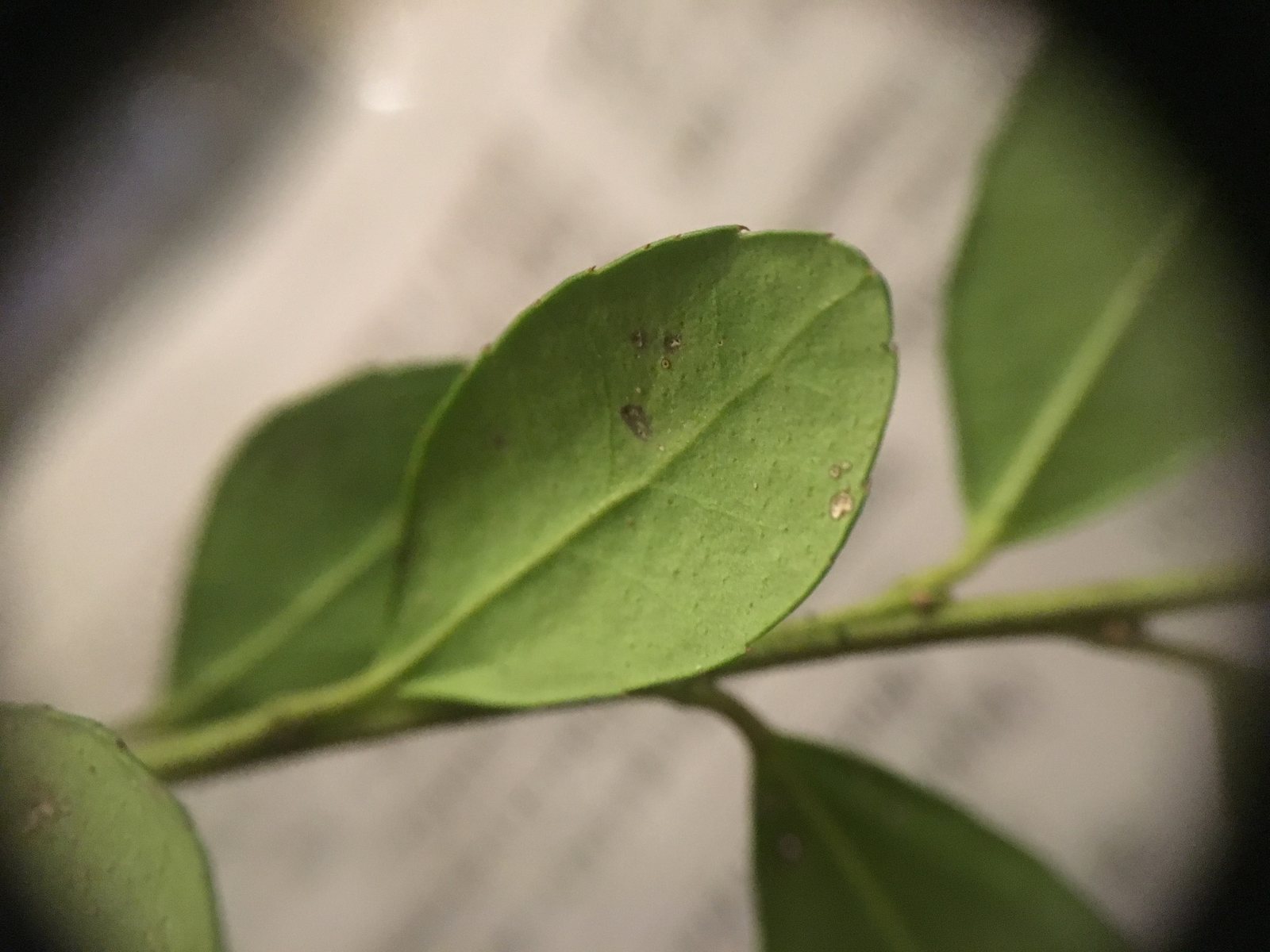
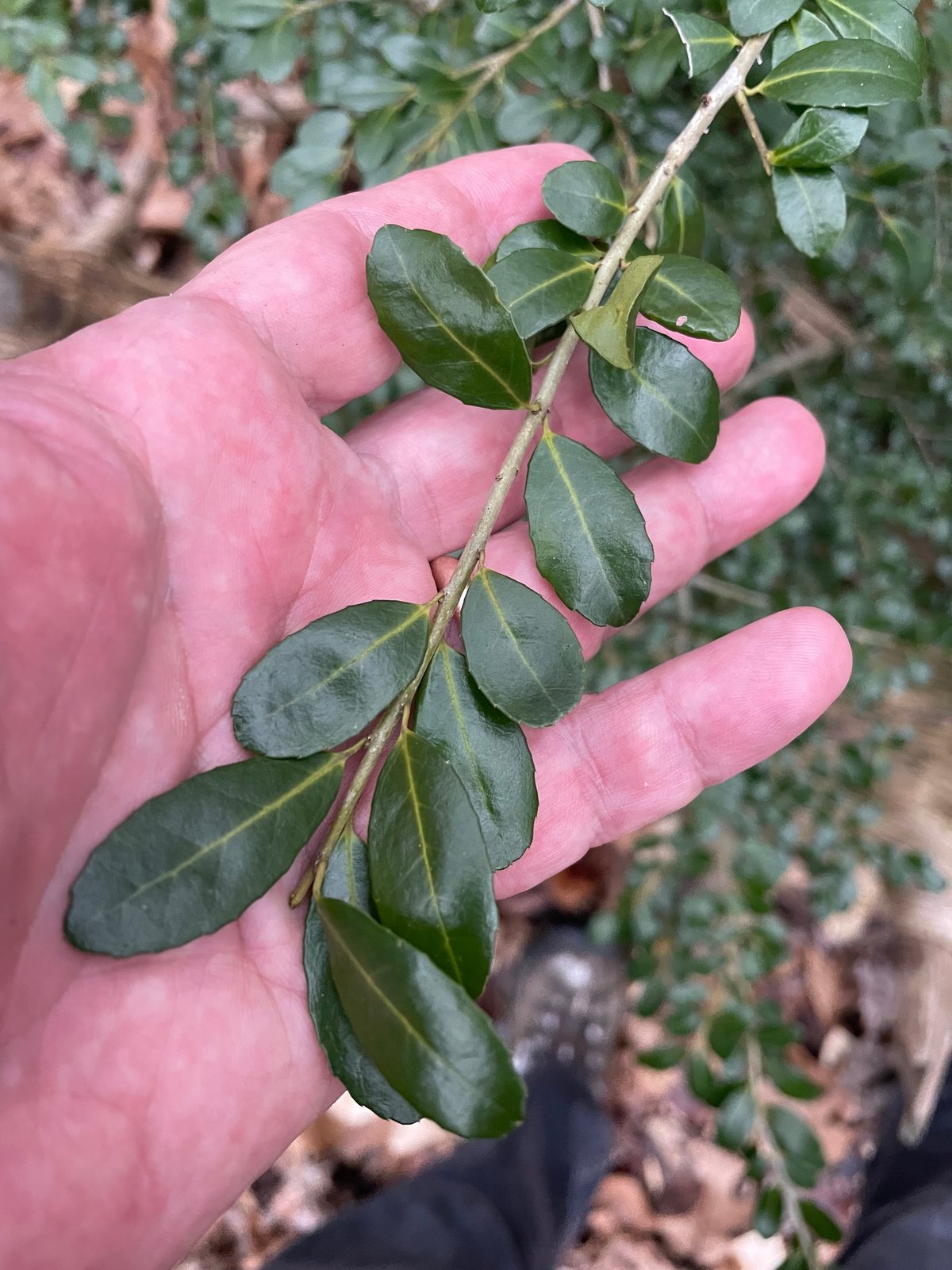
- Evergreen. Small, glossy, dark green oval leaves with finely scalloped edges, arranged alternately along the stems.
- Growth
- Slow to moderate
- Care needed
- Medium
The year at a glance
- Pollinators
- Wildlife
- Low allergen
| J | F | M | A | M | J | J | A | S | O | N | D | |
|---|---|---|---|---|---|---|---|---|---|---|---|---|
| Flowers | ||||||||||||
| Fruit | ||||||||||||
| Plant |
Northern hemisphere months. In Australia, shift them by six.
- Difficulty
- Moderate
- Toughness
- Fairly tough
Will it suit your garden?
Pick your zone, country, light and whether you have pets.
Full sun is 6 or more hours of direct sun a day, part shade 3 to 6 hours, shade under 3.
How it grows
Planting day
1.6 ft (0.5 m)
After 1 year
2.1 ft (0.65 m)
After 2 years
2.7 ft (0.81 m)
After 3 years
3 ft (0.96 m)
After 5 years
4 ft (1.3 m)
About 7 years to full size.
From a typical nursery size, at an average rate for this kind of plant. A rule of thumb, not a forecast.
Good to know
- Cats and dogs
- Toxic
- Invasive in
- the US
- Growth rate
- Slow
Care
Jobs through the year
- WaterApr–May, Sep–Nov, every 14 days
- Check established plants and water deeply if dry; water before freezing weather if autumn is dry.
- WaterJun–Aug, every 7 days
- Water during dry spells without waterlogging; plants in their first two seasons need closer attention.
- FeedMar–Apr
- Feed lightly with an acid-loving shrub fertilizer only if growth is weak; test pH if leaves yellow.
- MulchMar–Apr
- Renew a 5–8 cm organic mulch, keeping it away from stems.
- PruneFeb–Mar
- Remove dead branches and make any necessary substantial shaping cuts before growth starts.
- PruneJun
- Lightly trim after the spring flush, keeping hedge bases wider than tops; clipping can reduce berries.
- ProtectJan–Feb, Nov–Dec
- Shelter exposed plants from drying winter winds and insulate container roots.
- Plant with the root flare at soil level; improve drainage or use a raised bed on heavy, wet ground.
- Water deeply during dry weather through the first two growing seasons.
- Spread 2-3 in (5-8 cm) of organic mulch over the roots, keeping it clear of the stems.
- Apply a modest amount of slow-release fertiliser for acid-loving shrubs in spring only if growth is weak.
- Check soil pH before treating yellow foliage; iron supplements alone will not correct unsuitable soil.
Pruning. Prune in late winter or early spring before new growth, removing dead branches and shortening wayward shoots. Lightly trim hedges after the spring growth flush, keeping the base wider than the top; avoid heavy clipping late in the growing season.
Through the year
- Late winter
- Remove dead or damaged stems and carry out any substantial shaping before new growth starts.
- Spring
- Plant where the soil is workable, water thoroughly and renew mulch.
- Late spring
- Check new leaves for yellowing and test soil pH if growth looks pale.
- Early summer
- Lightly clip hedges or rounded shapes after the first flush of growth.
- Summer
- Water during prolonged dry spells and inspect leaf undersides for spider mites.
- Autumn
- Water before the ground freezes if conditions are dry; stop clipping so new shoots can harden.
- Winter
- Protect container roots and shelter plants from drying winds in cold, exposed gardens.
In the garden
- Clip into low hedges around beds or along paths for a neat evergreen boundary.
- Use rounded shrubs beside entrances or at border corners to repeat a simple structural shape.
- Plant beneath lightly canopied trees with ferns and other acid-soil woodland plants.
- Grow in large, well-drained containers filled with ericaceous compost where garden soil is alkaline.
Garden styles it suits: Formal, Japanese, Topiary garden, Modern courtyard, Green on green and Winter interest.
Plant it with: Japanese pieris, Azaleas, Camellias, Japanese forest grass, Hostas and Japanese painted fern.
Wildlife: Flowers attract small bees and other insects. Female plants can carry black berries when a compatible male Japanese holly flowers nearby; birds may eat the berries, and dense foliage offers shelter.
Problems to watch for
- Yellow leaves with greener veins often indicate alkaline soil: test pH and use a suitable acidic bed or an ericaceous container rather than repeatedly adding iron.
- Root rot causes wilting and dieback in wet soil: improve drainage, reduce watering and remove badly affected plants.
- Spider mites cause fine stippling and bronzing, especially in hot, dry conditions: rinse leaf undersides and use a labelled horticultural soap if needed.
- Winter scorch browns exposed foliage: shelter from cold winds, mulch the roots and water during dry autumn weather before freezing.
Safety
Treat the leaves and especially the berries as toxic to people, cats, dogs and horses if eaten. Ingestion can cause vomiting, diarrhoea and abdominal discomfort; poisoning is usually gastrointestinal rather than life-threatening, but seek medical or veterinary advice after ingestion.
Where it spreads. Japanese holly has escaped cultivation in parts of the eastern United States, including Virginia. Check local invasive-plant guidance before planting near natural woodland; seed-grown offspring will not necessarily remain compact.
Easily confused with
Common box (Buxus sempervirens)
Box has opposite pairs of leaves, usually with smooth edges; Japanese holly has alternate leaves with fine scalloping.
Inkberry (Ilex glabra)
Inkberry usually has longer leaves with teeth mainly near their tips and often spreads by suckers; Japanese holly has smaller leaves scalloped along more of the edge.
Convex-leaved Japanese holly (Ilex crenata 'Convexa')
Its leaves are noticeably rounded and cupped or bulging. 'Compacta' has flatter leaves; closely clipped plants can be difficult to distinguish without a reliable label.
The name
Crenata refers to the scalloped leaf margins, while 'Compacta' describes the cultivar's dense growth.
Propagation. Take semi-ripe cuttings in summer and root them in a moist, free-draining medium under humid conditions. Seed does not reliably reproduce the cultivar.
Checked against open data
- Accepted botanical name
- Ilex crenata
- In the US and Canada
- Introduced in the lower 48 states.
- Native range
- Assam, China North-Central, China South-Central, China Southeast, East Himalaya, Hainan, Japan, Korea, Kuril Is., Myanmar, Nepal and Sakhalin.
- Measured
- Soil pH 4.5 to 5.5. Average height 305 cm.
Sources: GBIF (CC BY 4.0), USDA PLANTS and Trefle (CC BY 4.0). The care and design notes are LandscapeGPT's own.
See it in your own yard.
Upload a photo of your yard and see it redesigned with plants that suit your climate, each checked against your zone.