Concord grape
Vitis labrusca. Family Vitaceae. Climber.
Also called Vitis labrusca 'Concord', Concord fox grape.
Concord is a vigorous, deciduous grapevine grown for its blue-black, seeded fruit, especially for juice, jelly and fresh eating. Usually listed as Vitis labrusca 'Concord', it has some hybrid ancestry and needs a sturdy support and annual pruning. The vine tolerates cold winters, but its late-ripening fruit needs a long, warm growing season and may not sweeten reliably in cooler parts of the UK or similar climates.
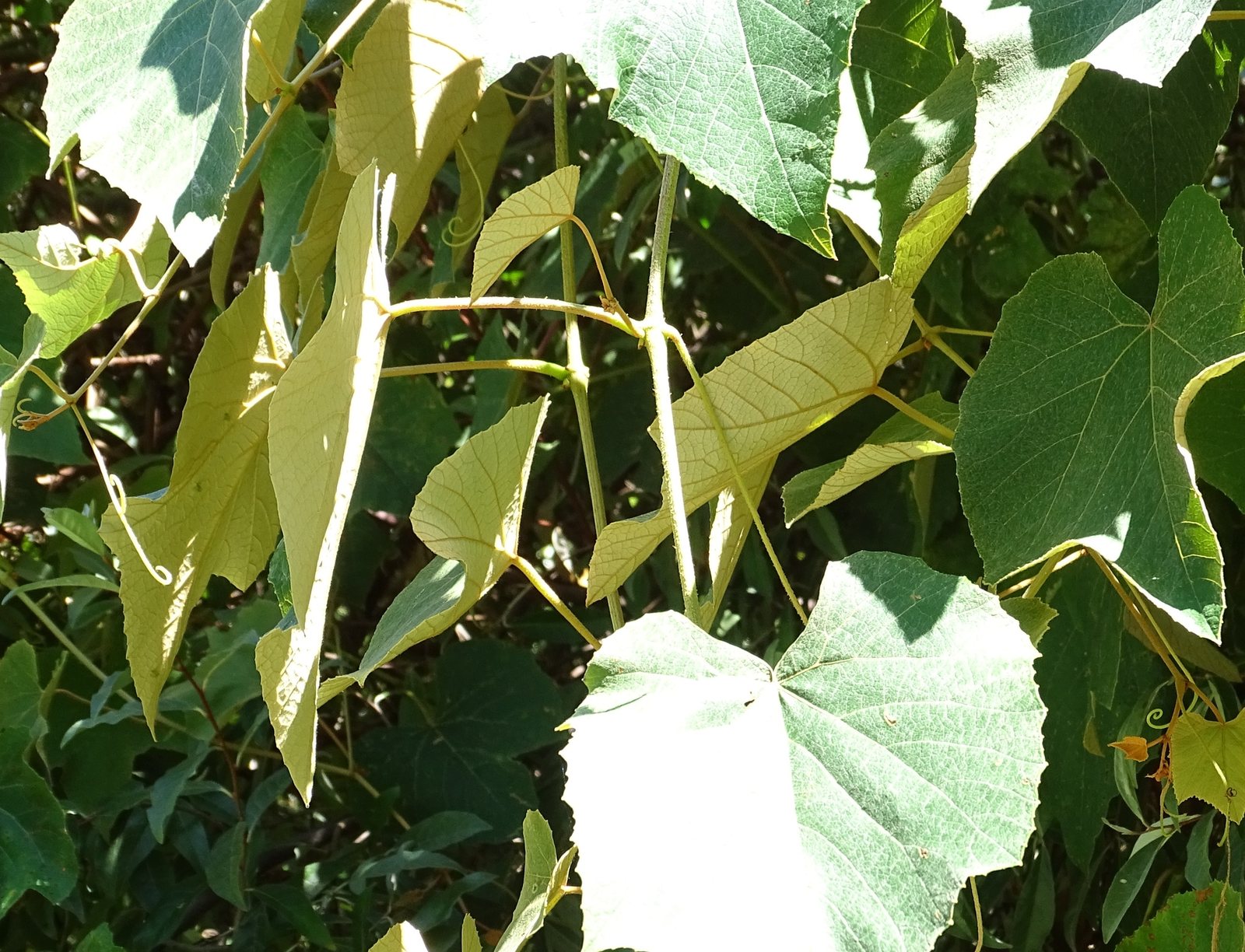
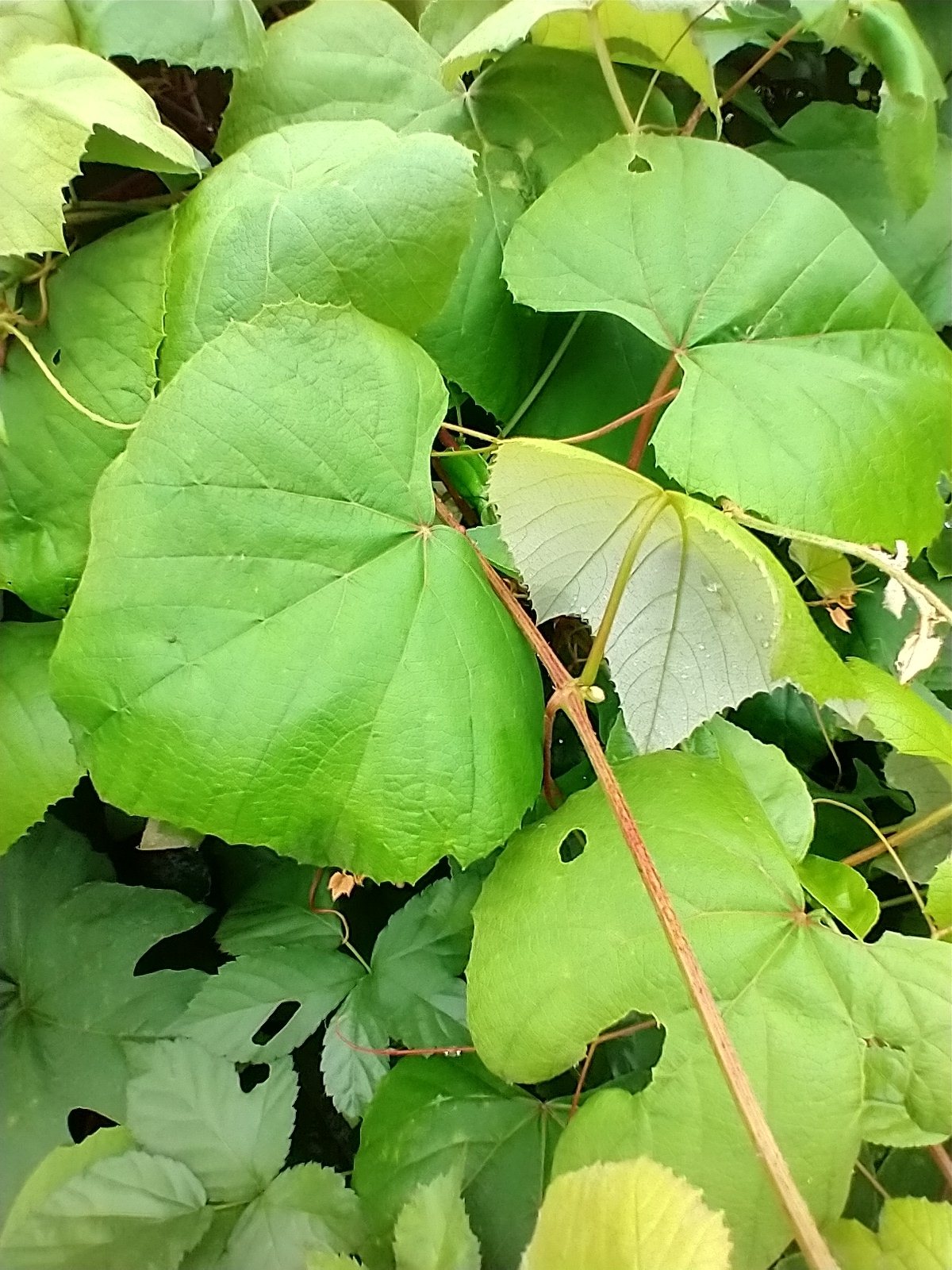
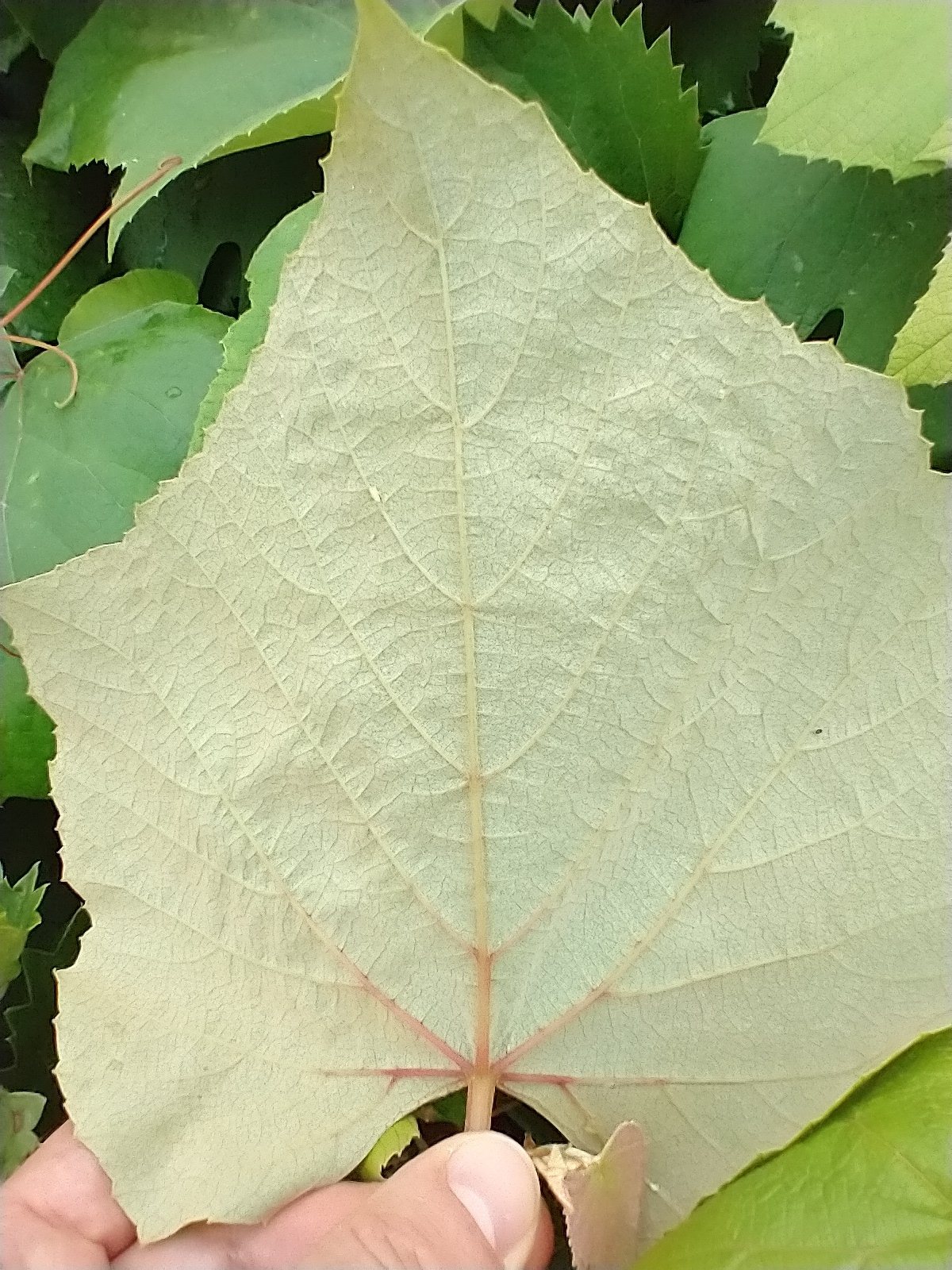
At a glance
- Sun
- Full sun; choose a warm, sheltered position with good air circulation.
- Water
- Water regularly during establishment. Once established, water deeply during prolonged dry weather, especially while fruit is swelling; avoid waterlogged soil.
- Soil
- Deep, well-drained loam with moderate fertility; prefers slightly acidic soil, roughly pH 5.5-6.5. Avoid wet ground and strongly alkaline soil.
- Height
- 15-20 ft (4.6-6.1 m) if allowed to climb; usually trained lower
- Spread
- 8-15 ft (2.4-4.6 m), controlled by training and pruning
- Flowers
- Late spring to early summer; small, inconspicuous greenish flowers in clusters.
- Foliage
- Large, rounded to shallowly lobed green leaves with softly hairy undersides; usually yellow in autumn.
- Growth
- Fast once established
- Care needed
- High
The year at a glance
- Drought tolerant
- Wildlife
- Edible
| J | F | M | A | M | J | J | A | S | O | N | D | |
|---|---|---|---|---|---|---|---|---|---|---|---|---|
| Flowers | ||||||||||||
| Fruit | ||||||||||||
| Plant |
Northern hemisphere months. In Australia, shift them by six.
- Difficulty
- Hard
- Toughness
- Fairly tough
Will it suit your garden?
Pick your zone, country, light and whether you have pets.
Full sun is 6 or more hours of direct sun a day, part shade 3 to 6 hours, shade under 3.
How it grows
Planting day
2 ft (0.6 m)
After 1 year
3 ft (1.1 m)
After 2 years
5 ft (1.5 m)
After 3 years
6 ft (1.8 m)
full size
About 3 years to full size.
From a typical nursery size, at an average rate for this kind of plant. A rule of thumb, not a forecast.
Good to know
- Cats and dogs
- Toxic
- Native to
- the US and Canada
- Growth rate
- Fast
Care
Jobs through the year
- WaterApr–May, Sep–Oct, every 14 days
- Water established vines deeply in dry weather; young vines need more frequent watering.
- WaterJun–Aug, every 7 days
- Water deeply during prolonged dry spells, especially as fruit swells; keep foliage dry.
- FeedApr
- Apply a modest balanced feed only if growth is weak.
- MulchApr
- Spread 5–8 cm of organic mulch, keeping it clear of the trunk.
- PruneFeb
- Retain selected one-year-old fruiting canes and renewal spurs; tie canes to strong wires.
- PruneJun–Jul, every 21 days
- Thin crowded shoots and shorten excessive growth without stripping fruit-shading leaves.
- ProtectApr–May
- Cover tender shoots during late frosts where practical.
- ProtectMay–Jun
- Remove flower clusters in the first two seasons to build the vine's framework.
- ProtectAug–Oct
- Secure wildlife-safe netting before birds feed; check it regularly for trapped animals.
- HarvestAug–Oct, every 7 days
- Taste first, then cut fully sweet purple-black bunches; grapes do not sweeten after picking.
- ProtectNov–Dec
- Remove mummified fruit and fallen diseased leaves, and check supports.
- Install a strong wire trellis or pergola before planting, and tie young shoots loosely to it.
- Water young vines deeply whenever the root zone begins to dry; keep irrigation off the leaves.
- Apply a modest balanced feed in spring only if growth is weak; excess nitrogen encourages leaves rather than fruit.
- Spread 2-3 in (5-8 cm) of organic mulch over the root area, keeping it clear of the trunk.
- Remove flower clusters during the first two growing seasons to build a strong framework.
- Use securely fitted wildlife-safe netting as fruit colours, and check it regularly for trapped animals.
Pruning. Prune in late winter while dormant, retaining a few strong one-year-old canes for fruiting and short renewal spurs; remove most of the previous season's growth. In summer, thin crowded shoots and shorten excessive extensions without stripping away the leaves that feed and shade the fruit.
Harvest
Pick whole bunches when the grapes are uniformly deep purple-black, sweet rather than sharply sour, and slip easily from their skins; they will not sweeten after picking. Harvest is usually August–October in the US, September–October in Canada and the UK, and February–March in Australia, though Concord may not ripen fully in cool UK summers. Expect the first substantial crop about 3–4 years after planting.
Through the year
- Winter
- Repair supports and remove old fruit and fallen leaves that could carry disease.
- Late winter
- Prune dormant vines and tie retained fruiting canes to their wires.
- Spring
- Plant dormant vines once soil is workable; renew mulch and water new plants.
- Late spring
- Select and tie in well-spaced shoots; watch for mildew and protect tender growth from late frost where practical.
- Summer
- Water during dry spells, thin congested growth and net developing fruit before birds begin feeding.
- Late summer to autumn
- Taste grapes before picking: full colour alone does not mean they are sweet. Cut ripe bunches with secateurs.
In the garden
- Train over a strong pergola to provide summer shade and expose the framework in winter.
- Grow along freestanding wires at the edge of a kitchen garden, leaving access on both sides for pruning and picking.
- Train on wires in front of a sunny wall in cooler regions to improve warmth and ripening.
- Use as an edible boundary in a homestead garden, with low herbs outside the mulched root zone.
Garden styles it suits: Potager (kitchen garden), Farmhouse, Traditional, Edible landscape, Homestead and Backyard orchard.
Plant it with: Chives, Thyme, Oregano and Yarrow.
Wildlife: Birds and mammals eat the fruit, while dense foliage offers shelter. In its native eastern North American range, Vitis labrusca supports several moth caterpillars; flowers can also attract small insects, although Concord is self-fertile and does not need a second vine.
Problems to watch for
- Black rot causes leaf spots and shrivelled, hard berries: remove mummified fruit and infected debris, improve airflow and seek locally approved preventative treatments where outbreaks recur.
- Powdery mildew leaves a pale coating on foliage and fruit: space shoots well, avoid excessive nitrogen and use a locally approved grape treatment if needed.
- Japanese beetles, where present in North America, skeletonise leaves: hand-pick into soapy water and avoid placing beetle traps beside the vine.
- Fruit stays sour or fails to ripen in cool or short summers: use the warmest sunny site, avoid overcropping and consider an earlier-ripening grape if this happens repeatedly.
Safety
Grapes and raisins can cause life-threatening kidney injury in dogs; keep fresh, dried and fallen fruit away from them and contact a vet immediately after ingestion. Comparable toxicity is not established in cats, but avoid offering them grapes or raisins. The plant and fruit are not known to be toxic to horses. Ripe fruit is edible for people, though whole grapes are a choking hazard for young children.
Easily confused with
European wine grape (Vitis vinifera)
Many cultivars have more deeply cut leaves with less densely hairy undersides. Concord has a distinctive musky flavour and ripe skins that separate readily from the pulp, but cultivar identification from leaves alone is…
Riverbank grape (Vitis riparia)
Usually has more sharply toothed leaves with much less woolly undersides and smaller, sour berries. Wild grapes can hybridise, making identification difficult.
Canada moonseed (Menispermum canadense)
This poisonous vine lacks grape tendrils and has mostly smooth-edged leaves; each berry contains a single crescent-shaped stone rather than grape-like seeds. Never eat unidentified wild berries.
The name
Concord is named for Concord, Massachusetts, where Ephraim Wales Bull selected the original vine.
Propagation. Take dormant hardwood cuttings in winter or layer a low shoot into soil. Seedlings will not come true to Concord; where phylloxera or local regulations affect planting, obtain certified vines on suitable rootstocks from a regional nursery.
Checked against open data
- Accepted botanical name
- Vitis labrusca
- In the US and Canada
- Native in the lower 48 states. Introduced in Canada.
- Native range
- Alabama, Connecticut, Delaware, District of Columbia, Georgia, Indiana, Kentucky, Maine, Maryland, Masachusettes, Michigan and Mississippi.
- Measured
- Soil pH 6.5 to 7. Average height 1350 cm.
Sources: GBIF (CC BY 4.0), USDA PLANTS and Trefle (CC BY 4.0). The care and design notes are LandscapeGPT's own.
See it in your own yard.
Upload a photo of your yard and see it redesigned with plants that suit your climate, each checked against your zone.