Coneflower 'Magnus'
Echinacea purpurea 'Magnus'. Family Asteraceae. Perennial.
Also called Purple coneflower 'Magnus', Echinacea purpurea 'Magnus'.
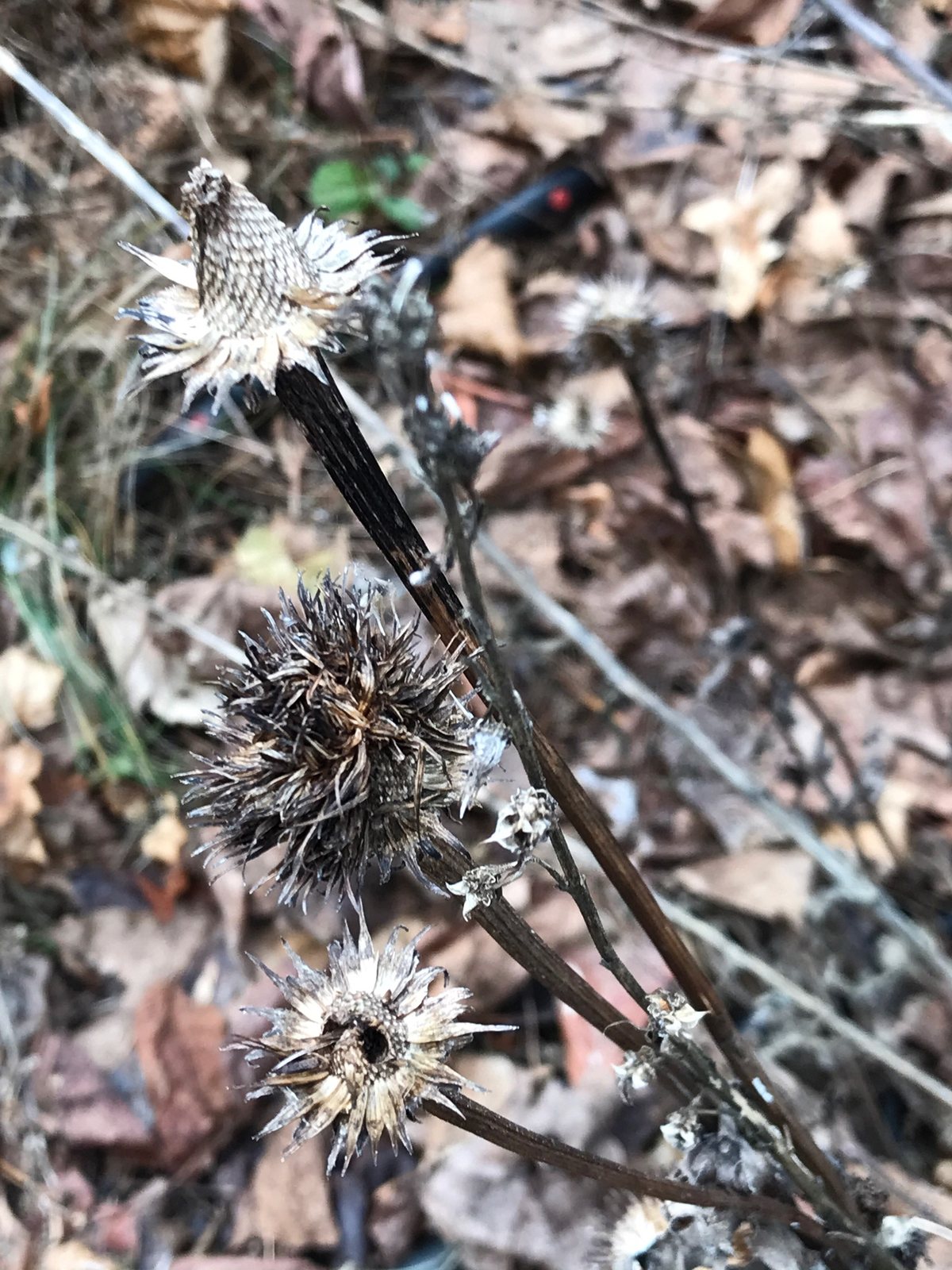
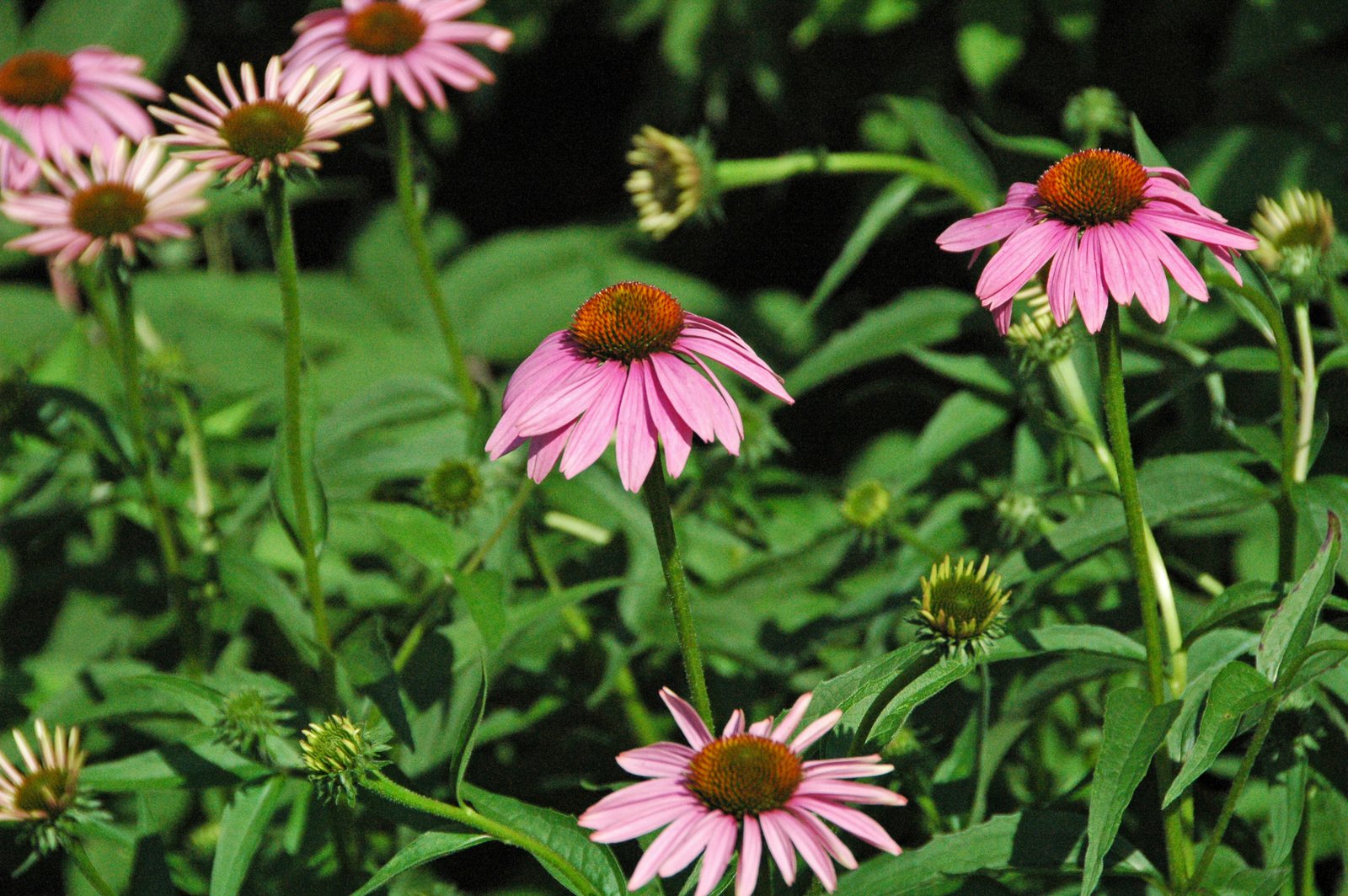
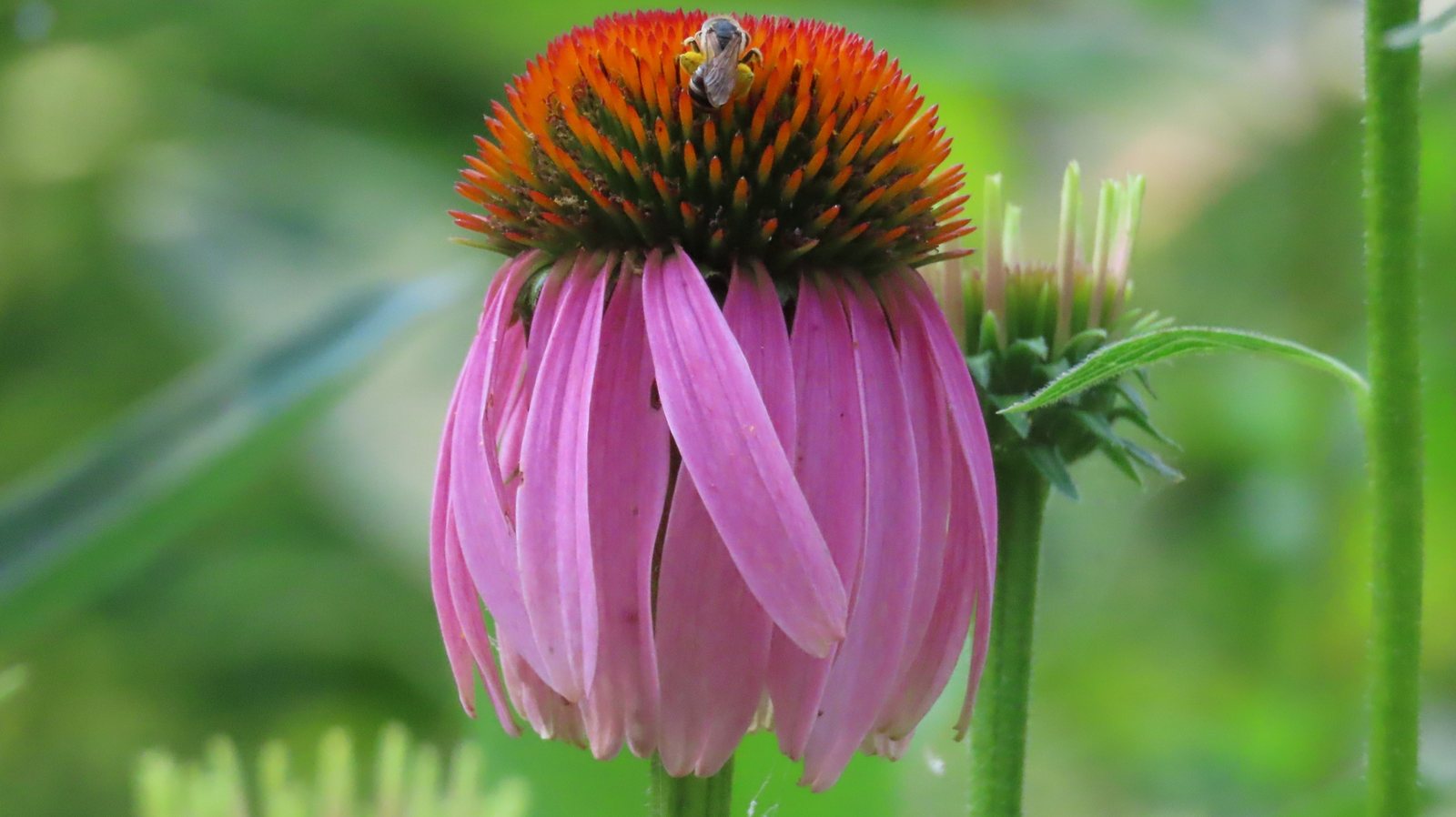
'Magnus' is a clump-forming perennial with large, rosy-purple daisies and raised orange-brown centres. Its petals sit more horizontally than those of many purple coneflowers, giving a broad, open flower shape. Gardeners grow it for summer colour, pollinating insects and seedheads that remain attractive into winter.
At a glance
- Sun
- Full sun is best; tolerates light partial shade but may flower less and lean.
- Water
- Moderate while establishing; water established plants during prolonged dry spells. Avoid persistently wet soil, especially in winter.
- Soil
- Well-drained loam, sandy loam or improved clay; tolerates a broad pH range. Avoid waterlogged ground and excessive feeding.
- Height
- 2-3 ft (0.6-0.9 m)
- Spread
- 1.5-2 ft (0.45-0.6 m)
- Flowers
- Midsummer to early autumn; rosy-purple petals around a prominent orange-brown cone.
- Foliage
- Rough, dark green, oval to lance-shaped leaves on upright, branching stems; dies back in winter.
- Growth
- Moderate; usually forms a substantial flowering clump within 2-3 growing seasons.
- Care needed
- Low
The year at a glance
- Pollinators
- Deer resistant
- Drought tolerant
- Cold hardy
- Heat tolerant
- Wildlife
- Low allergen
| J | F | M | A | M | J | J | A | S | O | N | D | |
|---|---|---|---|---|---|---|---|---|---|---|---|---|
| Flowers | ||||||||||||
| Fruit | ||||||||||||
| Plant |
Northern hemisphere months. In Australia, shift them by six.
- Difficulty
- Easy
- Toughness
- Very tough
Will it suit your garden?
Pick your zone, country, light and whether you have pets.
Full sun is 6 or more hours of direct sun a day, part shade 3 to 6 hours, shade under 3.
How it grows
Planting day
1 ft (0.3 m)
After 1 year
1.5 ft (0.45 m)
After 2 years
2 ft (0.6 m)
After 3 years
2.5 ft (0.75 m)
full size
About 3 years to full size.
From a typical nursery size, at an average rate for this kind of plant. A rule of thumb, not a forecast.
Good to know
- Cats and dogs
- Safe
- Native to
- the US
- Growth rate
- Moderate
Care
Jobs through the year
- WaterApr–May, Sep–Oct, every 14 days
- Water established plants deeply only during prolonged dry spells; water young plants whenever the root zone starts drying.
- WaterJun–Aug, every 7 days
- During prolonged drought, water established plants deeply if soil is dry; young plants need more frequent checks.
- FeedMar–Apr
- Apply a thin compost dressing; avoid high-nitrogen fertilizer.
- MulchApr
- Apply a light mulch, keeping the crown clear.
- PruneFeb–Mar
- Cut old stems just above ground before new shoots extend.
- DivideMar–Apr
- Divide crowded or declining clumps every three to four years.
- DeadheadJul–Sep, every 7 days
- Remove selected faded flowers; leave later seedheads for birds.
- ProtectMar–May, every 7 days
- Check emerging shoots for slugs and snails and control damage promptly.
- ProtectOct–Nov
- Clear wet debris from the crown to reduce winter rot.
- Water deeply during the first growing season whenever the root zone begins to dry.
- Apply a thin layer of compost in spring; avoid heavy nitrogen feeding, which encourages weak stems.
- Mulch lightly around the plant, keeping the crown clear to reduce winter rot.
- In exposed positions, support stems early with twiggy stakes or a discreet plant ring if needed.
- Divide crowded or declining clumps in spring, usually every 3-4 years.
Pruning. Remove faded flowerheads during summer to encourage further flowering, or leave them for seed-eating birds. Cut dead stems to just above ground level in late winter or early spring before new shoots extend.
Through the year
- Late winter
- Cut down last year's stems if they were left standing for wildlife.
- Spring
- Plant or divide clumps once the soil is workable; add a thin compost dressing.
- Spring
- Protect emerging shoots from slugs and snails, especially in damp weather.
- Early summer
- Water young plants during dry spells and add discreet supports where stems lean.
- Summer
- Deadhead selected stems to extend flowering, leaving some later flowers to develop seed.
- Autumn
- Leave sound seedheads standing and clear wet debris away from the crown.
In the garden
- Plant in repeated groups through a sunny mixed border for a steady rhythm of rosy-purple flowers.
- Combine with ornamental grasses for a prairie-style planting with contrasting flower and leaf shapes.
- Pair with blue salvias and yellow black-eyed Susans for a long-flowering summer border.
- Use near paths or seating where butterflies and the detailed flower cones can be seen closely.
- Leave seedheads among grasses for autumn and winter structure.
Garden styles it suits: Cottage garden, New perennial (prairie), Pollinator garden, Wildlife garden, Midwest prairie and Low-maintenance.
Plant it with: Black-eyed Susan, Switchgrass, Little bluestem, Meadow sage, Blazing star and Yarrow.
Wildlife: Flowers provide nectar and pollen for bees and butterflies. Ripe seedheads feed finches and other seed-eating birds; these are North American native-species benefits, although 'Magnus' itself is a cultivated selection.
Problems to watch for
- Slugs and snails can eat emerging shoots: inspect young growth after dark, remove pests and use locally approved iron-phosphate bait if needed.
- Aster yellows causes distorted greenish flowers and abnormal growth: remove and dispose of the whole affected plant; there is no cure.
- Crown or root rot in wet soil: improve drainage, keep mulch off the crown and replace badly affected plants in a better-drained position.
- Powdery mildew may coat leaves in dry, crowded conditions: improve spacing, water the soil during drought and remove affected debris at season's end.
Safety
Not known to be toxic to cats, dogs, horses or people. No part is recognised as seriously poisonous, but eating plant material may cause stomach upset, and sensitive people can develop allergic reactions.
Easily confused with
Pale purple coneflower (Echinacea pallida)
Has much narrower, strongly drooping pale pink petals and generally narrower leaves; 'Magnus' has broader, more horizontal petals.
Black-eyed Susan (Rudbeckia fulgida)
Usually has golden-yellow petals around a dark brown centre rather than the rosy-purple petals and orange-brown cone of 'Magnus'.
The name
Echinacea comes from the Greek echinos, meaning hedgehog, referring to the prickly flower cone, while purpurea means purple.
Propagation. Divide established clumps in spring to retain the characteristics of 'Magnus'; basal cuttings are another option. Seedlings may differ from the parent and should not automatically be labelled 'Magnus'.
Checked against open data
- Accepted botanical name
- Echinacea purpurea
- In the US and Canada
- Native in the lower 48 states. Introduced in Canada.
- Native range
- Alabama, Arkansas, Colorado, Florida, Georgia, Illinois, Indiana, Iowa, Kansas, Kentucky, Louisiana and Michigan.
- Measured
- Soil pH 6.5 to 7.2. Average height 70 cm.
Sources: GBIF (CC BY 4.0), USDA PLANTS and Trefle (CC BY 4.0). The care and design notes are LandscapeGPT's own.
See it in your own yard.
Upload a photo of your yard and see it redesigned with plants that suit your climate, each checked against your zone.