Confederate rose
Hibiscus mutabilis. Family Malvaceae. Shrub.
Also called Cotton rose, Changeable rose, Dixie rosemallow.
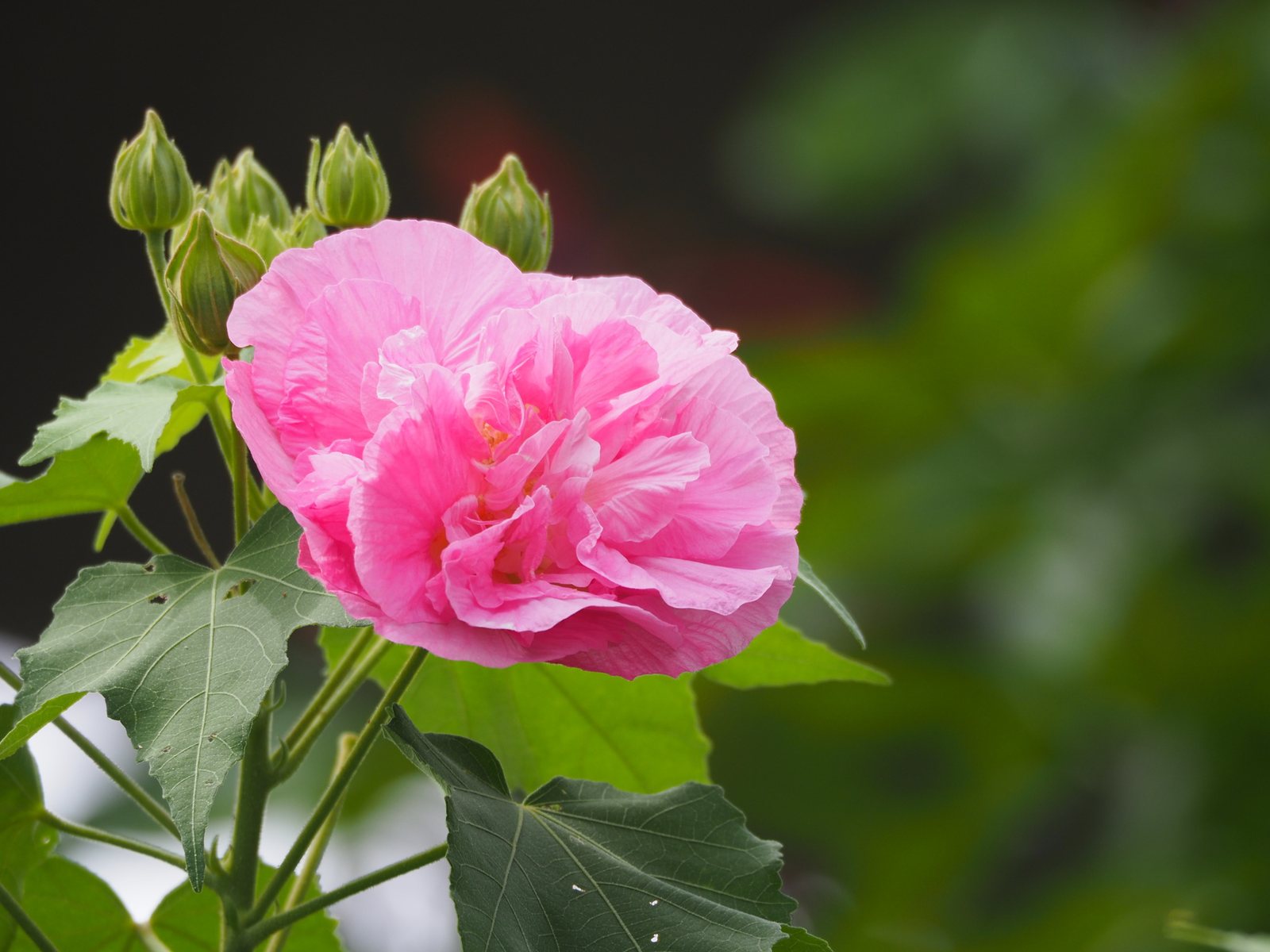
Confederate rose is a fast-growing, deciduous hibiscus grown for its large leaves and showy late-season flowers. Many forms open white or pale pink and deepen to dark pink during the day. It becomes a large shrub in warm climates but often dies back to the ground in colder gardens; cool summers or early frosts can prevent flowering.
At a glance
- Sun
- Full sun gives the best flowering; light afternoon shade is useful in very hot climates.
- Water
- Keep the root zone evenly moist during active growth, especially while establishing and during dry spells; avoid persistently waterlogged soil.
- Soil
- Fertile, moisture-retentive but well-drained soil; tolerates clay if drainage is adequate.
- Height
- 8-15 ft (2.4-4.6 m); often shorter where winter frost kills the stems
- Spread
- 6-10 ft (1.8-3 m)
- Flowers
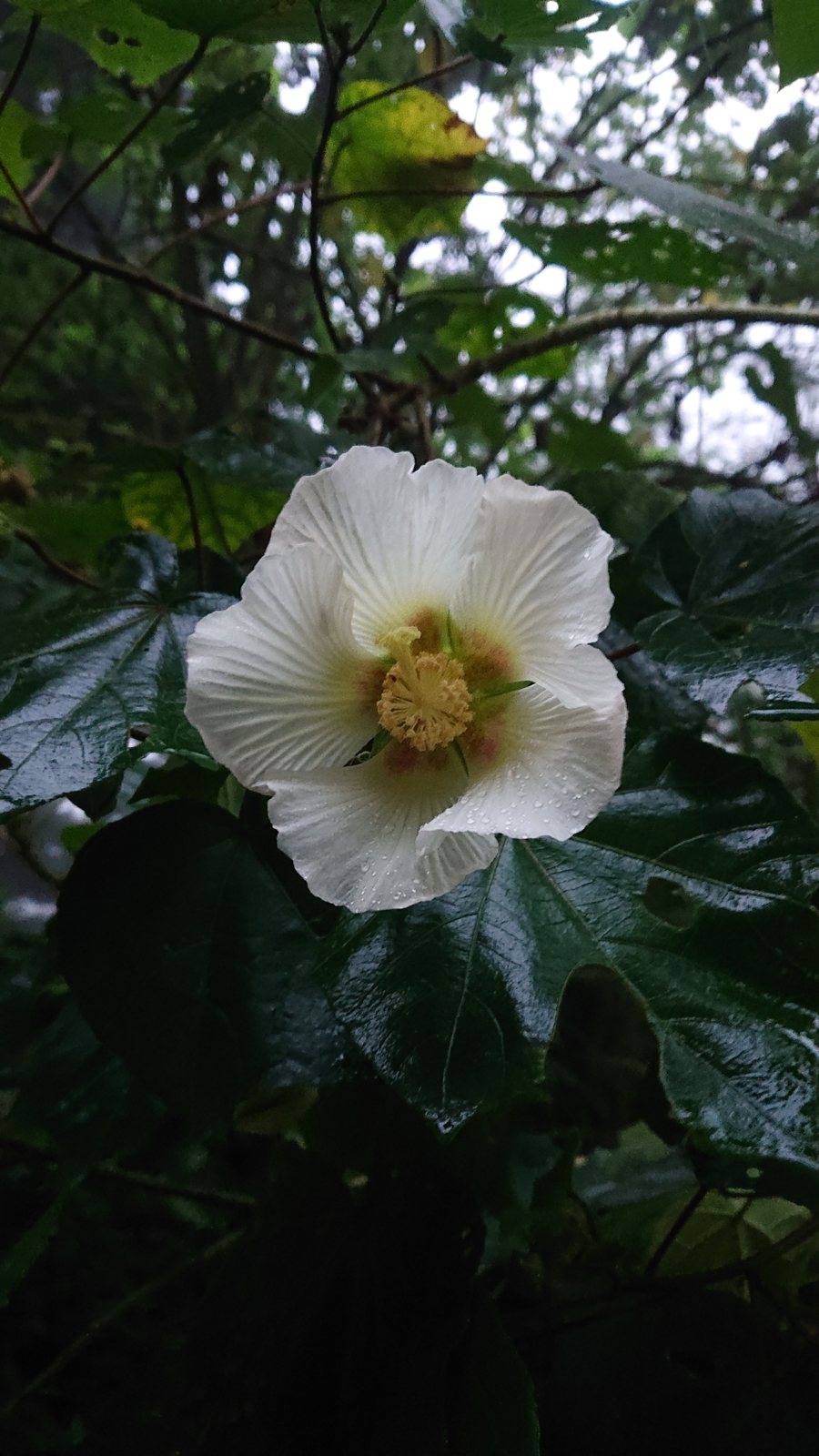
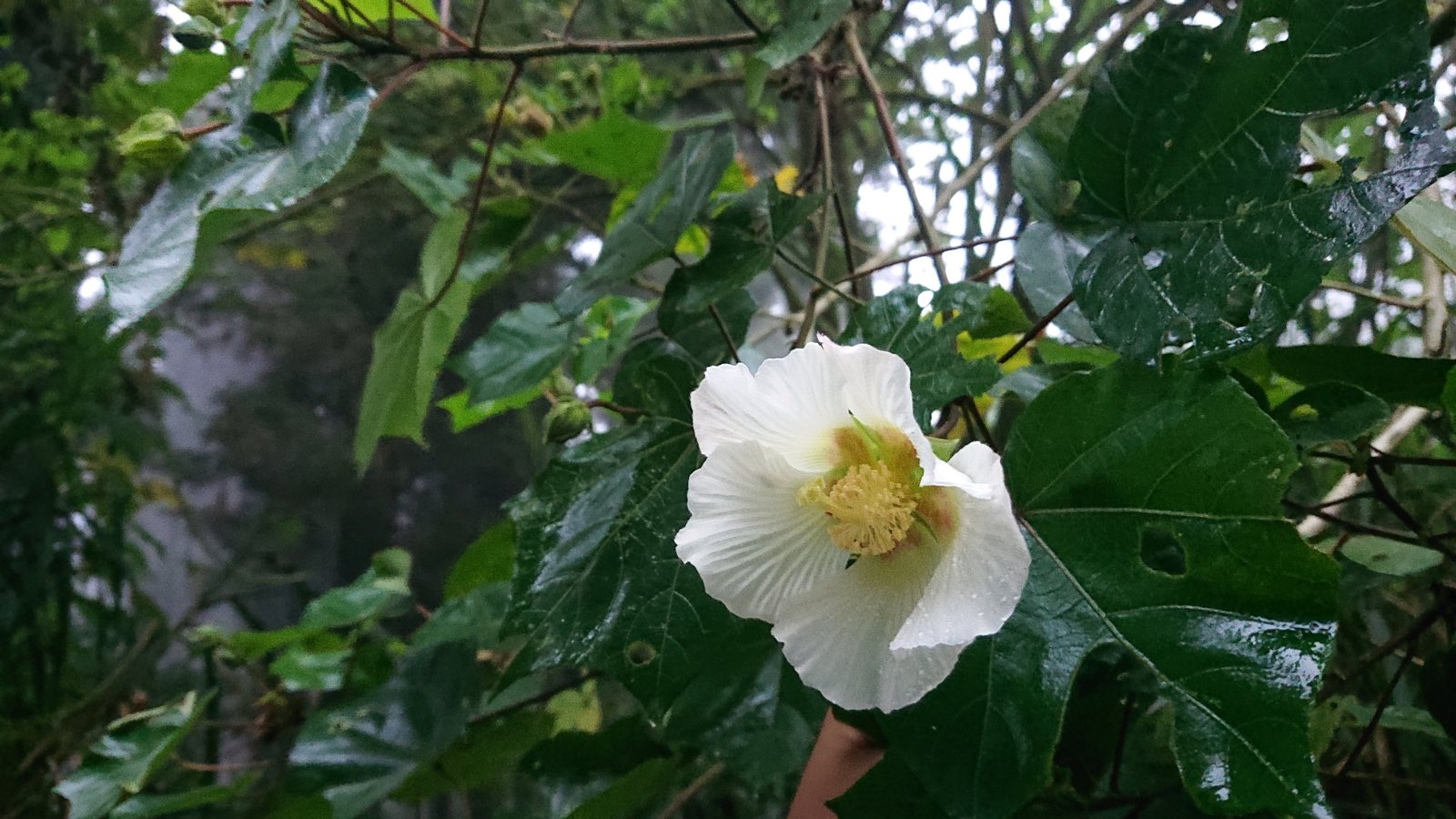
- Late summer through autumn; large single or double flowers, commonly opening white or pale pink and deepening to pink or rose-red. Colour change varies with the form.
- Foliage
- Large, softly hairy green leaves with three to seven broad lobes; provides a bold, leafy backdrop before flowering.
- Growth
- Fast
- Care needed
- Medium
The year at a glance
- Pollinators
- Heat tolerant
- Low allergen
| J | F | M | A | M | J | J | A | S | O | N | D | |
|---|---|---|---|---|---|---|---|---|---|---|---|---|
| Flowers | ||||||||||||
| Plant |
Northern hemisphere months. In Australia, shift them by six.
- Difficulty
- Moderate
- Toughness
- Fairly tough
Will it suit your garden?
Pick your zone, country, light and whether you have pets.
Full sun is 6 or more hours of direct sun a day, part shade 3 to 6 hours, shade under 3.
How it grows
Planting day
1.6 ft (0.5 m)
After 1 year
5 ft (1.4 m)
After 2 years
8 ft (2.3 m)
After 3 years
11 ft (3.3 m)
After 5 years
11 ft (3.5 m)
full size
About 3 years to full size.
From a typical nursery size, at an average rate for this kind of plant. A rule of thumb, not a forecast.
Good to know
- Cats and dogs
- Safe
- Growth rate
- Fast
Care
Jobs through the year
- WaterApr–May, Sep–Oct, every 7 days
- Water established plants deeply during dry weather; young plants need closer moisture checks.
- WaterJun–Aug, every 5 days
- Keep the root zone moderately moist as buds develop; skip watering when rain keeps soil moist.
- MulchApr–May
- Top-dress with compost and mulch warming soil, leaving stems clear.
- FeedMay
- Use a light balanced feed only if growth is weak.
- PruneApr–May
- Wait for new growth to reveal living wood, then remove winter-killed stems and lightly shape.
- ProtectOct–Nov
- After dormancy, insulate the root zone generously; move pots into frost-free shelter, especially in zone 6.
- ProtectJan–Mar, Dec
- Maintain winter insulation; survival and flowering are unreliable in cold or short-summer gardens.
- Plant in spring after hard frosts, choosing a warm, sheltered position with room for its mature spread.
- Water deeply during dry weather rather than giving frequent light sprinklings.
- Apply compost in spring; use a balanced fertiliser only if growth is weak, as excess nitrogen encourages leaves rather than flowers.
- Mulch the root zone to conserve moisture, keeping mulch away from the stems.
- In colder parts of its range, add a generous insulating mulch after dormancy; protect container-grown plants from freezing.
Pruning. In late winter or early spring, remove dead, damaged and crossing stems and shorten remaining branches if needed to control size. Where stems freeze back, wait until new growth reveals living wood, then cut dead stems close to the ground.
Through the year
- Spring
- Plant after hard frosts, or check established plants for new shoots before removing winter-killed stems.
- Spring
- Top-dress with compost and renew mulch once the soil begins to warm.
- Early summer
- Water during dry spells and check tender shoots and leaf undersides for aphids and whiteflies.
- Summer
- Take softwood or semi-ripe cuttings from healthy, non-flowering shoots.
- Late summer
- Maintain steady moisture as flower buds develop; avoid heavy pruning.
- Late autumn
- After frost and leaf fall, insulate the root zone in colder gardens and move pots into frost-free shelter.
In the garden
- Use as a late-season focal shrub at the back of a sunny mixed border.
- Pair with cannas and elephant ears for bold foliage and a tropical effect.
- Plant beside a lawn or terrace where the changing flower colours can be seen close up.
- Combine with ornamental grasses and autumn-flowering perennials for a loose, seasonal screen.
Garden styles it suits: Southern, Cottage garden, Tropical, Romantic rose garden, Autumn colour and Traditional.
Plant it with: Canna, Elephant ears, Salvia, Garden phlox, Switchgrass and New England aster.
Wildlife: Single flowers offer pollen and nectar to bees and other flower visitors; densely double forms provide less accessible food.
Problems to watch for
- Aphids and whiteflies: inspect new growth and leaf undersides; dislodge aphids with water and use insecticidal soap for persistent infestations, following the label.
- Spider mites in hot, dry weather: look for stippled leaves and fine webbing; maintain watering and rinse leaf undersides.
- Root rot in poorly drained soil: improve drainage or relocate the plant; do not keep the root zone saturated.
- Little or no flowering: provide full sun and a warm site, avoid excess nitrogen and late pruning, and recognise that short, cool growing seasons may not allow buds to open.
Safety
Not known to be toxic to people, cats, dogs or horses, although species-specific safety information is limited. No part is established as a serious poisoning hazard; do not treat it as a food plant, and discourage pets from chewing it.
Easily confused with
Rose of Sharon (Hibiscus syriacus)
Usually has smaller leaves and flowers, retains a woody framework in colder climates, and does not show the same marked daily flower-colour change.
Swamp rose mallow (Hibiscus moscheutos)
An herbaceous perennial with enormous, usually single flowers and less deeply lobed leaves; its stems die back each winter.
Chinese hibiscus (Hibiscus rosa-sinensis)
Has glossy, mostly unlobed leaves rather than large, softly hairy, lobed leaves, and is much less tolerant of frost.
The name
The species name mutabilis means changeable, referring to the flowers changing colour as they age.
Propagation. Root softwood cuttings in late spring or semi-ripe cuttings in summer, keeping them humid but not waterlogged. Seed can be sown in warmth in spring, but seedlings may differ from the parent; use cuttings to preserve a particular flower form.
Checked against open data
- Accepted botanical name
- Hibiscus mutabilis
- In the US and Canada
- Introduced in Hawaii, the lower 48 states and Pacific Basin.
- Native range
- China South-Central, China Southeast and Taiwan.
- Measured
- Average height 357 cm.
Sources: GBIF (CC BY 4.0), USDA PLANTS and Trefle (CC BY 4.0). The care and design notes are LandscapeGPT's own.
See it in your own yard.
Upload a photo of your yard and see it redesigned with plants that suit your climate, each checked against your zone.