Conference pear
Pyrus communis 'Conference'. Family Rosaceae. Tree.
Also called European pear 'Conference'.
A deciduous European pear grown for its long, narrow, green pears with brown russeting and sweet, juicy flesh. It crops well in cool temperate gardens and is partly self-fertile, although a compatible pear nearby usually improves yields. Choose the rootstock carefully: it controls the tree's eventual size and how soon it bears.
At a glance
- Sun
- Full sun, preferably in a sheltered position away from frost pockets.
- Water
- Keep the root zone evenly moist while establishing and during fruit swelling; avoid waterlogged ground.
- Soil
- Deep, fertile, well-drained loam; slightly acidic to neutral soil is ideal. Quince rootstocks can struggle in strongly alkaline soil.
- Height
- Usually 8-20 ft (2.4-6 m) on dwarfing or semi-vigorous rootstocks; 30-40 ft (9-12 m) on vigorous pear rootstocks.
- Spread
- Usually 6-15 ft (1.8-4.6 m) on dwarfing or semi-vigorous rootstocks; 20-30 ft (6-9 m) on vigorous pear rootstocks.
- Flowers
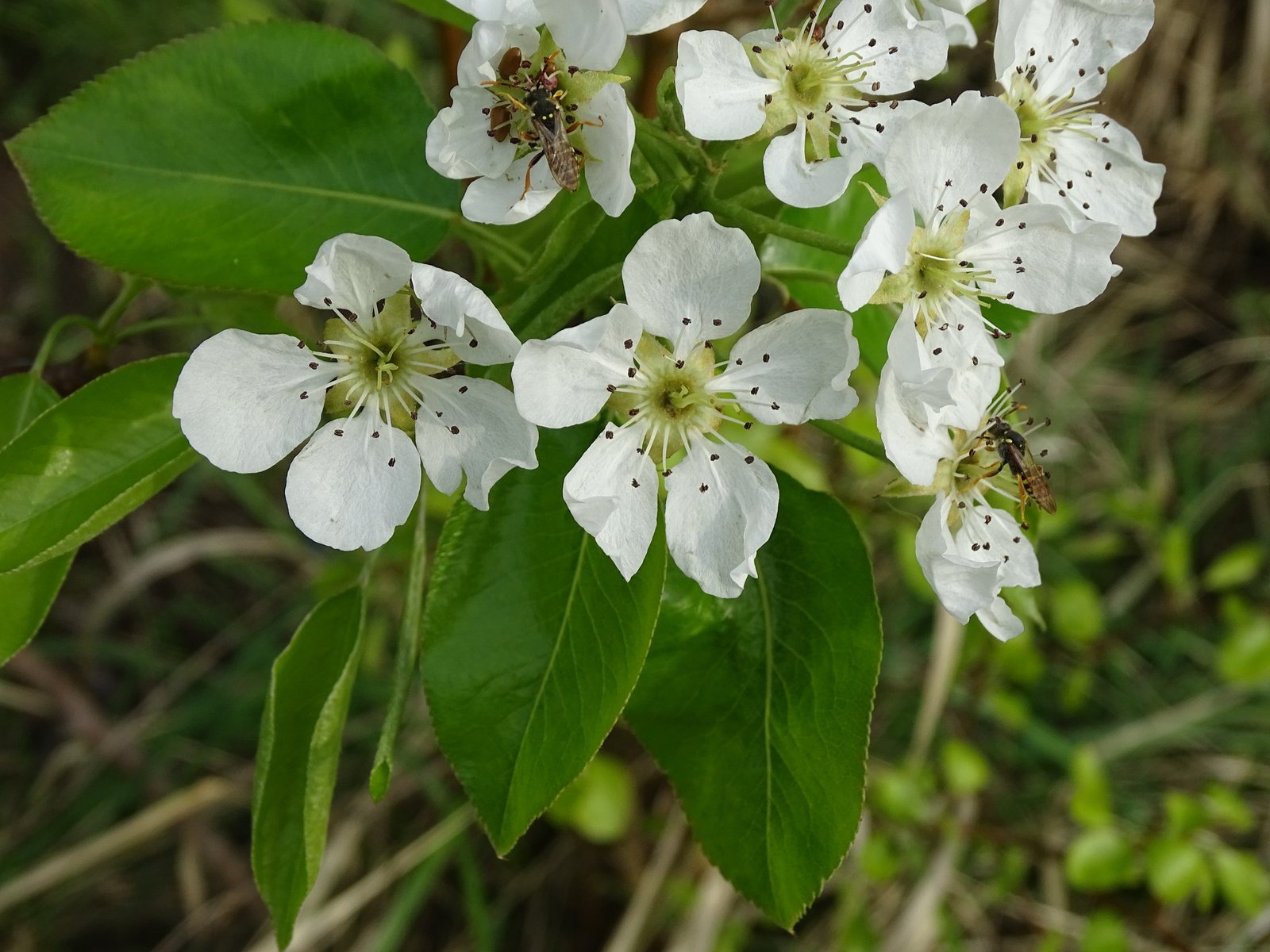
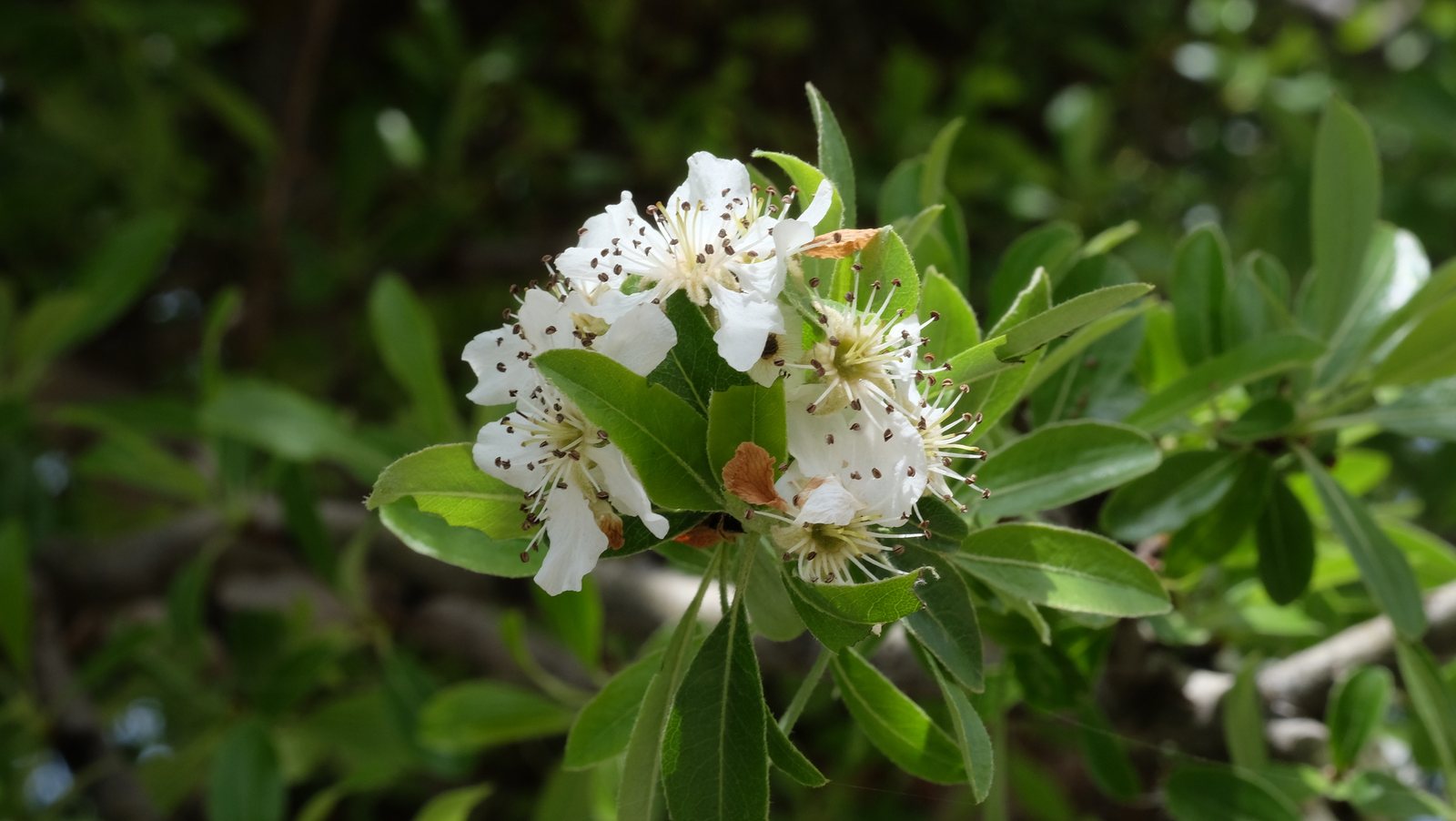
- White flowers in mid-spring, usually April in the Northern Hemisphere and September-October in the Southern Hemisphere.
- Foliage
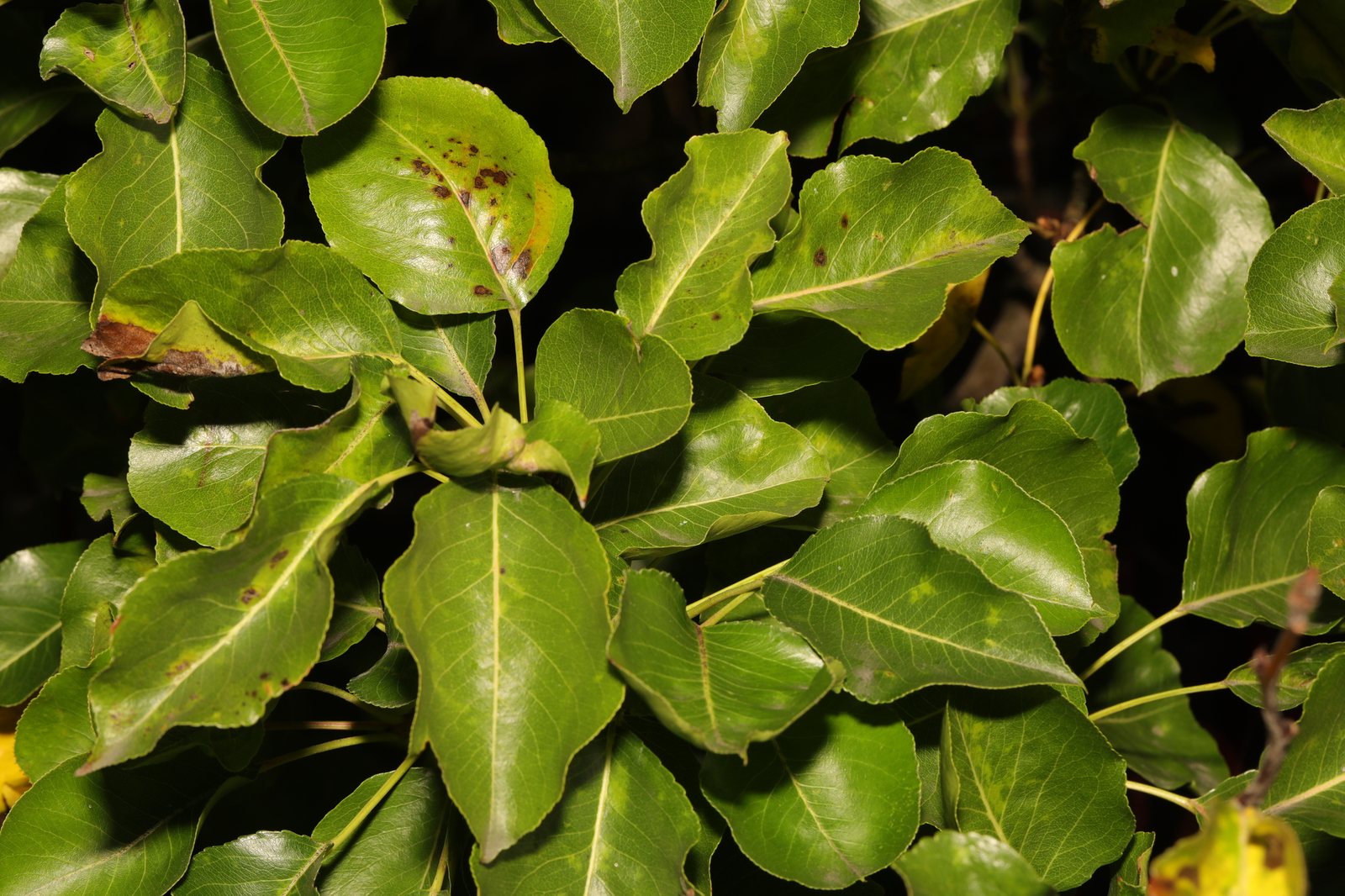
- Oval, glossy green leaves, often turning yellow in autumn.
- Growth
- Moderate; strongly influenced by rootstock, soil and pruning.
- Care needed
- Medium
The year at a glance
- Pollinators
- Cold hardy
- Wildlife
- Low allergen
- Edible
| J | F | M | A | M | J | J | A | S | O | N | D | |
|---|---|---|---|---|---|---|---|---|---|---|---|---|
| Flowers | ||||||||||||
| Fruit | ||||||||||||
| Plant |
Northern hemisphere months. In Australia, shift them by six.
- Difficulty
- Moderate
- Toughness
- Fairly tough
Will it suit your garden?
Pick your zone, country, light and whether you have pets.
Full sun is 6 or more hours of direct sun a day, part shade 3 to 6 hours, shade under 3.
How it grows
Planting day
7 ft (2 m)
After 1 year
7 ft (2.1 m)
After 2 years
7 ft (2.2 m)
After 3 years
8 ft (2.3 m)
After 5 years
8 ft (2.6 m)
About 20 years to full size.
From a typical nursery size, at an average rate for this kind of plant. A rule of thumb, not a forecast.
Good to know
- Cats and dogs
- Toxic
- Growth rate
- Moderate
Care
Jobs through the year
- WaterApr–May, Sep–Oct, every 14 days
- Water established trees deeply if rain is insufficient; young trees need more frequent watering.
- WaterJun–Aug, every 7 days
- Water established trees deeply during dry spells, keeping moisture even while fruit swells.
- FeedMar–Apr
- Feed modestly only if growth is weak; avoid heavy nitrogen applications.
- MulchMar–Apr
- Apply 5-8 cm of organic mulch, leaving a gap around the trunk.
- PruneFeb–Mar
- Prune dormant free-standing trees lightly, retaining fruiting spurs and removing crowded wood.
- PruneJun
- After natural fruit drop, thin clusters to one or two pears, with retained fruit 10-15 cm apart.
- PruneJul–Aug
- Summer-prune established cordons and espaliers only to control side shoots.
- ProtectApr
- Fleece accessible blossom during forecast frost; a compatible flowering pear improves cropping.
- ProtectMay–Aug
- Inspect for fire blight, pear rust, psylla and aphids; act promptly on significant damage.
- HarvestSep–Oct
- Pick firm pears when they release easily with a lift and twist; ripen small batches indoors.
- ProtectOct–Nov
- Clear fallen fruit and diseased leaves; check stakes, ties and trunk guards.
- Water deeply during dry spells for the first two or three years and when developing fruit needs moisture.
- Apply a 2-3 in (5-8 cm) organic mulch each spring, keeping it clear of the trunk.
- Feed modestly in spring if growth is weak; avoid heavy nitrogen feeding, which encourages soft shoots.
- Stake newly planted trees; dwarfing rootstocks may need permanent support.
- Thin crowded fruit clusters in early summer to one or two pears, leaving roughly 4-6 in (10-15 cm) between retained fruits.
- For better cropping, plant a compatible pear with overlapping blossom, such as 'Comice' or 'Williams' Bon Chrétien' ('Bartlett').
Pruning. Prune free-standing trees in late winter while dormant, removing dead, crossing and crowded branches while retaining fruiting spurs; avoid severe cutting. Summer-prune trained espaliers and cordons to control side shoots, and follow local disease advice where fire blight occurs.
Harvest
Pick the pears in early to mid-autumn, usually September-October in the Northern Hemisphere, while still firm; a ready pear separates easily when lifted and gently twisted. Ripen indoors until the flesh near the stalk yields slightly to pressure, rather than leaving fruit to soften on the tree. Expect the first substantial crop about 3-5 years after planting a grafted tree, sometimes longer on vigorous rootstocks.
Through the year
- Late autumn
- Plant bare-root trees once dormant if the ground is workable; stake and water thoroughly.
- Late winter
- Prune free-standing trees lightly to maintain an open framework and productive fruiting spurs.
- Spring
- Mulch, feed if needed, and protect blossom from forecast frost with fleece where practical.
- Early summer
- Thin heavy fruit clusters after the natural fruit drop and check shoots for pests or disease.
- Summer
- Water during dry spells and summer-prune trained forms.
- Early autumn
- Test pears regularly for easy release, harvest while firm and ripen small batches indoors.
- Late autumn
- Collect fallen fruit and diseased leaves, and check ties and trunk guards.
In the garden
- Train as an espalier along a sunny fence or wall to grow fruit without a broad canopy.
- Plant as a small orchard tree with a compatible pear for better pollination.
- Use a dwarfing-rootstock tree as a focal point in a kitchen garden, surrounded by low herbs and flowers.
- Train cordons along wires to form an orderly, productive boundary.
Garden styles it suits: Backyard orchard, Potager (kitchen garden), Edible landscape, Cottage garden, Formal and Homestead.
Plant it with: Comice pear, Williams' Bon Chrétien pear, Chives, Thyme, Sweet alyssum and Calendula.
Wildlife: Flowers provide pollen and nectar for bees and other insects. Birds and wasps may feed on ripe or damaged pears; collect fallen fruit and use wildlife-safe netting if protection is needed.
Problems to watch for
- Fire blight: blackened blossom and hooked, dying shoots need prompt attention; remove infected wood well below symptoms in dry weather, disinfect tools and follow local guidance.
- Pear rust: orange leaf spots are associated with nearby susceptible junipers; remove fallen leaves and seek local advice if infection is repeated or severe.
- Pear psylla and aphids: inspect curled or sticky shoots, encourage natural predators and use a locally approved insecticidal soap where appropriate.
- Poor fruit set: blossom frost, insufficient winter chilling or weak pollination can reduce crops; choose a suitable climate and sheltered site, and add a compatible flowering pear.
Safety
Pear flesh is not known to be toxic to people, cats, dogs or horses. Seeds contain cyanogenic compounds and should not be deliberately eaten or fed to animals; poisoning from accidentally swallowing a few intact seeds is unlikely, but larger amounts of chewed seeds can be harmful. Whole pears and cores can also be choking hazards for animals.
Easily confused with
Bosc pear (Pyrus communis 'Bosc')
Also long-necked, but typically has more extensive cinnamon-brown russeting; 'Conference' usually retains more visible green skin. Fruit appearance alone is not always enough to confirm a cultivar.
Concorde pear (Pyrus communis 'Concorde')
Produces similarly elongated fruit, often with smoother skin and less russeting. A nursery label or known planting history is more reliable than shape alone.
Asian pear (Pyrus pyrifolia)
Most garden varieties have rounded, apple-shaped fruit that stays crisp when ripe, unlike the elongated fruit and soft, melting flesh of ripe 'Conference'.
The name
The cultivar was named after the National British Pear Conference of 1885, where it was exhibited.
Propagation. Propagate by budding or grafting onto a compatible pear or quince rootstock. Seedlings do not come true to 'Conference', and ordinary cuttings are not a reliable home method.
Checked against open data
- Accepted botanical name
- Pyrus communis
- In the US and Canada
- Introduced in Canada and the lower 48 states.
- Native range
- Albania, Austria, Baltic States, Belarus, Belgium, Bulgaria, Central European Rus, Corse, Cyprus, Czechoslovakia, East Aegean Is. and East European Russia.
- Measured
- Soil pH 5.2 to 6.7. Average height 750 cm.
Sources: GBIF (CC BY 4.0), USDA PLANTS and Trefle (CC BY 4.0). The care and design notes are LandscapeGPT's own.
See it in your own yard.
Upload a photo of your yard and see it redesigned with plants that suit your climate, each checked against your zone.