Copper beech
Fagus sylvatica 'Purpurea'. Family Fagaceae. Tree.
Also called Purple beech, Purple European beech.
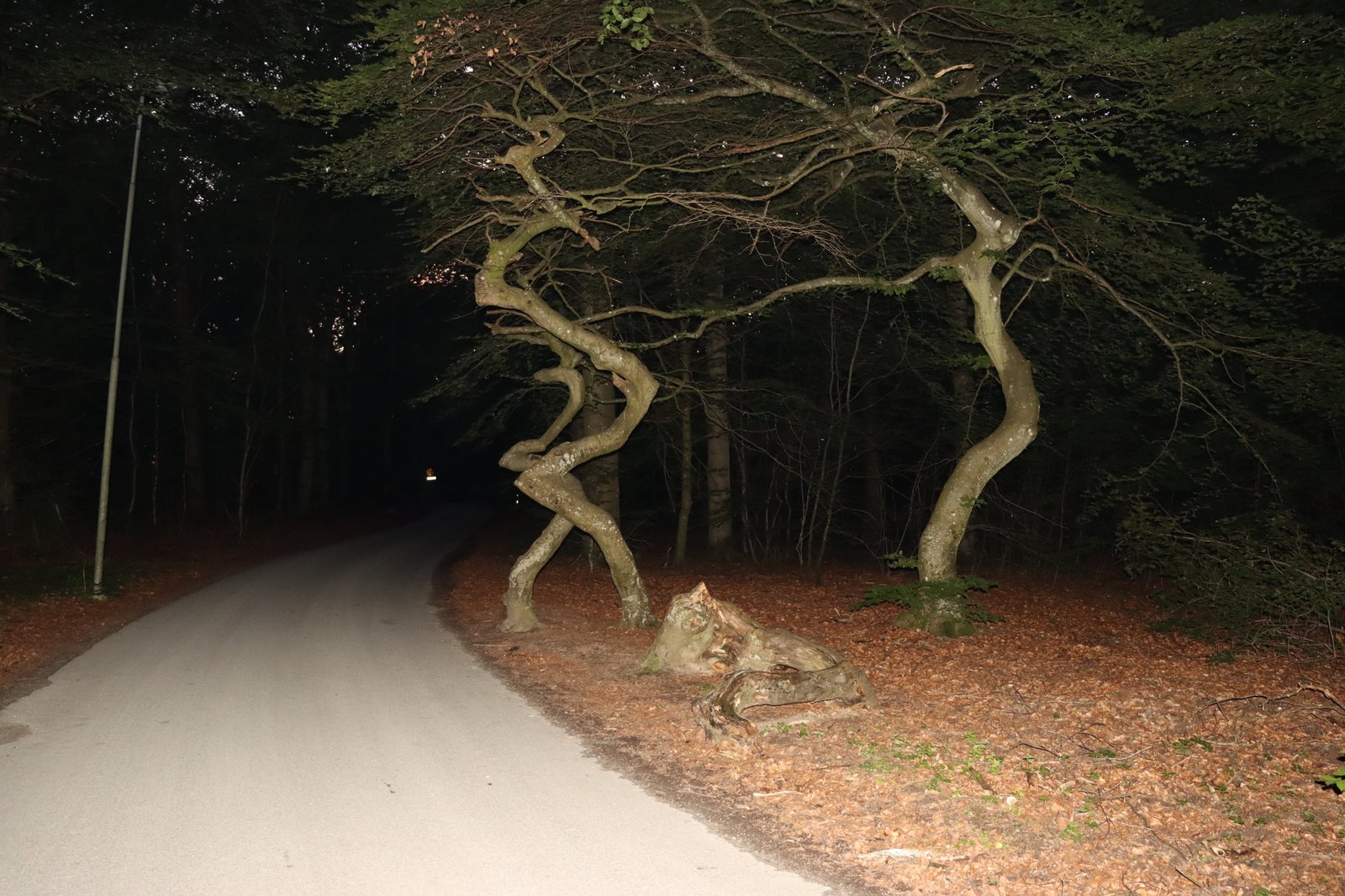
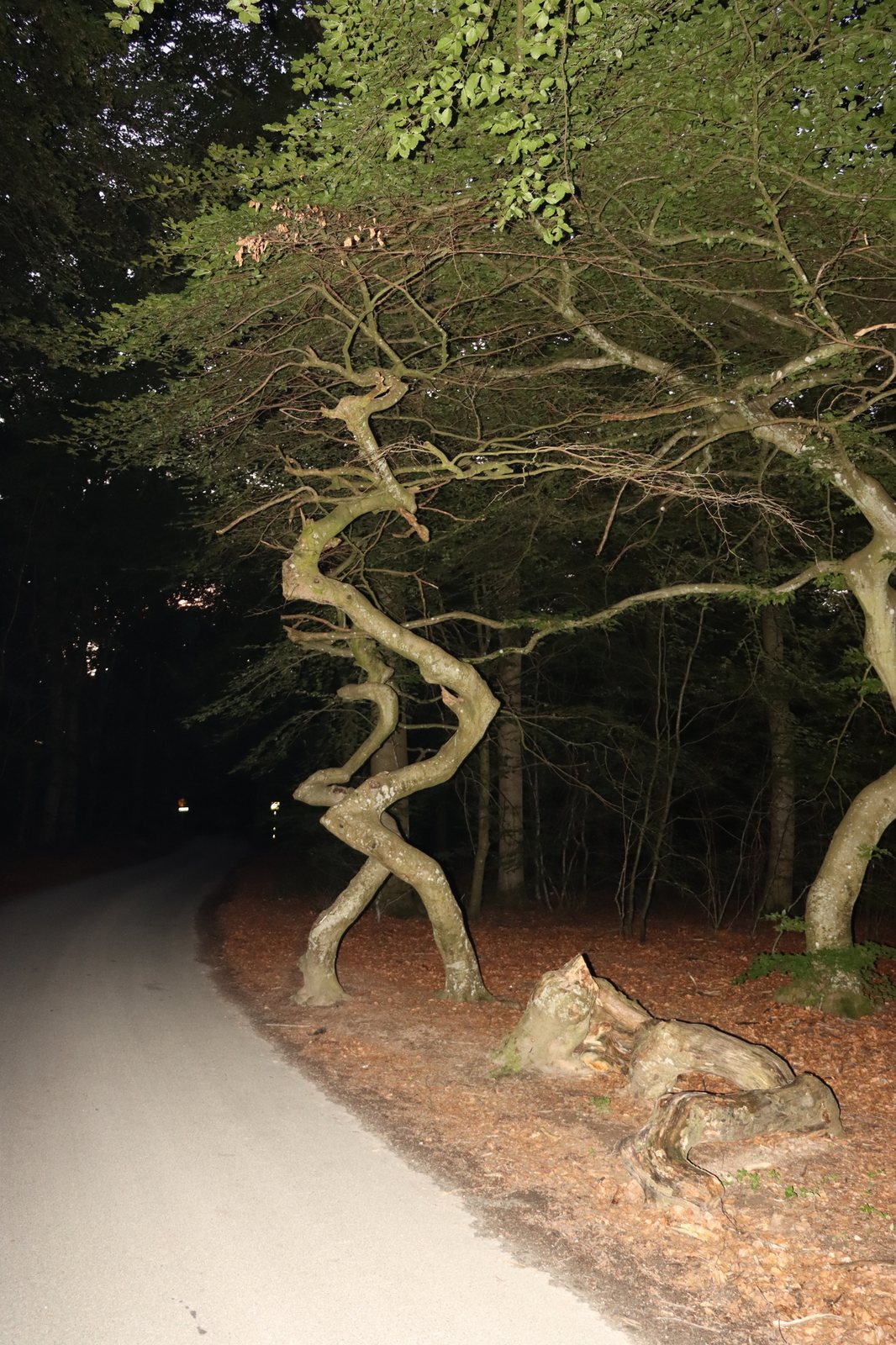
Copper beech is a large, deciduous European beech grown for its smooth grey bark, broad crown and copper-purple leaves. It makes a long-lived specimen tree or a dense clipped hedge, but an unpruned tree needs a large garden and casts deep shade. It performs best where summers are relatively cool and soil does not dry out severely.
At a glance
- Sun
- Full sun to partial shade; foliage usually colours best in full sun where moisture is adequate.
- Water
- Moderate; keep young trees evenly moist. Established trees need deep watering during prolonged drought, especially in hot summers.
- Soil
- Deep, fertile, well-drained soil that holds some moisture; tolerates acidic, neutral and alkaline conditions. Avoid waterlogged ground, compacted soil and very dry, shallow sites.
- Height
- 50-80 ft (15-24 m), sometimes taller with age
- Spread
- 40-60 ft (12-18 m)
- Foliage
- Oval leaves with wavy edges emerge coppery to deep purple, often becoming darker purple-green through summer, then bronze or copper-brown in autumn. Clipped hedges and young trees often retain dead brown leaves through winter.
- Growth
- Slow to moderate
- Care needed
- Medium
The year at a glance
- Cold hardy
- Wildlife
| J | F | M | A | M | J | J | A | S | O | N | D | |
|---|---|---|---|---|---|---|---|---|---|---|---|---|
| Fruit | ||||||||||||
| Plant |
Northern hemisphere months. In Australia, shift them by six.
- Difficulty
- Moderate
- Toughness
- Fairly tough
Will it suit your garden?
Pick your zone, country, light and whether you have pets.
Full sun is 6 or more hours of direct sun a day, part shade 3 to 6 hours, shade under 3.
How it grows
Planting day
8 ft (2.3 m)
After 1 year
10 ft (3 m)
After 2 years
12 ft (3.7 m)
After 3 years
14 ft (4.3 m)
After 5 years
19 ft (5.6 m)
About 26 years to full size.
From a typical nursery size, at an average rate for this kind of plant. A rule of thumb, not a forecast.
Good to know
- Cats and dogs
- Mildly toxic: may upset a stomach
- Native to
- the UK
- Growth rate
- Slow
Care
Jobs through the year
- WaterApr–May, Sep–Oct, every 14 days
- Deep-water established trees if soil dries; young trees need more frequent moisture checks.
- WaterJun–Aug, every 7 days
- Water deeply during prolonged drought, especially in hot weather and during establishment.
- MulchMar–Apr
- Maintain 5–8 cm of organic mulch, keeping the trunk clear and avoiding root disturbance.
- PruneJan–Feb
- Make only light formative cuts on young specimen trees in mild, frost-free weather.
- PruneAug
- For hedges only, clip with a wider base; check for active bird nests first.
- Plant with the root flare at soil level, allowing ample room for the mature crown and shallow, spreading roots.
- Water deeply through the first two or three growing seasons whenever the root zone begins to dry.
- Apply 2-3 in (5-8 cm) of organic mulch over the root zone, keeping it clear of the trunk.
- Keep grass away from young trees and avoid digging, paving or compacting soil beneath established crowns.
- Feed only if growth is poor and a soil test indicates a deficiency.
- Stake only if the tree is unstable, using flexible ties; remove support once roots hold it securely.
Pruning. For specimen trees, make only light formative cuts during dormancy, removing crossing branches and competing leaders; avoid topping or removing large limbs. Clip established hedges in late summer, keeping the base slightly wider than the top, and check for nesting birds before cutting.
Through the year
- Autumn
- Plant while soil is workable and moist, particularly bare-root hedging stock after leaf fall.
- Winter
- Carry out light formative pruning on young specimen trees during mild, frost-free weather.
- Spring
- Renew mulch, check tree ties and inspect emerging leaves for unusual banding, distortion or aphids.
- Summer
- Water young trees deeply during dry spells and monitor established trees for leaf scorch.
- Late summer
- Clip hedges to shape without cutting back into large, old branches.
- Late autumn
- Collect fallen leaves from lawns and paths for leaf mould; leave a loose layer beneath the tree where practical.
In the garden
- Use as a specimen on a broad lawn, where its dark crown contrasts with open grass.
- Plant as a clipped boundary hedge for dense summer screening and partial winter screening from retained leaves.
- Use in a large mixed parkland planting with green-leaved trees to create strong foliage contrast.
- Place behind pale-flowered borders, keeping the border beyond the tree's deepest shade and strongest root competition.
Garden styles it suits: Formal, English country, Grand estate, Traditional, Woodland and English manor.
Plant it with: Snowdrops, Cyclamen, Epimedium, Hellebores and Holly.
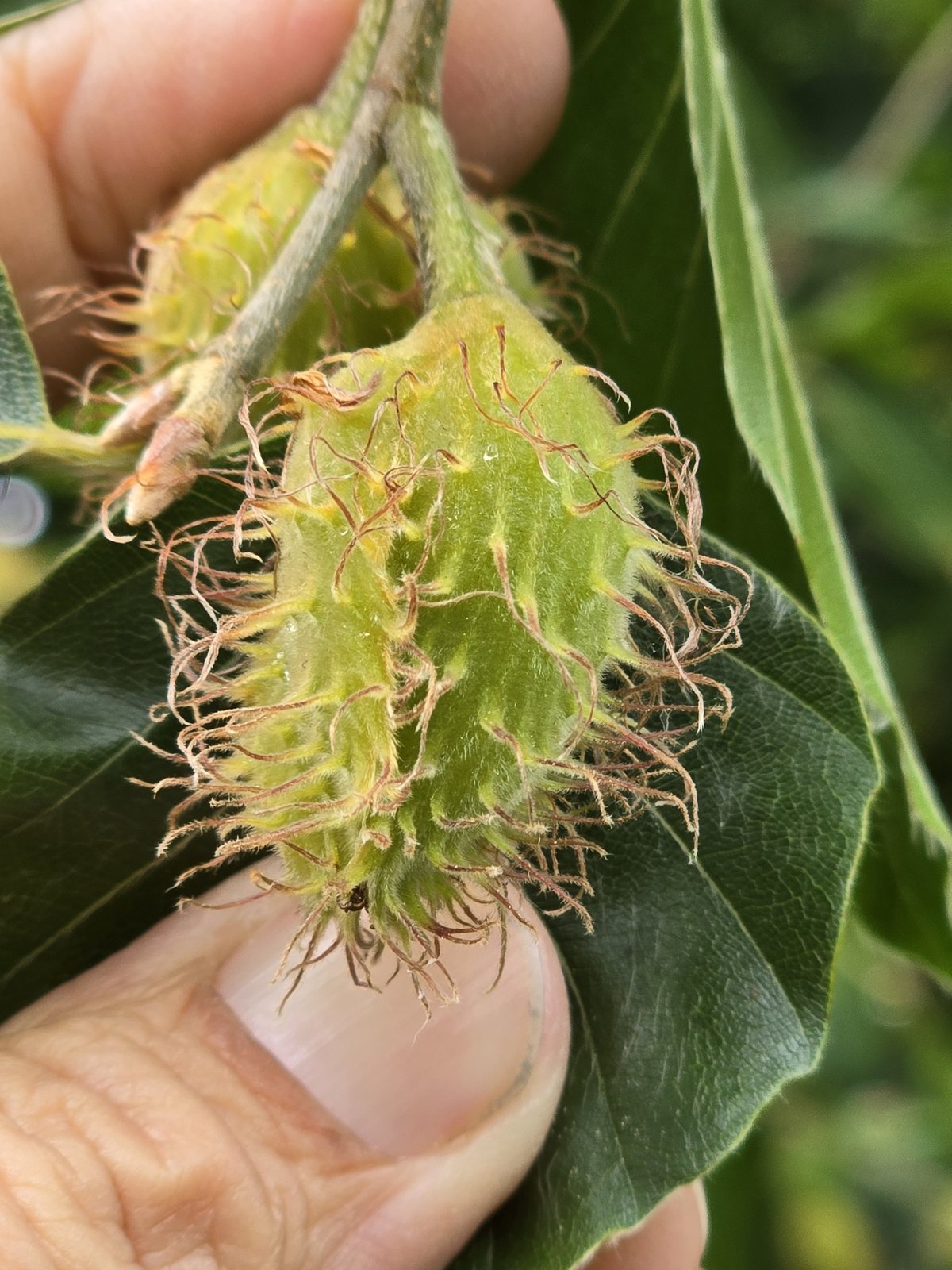
Wildlife: Beech nuts feed squirrels and seed-eating birds. Mature crowns provide nesting and shelter, while older trees can develop cavities used by wildlife; native European beech also supports many insects within its natural range.
Problems to watch for
- Drought and leaf scorch: brown leaf edges and early leaf fall occur in hot, dry conditions. Water deeply, maintain mulch and avoid sites with strong reflected heat.
- Beech woolly aphid: white, woolly colonies beneath leaves may cause curling and sticky honeydew. Usually tolerate light infestations; conserve predators and rinse reachable foliage with water.
- Beech leaf disease: dark bands between leaf veins, distorted leaves and canopy thinning occur in affected parts of eastern North America. Seek local extension or arborist advice promptly; there is no simple homeowner cure.
- Phytophthora root or collar rot: poor drainage can cause decline and bleeding bark near the trunk base. Prevent waterlogging, keep mulch off the trunk and have affected trees assessed by an arborist.
Safety
Raw beech nuts can be harmful when eaten in quantity by people, dogs or horses, causing digestive upset and potentially more serious poisoning in livestock. Toxicity to cats is not well documented, so prevent access to fallen nuts rather than assuming they are safe. Leaves and bark are not generally regarded as significant poisoning hazards.
Easily confused with
European beech (Fagus sylvatica)
The ordinary species has green rather than copper-purple leaves, but shares the smooth grey bark, long pointed buds and wavy leaf edges.
Purple-leaved European hornbeam (Carpinus betulus 'Purpurea')
Hornbeam leaves have sharply double-toothed edges and a strongly pleated surface; their purple spring colour usually fades to green.
Purple-leaf plum (Prunus cerasifera)
Purple-leaved forms are much smaller trees, with finely toothed leaves and conspicuous pink or white spring blossom, often followed by plum-like fruit.
The name
Fagus is the Latin name for beech, sylvatica means 'of woods', and Purpurea refers to the purple foliage, which also gives copper beech its common name.
Propagation. Named purple-leaved selections are usually grafted onto European beech rootstocks. Seed-grown offspring vary in leaf colour and are not reliably identical to the parent; ordinary cuttings are difficult to root.
Checked against open data
- Accepted botanical name
- Fagus sylvatica
- In the US and Canada
- Introduced in Canada and the lower 48 states.
- Native range
- Albania, Austria, Baltic States, Belgium, Bulgaria, Corse, Czechoslovakia, Denmark, East European Russia, France, Germany and Great Britain.
- Measured
- Soil pH 5 to 5.5. Average height 2260 cm.
Sources: GBIF (CC BY 4.0), USDA PLANTS and Trefle (CC BY 4.0). The care and design notes are LandscapeGPT's own.
See it in your own yard.
Upload a photo of your yard and see it redesigned with plants that suit your climate, each checked against your zone.