Coral bean
Erythrina herbacea. Family Fabaceae. Shrub.
Also called Cherokee bean, Red cardinal.
Coral bean is a thorny, deciduous shrub native to the southeastern United States and northeastern Mexico, grown for upright spikes of scarlet flowers that attract hummingbirds. In colder parts of its range it dies back to the roots each winter; in frost-free gardens it can become a large shrub or small tree. Its poisonous seeds and prickly stems make it unsuitable beside play areas or busy paths.
At a glance
- Sun
- Full sun to light partial shade; flowering is usually best in full sun.
- Water
- Water regularly while establishing, then deeply during prolonged dry spells. Established plants tolerate drought but dislike persistently wet roots.
- Soil
- Well-drained sandy, gravelly or loamy soil; tolerates relatively poor soil but not waterlogged ground.
- Height
- 3-6 ft (0.9-1.8 m) where winter dieback occurs; potentially 10-15 ft (3-4.6 m) in frost-free conditions
- Spread
- 3-6 ft (0.9-1.8 m)
- Flowers
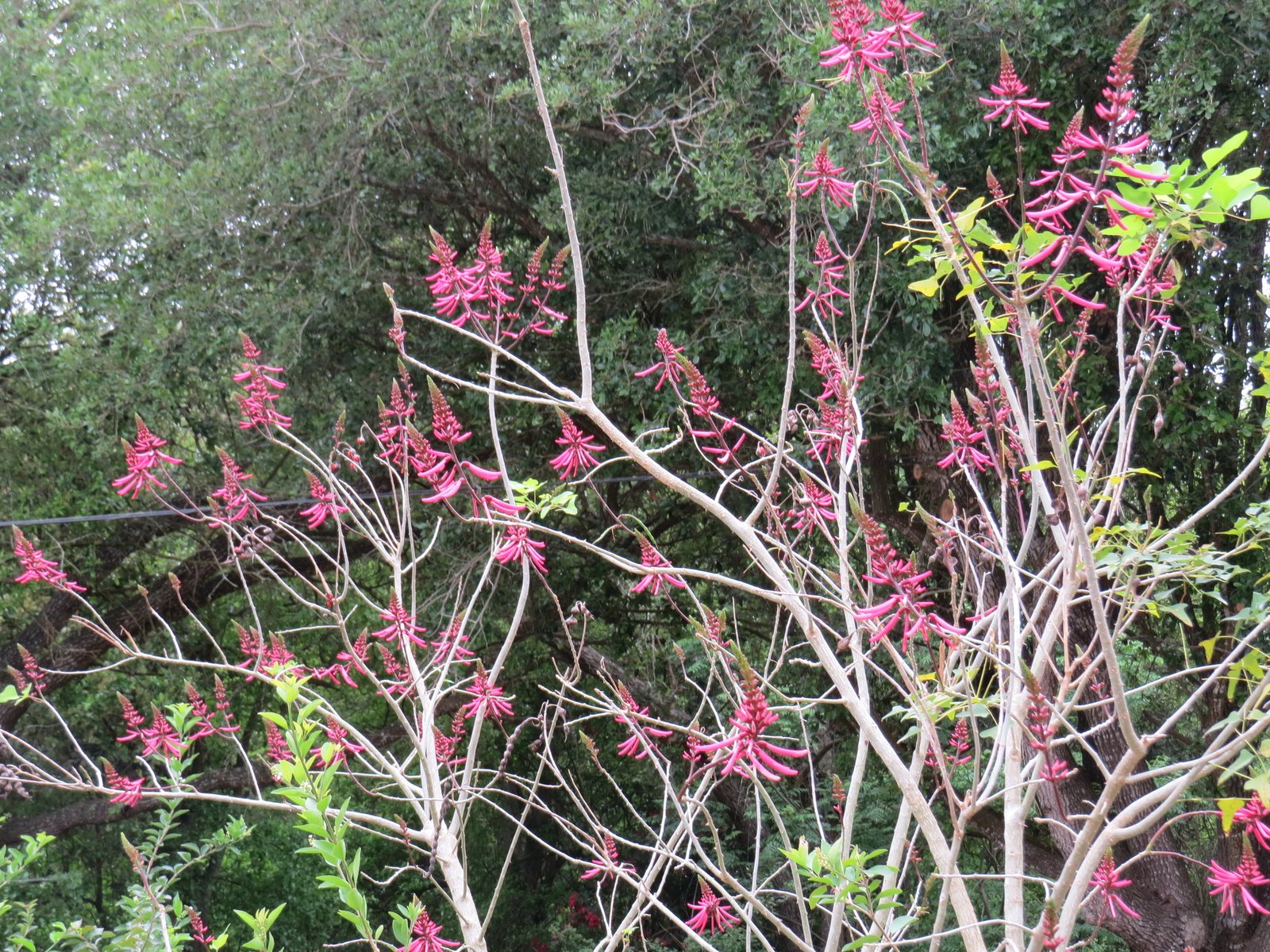
- Scarlet-red tubular flowers in upright spikes, mainly in late spring and early summer, often beginning before the leaves fully expand.
- Foliage
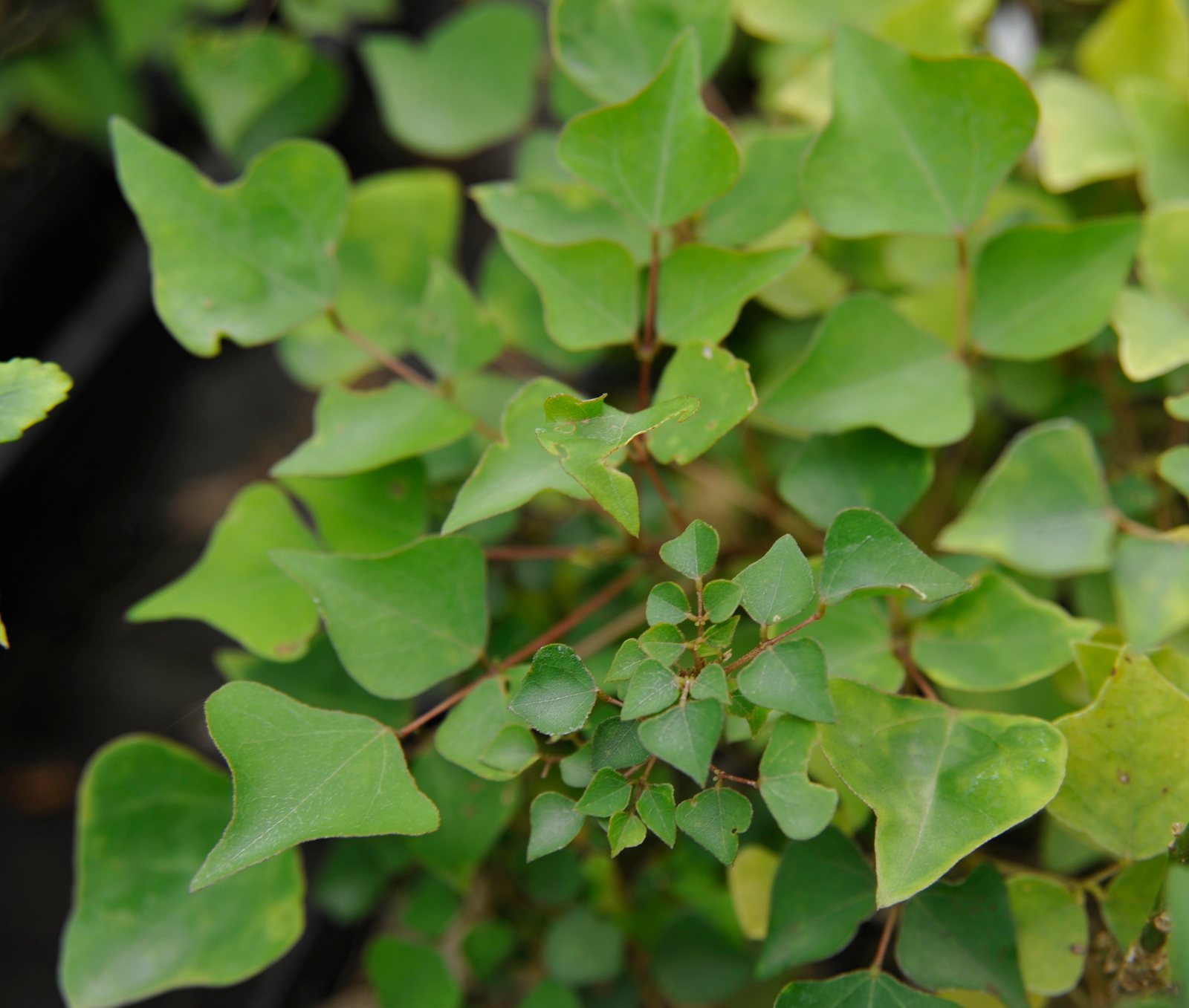
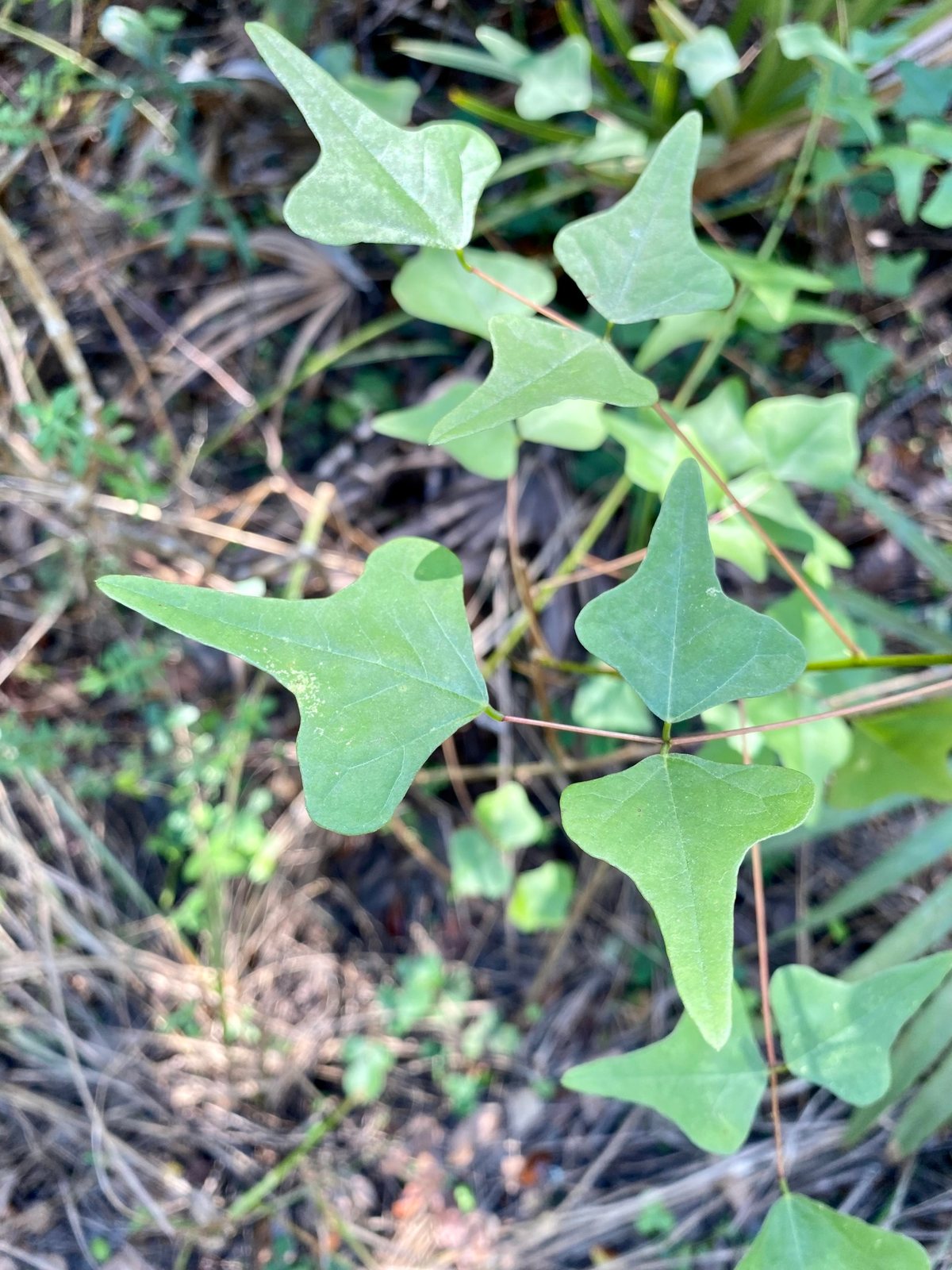
- Green leaves divided into three broad, often triangular or arrowhead-shaped leaflets; stems and sometimes leaf stalks bear prickles.
- Growth
- Moderate to fast in warm weather
- Care needed
- Medium
The year at a glance
- Pollinators
- Deer resistant
- Drought tolerant
- Heat tolerant
- Low allergen
| J | F | M | A | M | J | J | A | S | O | N | D | |
|---|---|---|---|---|---|---|---|---|---|---|---|---|
| Flowers | ||||||||||||
| Fruit | ||||||||||||
| Plant |
Northern hemisphere months. In Australia, shift them by six.
- Difficulty
- Hard
- Toughness
- Fairly tough
Will it suit your garden?
Pick your zone, country, light and whether you have pets.
Full sun is 6 or more hours of direct sun a day, part shade 3 to 6 hours, shade under 3.
How it grows
Planting day
1.6 ft (0.5 m)
After 1 year
2.3 ft (0.71 m)
After 2 years
3 ft (0.93 m)
After 3 years
4 ft (1.1 m)
After 5 years
4 ft (1.4 m)
full size
About 4 years to full size.
From a typical nursery size, at an average rate for this kind of plant. A rule of thumb, not a forecast.
Good to know
- Cats and dogs
- Toxic
- Native to
- the US
- Growth rate
- Fast
Care
Jobs through the year
- WaterMay, Sep, every 21 days
- Water established ground plants only during prolonged drought; young and container plants need closer checks.
- WaterJun–Aug, every 14 days
- Soak established ground plants during drought, allowing surface soil to dry between waterings.
- PruneApr–May
- After severe frost risk passes, cut dead stems to healthy wood or ground level before new shoots grow.
- MulchOct–Nov
- Insulate outdoor roots with loose mulch, keeping the crown clear; mulch alone is unreliable in zones 6–7.
- ProtectJan–Apr, Oct–Dec
- Use a container in this climate and overwinter bright and frost-free; all parts, especially seeds, are poisonous.
- ProtectAug–Oct
- Remove accessible seed pods before they open where children or animals could reach the poisonous seeds.
- WaterJan–Apr, Oct–Dec, every 21 days
- Check sheltered dormant containers and water only enough to prevent complete root-ball drying.
- Plant after frost in a sunny position with sharp drainage.
- Water deeply during the first growing season, allowing the surface soil to dry between waterings.
- Avoid heavy feeding, especially high-nitrogen fertilizer, which encourages leafy growth rather than flowers.
- Mulch the root area before winter at the cold edge of its range, keeping mulch away from the stems.
- In most of the UK and Canada, grow it in a container and overwinter in a bright, frost-free place; water sparingly while dormant.
Pruning. In late winter or early spring, once severe frost has passed, remove dead stems and shorten damaged growth to healthy wood. Where the entire top dies back, cut the dead stems close to ground level before new shoots emerge.
Through the year
- Late winter
- Check overwintering container plants and water only enough to prevent the root ball from drying out completely.
- Early spring
- Remove winter-killed stems once severe frost has passed; do not mistake late-emerging shoots for a dead plant.
- Spring
- Plant or move containers outdoors after frost, gradually acclimating sheltered plants to direct sun.
- Late spring
- Watch for flower spikes and check young shoots for aphids.
- Summer
- Water new plants during dry spells and avoid frequent light watering.
- Autumn
- Remove accessible seed pods where children or animals could reach them; move containers under cover before frost.
- Late autumn
- Mulch outdoor roots in colder gardens without burying the crown.
In the garden
- Use as a seasonal flowering accent in a sunny border with ornamental grasses and salvias.
- Place toward the back of a southeastern US native planting, away from paths, to provide flowers for hummingbirds.
- Grow in a large container on a sunny terrace where winter shelter is available.
- Combine with drought-tolerant perennials in a warm, well-drained gravel garden.
Garden styles it suits: Southern, Florida subtropical, Wildlife garden, Pollinator garden, Hot border and Tropical.
Plant it with: Muhly grass, Little bluestem, Scarlet sage, Butterfly weed and Blanket flower.
Wildlife: The tubular flowers are especially attractive to hummingbirds in its native range. It is not a food plant for pets or livestock.
Problems to watch for
- Winter root loss: cold combined with wet soil can kill the plant; improve drainage, mulch the root zone, or overwinter a container under cover.
- Poor flowering: move to a sunnier position and stop high-nitrogen feeding.
- Aphids on soft growth: rinse off small colonies with water and encourage ladybirds and other predators.
- Root rot in saturated soil: reduce watering and replant in a raised, freely draining position.
Safety
Treat all parts as poisonous to people, cats, dogs and horses, especially the bright red seeds. Ingestion can cause serious poisoning, including weakness and breathing difficulties, and may be fatal; seek urgent medical or veterinary advice. The seeds are not edible beans, and the prickles can also cause injury.
Easily confused with
Cockspur coral tree (Erythrina crista-galli)
Usually forms a larger woody shrub or tree and has broad, open, pea-like red flowers rather than the narrow tubular flowers of coral bean.
The name
Erythrina comes from the Greek word for red, referring to the flowers, while herbacea means herbaceous; coral bean refers to the bright red seeds.
Propagation. Grow from seed in warmth after carefully nicking the hard seed coat and soaking overnight. Keep poisonous seeds away from children and animals. Stem cuttings taken during active growth are another option.
Checked against open data
- Accepted botanical name
- Erythrina herbacea
- In the US and Canada
- Native in the lower 48 states.
- Native range
- Alabama, Florida, Georgia, Louisiana, Mexico Northeast, Mississippi, North Carolina, South Carolina and Texas.
Sources: GBIF (CC BY 4.0), USDA PLANTS and Trefle (CC BY 4.0). The care and design notes are LandscapeGPT's own.
See it in your own yard.
Upload a photo of your yard and see it redesigned with plants that suit your climate, each checked against your zone.