Coral bells 'Obsidian'
Heuchera 'Obsidian'. Family Saxifragaceae. Perennial.
Also called Alumroot 'Obsidian'.
A clump-forming perennial grown for its glossy, nearly black leaves, which hold their dark colour well through the growing season. It brings contrast to shady borders and containers, with small cream flowers held above the foliage in summer. Leaves usually persist through mild winters but may die back in severe cold.
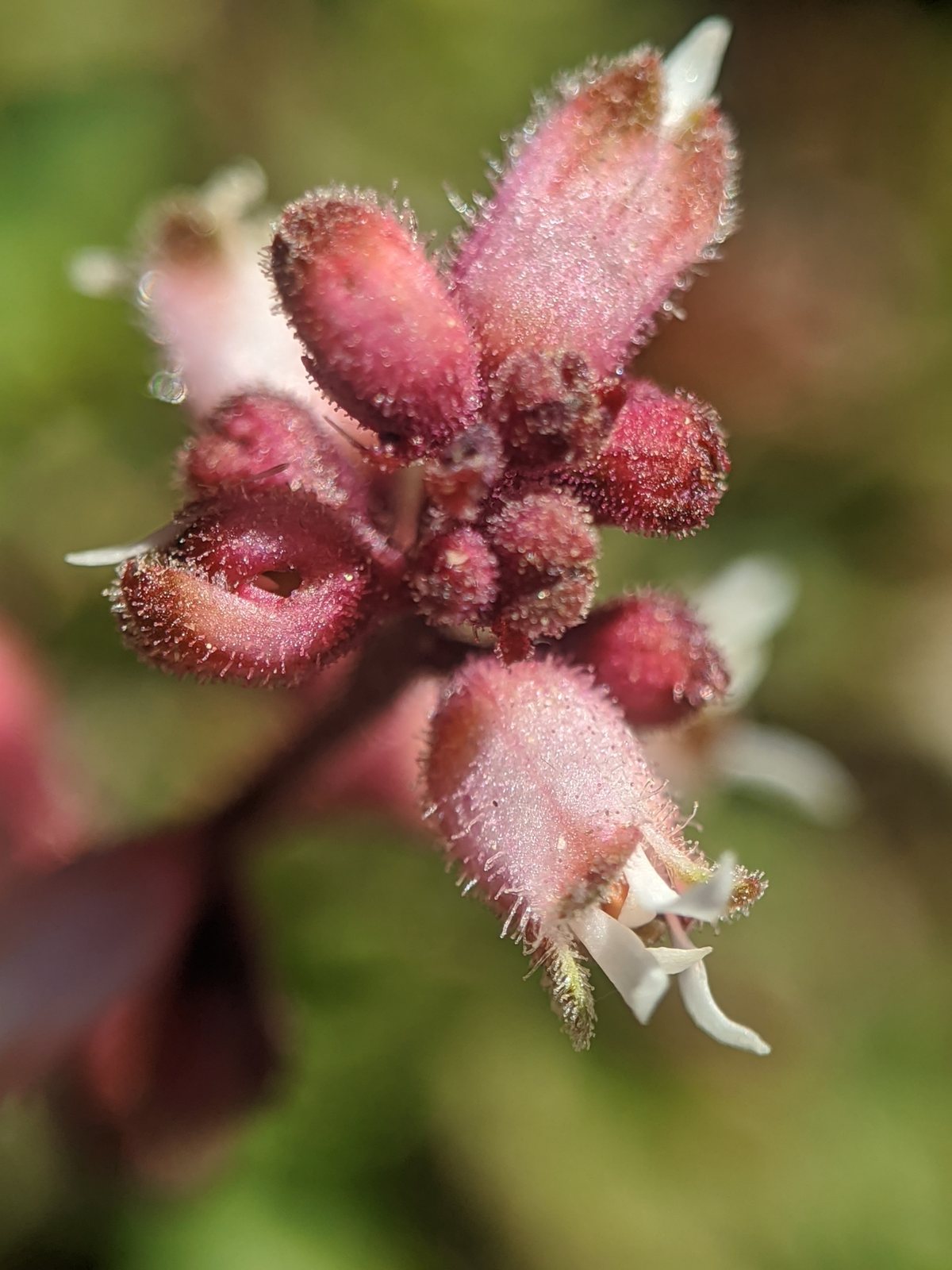
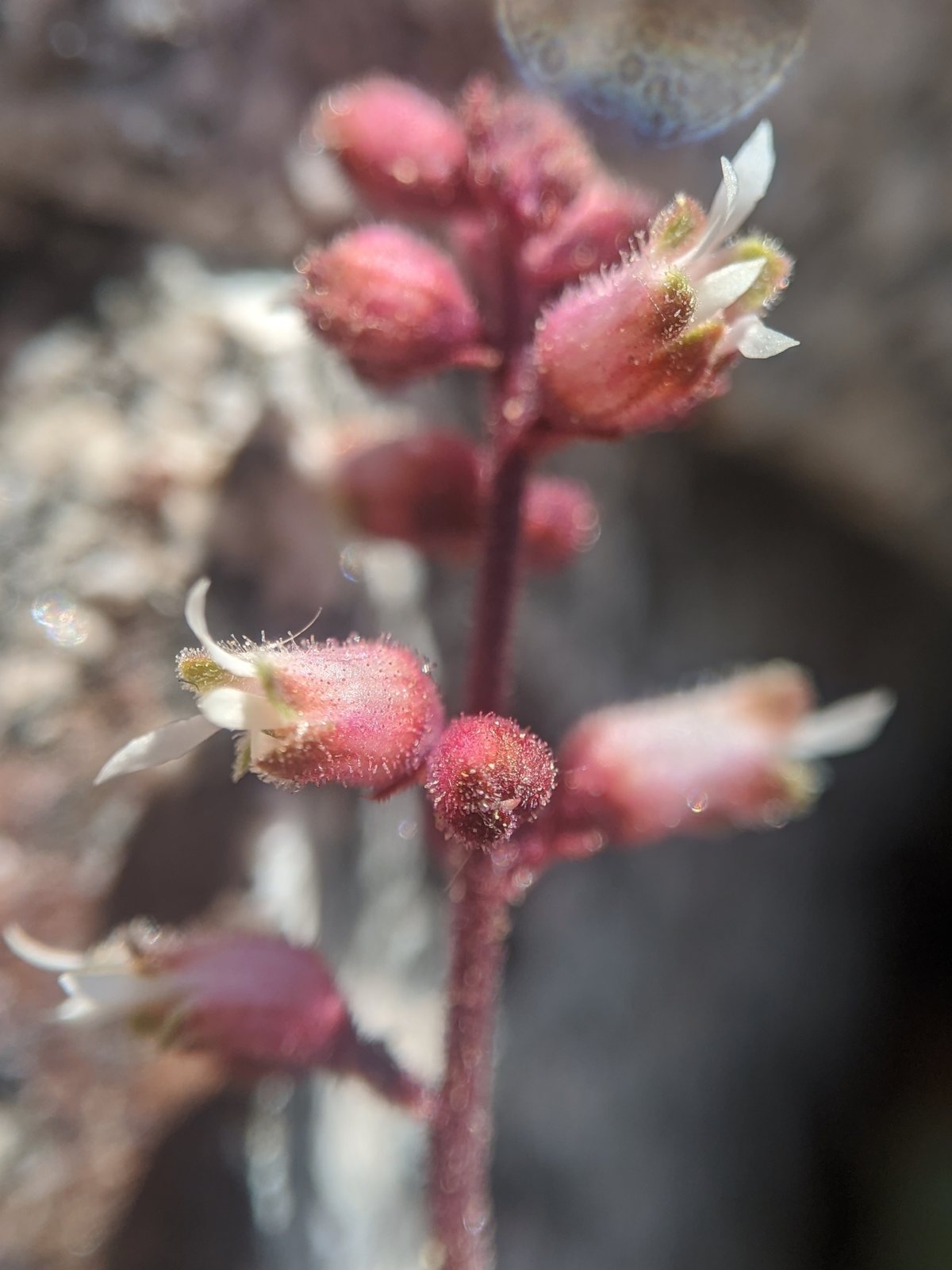
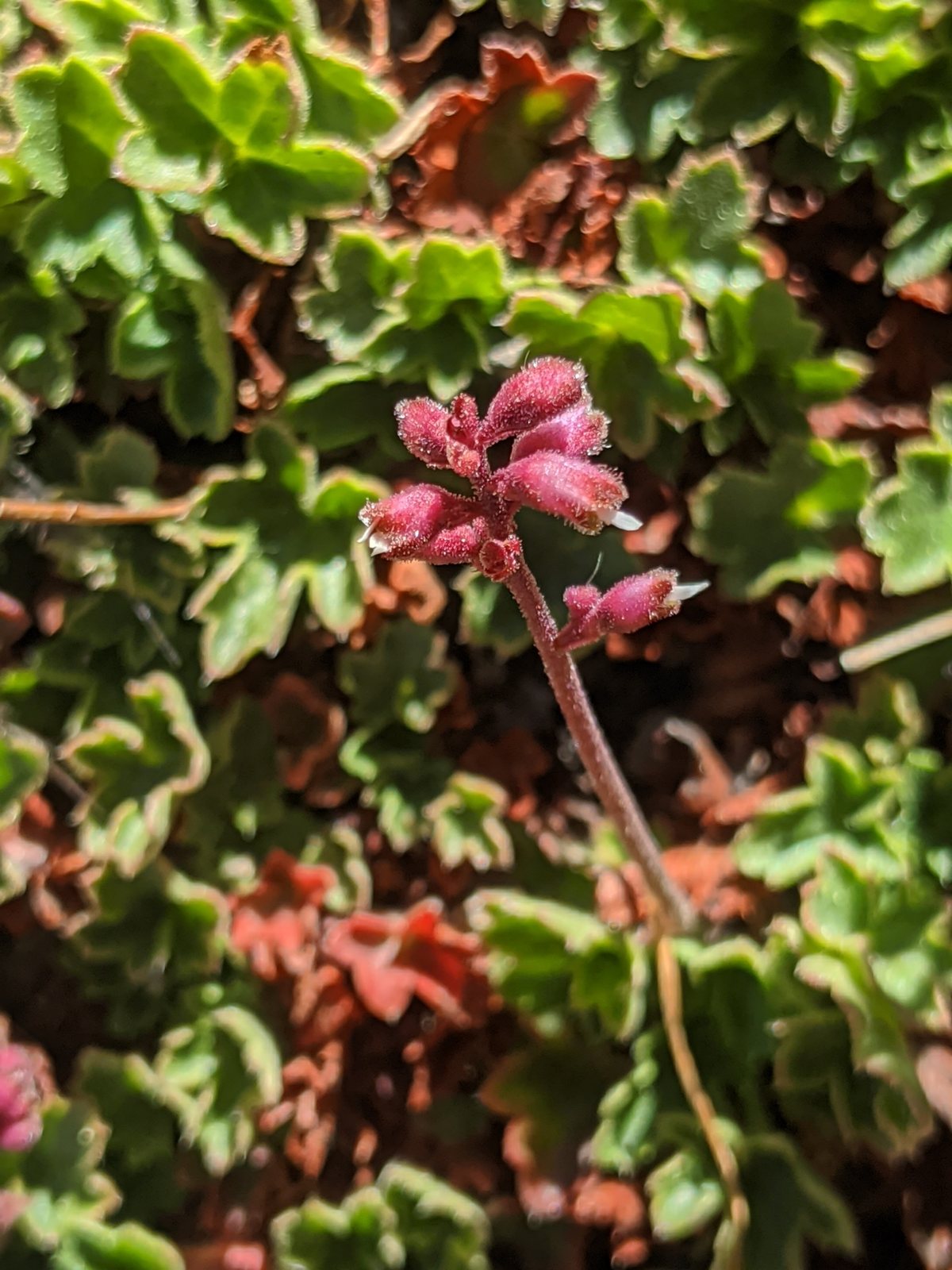
At a glance
- Sun
- Partial shade is best, particularly afternoon shade in hot climates. It tolerates more sun in cool regions if the soil stays evenly moist.
- Water
- Keep evenly moist while establishing; once established, water during dry spells. Avoid saturated soil, especially in winter.
- Soil
- Humus-rich, well-drained soil, from slightly acidic to slightly alkaline. Heavy clay needs improved drainage or a raised planting position.
- Height
- 0.75-1 ft (0.23-0.3 m) in leaf; 1.5-2 ft (0.45-0.6 m) in flower
- Spread
- 1-1.5 ft (0.3-0.45 m)
- Flowers
- Small cream flowers on slender stems in late spring and early summer.
- Foliage
- Evergreen. Rounded, shallowly lobed, glossy leaves in deep purple-black, with purplish undersides; forms a compact mound.
- Growth
- Moderate
- Care needed
- Low
The year at a glance
- Pollinators
- Cold hardy
- Low allergen
| J | F | M | A | M | J | J | A | S | O | N | D | |
|---|---|---|---|---|---|---|---|---|---|---|---|---|
| Plant |
Northern hemisphere months. In Australia, shift them by six.
- Difficulty
- Easy
- Toughness
- Fairly tough
Will it suit your garden?
Pick your zone, country, light and whether you have pets.
Full sun is 6 or more hours of direct sun a day, part shade 3 to 6 hours, shade under 3.
How it grows
Planting day
0.9 ft (0.27 m)
full size
About 3 years to full size.
From a typical nursery size, at an average rate for this kind of plant. A rule of thumb, not a forecast.
Good to know
- Cats and dogs
- Safe
- Growth rate
- Moderate
Care
Jobs through the year
- WaterApr–May, Sep–Oct, every 14 days
- Water established plants when the upper soil dries; new plants need more frequent checks.
- WaterJun–Aug, every 7 days
- Water at the base during dry weather, keeping soil moist but not saturated.
- PruneMar
- Remove dead or weathered leaves without cutting into the crown.
- MulchMar–Apr
- Apply a thin compost layer around the roots, leaving the crown exposed.
- DivideMar–Apr
- Divide every three to four years if the centre becomes woody or the crown rises.
- DeadheadJun–Aug
- Cut finished flower stems to their base, retaining healthy foliage.
- ProtectFeb–Mar
- Check frost-lifted crowns and gently firm or replant at their original depth.
- ProtectJun–Aug
- Provide afternoon shade if leaves scorch and inspect roots if plants wilt in moist soil.
- ProtectOct–Dec
- Clear wet fallen leaves from the crown and ensure free winter drainage.
- Plant with the crown at soil level, not buried.
- Water at the base when the upper soil starts to dry; containers need more frequent checks.
- Apply a thin layer of compost in spring, keeping it clear of the crown.
- Use a modest slow-release feed in containers in spring; avoid heavy feeding in borders.
- Divide every three to four years if the centre becomes woody or the crown rises above the soil.
Pruning. In early spring, remove dead or badly weathered leaves without cutting into the crown. Cut spent flower stems back to their base after flowering.
Through the year
- Early spring
- Remove damaged leaves and check for crowns lifted by frost; gently firm or replant them at the correct depth.
- Spring
- Plant or divide clumps and apply a thin compost mulch, leaving the crown exposed.
- Late spring
- Check container plants for vine weevil damage if they wilt despite moist soil.
- Summer
- Water during dry weather and provide afternoon shade where heat scorches the leaves.
- Late summer
- Remove spent flower stems, leaving healthy foliage intact.
- Late autumn
- Clear wet fallen leaves from the crown and check that pots and planting areas drain freely.
In the garden
- Edge a partly shaded path with repeated dark mounds for a clear, low border.
- Pair with lime-green hostas or golden grasses for strong foliage contrast.
- Use in containers with ferns and small shade-tolerant perennials, ensuring good drainage.
- Plant beneath deciduous shrubs where filtered light shows off the glossy foliage without exposing it to hot afternoon sun.
Garden styles it suits: Woodland, Modern, Modern courtyard, Cottage garden, Small-space and Blues and silvers.
Plant it with: Hostas, Japanese painted fern, Japanese forest grass, Brunnera, Hellebores and Foamflower.
Wildlife: The small flowers can provide nectar and pollen for bees and other visiting insects. Its main garden value is foliage rather than a large floral display.
Problems to watch for
- Vine weevil larvae eat roots, especially in pots, causing sudden wilting or loose crowns. Inspect roots and use locally approved biological controls when conditions suit.
- Crown rot develops in wet soil or when planted too deeply. Improve drainage, keep the crown exposed and remove badly rotted plants.
- Leaf scorch causes crisp brown patches in hot sun or dry soil. Provide afternoon shade and water consistently.
- Frost heave can lift shallow crowns out of the ground. Check after winter and replant at the original depth once the soil is workable.
Safety
Not known to be toxic to cats, dogs, horses or people; no part is recognised as seriously poisonous. It is an ornamental plant, not intended for eating.
Easily confused with
Coral bells 'Palace Purple' (Heuchera 'Palace Purple')
Usually has more bronze-purple, less uniformly black foliage and more angular leaves; colour varies with growing conditions.
Coral bells 'Black Pearl' (Heuchera 'Black Pearl')
Also nearly black, but typically has more strongly ruffled, scalloped leaf edges; 'Obsidian' has a smoother outline.
Foamflower (Tiarella cordifolia)
Usually has green leaves with dark markings rather than uniformly purple-black leaves, and produces conspicuous fluffy flower spikes.
The name
Heuchera honours the German physician and botanist Johann Heinrich von Heucher, while 'Obsidian' refers to the cultivar's dark, glossy leaves resembling black volcanic glass.
Propagation. Divide healthy clumps in spring, retaining rooted sections with sound growing points. Seed-grown plants will not reliably retain the colour and form of 'Obsidian'.
Checked against open data
- Accepted botanical name
- Heuchera
Sources: GBIF (CC BY 4.0). The care and design notes are LandscapeGPT's own.
See it in your own yard.
Upload a photo of your yard and see it redesigned with plants that suit your climate, each checked against your zone.