Corkscrew rush
Juncus effusus 'Spiralis'. Family Juncaceae. Perennial.
Also called Spiral rush, Curly rush.
Corkscrew rush is a clump-forming wetland perennial grown for its tightly curled, green stems rather than its flowers. It adds unusual texture to pond margins, bog gardens and containers kept consistently wet.
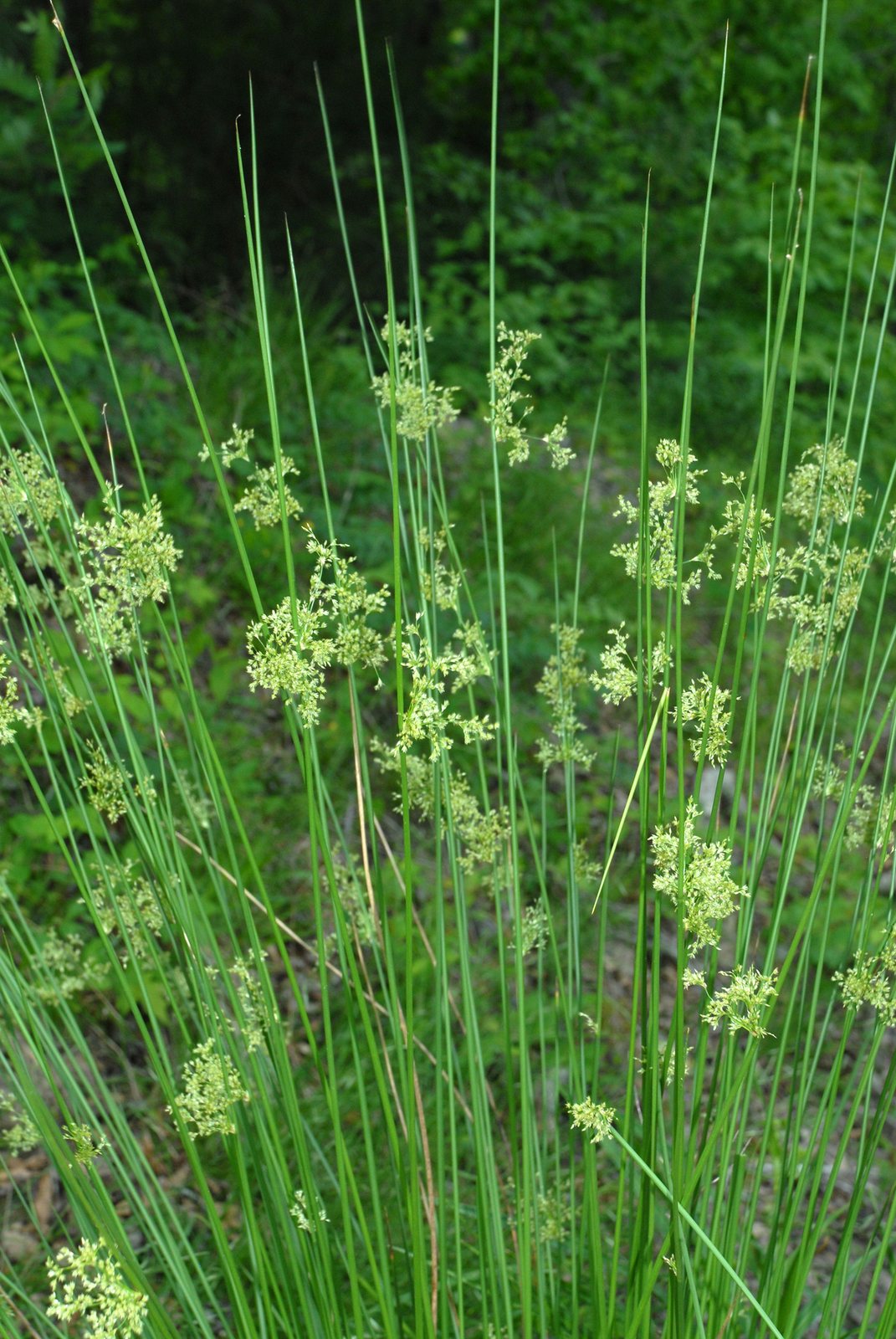
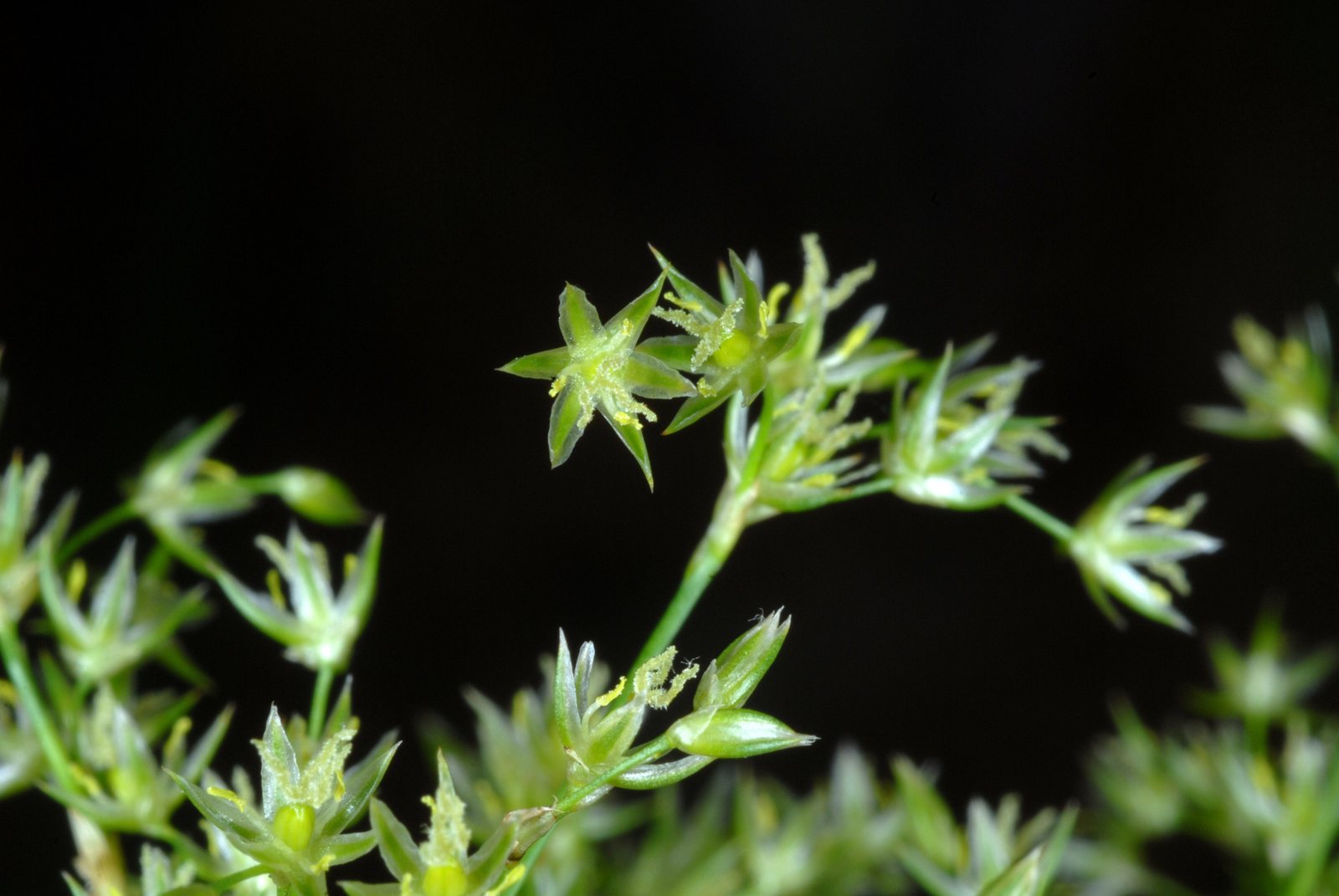
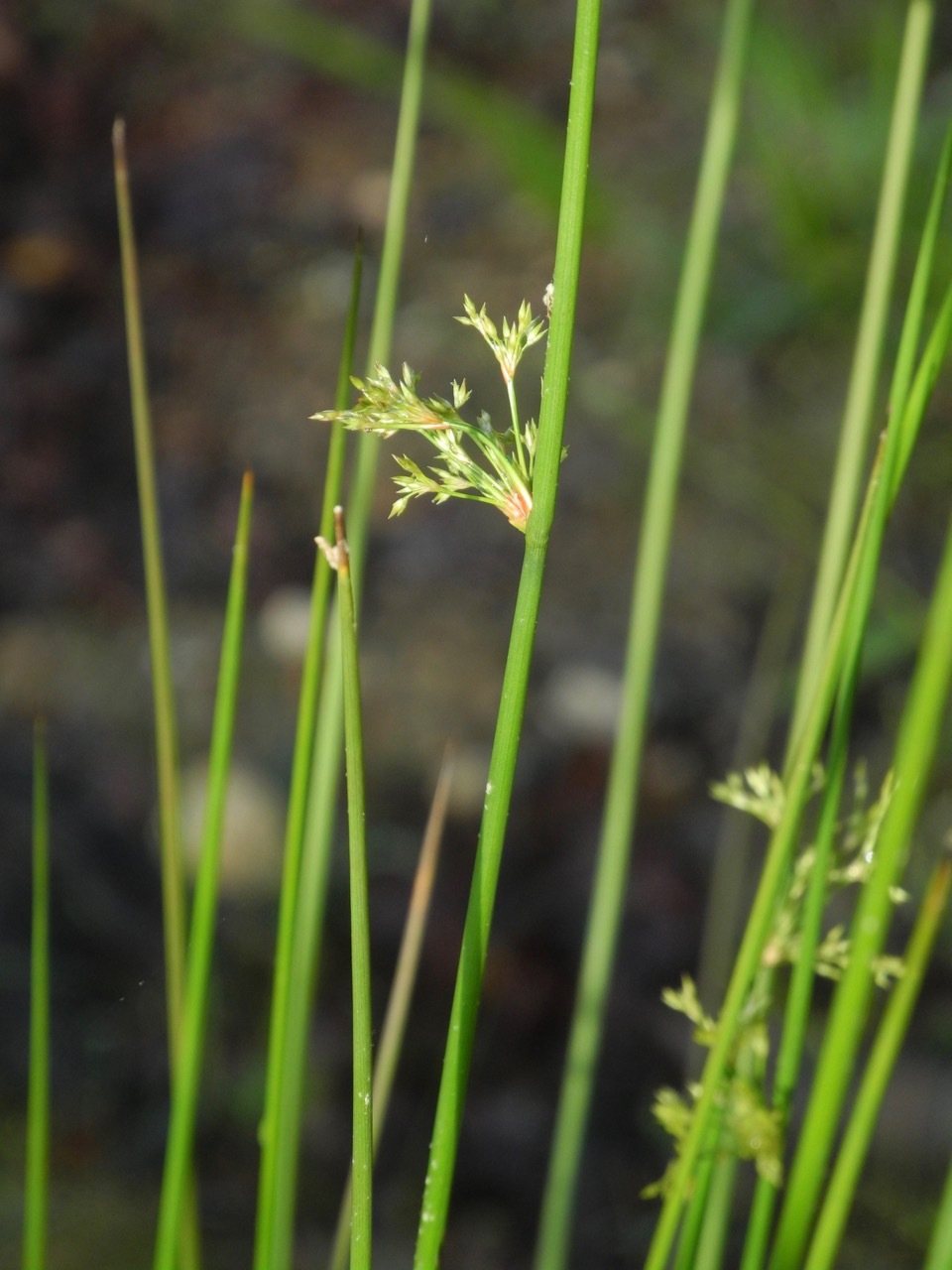
At a glance
- Sun
- Full sun to partial shade; strongest growth usually occurs in full sun where moisture is plentiful.
- Water
- High; keep the root zone constantly moist or wet. Established plants tolerate shallow standing water.
- Soil
- Moisture-retentive loam or clay, preferably acidic to neutral; tolerates poorly drained soil.
- Height
- 1-2 ft (0.3-0.6 m)
- Spread
- 1-2 ft (0.3-0.6 m)
- Flowers
- Summer; small, inconspicuous greenish-brown flower clusters appear near the stem tips.
- Foliage
- Evergreen. Smooth, cylindrical green stems twist into spirals and loops; the true leaves are reduced to small basal sheaths.
- Growth
- Moderate; faster in warm weather with constant moisture.
- Care needed
- Low
The year at a glance
- Deer resistant
- Cold hardy
- Heat tolerant
- Wildlife
| J | F | M | A | M | J | J | A | S | O | N | D | |
|---|---|---|---|---|---|---|---|---|---|---|---|---|
| Flowers | ||||||||||||
| Plant |
Northern hemisphere months. In Australia, shift them by six.
- Difficulty
- Easy
- Toughness
- Fairly tough
Will it suit your garden?
Pick your zone, country, light and whether you have pets.
Full sun is 6 or more hours of direct sun a day, part shade 3 to 6 hours, shade under 3.
How it grows
Planting day
1 ft (0.3 m)
After 1 year
1.2 ft (0.36 m)
After 2 years
1.4 ft (0.42 m)
After 3 years
1.5 ft (0.45 m)
full size
About 2 years to full size.
From a typical nursery size, at an average rate for this kind of plant. A rule of thumb, not a forecast.
Good to know
- Cats and dogs
- Safe
- Native to
- the US, Canada and the UK
- In the garden
- Spreads vigorously: plan to contain it.
- Growth rate
- Fast
Care
Jobs through the year
- WaterMar–May, Sep–Oct, every 7 days
- Keep established plants constantly moist or wet; top up only if the site is not naturally wet.
- WaterJun–Aug, every 3 days
- Maintain wet soil; check daily in heat and omit watering where shallow standing water persists.
- WaterJan–Feb, Nov–Dec, every 14 days
- Do not let roots dry out; top up only when needed and the ground is unfrozen.
- PruneFeb–Mar
- Remove brown or damaged stems at the base, leaving healthy green stems intact.
- PruneApr–Sep
- Remove straight-growing shoots at their bases whenever they appear.
- DivideApr–May
- Divide congested clumps as growth resumes and keep divisions continuously wet.
- ProtectJan–Feb, Nov–Dec
- Sink exposed pots into the ground or insulate root balls against prolonged freezing.
- Keep the soil wet throughout active growth; do not let container compost dry out.
- For pond planting, position the crown at water level or no more than 2 in (0.05 m) below it.
- Feed container plants lightly in spring; plants in fertile garden soil usually need no extra fertilizer.
- Divide congested clumps in spring, retaining healthy roots and several growing points in each division.
- Remove any straight-growing shoots at their base to preserve the curled appearance.
- In cold regions, sink pots into the ground or protect their root balls from prolonged freezing.
Pruning. In late winter or early spring, cut brown or damaged stems close to the base before new growth starts. Leave healthy green stems intact unless the whole clump needs renovation.
Through the year
- Late winter
- Remove dead stems and check that container roots have not dried out.
- Spring
- Plant or divide clumps as growth resumes, keeping divisions wet while they establish.
- Late spring
- Give container plants a light feed and check that pond baskets sit in shallow water.
- Summer
- Check containers frequently and top up water during hot or windy weather.
- Early autumn
- Remove unwanted seedlings and straight-growing shoots.
- Late autumn
- Protect exposed containers in cold climates; leave healthy stems for winter structure.
In the garden
- Use a single clump in a simple, watertight container where the curled stems can be seen close up.
- Plant along shallow pond margins with Japanese iris for contrasting upright and curled shapes.
- Repeat small groups through a bog garden to give continuity among broad-leaved plants.
- Combine with ferns and moisture-loving sedges in a damp courtyard with partial shade.
Garden styles it suits: Bog garden, Architectural minimal, Contemporary minimal, Modern courtyard, Japanese and Small-space.
Plant it with: Japanese iris, Marsh marigold, Astilbe and Royal fern.
Wildlife: Dense stems provide shelter for small invertebrates around water. Flowers are wind-pollinated and offer little nectar value.
Problems to watch for
- Brown, brittle stems often indicate drying out: restore constant moisture and remove dead growth.
- Weak, sparse growth can result from deep shade: move to a brighter position while keeping the roots wet.
- Straight shoots can outgrow the curled stems: remove them at their point of origin, dividing the clump if necessary.
- Winter damage is more likely in exposed pots: insulate the container or sink it into the ground before severe frost.
Safety
Not known to be toxic to cats, dogs, horses or people. No particular part is established as poisonous, but information specific to this cultivar is limited; it is not an edible plant.
Where it spreads. The species, Juncus effusus, can spread strongly in wet ground and is a troublesome introduced weed of wet pasture in New Zealand. 'Spiralis' is generally more restrained, but can expand by short rhizomes and produce seedlings that may have straight stems; contain it where spread would be a problem.
Easily confused with
Soft rush (Juncus effusus)
The ordinary species has predominantly straight, upright stems rather than tight curls.
Corkscrew rush 'Big Twister' (Juncus effusus 'Big Twister')
Usually has thicker stems and larger, more open coils; young plants can be difficult to distinguish without a reliable label.
Corkscrew albuca (Albuca spiralis)
Has curled leaves arising from a bulb and produces yellow-green flowers; unlike corkscrew rush, it needs freely draining soil and a dry resting period.
The name
The Latin effusus means spreading or loosely arranged, referring to the flower clusters, while 'Spiralis' describes the spiralling stems.
Propagation. Divide in spring to retain the curled stems. Seed-grown plants are variable and may not resemble the parent cultivar.
Checked against open data
- Accepted botanical name
- Juncus effusus
- In the US and Canada
- Native in Alaska, Canada, the lower 48 states and St. Pierre and Miquelon. Introduced in Hawaii.
- Native range
- Afghanistan, Alabama, Alaska, Albania, Algeria, Altay, Arizona, Arkansas, Austria, Azores, Baleares and Baltic States.
- Measured
- Soil pH 5.5 to 8.8. Average height 66 cm.
Sources: GBIF (CC BY 4.0), USDA PLANTS and Trefle (CC BY 4.0). The care and design notes are LandscapeGPT's own.
See it in your own yard.
Upload a photo of your yard and see it redesigned with plants that suit your climate, each checked against your zone.