Cornelian cherry
Cornus mas. Family Cornaceae. Tree.
Also called Cornelian cherry dogwood.
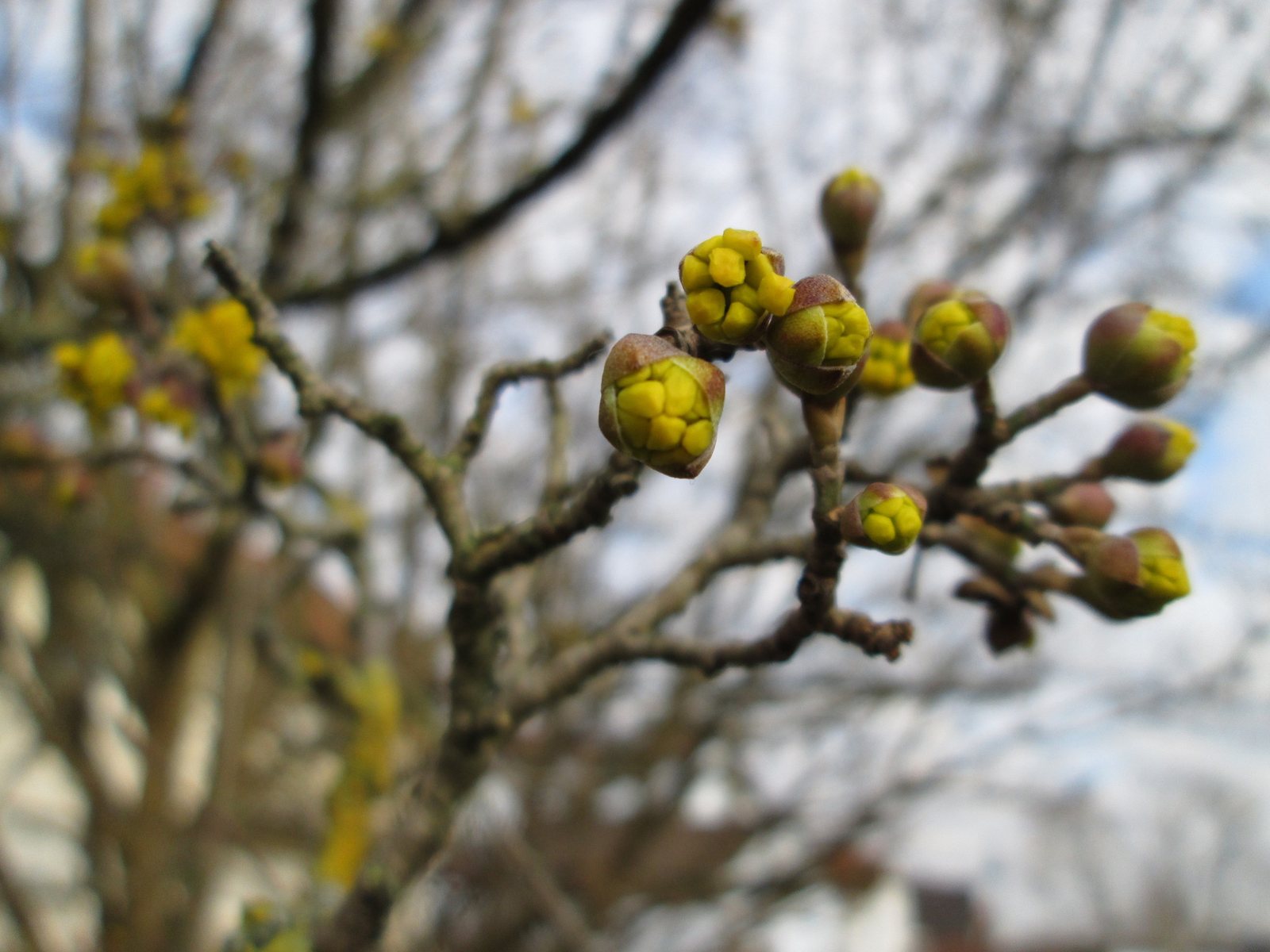
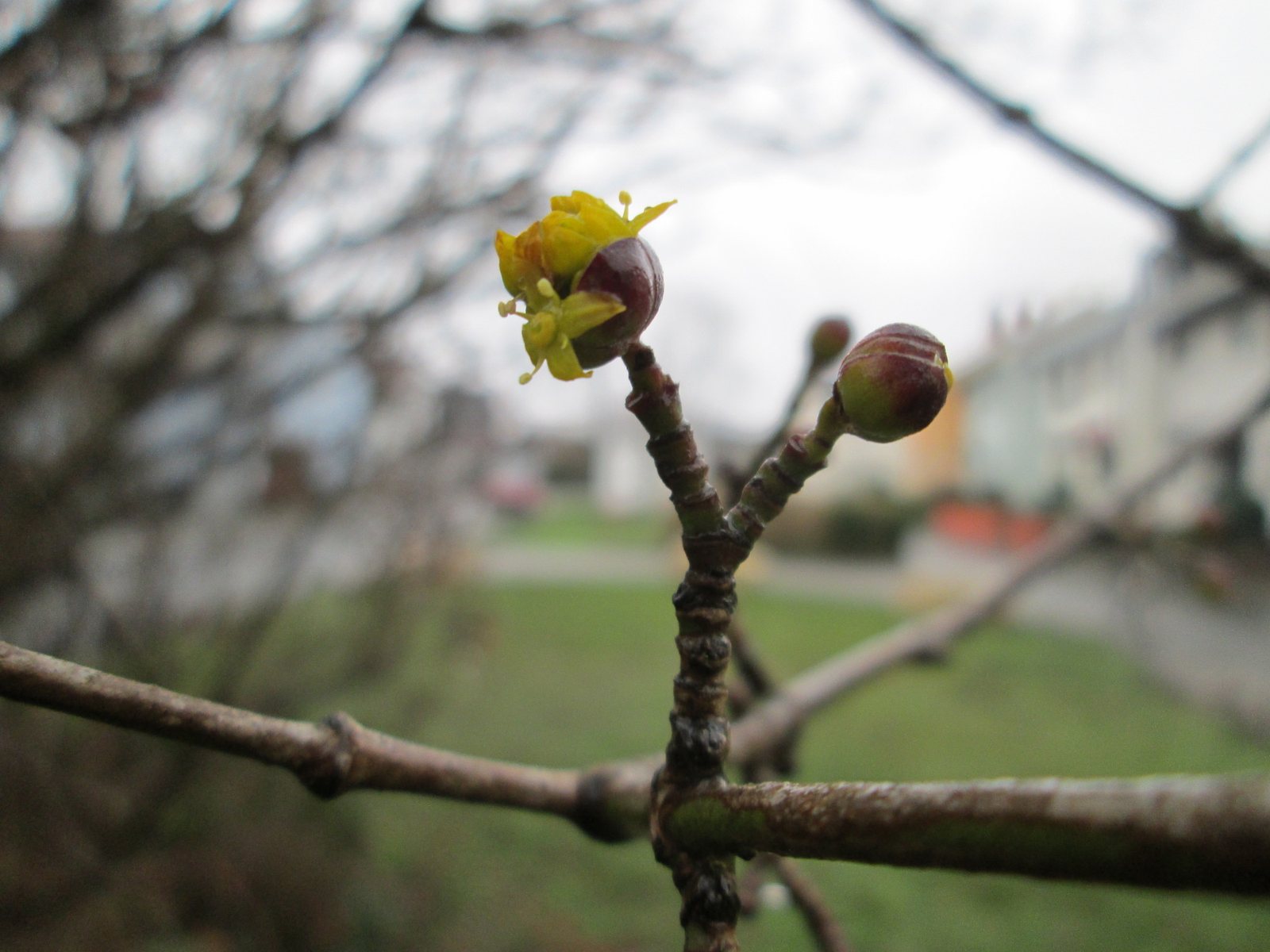
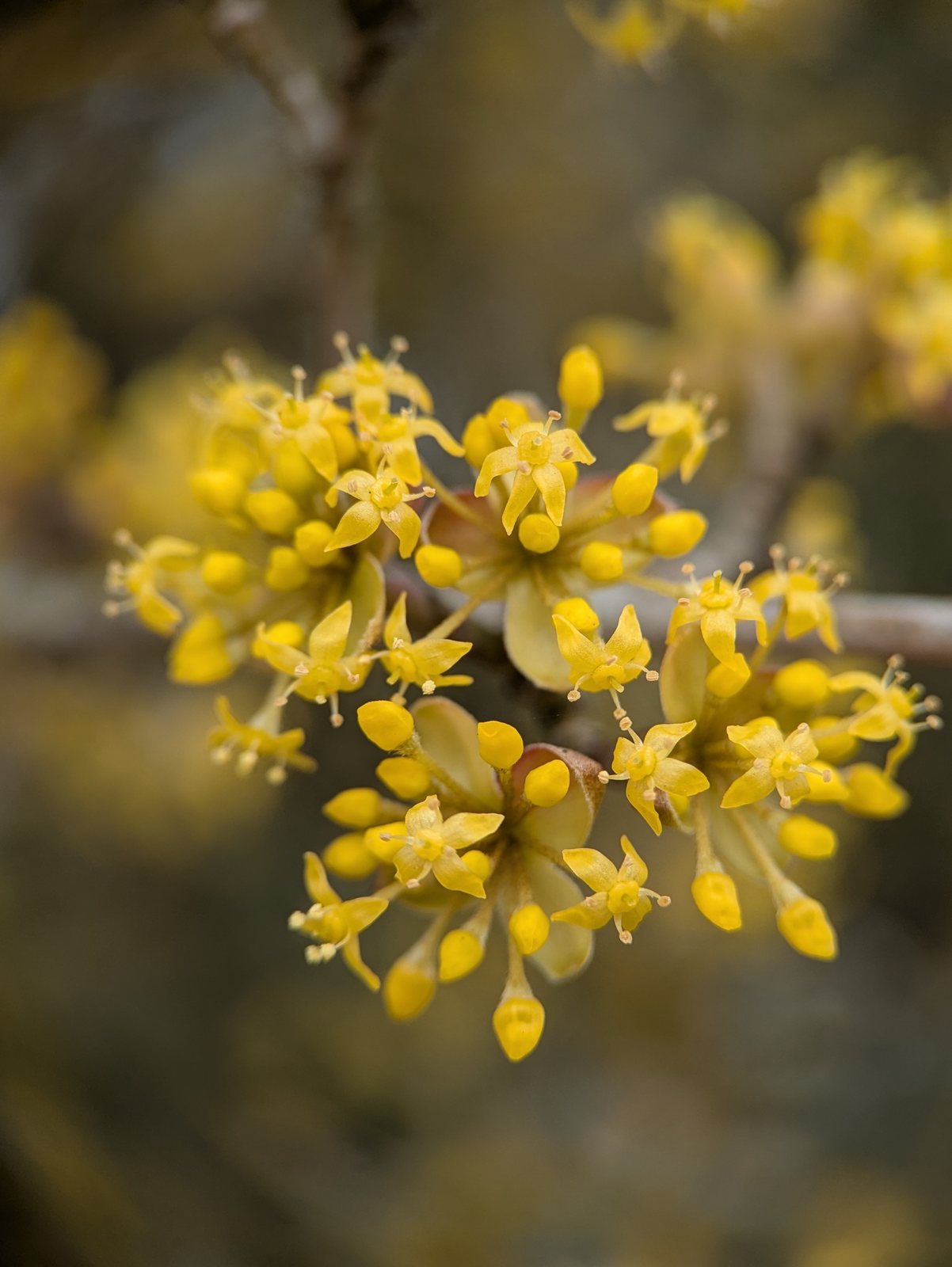
Cornelian cherry is a deciduous small tree or large, multi-stemmed shrub grown for yellow flowers on bare branches in late winter, followed by edible red fruits. It suits mixed borders, informal hedges and edible gardens, but needs winter chilling and is poorly suited to tropical or warm subtropical climates.
At a glance
- Sun
- Full sun to partial shade; flowering and fruiting are best in sun. Afternoon shade helps in hotter climates.
- Water
- Water regularly while establishing; once established, water during prolonged drought, especially while fruit is developing.
- Soil
- Well-drained soil, including clay and chalk; tolerates acidic to alkaline conditions but not prolonged waterlogging.
- Height
- 15-25 ft (4.6-7.6 m)
- Spread
- 15-20 ft (4.6-6.1 m)
- Flowers
- Small yellow flowers in rounded clusters on bare branches in late winter to early spring.
- Foliage
- Opposite, oval, dark green leaves with curved veins; autumn colour varies from muted yellow to reddish purple.
- Growth
- Slow to moderate
- Care needed
- Low
The year at a glance
- Pollinators
- Drought tolerant
- Cold hardy
- Disease resistant
- Wildlife
- Low allergen
- Edible
| J | F | M | A | M | J | J | A | S | O | N | D | |
|---|---|---|---|---|---|---|---|---|---|---|---|---|
| Flowers | ||||||||||||
| Fruit | ||||||||||||
| Plant |
Northern hemisphere months. In Australia, shift them by six.
- Difficulty
- Easy
- Toughness
- Very tough
Will it suit your garden?
Pick your zone, country, light and whether you have pets.
Full sun is 6 or more hours of direct sun a day, part shade 3 to 6 hours, shade under 3.
How it grows
Planting day
7 ft (2 m)
After 1 year
7 ft (2.2 m)
After 2 years
8 ft (2.3 m)
After 3 years
8 ft (2.5 m)
After 5 years
9 ft (2.8 m)
About 26 years to full size.
From a typical nursery size, at an average rate for this kind of plant. A rule of thumb, not a forecast.
Good to know
- Cats and dogs
- Safe
- Growth rate
- Slow
Care
Jobs through the year
- WaterApr–May, Sep–Oct, every 14 days
- Water established trees only during prolonged dry weather; water regularly for the first two years.
- WaterJun–Aug, every 14 days
- Water deeply during prolonged drought, especially while fruit develops.
- MulchMar–Apr
- Renew organic mulch to 5–8 cm deep, keeping it clear of the trunk.
- FeedMar–Apr
- Feed only if growth is weak or a soil test confirms deficiency.
- PruneMar–Apr
- Just after flowering, remove damaged or crossing branches and unwanted basal shoots, preserving fruiting wood.
- HarvestAug–Sep
- Pick soft, fully colored fruit that detaches easily, or shake onto a clean sheet.
- Water deeply during dry spells for the first two growing seasons.
- Apply 2-3 in (5-8 cm) of organic mulch, keeping it clear of the trunk.
- Feed only if growth is weak or a soil test shows a deficiency; avoid heavy nitrogen feeding.
- For better fruit crops, plant a second, genetically different Cornelian cherry nearby.
- Remove basal shoots if you want a single-trunk tree; retain them for a shrubby habit.
Pruning. Prune lightly just after flowering, removing dead, damaged or crossing branches and any unwanted basal shoots. Avoid routine hard pruning, and remember that removing flowered branches also removes potential fruit.
Harvest
Pick the fruit in late summer to early autumn, usually August–September in the US, UK and Canada, and February–March in Australia. Ripe fruit is fully coloured (usually deep red), soft and easily detached; pick gently or shake it onto a clean sheet, leaving hard, astringent fruit to ripen. Grafted plants usually produce their first worthwhile crop 2–4 years after planting; seed-grown plants may take 5–10 years.
Through the year
- Late winter
- Check moisture around young plants during dry, frost-free weather as flowering begins.
- Early spring
- After flowering, lightly prune crossing branches and unwanted basal shoots.
- Spring
- Renew mulch and remove weeds from around the root zone.
- Summer
- Water young trees deeply during dry spells and support fruit development during prolonged drought.
- Late summer to early autumn
- Harvest fruits when fully coloured, soft and easily detached; net selectively if birds take the crop.
- Autumn
- Plant container-grown trees while the soil is moist and workable; delay until spring in severe-winter regions.
In the garden
- Use as a small specimen tree near a path or window where its early flowers are easy to see.
- Plant in an informal mixed hedge with other flowering and fruiting shrubs.
- Underplant with snowdrops, crocuses and hellebores for a late-winter display.
- Include in an edible landscape or small orchard for tart fruit used in preserves.
Garden styles it suits: Woodland, Wildlife garden, Winter interest, Edible landscape, Native hedgerow and Cottage garden.
Plant it with: Snowdrops, Crocuses, Hellebores, Witch hazel, Serviceberry and Daffodils.
Wildlife: Early flowers provide pollen and nectar for bees and other insects active in mild weather. Birds and small mammals eat the fruits, and dense shrubs provide shelter.
Problems to watch for
- Poor fruit set: plant a genetically different Cornelian cherry nearby; cold, wet flowering weather can also limit pollination.
- Leaf scorch during drought: water deeply and mulch; provide afternoon shade in hot locations.
- Leaf spots in damp conditions: collect fallen leaves, avoid overhead watering and improve airflow; mild spotting rarely needs treatment.
- Root decline in waterlogged soil: correct drainage or move young plants to a better-drained site.
Safety
Not known to be toxic to people, cats, dogs or horses. The ripe fruit flesh is edible, although tart; remove the hard stones before eating or processing, as they are a choking hazard and should not be chewed or swallowed.
Easily confused with
Japanese cornel dogwood (Cornus officinalis)
Very similar in flower and fruit; it usually has brown hair tufts in the vein axils beneath the leaves, whereas Cornelian cherry has pale or whitish tufts.
Forsythia (Forsythia × intermedia)
Forsythia has larger, four-lobed yellow flowers spaced along arching stems; Cornelian cherry has small flowers packed into rounded clusters and later bears red, stone-containing fruits.
The name
Cornus comes from the Latin for horn, referring to the hard wood, while mas means male, an old distinction used for this dogwood.
Propagation. Sow cleaned seed outdoors and allow for slow, irregular germination, often over more than one season. Softwood cuttings taken in early summer can root under humid conditions; named fruiting selections are usually grafted or budded to preserve their characteristics.
Checked against open data
- Accepted botanical name
- Cornus mas
- In the US and Canada
- Introduced in the lower 48 states.
- Native range
- Albania, Austria, Belgium, Bulgaria, Czechoslovakia, East Aegean Is., France, Germany, Hungary, Italy, Krym and Lebanon-Syria.
- Measured
- Soil pH 5 to 7.5. Average height 600 cm.
Sources: GBIF (CC BY 4.0), USDA PLANTS and Trefle (CC BY 4.0). The care and design notes are LandscapeGPT's own.
See it in your own yard.
Upload a photo of your yard and see it redesigned with plants that suit your climate, each checked against your zone.