Cousin It she-oak
Casuarina glauca 'Cousin It'. Family Casuarinaceae. Groundcover.
Also called Casuarina Cousin It, Cousin Itt, Prostrate swamp she-oak.
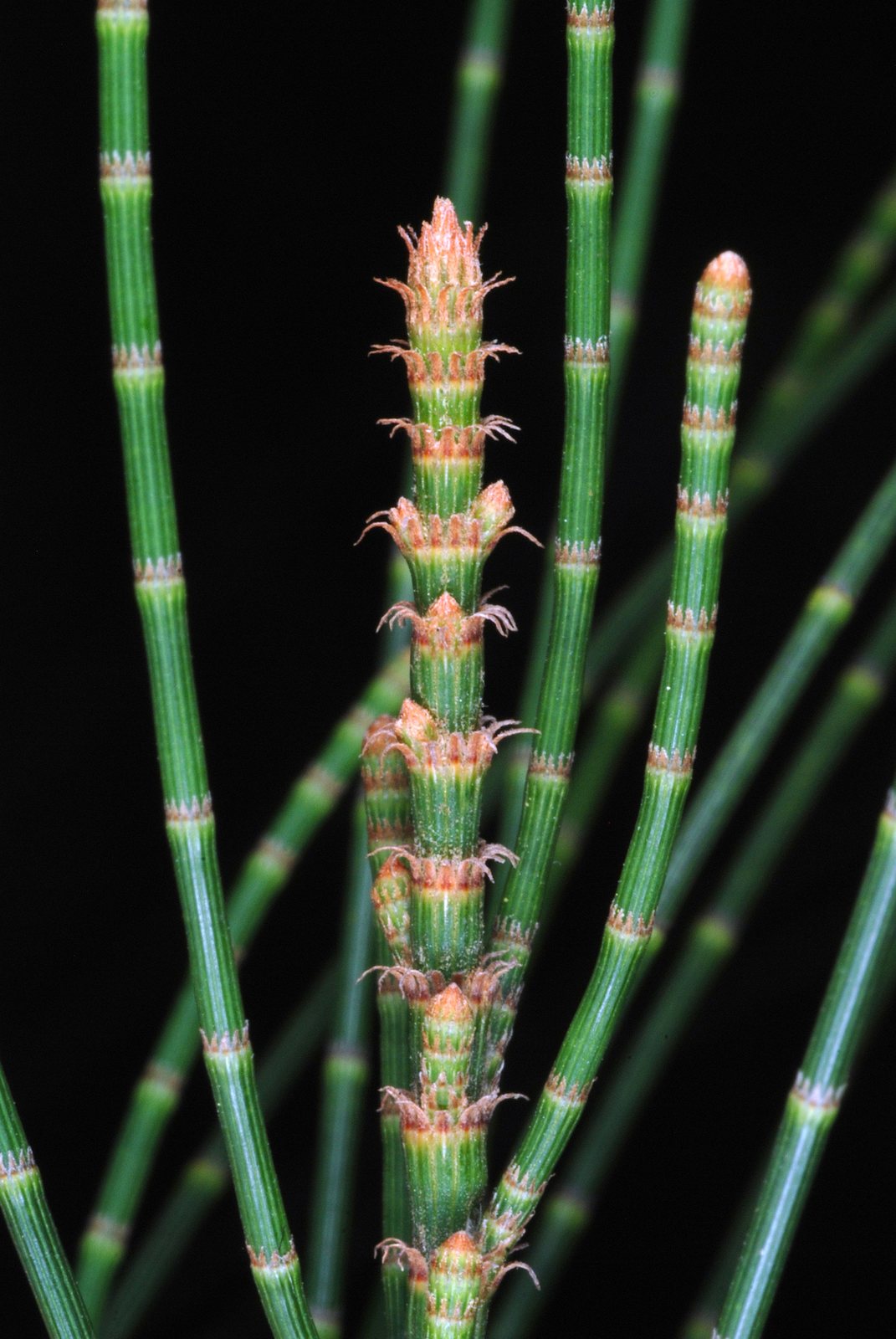
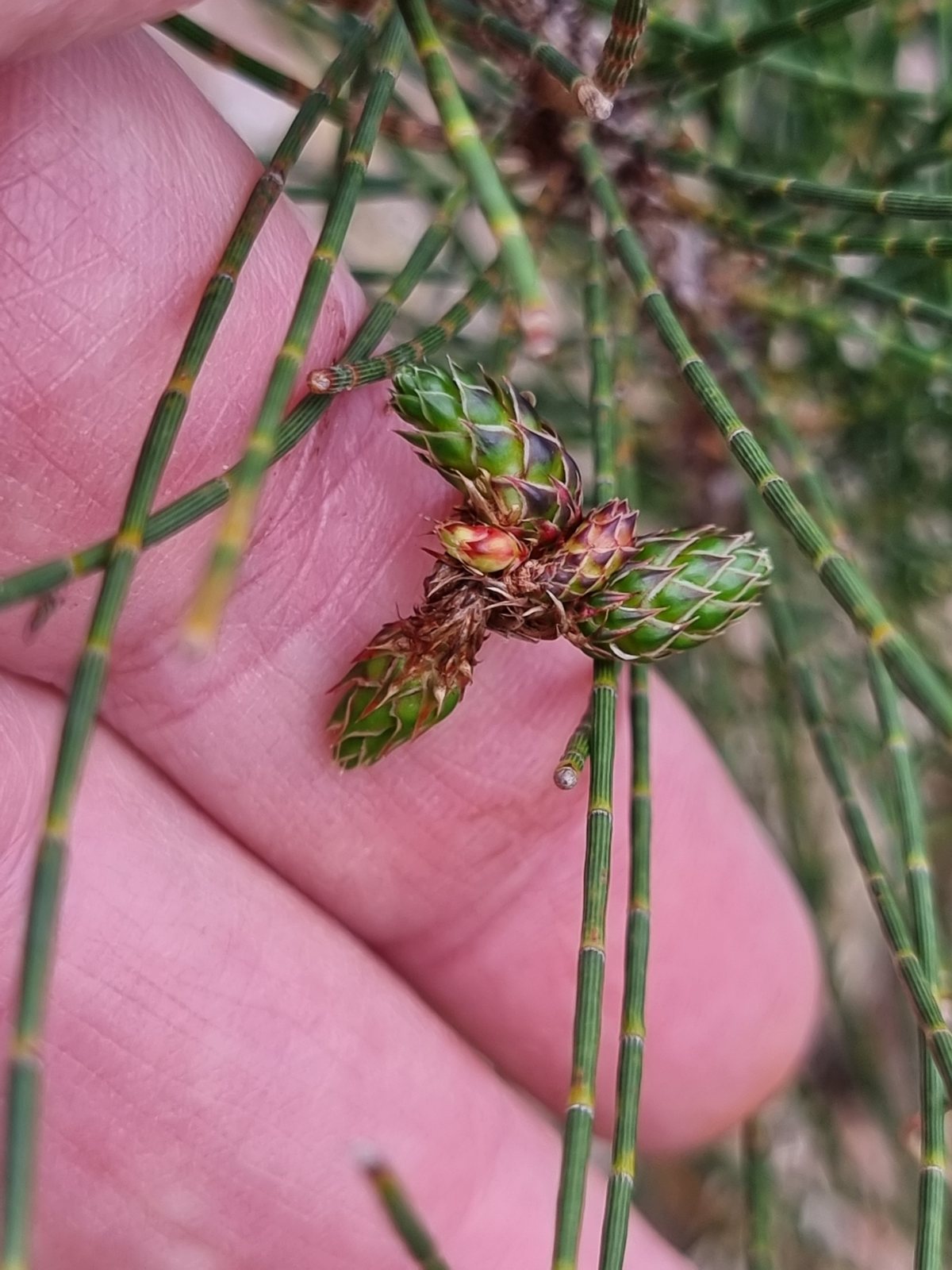
Casuarina glauca 'Cousin It' is a low, evergreen Australian native with long, trailing green branchlets that form a dense, shaggy mound. Gardeners grow it for its texture, particularly spilling over walls, banks and large containers. It suits mild climates; in colder regions, containers need a bright, frost-free winter home.
At a glance
- Sun
- Full sun to light partial shade; growth is densest in good light.
- Water
- Water regularly during establishment. Established plants tolerate dry spells, but containers need watering when the upper soil begins to dry.
- Soil
- Adaptable to sandy, loamy or clay soils, provided drainage is adequate. Tolerates coastal conditions and some salinity; avoid persistently stagnant, waterlogged potting mix.
- Height
- 1-2 ft (0.3-0.6 m)
- Spread
- 4-6 ft (1.2-1.8 m)
- Foliage
- Evergreen. Fine, jointed, green branchlets trail like long hair. The true leaves are tiny scales arranged around the branchlet joints.
- Growth
- Moderate
- Care needed
- Low
The year at a glance
- Drought tolerant
- Heat tolerant
- Wildlife
| J | F | M | A | M | J | J | A | S | O | N | D | |
|---|---|---|---|---|---|---|---|---|---|---|---|---|
| Plant |
Northern hemisphere months. In Australia, shift them by six.
- Difficulty
- Moderate
- Toughness
- Needs looking after
Will it suit your garden?
Pick your zone, country, light and whether you have pets.
Full sun is 6 or more hours of direct sun a day, part shade 3 to 6 hours, shade under 3.
How it grows
Planting day
0.4 ft (0.11 m)
After 1 year
0.8 ft (0.25 m)
After 2 years
1.3 ft (0.38 m)
After 3 years
1.5 ft (0.45 m)
full size
About 3 years to full size.
From a typical nursery size, at an average rate for this kind of plant. A rule of thumb, not a forecast.
Good to know
- Cats and dogs
- Safe
- Native to
- Australia
- Invasive in
- the US
- In the garden
- Spreads vigorously: plan to contain it.
- Growth rate
- Moderate
Care
Jobs through the year
- WaterApr–May, Sep–Oct, every 21 days
- For established ground plantings, water only if dry; new plants and containers need more.
- WaterJun–Aug, every 14 days
- Water established ground plantings in dry spells; check containers much more often.
- WaterJan–Mar, Nov–Dec, every 21 days
- For frost-free overwintered pots only, check moisture and water sparingly before roots dry out.
- FeedApr–May
- Use a light controlled-release feed only if growth is weak.
- PruneApr–May
- Remove dead branchlets and shorten stray growth; avoid bare old wood.
- MulchMay
- Apply a thin mulch around roots, keeping it clear of the crown.
- ProtectJan–Apr, Oct–Dec
- Not hardy in zones 6–7; move containers to bright, frost-free shelter before frost.
- Water deeply during the first growing season, allowing the surface soil to dry slightly between waterings.
- Use a container with drainage holes and a free-draining potting mix.
- Apply a thin mulch around the roots, keeping it clear of the crown.
- Feed sparingly; use a light application of controlled-release fertiliser in spring only if growth is weak.
- Protect young plants from frost and move containers under frost-free cover in cold climates.
Pruning. In spring, remove dead or frost-damaged branchlets and lightly shorten trailing growth that blocks paths or drains. Avoid cutting hard into old, bare wood, where regrowth can be unreliable.
Through the year
- Spring
- Plant after the risk of damaging frost has passed, leaving room for the full spread.
- Spring
- Remove winter damage and lightly trim stray growth.
- Summer
- Check new plantings and containers regularly; water deeply rather than giving frequent light sprinkles.
- Autumn
- Clear fallen debris from the crown and check that containers drain freely.
- Late autumn
- Move container plants to a bright, frost-free position where winters are too cold.
- Winter
- Water sheltered containers sparingly, without letting the root ball dry out completely.
In the garden
- Let branchlets cascade over a retaining wall to soften its edge.
- Use as a broad groundcover on sunny banks with room for its trailing growth.
- Plant in a tall container so the foliage hangs clear of the ground.
- Pair with upright native grasses and bold-leaved plants for contrasting textures.
Garden styles it suits: Australian native, Coastal, Contemporary minimal, Architectural minimal, Low-maintenance and Green on green.
Plant it with: Mat rush, Flax lily, Kangaroo paw, Coastal rosemary, New Zealand flax and Pigface.
Wildlife: Dense growth provides low shelter for small animals and invertebrates. Casuarinas are wind-pollinated, so this is not a useful nectar plant.
Problems to watch for
- Frost damage: branchlet tips may brown after cold weather; protect young plants and remove dead growth once spring growth starts.
- Root rot in poorly drained containers: use drainage holes and an open potting mix, and never leave the pot standing in water.
- Drying out in pots: brown, brittle branchlets can follow a dry root ball; soak thoroughly and check moisture more often in hot or windy weather.
- Unwanted spread: trailing growth can cover neighbouring plants, and root shoots may appear; trim the edges and remove unwanted shoots promptly.
Safety
Not known to be toxic to people, cats, dogs or horses. Specific safety information for this cultivar is limited; discourage chewing, as the wiry branchlets are not food and may cause physical irritation.
Where it spreads. The parent species, Casuarina glauca, is invasive in Florida, where it can spread strongly by root suckers. The compact cultivar should not be assumed to be non-invasive; avoid planting it near natural areas where the species is restricted or invasive, and check local rules before planting.
Easily confused with
Limelight bower wattle (Acacia cognata 'Limelight')
Also forms a shaggy green mound, but has separate, flattened, narrow leaf-like phyllodes rather than jointed, threadlike branchlets.
Weeping she-oak (Allocasuarina verticillata)
Has similar jointed, drooping branchlets but develops into an upright tree rather than remaining a low, spreading mound.
The name
Casuarina refers to the resemblance of the fine, drooping branchlets to cassowary feathers, while glauca means bluish-grey.
Propagation. Propagate from semi-ripe cuttings during the growing season, although rooting can be slow and uneven. Seed will not reliably reproduce the cultivar.
Checked against open data
- Accepted botanical name
- Casuarina glauca
- Native range
- New South Wales and Queensland.
- Measured
- Soil pH 6.5 to 7.5. Average height 1450 cm.
Sources: GBIF (CC BY 4.0) and Trefle (CC BY 4.0). The care and design notes are LandscapeGPT's own.
See it in your own yard.
Upload a photo of your yard and see it redesigned with plants that suit your climate, each checked against your zone.