Cranesbill 'Biokovo'
Geranium × cantabrigiense 'Biokovo'. Family Geraniaceae. Perennial.
Also called Geranium × cantabrigiense 'Biokovo', Cambridge cranesbill 'Biokovo', Hardy geranium 'Biokovo'.
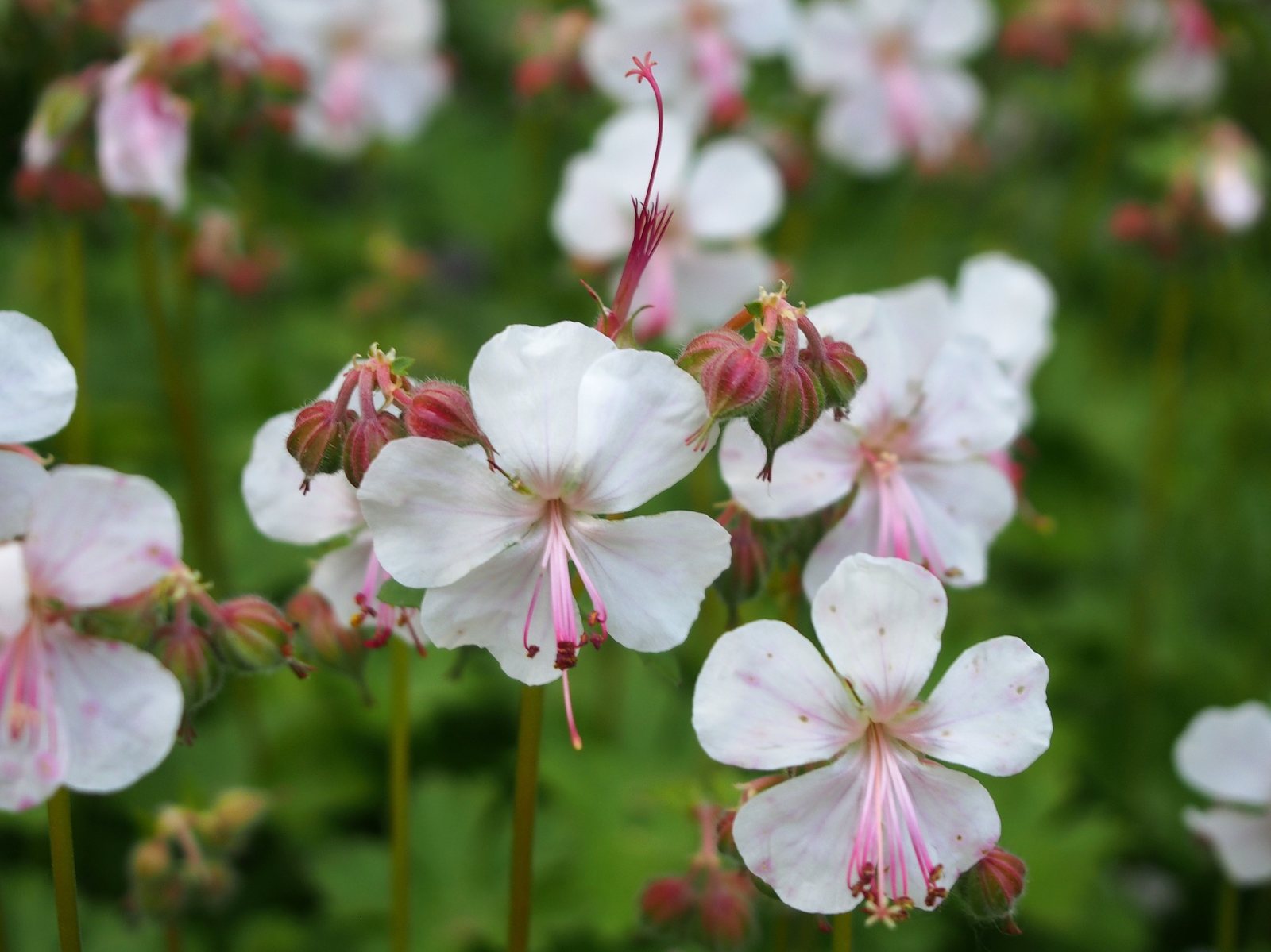
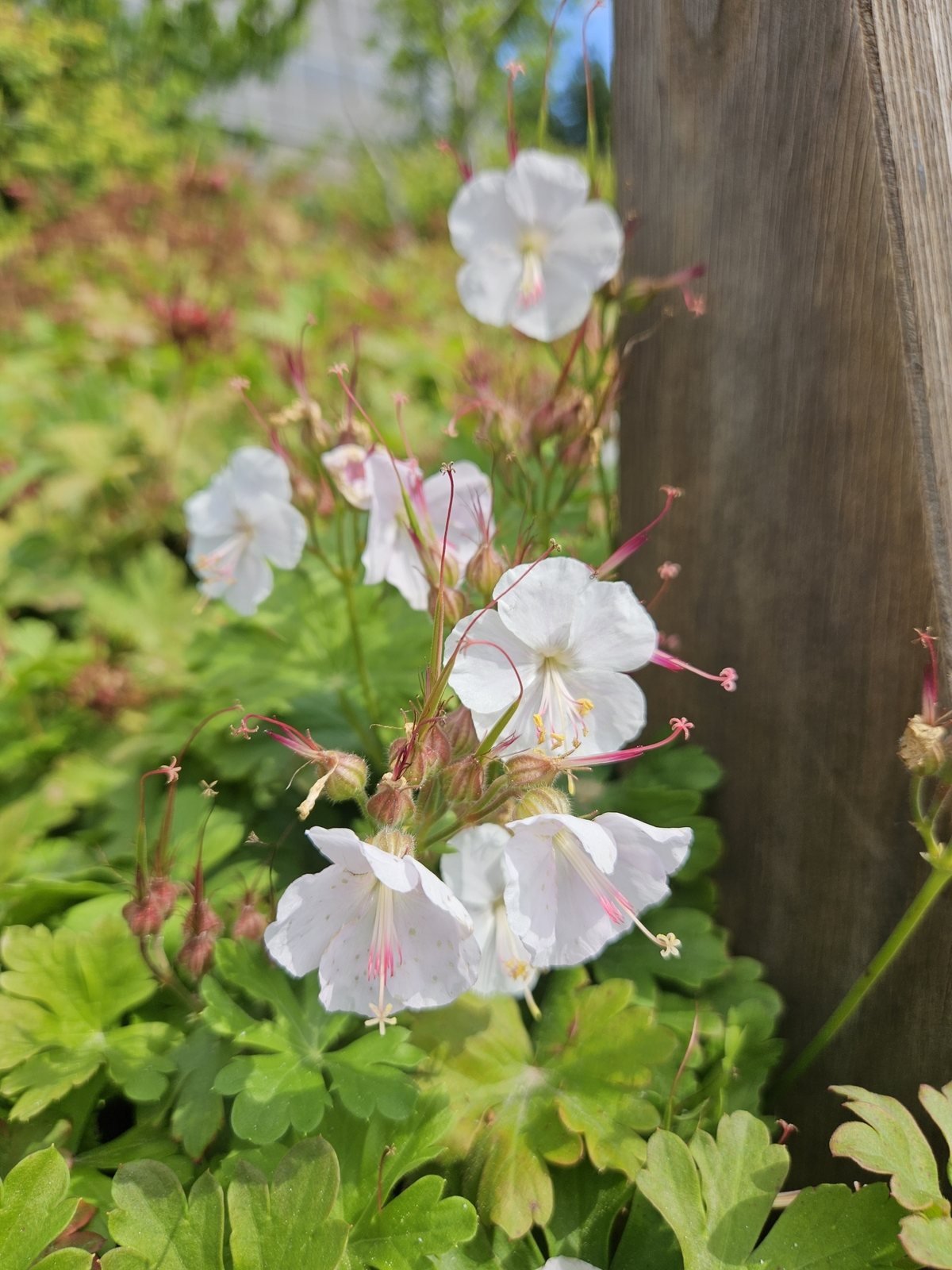
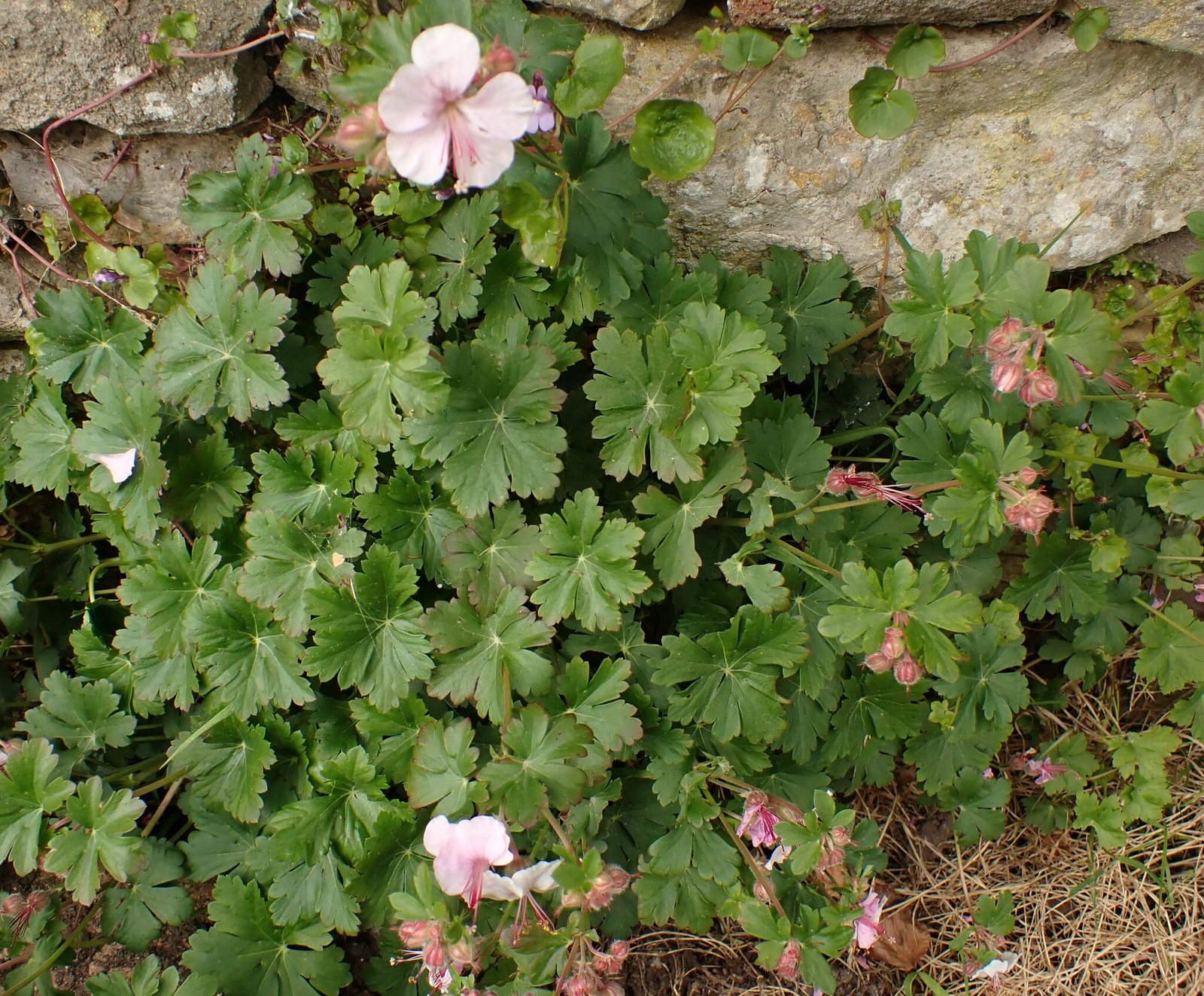
'Biokovo' is a low, spreading hardy geranium with aromatic leaves and white flowers flushed with pale pink. Gardeners grow it as an easy groundcover beneath shrubs, along paths and at the front of borders; its shallow rhizomes gradually form a leafy carpet.
At a glance
- Sun
- Full sun to partial shade; afternoon shade helps in hot climates.
- Water
- Water regularly during establishment. Once rooted, it tolerates short dry spells but flowers and grows best with occasional deep watering during prolonged drought.
- Soil
- Well-drained soil, including sandy, loamy or chalky ground; tolerates a broad pH range. Avoid persistently wet soil.
- Height
- 0.5-1 ft (0.15-0.3 m)
- Spread
- 1-2 ft (0.3-0.6 m), eventually wider where allowed to spread
- Flowers
- Late spring to early summer; white flowers flushed with pale pink, with pink veins and stamens.
- Foliage
- Rounded, lobed, aromatic green leaves often develop red or bronze autumn colour. Semi-evergreen in mild climates but may lose most or all leaves in cold winters.
- Growth
- Moderate
- Care needed
- Low
The year at a glance
- Pollinators
- Deer resistant
- Drought tolerant
- Low allergen
- Fragrant
| J | F | M | A | M | J | J | A | S | O | N | D | |
|---|---|---|---|---|---|---|---|---|---|---|---|---|
| Flowers | ||||||||||||
| Plant |
Northern hemisphere months. In Australia, shift them by six.
- Difficulty
- Easy
- Toughness
- Very tough
Will it suit your garden?
Pick your zone, country, light and whether you have pets.
Full sun is 6 or more hours of direct sun a day, part shade 3 to 6 hours, shade under 3.
How it grows
Planting day
0.7 ft (0.22 m)
full size
About 3 years to full size.
From a typical nursery size, at an average rate for this kind of plant. A rule of thumb, not a forecast.
Good to know
- Cats and dogs
- Safe
- In the garden
- Spreads vigorously: plan to contain it.
- Growth rate
- Moderate
Care
Jobs through the year
- WaterApr–May, Sep–Oct, every 14 days
- Water established clumps deeply if soil is dry; water new plants whenever the upper soil dries.
- WaterJun–Aug, every 14 days
- Water established clumps deeply during prolonged drought; new plants need more frequent watering.
- MulchMar
- Apply a thin compost dressing without burying crowns or shallow rhizomes.
- PruneMar
- Remove winter-damaged leaves while retaining healthy foliage.
- PruneJun–Jul
- After flowering, lightly trim spent stems and ragged foliage to encourage fresh leaves.
- DivideMar–Apr, Sep
- Divide congested clumps or lift unwanted edges; promptly replant and water rooted sections.
- Water new plants deeply whenever the upper soil dries during their first growing season.
- Apply a thin layer of compost in spring; routine fertiliser is usually unnecessary.
- Keep mulch clear of the crown and avoid heavy mulch over the shallow rhizomes.
- Divide congested patches in spring or early autumn, replanting rooted sections promptly.
- Lift spreading edge pieces when they encroach on neighbouring plants.
Pruning. After flowering, trim spent stems and untidy foliage lightly to encourage fresh leaves. Remove winter-damaged leaves in early spring, leaving healthy evergreen foliage in place.
Through the year
- Early spring
- Remove dead or winter-damaged leaves and add a thin layer of compost.
- Spring
- Plant or divide clumps, then water well until new growth is established.
- Late spring
- Check soil moisture during flowering, especially around new plants.
- Early summer
- Trim spent flower stems and ragged leaves after the main flowering flush.
- Late summer
- Water during prolonged drought and lift unwanted spreading edges.
- Early autumn
- Divide or transplant rooted sections while soil is still warm and moist.
In the garden
- Plant in repeated drifts along paths for a low, soft edge.
- Use beneath roses and deciduous shrubs to cover bare soil without adding much height.
- Weave between spring bulbs so the leaves help conceal fading bulb foliage.
- Combine with ferns and hostas at a bright woodland edge for contrasting leaf shapes.
- Let it soften retaining-wall tops and the edges of well-drained raised beds.
Garden styles it suits: Cottage garden, English country, Woodland, Low-maintenance, White garden and Pollinator garden.
Plant it with: Roses, Hostas, Japanese painted ferns, Daffodils, Lady's mantle and Hellebores.
Wildlife: The open flowers provide pollen and nectar for bees and other visiting insects. Deer and rabbits often leave the aromatic foliage alone, although browsing is still possible.
Problems to watch for
- Crown or root rot in waterlogged soil: improve drainage or move the plant to a raised position; discard badly rotted sections.
- Brown leaf edges or summer dieback in hot, dry sites: water deeply and provide afternoon shade.
- Occasional slug or snail damage to young leaves: remove pests at dusk and use iron-phosphate bait according to its label if damage persists.
Safety
This hardy geranium is not known to be toxic to cats, dogs, horses or people, and no particular part is recognised as poisonous. It is not a food plant. Do not confuse it with bedding geraniums, which are Pelargonium and can be toxic to pets.
Easily confused with
Cambridge cranesbill 'Karmina' (Geranium × cantabrigiense 'Karmina')
It has a similar low, aromatic carpet of foliage but strong pink flowers rather than the nearly white flowers of 'Biokovo'.
Bigroot geranium (Geranium macrorrhizum)
Usually taller and coarser, with larger leaves and thicker rhizomes; flower colour varies by cultivar, so compare foliage as well.
Dalmatian cranesbill (Geranium dalmaticum)
Generally forms a shorter, finer mat with smaller, glossier leaves and clearer pink flowers.
The name
Geranium comes from the Greek word for crane, referring to the beak-shaped fruit that also gives cranesbills their common name.
Propagation. Divide clumps or detach rooted rhizome sections in spring or early autumn. Use vegetative propagation to retain the cultivar's characteristics; seedlings, if produced, may differ from the parent.
Checked against open data
- Accepted botanical name
- Geranium cantabrigiense
Sources: GBIF (CC BY 4.0). The care and design notes are LandscapeGPT's own.
See it in your own yard.
Upload a photo of your yard and see it redesigned with plants that suit your climate, each checked against your zone.