Creeping boobialla
Myoporum parvifolium. Family Scrophulariaceae. Groundcover.
Also called Creeping myoporum, Dwarf native myrtle.
Creeping boobialla is a fast-spreading Australian evergreen groundcover with narrow leaves and small, star-shaped flowers. Gardeners use it to cover sunny banks, soften retaining walls and fill dry coastal beds where drainage is good. It tolerates light frost but is not reliably hardy through cold winters.
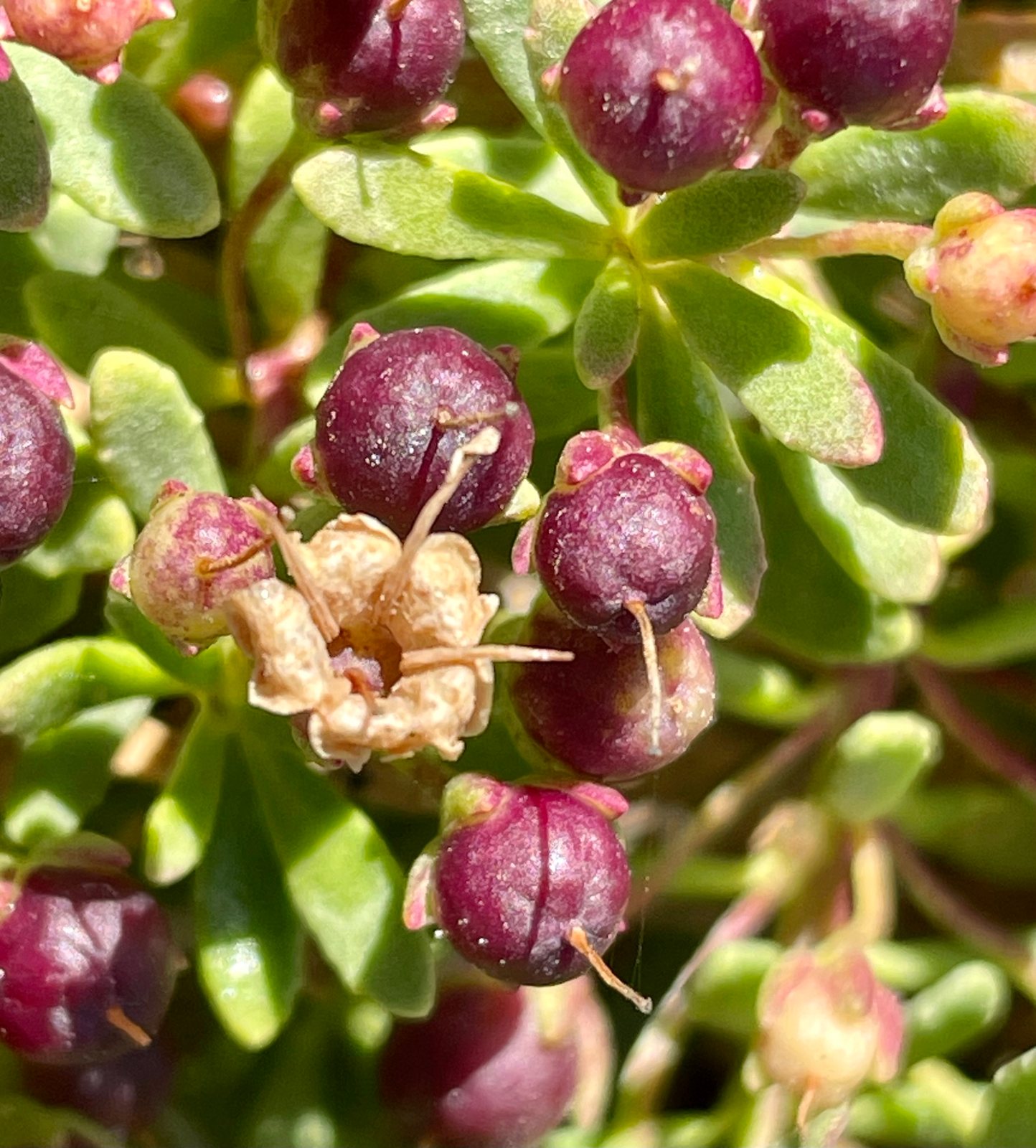
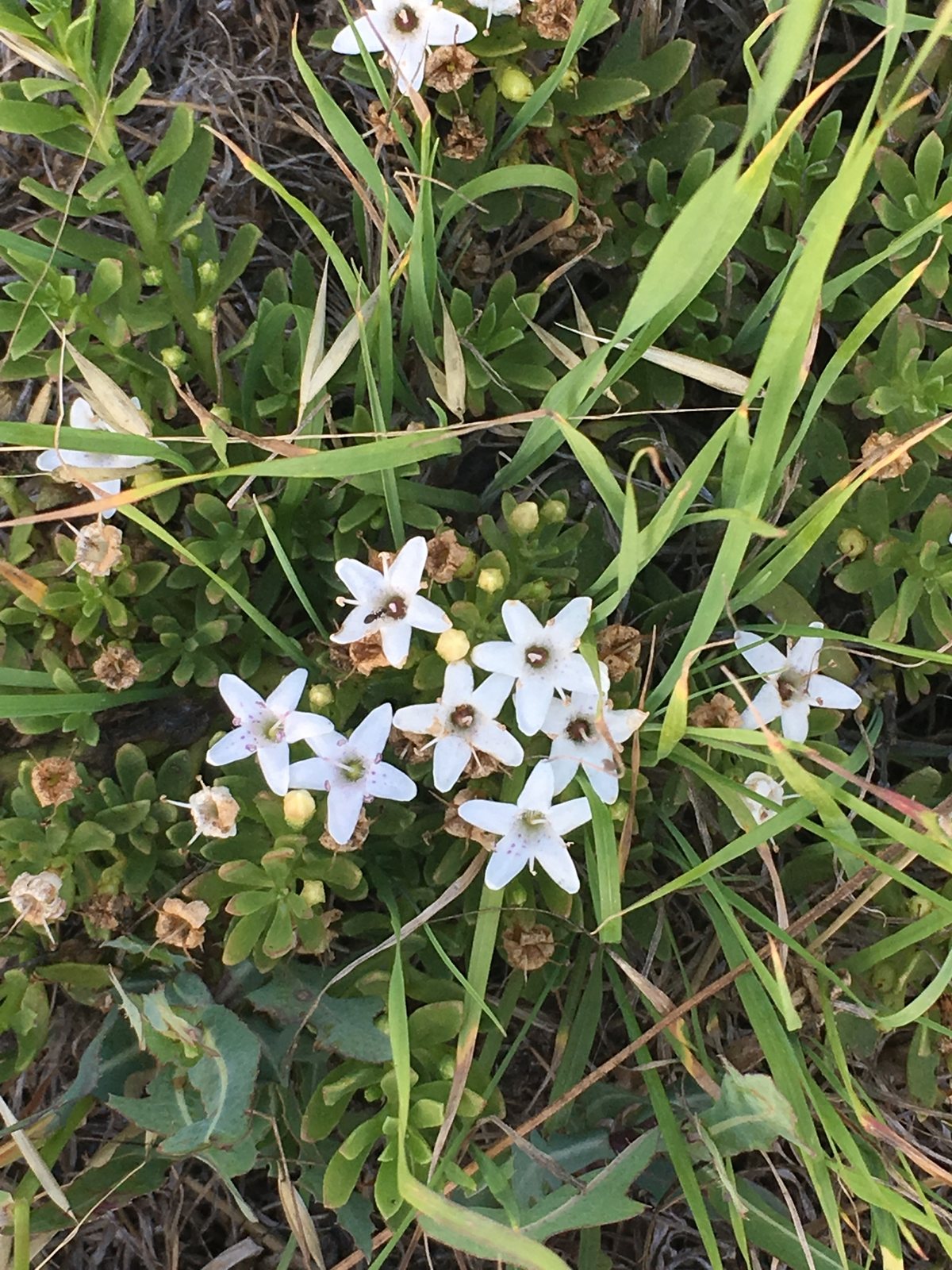
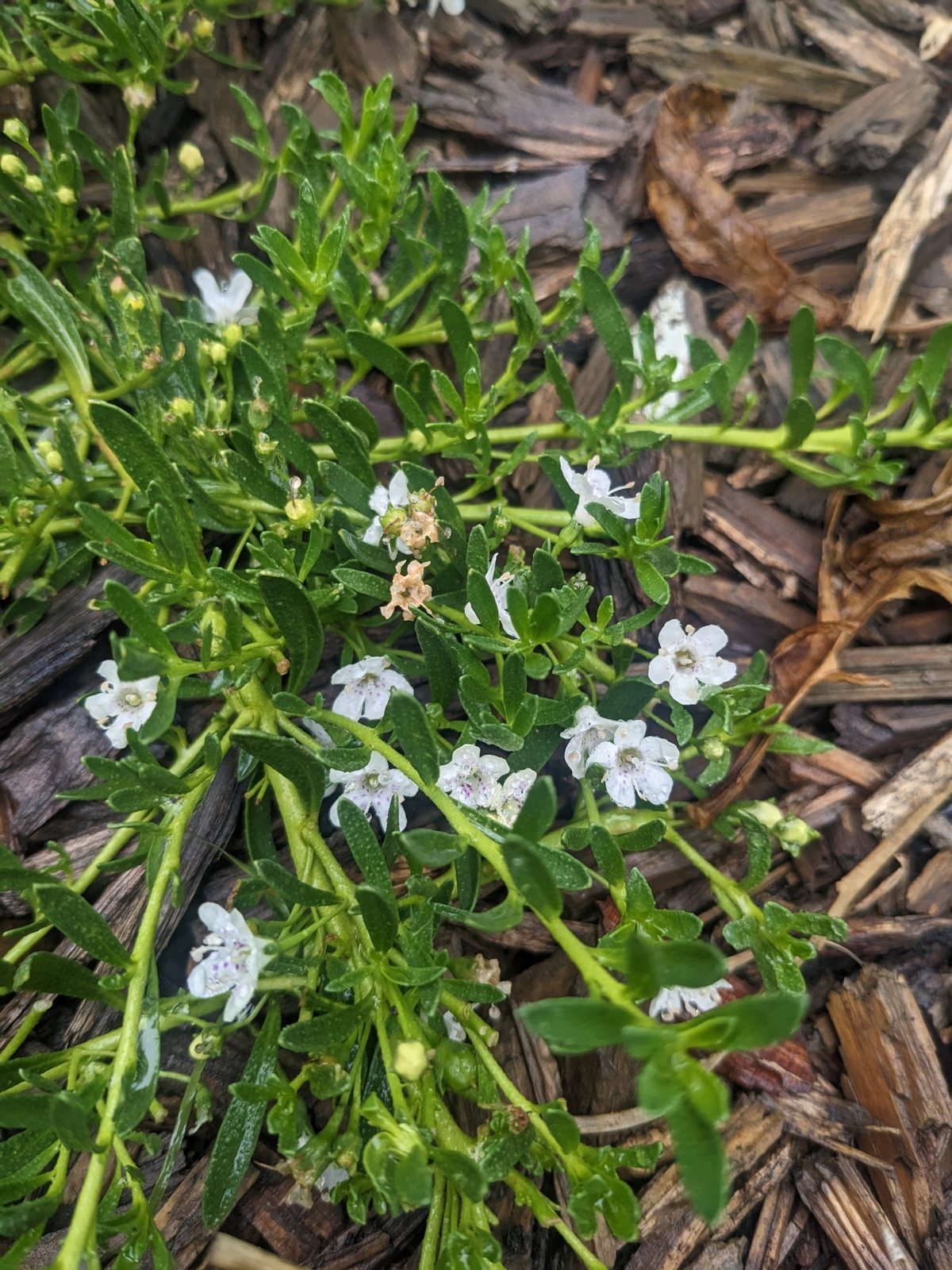
At a glance
- Sun
- Full sun to light partial shade; growth is denser and flowering better in sun.
- Water
- Water regularly while establishing; once rooted, water deeply during prolonged dry spells rather than little and often.
- Soil
- Well-drained sandy, gravelly or loamy soil; tolerates relatively poor soil and coastal conditions but dislikes waterlogged ground.
- Height
- 0.3-1 ft (0.1-0.3 m)
- Spread
- 6-10 ft (1.8-3 m)
- Flowers
- Spring through summer, sometimes into autumn in mild climates; small white flowers, often with purple spotting.
- Foliage
- Evergreen. Small, narrow green leaves on trailing, woody stems; leaf width and shade vary between forms.
- Growth
- Fast in warm weather; stems root where they touch suitable soil.
- Care needed
- Low
The year at a glance
- Pollinators
- Drought tolerant
- Heat tolerant
- Low allergen
| J | F | M | A | M | J | J | A | S | O | N | D | |
|---|---|---|---|---|---|---|---|---|---|---|---|---|
| Flowers | ||||||||||||
| Fruit | ||||||||||||
| Plant |
Northern hemisphere months. In Australia, shift them by six.
- Difficulty
- Moderate
- Toughness
- Fairly tough
Will it suit your garden?
Pick your zone, country, light and whether you have pets.
Full sun is 6 or more hours of direct sun a day, part shade 3 to 6 hours, shade under 3.
How it grows
Planting day
0.2 ft (0.05 m)
After 1 year
0.5 ft (0.14 m)
After 2 years
0.7 ft (0.2 m)
full size
About 2 years to full size.
From a typical nursery size, at an average rate for this kind of plant. A rule of thumb, not a forecast.
Good to know
- Cats and dogs
- Toxic
- Native to
- Australia
- Growth rate
- Fast
Care
Jobs through the year
- WaterApr–May, Sep–Oct, every 14 days
- Locally grow in a movable container; water deeply once the upper soil dries.
- WaterJun–Aug, every 7 days
- Water containers when the root zone begins drying; newly planted specimens need closer checks.
- WaterJan–Mar, Nov–Dec, every 21 days
- Under frost-free cover, keep relatively dry but do not allow the root ball to dry out completely.
- PruneApr–May
- Once new growth shows, remove dead tips and lightly shorten spreading shoots.
- PruneAug–Sep
- Trim encroaching shoots after the main flowering flush; avoid hard cuts into bare old wood.
- ProtectSep–Oct
- Move containers into bright frost-free shelter before frost; winter groundcover use is unsuitable locally.
- ProtectMay–Jun
- Acclimatise to outdoor conditions after frost danger passes.
- Water the root zone regularly through the first growing season, allowing the surface to dry between waterings.
- Plant in freely draining soil; use a raised bed or container where winter ground stays wet.
- Leave room for its mature spread and keep trailing stems out of neighbouring plants.
- Feed lightly in spring only if growth is weak; rich feeding encourages excessive soft growth.
- Keep mulch away from the crown and avoid routine overhead watering.
Pruning. Trim spreading shoots in spring and after flowering to keep plants within bounds and encourage dense growth. Remove dead stems and lightly shorten thin patches rather than cutting the whole plant hard into bare old wood.
Through the year
- Spring
- Plant after the risk of damaging frost has passed and water thoroughly.
- Late spring
- Trim frost-damaged tips once new growth shows which stems are alive.
- Summer
- Check newly planted specimens frequently and water established plants during extended drought.
- Late summer
- Shorten shoots encroaching on paths and take cuttings from healthy non-flowering growth.
- Autumn
- Clear leaves and debris from the mat and check that water drains away from the crown.
- Winter
- Keep container plants on the dry side and move them under frost-free cover in colder regions.
In the garden
- Cover sunny banks with a low evergreen mat that helps protect the soil once established.
- Let stems trail over low retaining walls to soften hard edges.
- Plant beneath widely spaced drought-tolerant shrubs, keeping their crowns clear.
- Use beside gravel paths with lavender and rock roses for contrasting foliage and a low flowering layer.
Garden styles it suits: Australian native, Coastal, Mediterranean, Desert / xeriscape, Dry gravel garden and Low-maintenance.
Plant it with: Lavender, Rock rose, Coastal rosemary, Kangaroo paw, Blue fescue and Lomandra.
Wildlife: Flowers provide nectar and pollen for small insects, including bees. The low mat offers shelter for invertebrates, but it is not a suitable groundcover for regular foot traffic.
Problems to watch for
- Root and crown rot in wet soil: improve drainage, reduce watering and replace badly affected plants in a drier position.
- Myoporum thrips can distort and curl new growth, particularly in affected parts of California: inspect shoot tips, avoid moving infested cuttings and seek local advice before treatment.
- Frost damage can blacken leaves and kill shoots: grow in a sheltered position and wait until spring growth begins before pruning damage.
- Thin or bare patches can develop in heavy shade or ageing mats: improve light, lightly trim surrounding shoots or replace patches with rooted cuttings.
Safety
Myoporum plants can contain liver-damaging toxins, especially in their leaves, and poisoning is a serious concern for grazing livestock, including horses. Species-specific evidence for creeping boobialla in cats, dogs and people is limited, so do not assume the foliage or small fruits are safe to eat; keep it away from grazing animals and seek veterinary or poison-control advice after ingestion.
Easily confused with
Slender myoporum (Myoporum insulare)
Usually forms an upright shrub or small tree with larger, broader leaves rather than a low, fine-leaved carpet.
Ngaio (Myoporum laetum)
Forms a large shrub or tree with much larger, glossy leaves showing conspicuous translucent dots when held to the light.
Creeping mazus (Mazus reptans)
Has rounded, toothed leaves and larger, two-lipped purple or white flowers; it favours moist soil rather than dry, freely drained beds.
The name
The species name parvifolium means 'small-leaved', referring to its foliage.
Propagation. Take softwood or semi-ripe stem cuttings in spring or summer and root them in a free-draining medium. You can also lift and transplant sections where trailing stems have already rooted.
Checked against open data
- Accepted botanical name
- Myoporum parvifolium
- Native range
- New South Wales, South Australia, Tasmania and Victoria.
Sources: GBIF (CC BY 4.0) and Trefle (CC BY 4.0). The care and design notes are LandscapeGPT's own.
See it in your own yard.
Upload a photo of your yard and see it redesigned with plants that suit your climate, each checked against your zone.