Creeping lilyturf
Liriope spicata. Family Asparagaceae. Groundcover.
Also called Creeping liriope, Lilyturf.
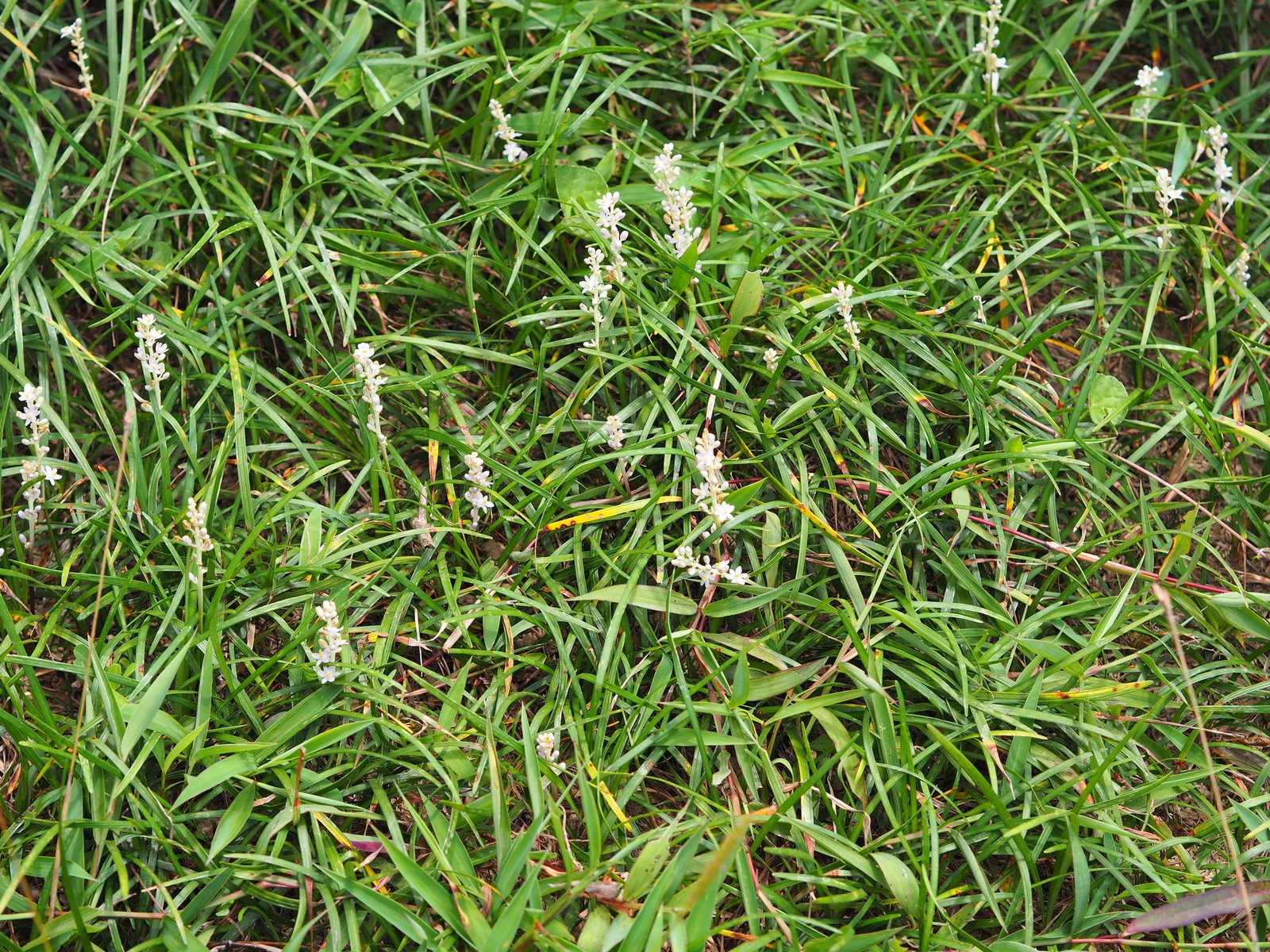
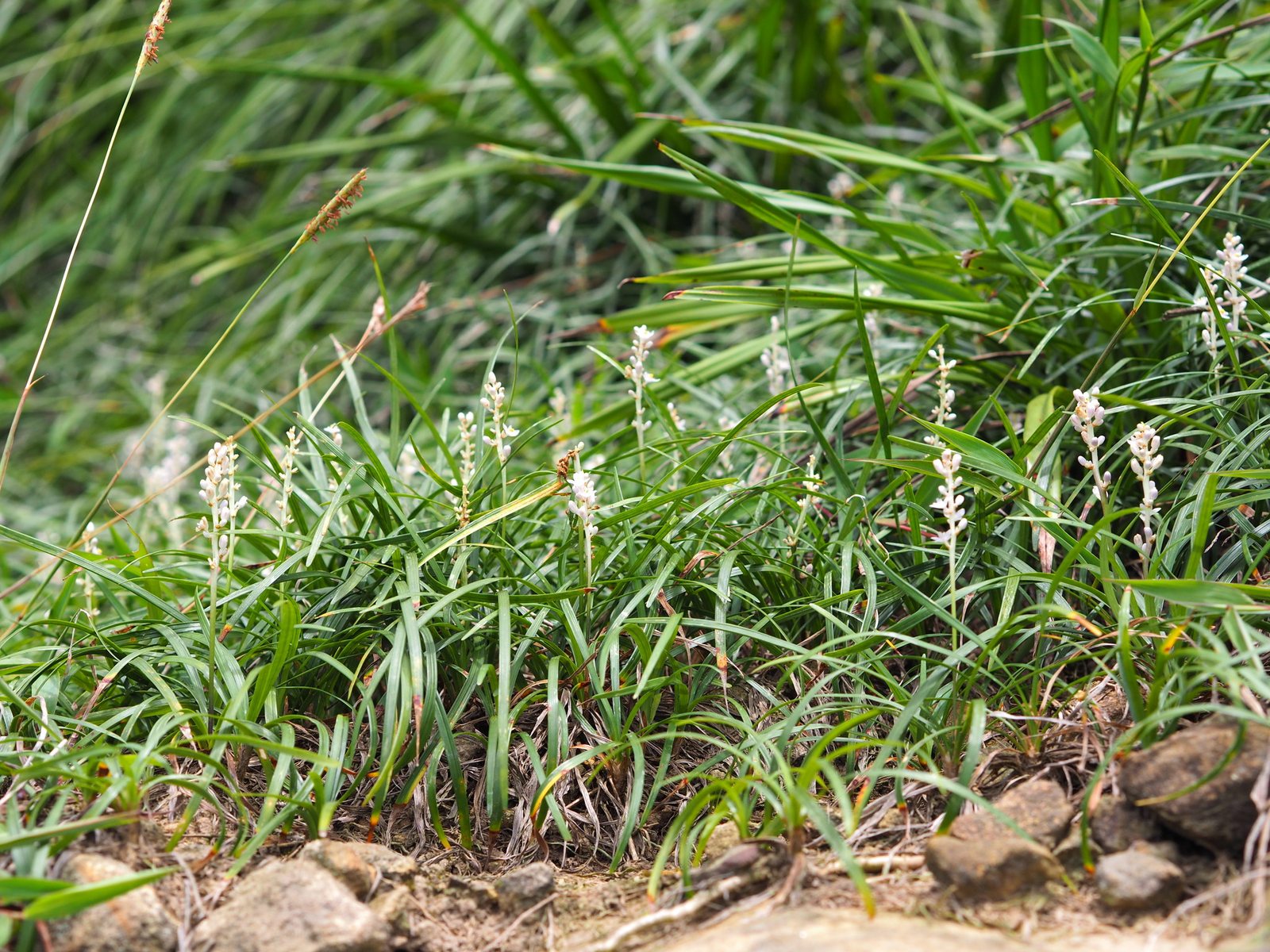
Creeping lilyturf is a grass-like perennial that spreads by underground runners to form dense carpets of narrow leaves. Gardeners grow it for groundcover beneath trees and shrubs, but its vigorous spread makes it unsuitable beside delicate plants or natural woodland.
At a glance
- Sun
- Partial shade is ideal; tolerates deep shade and full sun where the soil stays reasonably moist.
- Water
- Water regularly during establishment. Established plants tolerate short dry spells, but prolonged drought can brown the leaf tips.
- Soil
- Adaptable to clay, loam and sandy soils, provided drainage is adequate; prefers moderately fertile, slightly acidic soil.
- Height
- 0.75-1.5 ft (0.23-0.45 m)
- Spread
- 1-2 ft (0.3-0.6 m) initially; runners form colonies much wider over time.
- Flowers
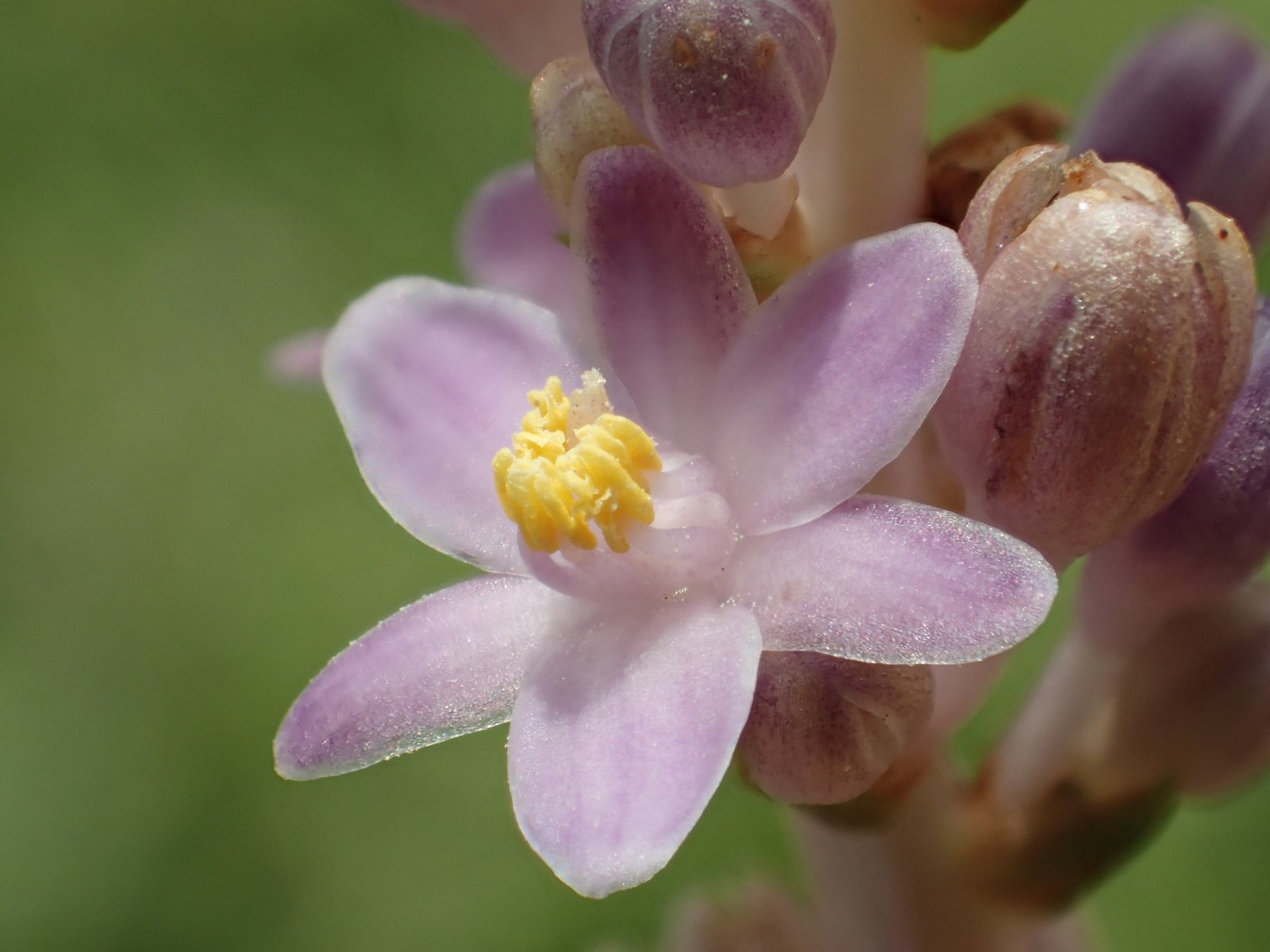
- Summer to early autumn; small pale lilac to nearly white flowers on short spikes, often partly hidden by the leaves, followed by dark berries.
- Foliage
- Narrow, arching, dark green leaves form a dense, grass-like carpet. Evergreen in mild climates, but often partly or fully winter-browned in colder areas.
- Growth
- Fast once established, especially in moist soil.
- Care needed
- Medium
The year at a glance
- Pollinators
- Deer resistant
- Drought tolerant
- Heat tolerant
- Wildlife
- Low allergen
| J | F | M | A | M | J | J | A | S | O | N | D | |
|---|---|---|---|---|---|---|---|---|---|---|---|---|
| Flowers | ||||||||||||
| Fruit | ||||||||||||
| Plant |
Northern hemisphere months. In Australia, shift them by six.
- Difficulty
- Moderate
- Toughness
- Very tough
Will it suit your garden?
Pick your zone, country, light and whether you have pets.
Full sun is 6 or more hours of direct sun a day, part shade 3 to 6 hours, shade under 3.
How it grows
Planting day
0.3 ft (0.09 m)
After 1 year
0.8 ft (0.24 m)
After 2 years
1.1 ft (0.34 m)
full size
About 2 years to full size.
From a typical nursery size, at an average rate for this kind of plant. A rule of thumb, not a forecast.
Good to know
- Cats and dogs
- Safe
- Invasive in
- the US
- In the garden
- Spreads vigorously: plan to contain it.
- Growth rate
- Fast
Care
Jobs through the year
- WaterApr–May, Sep–Oct, every 14 days
- Water established patches only when soil is dry; water new plants whenever the upper soil starts drying.
- WaterJun–Aug, every 10 days
- Water established patches deeply during prolonged drought; new plantings need more frequent watering.
- MulchMar–Apr
- Apply a thin compost dressing; mulch gaps between new plants without covering crowns.
- PruneFeb–Mar
- Cut damaged old leaves to 5–8 cm before new shoots emerge; retain healthy foliage.
- DivideMar–Apr
- Divide crowded patches and water replanted sections thoroughly.
- PruneApr–Sep, every 30 days
- Check boundaries and dig out escaping runners with their attached roots.
- DeadheadSep
- Remove spikes with developing berries if seed spread is a concern.
- ProtectNov
- Clear heavy fallen-leaf accumulations so crowns are not smothered.
- Water through the first growing season whenever the upper soil starts to dry.
- Apply a thin layer of compost in spring; routine heavy feeding is unnecessary.
- Mulch between new plants, keeping mulch away from their crowns.
- Inspect bed edges during the growing season and dig out runners before they reach neighbouring plants.
- Divide crowded patches in spring, replanting healthy sections and watering them in.
Pruning. In late winter or early spring, cut winter-damaged leaves back to about 2-3 in (5-8 cm) above the ground before new shoots emerge. Leave healthy foliage intact and avoid cutting the fresh growth.
Through the year
- Late winter
- Remove battered foliage before new leaves begin growing.
- Spring
- Plant or divide clumps, water thoroughly and apply a thin compost dressing.
- Late spring
- Check boundaries and dig out runners escaping into adjacent beds.
- Summer
- Water new plantings during dry weather and check for slugs around young shoots.
- Early autumn
- Remove unwanted offsets and flower spikes with developing berries where spread is a concern.
- Late autumn
- Clear heavy accumulations of fallen leaves so the crowns are not smothered.
In the garden
- Mass beneath established trees and shrubs for a continuous green ground layer, where its spread can be contained.
- Use beside paved paths with a firm boundary to create a low, arching edge.
- Cover shaded banks away from natural habitats, allowing the runners to knit the planting together.
- Contrast its narrow leaves with broad-leaved hostas and bold evergreen shrubs.
Garden styles it suits: Woodland, Japanese, Modern, Traditional, Southern and Green on green.
Plant it with: Hostas, Autumn ferns, Cast-iron plants, Camellias, Azaleas and Hellebores.
Wildlife: Flowers attract some bees and other small pollinators, and birds may eat the berries. Dense colonies can displace more valuable native woodland plants where the species escapes.
Problems to watch for
- Unwanted spread: dig out runners and their attached roots repeatedly; use a deep barrier or choose a less spreading plant for small mixed borders.
- Crown and root rot in wet soil: improve drainage, reduce irrigation and remove badly rotted plants.
- Leaf spots or anthracnose: remove affected foliage, avoid overhead watering and improve airflow.
- Slugs and snails on young growth: remove hiding places, hand-pick after dark or use a labelled iron-phosphate bait.
Safety
Not known to be toxic to cats, dogs, horses or people. Neither the leaves nor berries should be treated as food; eating plant material may cause digestive upset.
Where it spreads. Spreads aggressively by underground runners even within gardens. It is reported invasive in parts of the southeastern United States, including Virginia, North Carolina, Tennessee and Georgia. Avoid planting near woodland or waterways there, and check local invasive-plant guidance before planting.
Easily confused with
Big blue lilyturf (Liriope muscari)
Usually forms distinct clumps rather than a rapidly running carpet; leaves are generally broader and the purple flower spikes more conspicuous.
Mondo grass (Ophiopogon japonicus)
Usually has finer leaves, small flowers tucked low within the foliage and blue rather than nearly black berries.
Japanese sedge (Carex morrowii)
Produces inconspicuous brownish sedge flowers rather than lilac lily-like flower spikes, and does not develop dark fleshy berries.
The name
The species name spicata means spike-bearing, referring to the flower spikes, while creeping describes its spreading underground runners.
Propagation. Divide in spring, cutting rooted sections from the edge of a colony and replanting at the same depth. Remove unwanted runners completely rather than putting live pieces in garden waste that could reach natural areas.
Checked against open data
- Accepted botanical name
- Liriope spicata
- In the US and Canada
- Introduced in the lower 48 states.
- Native range
- Cambodia, China North-Central, China South-Central, China Southeast, Hainan, Japan, Korea, Nansei-shoto, Taiwan and Vietnam.
- Measured
- Soil pH 5 to 7. Average height 30 cm.
Sources: GBIF (CC BY 4.0), USDA PLANTS and Trefle (CC BY 4.0). The care and design notes are LandscapeGPT's own.
See it in your own yard.
Upload a photo of your yard and see it redesigned with plants that suit your climate, each checked against your zone.