Crimson Queen laceleaf maple
Acer palmatum 'Crimson Queen'. Family Sapindaceae. Tree.
Also called Crimson Queen Japanese maple, Crimson Queen dissected Japanese maple.
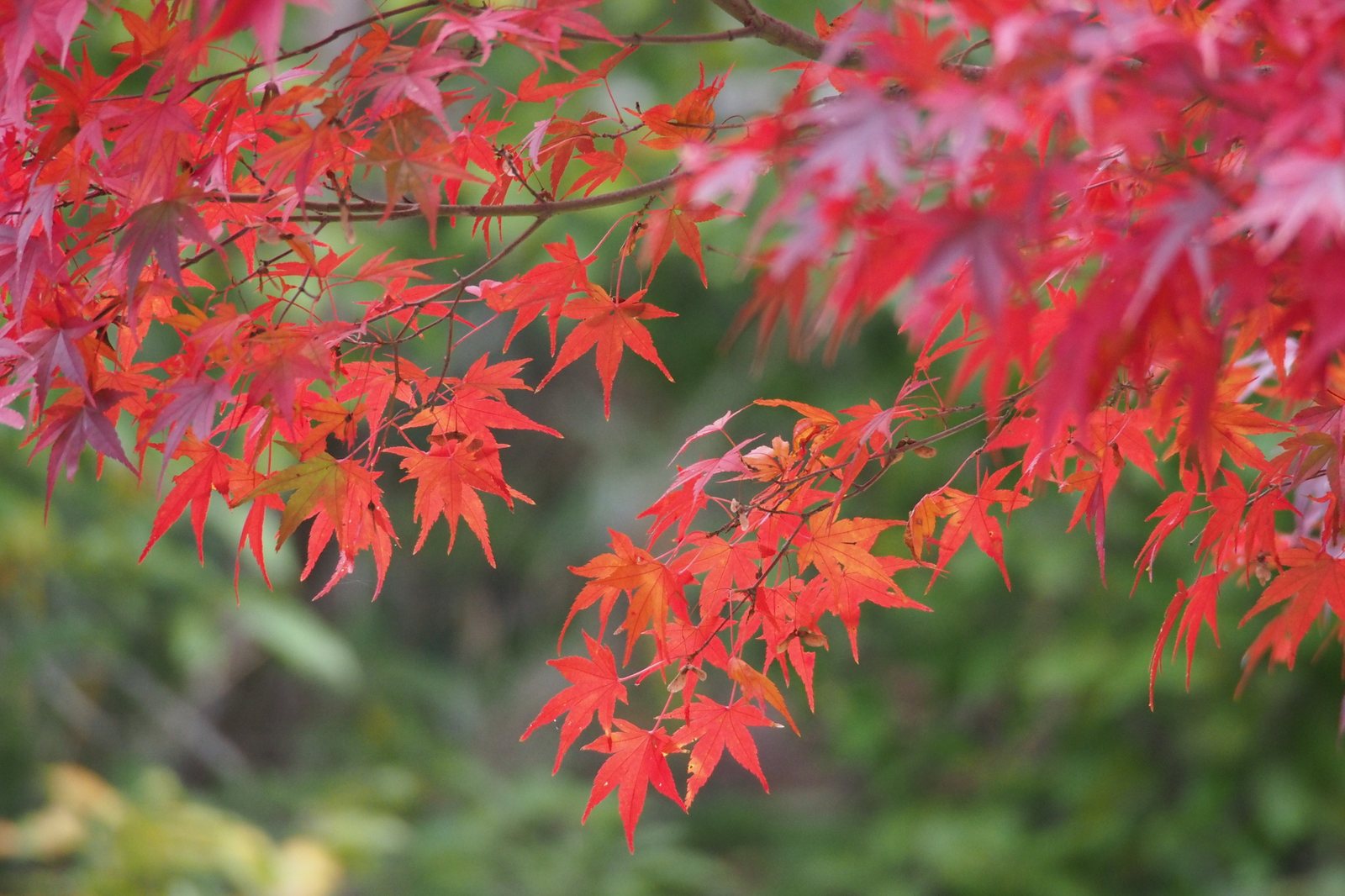
A small, slow-growing deciduous Japanese maple with finely divided burgundy leaves and cascading branches that form a broad mound. Gardeners grow it for its delicate texture, sculptural shape and bright crimson autumn colour.
At a glance
- Sun
- Morning sun and afternoon shade, or light dappled shade. More sun is suitable in cool climates if the soil stays moist; protect from hot afternoon sun and drying winds.
- Water
- Keep the root zone evenly moist but not waterlogged. Water deeply during dry spells, especially during the first two growing seasons and when grown in a container.
- Soil
- Moist, well-drained soil rich in organic matter, preferably slightly acidic. Avoid waterlogged ground and shallow, drought-prone soil.
- Height
- 6-10 ft (1.8-3 m), sometimes taller with age
- Spread
- 8-12 ft (2.4-3.7 m)
- Foliage
- Deeply cut, lace-like leaves emerge crimson, remain burgundy through much of summer and turn scarlet in autumn. Summer colour can become greener in heavy shade.
- Growth
- Slow; usually takes many years to develop its mature spread.
- Care needed
- Medium
The year at a glance
- Wildlife
| J | F | M | A | M | J | J | A | S | O | N | D | |
|---|---|---|---|---|---|---|---|---|---|---|---|---|
| Plant |
Northern hemisphere months. In Australia, shift them by six.
- Difficulty
- Moderate
- Toughness
- Needs looking after
Will it suit your garden?
Pick your zone, country, light and whether you have pets.
Full sun is 6 or more hours of direct sun a day, part shade 3 to 6 hours, shade under 3.
How it grows
Planting day
7 ft (2 m)
After 1 year
7 ft (2 m)
After 2 years
7 ft (2 m)
After 3 years
7 ft (2 m)
After 5 years
7 ft (2.1 m)
About 32 years to full size.
From a typical nursery size, at an average rate for this kind of plant. A rule of thumb, not a forecast.
Good to know
- Cats and dogs
- Safe
- Invasive in
- the US
- Growth rate
- Slow
Care
Jobs through the year
- WaterApr–May, Sep–Oct, every 7 days
- Water established trees deeply if the upper soil is drying; young trees need closer monitoring.
- WaterJun–Aug, every 5 days
- During dry weather, water established trees deeply to maintain even moisture without waterlogging.
- MulchApr
- Refresh organic mulch to 5–8 cm deep, keeping the trunk and root flare clear.
- FeedApr
- Feed lightly only if soil is poor or growth is weak; avoid heavy nitrogen feeding.
- ProtectMar–May
- Cover emerging leaves with horticultural fleece when late frost is forecast.
- ProtectJun–Aug
- Provide temporary afternoon shade or wind shelter during hot, drying weather.
- PruneAug–Sep
- Make only small cuts to remove dead, damaged or crossing branches; preserve the cascading outline.
- Plant with the root flare at soil level and leave enough room for the branches to spread naturally.
- Water deeply when the upper soil begins to dry; check containers more often during warm or windy weather.
- Apply 2-3 in (5-8 cm) of organic mulch over the root zone, keeping it clear of the trunk.
- Feed lightly in spring only if growth is weak or the soil is poor; avoid heavy nitrogen feeding.
- Shelter young leaves from drying winds, late frost and strong afternoon sun.
- Use a broad container with drainage holes if growing in a pot; protect the root ball from severe winter freezing.
Pruning. Prune sparingly in late summer, removing dead, damaged or crossing growth and making small cuts back to a branch junction. Preserve the cascading framework; avoid shearing and heavy spring pruning, when cuts can bleed sap.
Through the year
- Spring
- Check soil moisture as leaves emerge and protect tender growth if a late frost is forecast.
- Mid-spring
- Refresh the mulch, keeping it away from the trunk; feed lightly only if needed.
- Summer
- Water deeply during dry weather and check container plants frequently.
- Late summer
- Remove small dead, damaged or crossing branches without changing the natural outline.
- Autumn
- Plant while the soil is workable, allowing space for the mature canopy.
- Winter
- Protect container roots from prolonged freezing and check that drainage holes remain clear.
In the garden
- Use as a specimen beside a path or patio where its finely cut leaves can be seen closely.
- Place above a low retaining wall so the cascading branches soften the edge.
- Combine with green ferns, hostas and sedges for contrasting colour and leaf texture.
- Grow in a large container in a sheltered courtyard, allowing room for its broad canopy.
- Set beside stones or a pond in a Japanese-style garden, keeping roots out of saturated ground.
Garden styles it suits: Japanese, Japandi, Modern courtyard, Woodland, Autumn colour and Small-space.
Plant it with: Hostas, Japanese painted fern, Japanese forest grass, Epimediums, Hellebores and Japanese sedges.
Wildlife: Small flowers provide some food for insects, and the branching canopy offers shelter for small birds. It is not a substitute for locally native trees where wildlife support is the main aim.
Problems to watch for
- Leaf scorch: brown, crisp leaf edges usually follow drought, drying wind or excessive heat. Water deeply, mulch and provide afternoon shade; damaged leaves will not recover.
- Verticillium wilt: sudden wilting or dieback of individual branches needs diagnosis. Remove affected branches and avoid drought stress; there is no reliable chemical cure.
- Root rot: persistent wet soil can cause poor growth, wilting and root decay. Improve drainage and avoid overwatering; severely affected trees may need replacing.
- Scale insects: inspect twigs for fixed bumps, sticky honeydew or sooty mould. Prune out small infestations and use a labelled horticultural oil at the appropriate stage if necessary.
Safety
Not known to be toxic to cats, dogs or people. Acer palmatum is not established as a cause of maple poisoning in horses, but horse-specific safety information is limited; do not deliberately feed its leaves or prunings to horses.
Where it spreads. The species can escape by seed in parts of the eastern United States, particularly the Mid-Atlantic. 'Crimson Queen' is not generally an aggressive spreader, but remove unwanted seedlings near natural woodland.
Easily confused with
Inaba-shidare Japanese maple (Acer palmatum 'Inaba-shidare')
Also has dissected red leaves, but typically develops a more upright framework and a taller, less flattened outline.
Tamukeyama Japanese maple (Acer palmatum 'Tamukeyama')
Has a similar cascading habit but often shows darker purple-red foliage. The two can be difficult to distinguish reliably without a cultivar label.
Garnet Japanese maple (Acer palmatum 'Garnet')
Usually has warmer garnet-red foliage and somewhat larger leaf segments; colour varies with light and climate, so appearance alone is not conclusive.
The name
Palmatum refers to the hand-like arrangement of the leaf lobes, while laceleaf describes their finely divided appearance.
Propagation. Usually propagated by grafting onto Japanese maple rootstock to preserve the cultivar. Seedlings will not reliably retain its colour or weeping habit; grafting is specialist work.
Checked against open data
- Accepted botanical name
- Acer palmatum
- In the US and Canada
- Introduced in Canada and the lower 48 states.
- Native range
- Japan and Korea.
- Measured
- Soil pH 6.5 to 7. Average height 700 cm.
Sources: GBIF (CC BY 4.0), USDA PLANTS and Trefle (CC BY 4.0). The care and design notes are LandscapeGPT's own.
See it in your own yard.
Upload a photo of your yard and see it redesigned with plants that suit your climate, each checked against your zone.