Crinum lily
Crinum asiaticum. Family Amaryllidaceae. Bulb.
Also called Giant crinum, Giant spider lily, Poison bulb.
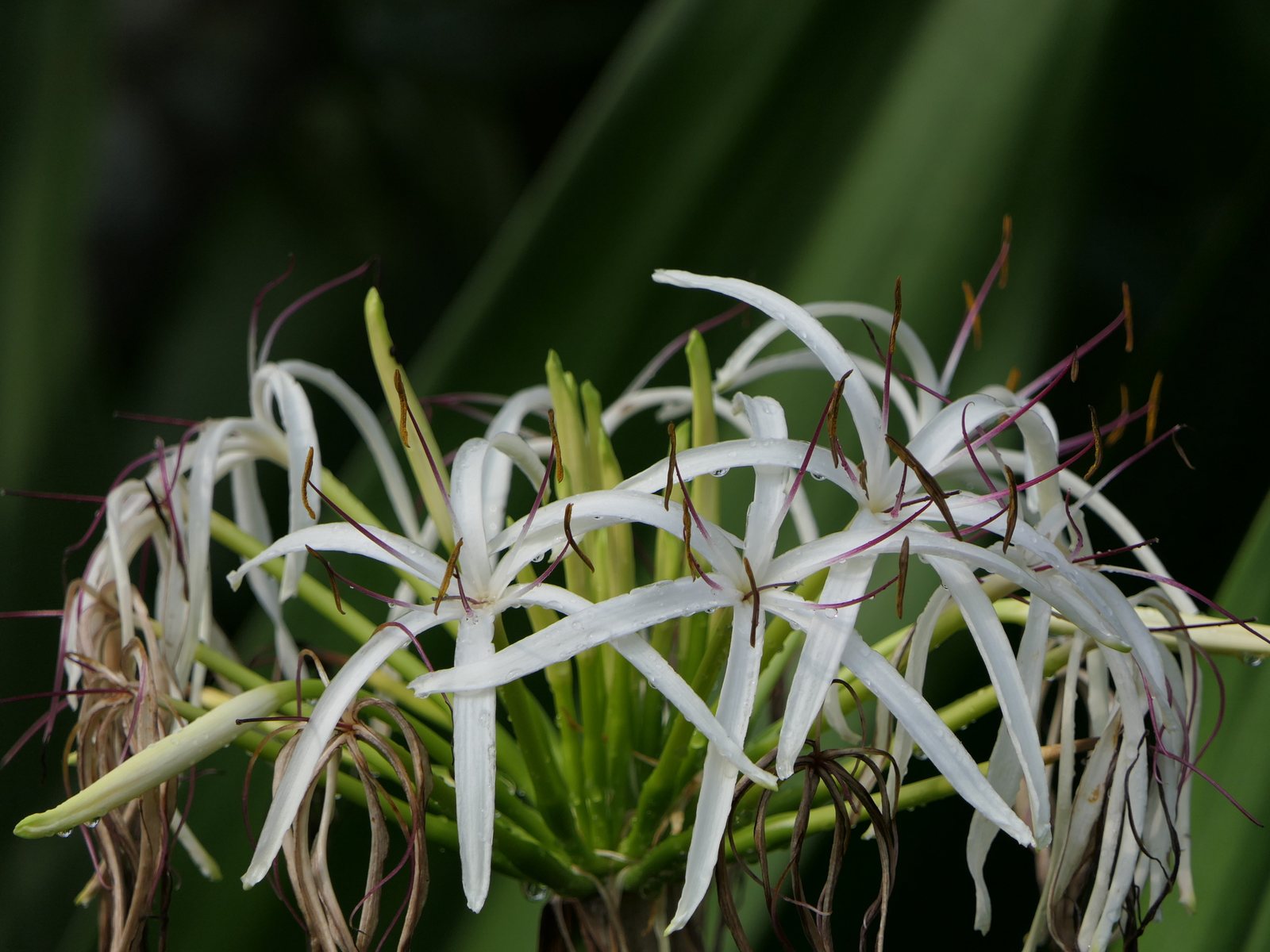
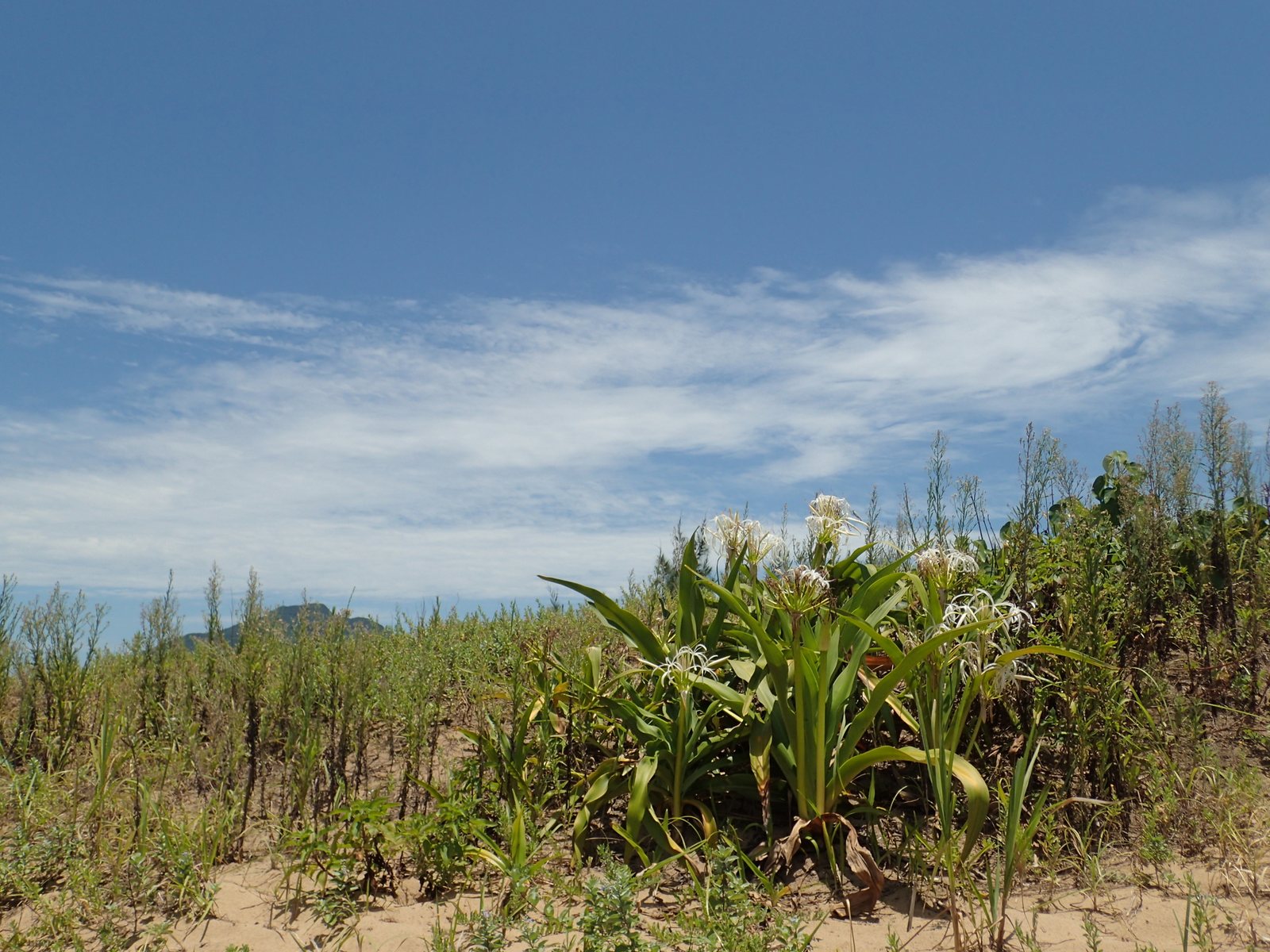
Crinum lily is a large, clump-forming tropical bulb with broad, arching leaves and clusters of fragrant, white, spider-like flowers. Gardeners grow it for bold foliage and summer flowers in warm gardens, or in large containers overwintered under cover in colder climates.
At a glance
- Sun
- Full sun to partial shade; light afternoon shade helps in very hot, dry sites.
- Water
- Water regularly during active growth, allowing the surface soil to dry slightly between waterings. Established plants tolerate short dry spells, but flower better with consistent moisture.
- Soil
- Fertile, moisture-retentive but well-drained soil; avoid cold, waterlogged ground.
- Height
- 4-6 ft (1.2-1.8 m)
- Spread
- 3-5 ft (0.9-1.5 m), widening as offsets develop
- Flowers
- Summer into autumn, with intermittent flowering over a longer season in tropical climates; fragrant white flowers with narrow, spreading petals.
- Foliage
- Evergreen. Large rosettes of broad, glossy green, strap-shaped leaves with arching tips.
- Growth
- Moderate
- Care needed
- Low
The year at a glance
- Pollinators
- Heat tolerant
- Low allergen
- Fragrant
| J | F | M | A | M | J | J | A | S | O | N | D | |
|---|---|---|---|---|---|---|---|---|---|---|---|---|
| Flowers | ||||||||||||
| Plant |
Northern hemisphere months. In Australia, shift them by six.
- Difficulty
- Moderate
- Toughness
- Fairly tough
Will it suit your garden?
Pick your zone, country, light and whether you have pets.
Full sun is 6 or more hours of direct sun a day, part shade 3 to 6 hours, shade under 3.
How it grows
Planting day
0.6 ft (0.18 m)
After 1 year
5 ft (1.5 m)
full size
About 1 years to full size.
From a typical nursery size, at an average rate for this kind of plant. A rule of thumb, not a forecast.
Good to know
- Cats and dogs
- Toxic
- Native to
- Australia
- Growth rate
- Moderate
Care
Jobs through the year
- WaterApr–May, Sep–Oct, every 7 days
- Water active plants when the surface dries slightly; use a movable pot in this climate.
- WaterJun–Aug, every 5 days
- Water deeply when drying; container plants need more frequent checks in hot weather.
- WaterJan–Mar, Nov–Dec, every 21 days
- In frost-free shelter, water sparingly without letting the root ball dry completely.
- FeedApr–May
- Apply balanced slow-release fertiliser once as spring growth starts, following the label.
- MulchMay
- Refresh a light mulch around roots without covering the bulb neck.
- DeadheadJul–Oct, every 14 days
- Cut spent flower stalks near the base unless saving seed.
- PruneApr–May
- Remove dead or damaged leaves at the base; retain healthy green foliage.
- DivideMay
- Divide only severely crowded clumps; undisturbed plants flower best.
- ProtectSep–Oct
- Move containers into bright frost-free shelter before frost; mulch alone is insufficient locally.
- ProtectMay–Jun
- Return plants outdoors gradually after frost risk has passed.
- Plant with the bulb's neck at or just above soil level, leaving room for the clump to widen.
- Water deeply during active growth, but do not leave container plants standing in saucers of water.
- Apply a balanced, slow-release fertiliser in spring according to the label.
- Mulch around the roots without covering the bulb's neck.
- In frost-prone areas, move container plants into a bright, frost-free place before cold weather and reduce watering.
- Divide only when necessary; established clumps flower best when left undisturbed.
Pruning. Remove yellow or frost-damaged leaves at the base once they have died back. Cut spent flower stalks near their base unless you want seed, and leave healthy green leaves intact.
Through the year
- Spring
- Plant bulbs or repot crowded container plants once frost risk has passed and temperatures are rising.
- Spring
- Apply fertiliser and refresh mulch, keeping the bulb's neck clear.
- Summer
- Water during dry spells and inspect leaf bases for chewing pests.
- Late summer
- Remove spent flower stalks and retain healthy foliage.
- Autumn
- Move containers under cover before frost where the plant cannot overwinter outdoors.
- Winter
- Keep sheltered plants frost-free and water sparingly, without allowing the root ball to become completely dry.
In the garden
- Use a single mature clump as an architectural focal point beside a warm patio.
- Plant behind lower foliage plants in a tropical border to create contrasting leaf sizes.
- Grow in a large, stable container near seating where the flower fragrance can be enjoyed.
- Use in sheltered coastal gardens, set back from the most exposed salt spray.
Garden styles it suits: Modern tropical, Architectural minimal, Coastal, Luxury resort, White garden and Moon garden.
Plant it with: Canna, Elephant's ear, Ginger lily, Cast-iron plant and Liriope.
Wildlife: The fragrant flowers can attract moths and other nectar-feeding insects. It is not a substitute for locally native plants that support specialist wildlife.
Problems to watch for
- Bulb rot in cold, wet soil: improve drainage, keep the bulb's neck exposed and reduce winter watering.
- Frost-scorched leaves: shelter plants from freezing weather; remove dead foliage after the risk of further frost has passed.
- Lily caterpillar in Australia: inspect for striped caterpillars and damaged leaf bases, remove larvae promptly and use a locally approved caterpillar treatment if needed.
- Poor flowering after division or in deep shade: leave the clump undisturbed, provide more light and avoid excessive nitrogen feeding.
Safety
Toxic to people, cats, dogs and horses if eaten. All parts contain poisonous alkaloids, especially the bulb; ingestion can cause vomiting, diarrhoea and potentially serious poisoning. Keep bulbs away from children and animals, and seek medical or veterinary advice promptly after ingestion. Sap may irritate skin.
Easily confused with
Beach spider lily (Hymenocallis littoralis)
Its white flowers have a conspicuous central membranous cup joining the stamens; Crinum asiaticum has separate, exposed stamens without that cup.
Queen Emma lily (Crinum asiaticum 'Queen Emma')
This cultivated form of the same species has bronze-purple foliage and pink-flushed flowers rather than the usual green leaves and white flowers.
The name
Crinum comes from the Greek krinon, meaning lily, and asiaticum refers to the plant's Asian origin.
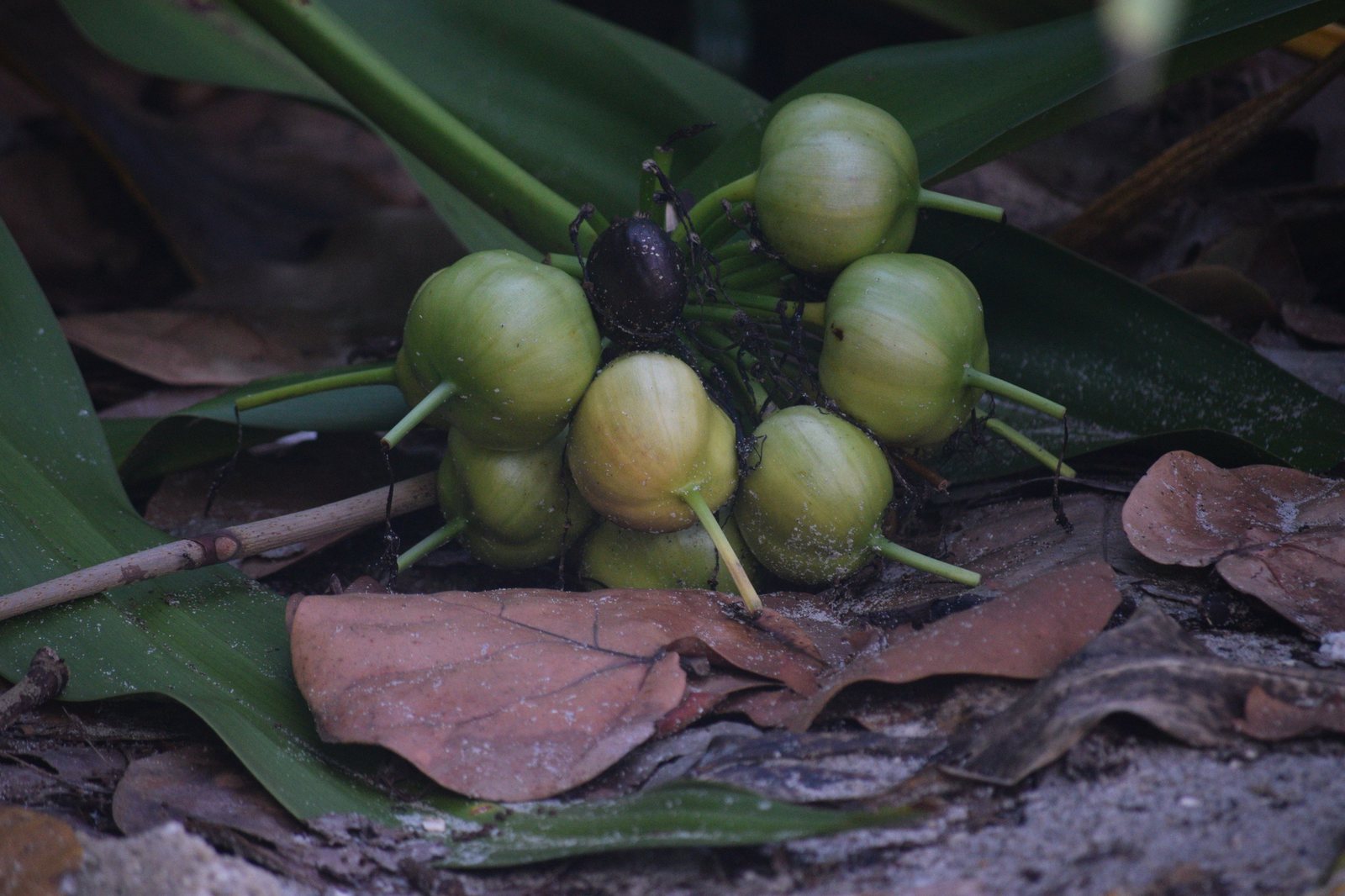
Propagation. Separate well-rooted offsets in spring or early summer, keeping as many roots intact as possible. Fresh seed can also be sown in warmth, but seedlings take several years to reach flowering size.
Checked against open data
- Accepted botanical name
- Crinum asiaticum
- In the US and Canada
- Native in Pacific Basin. Introduced in the lower 48 states and Pacific Basin.
- Native range
- Andaman Is., Assam, Bangladesh, Bismarck Archipelago, Borneo, Cambodia, China Southeast, Christmas I., Cocos (Keeling) Is., Fiji, Gilbert Is. and India.
Sources: GBIF (CC BY 4.0), USDA PLANTS and Trefle (CC BY 4.0). The care and design notes are LandscapeGPT's own.
See it in your own yard.
Upload a photo of your yard and see it redesigned with plants that suit your climate, each checked against your zone.