Crossvine
Bignonia capreolata. Family Bignoniaceae. Climber.
Also called Cross vine, Trumpet flower.
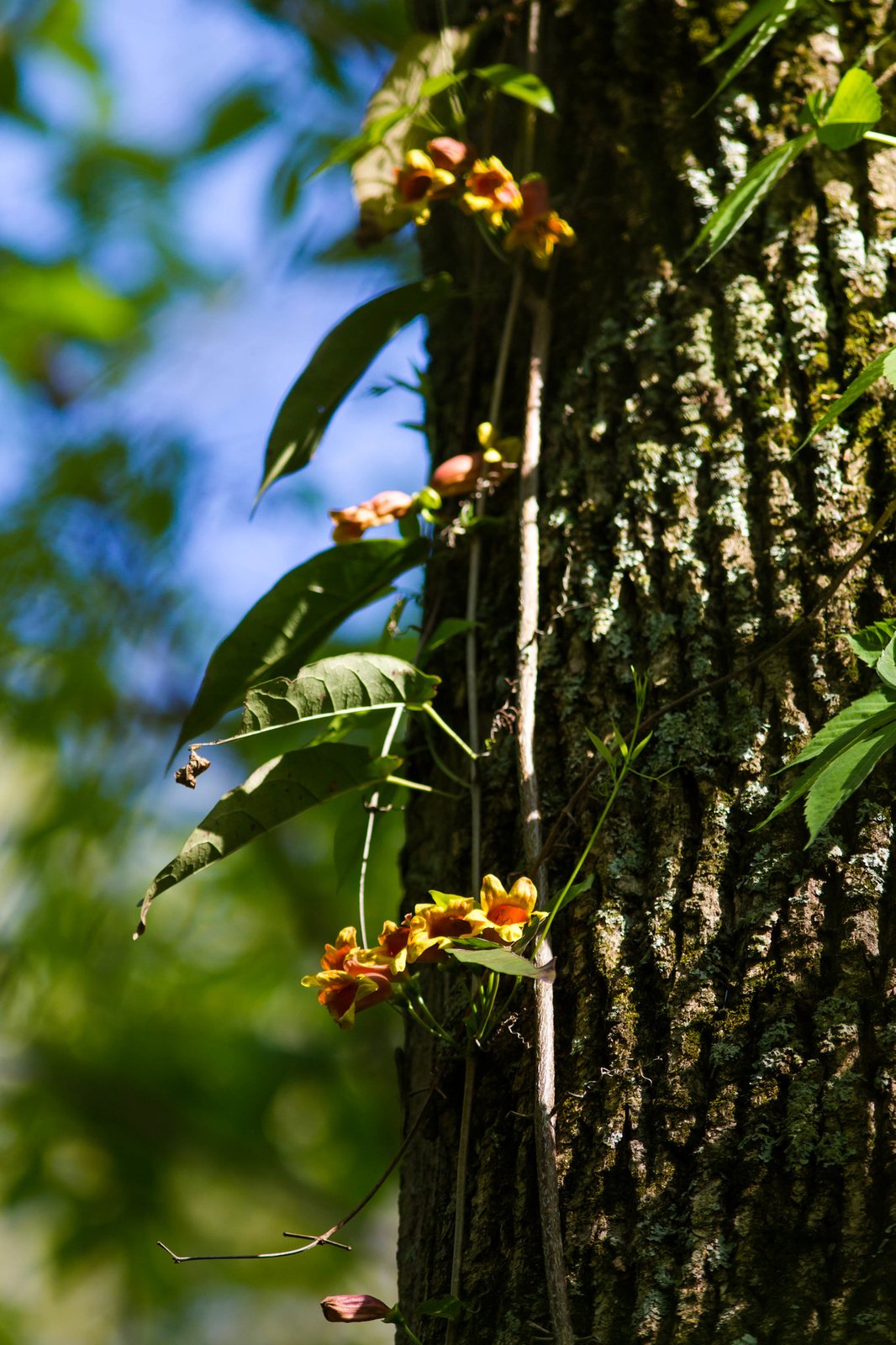
Crossvine is a vigorous woody climber native to the southeastern and south-central United States, grown for its spring display of trumpet-shaped flowers. Its tendrils grip supports with adhesive tips, making it useful for covering substantial fences, trellises and arbors. It keeps most of its leaves in mild winters but may become deciduous in colder gardens.
At a glance
- Sun
- Full sun to partial shade; flowering is heaviest in full sun. In cool climates, choose a warm, sheltered position.
- Water
- Water regularly while establishing; once established, it tolerates short dry spells but flowers best with moderate moisture.
- Soil
- Moist, well-drained soil with some organic matter; tolerates clay, sandy soil and a fairly broad pH range.
- Height
- 30-50 ft (9-15 m)
- Spread
- 6-9 ft (1.8-2.7 m), wider if allowed to spread across supports
- Flowers
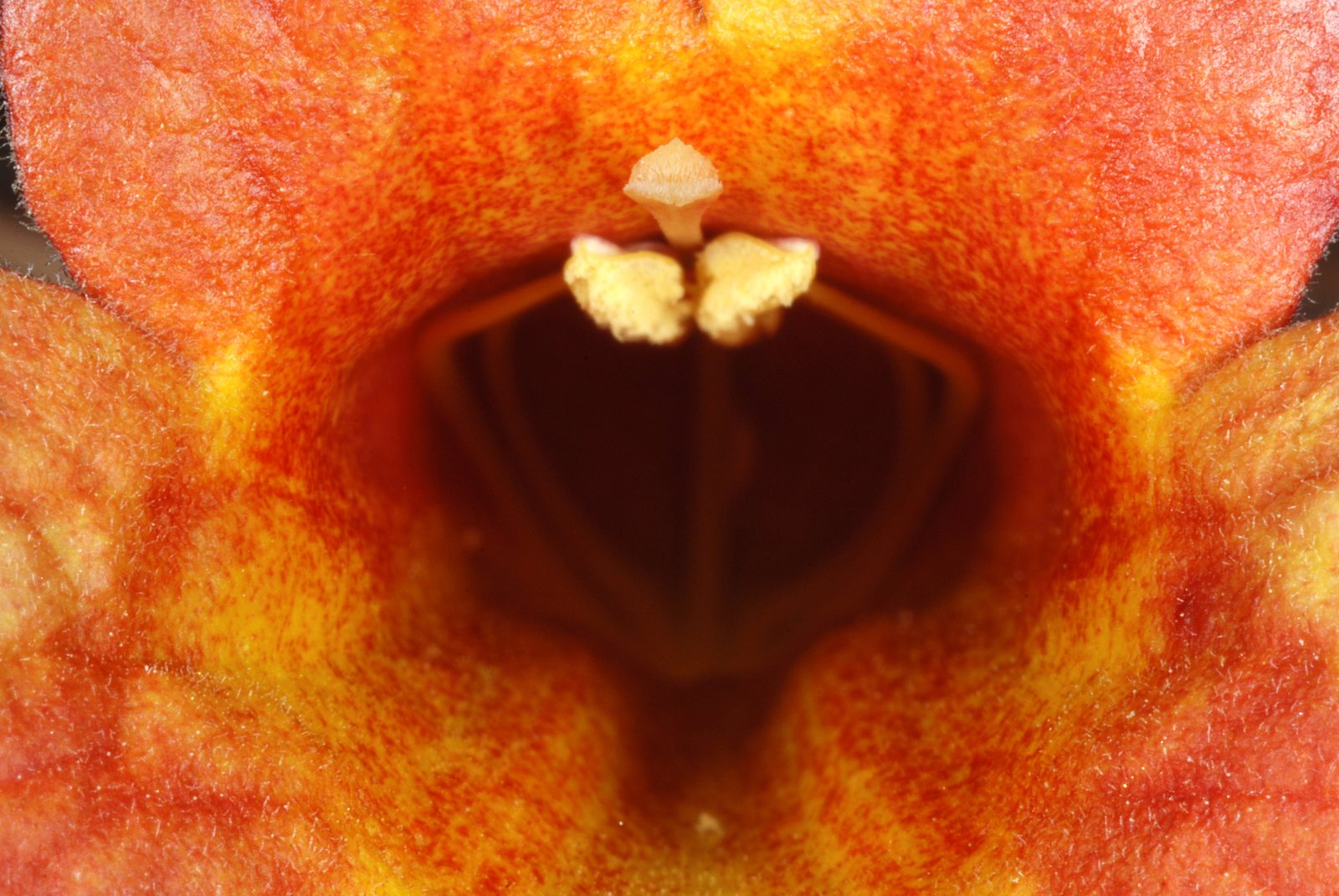
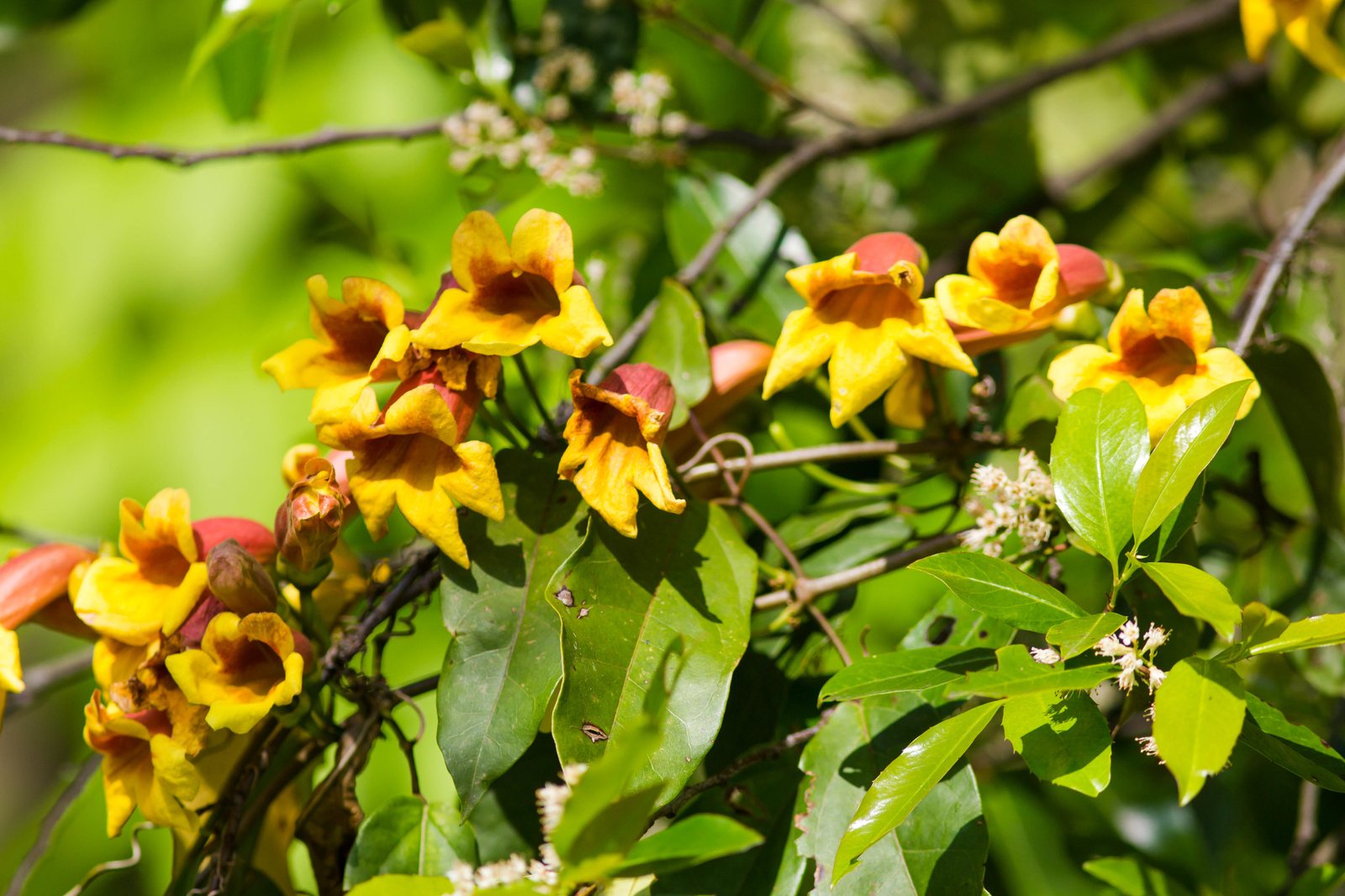
- Spring to early summer: orange-red trumpets, usually with yellow throats; occasional scattered flowers later.
- Foliage
- Evergreen. Opposite leaves with two glossy green leaflets and a branching tendril between them; leaves often turn bronze-purple in winter.
- Growth
- Fast once established
- Care needed
- Medium
The year at a glance
- Pollinators
- Drought tolerant
- Heat tolerant
- Wildlife
- Low allergen
| J | F | M | A | M | J | J | A | S | O | N | D | |
|---|---|---|---|---|---|---|---|---|---|---|---|---|
| Flowers | ||||||||||||
| Plant |
Northern hemisphere months. In Australia, shift them by six.
- Difficulty
- Moderate
- Toughness
- Very tough
Will it suit your garden?
Pick your zone, country, light and whether you have pets.
Full sun is 6 or more hours of direct sun a day, part shade 3 to 6 hours, shade under 3.
How it grows
Planting day
2 ft (0.6 m)
After 1 year
3 ft (1.1 m)
After 2 years
5 ft (1.5 m)
After 3 years
6 ft (1.8 m)
full size
About 3 years to full size.
From a typical nursery size, at an average rate for this kind of plant. A rule of thumb, not a forecast.
Good to know
- Cats and dogs
- Safe
- Native to
- the US
- In the garden
- Spreads vigorously: plan to contain it.
- Growth rate
- Fast
Care
Jobs through the year
- WaterApr–May, Sep–Oct, every 14 days
- Water established vines deeply if soil is dry; water young plants more often.
- WaterJun–Aug, every 7 days
- Water deeply during dry spells; skip when rainfall keeps roots moist.
- MulchMar–Apr
- Apply 5–8 cm of organic mulch, keeping stems clear.
- FeedApr
- Feed lightly only if growth is weak; avoid excess nitrogen.
- PruneMay–Jun
- Shorten overlong shoots immediately after the main flowering flush.
- PruneJun–Sep, every 30 days
- Remove suckers and shoots entering gutters, roofs or neighboring plants.
- ProtectJan–Feb, Nov–Dec
- Check ties and supports after storms; shelter exposed young vines from cold winds.
- Provide a strong arbor, trellis or fence before planting, and guide young shoots onto it.
- Water deeply during dry spells in the first growing season; avoid leaving the roots waterlogged.
- Apply a 2-3 in (5-8 cm) organic mulch, keeping it clear of the main stems.
- Feed lightly in spring only if growth is weak; excess nitrogen encourages leaves rather than flowers.
- Remove unwanted root suckers and keep shoots away from gutters, roof spaces and damaged masonry.
Pruning. Prune immediately after the main spring flowering, shortening overlong shoots and removing unwanted or crowded stems. Avoid routine late-winter pruning, which removes flowering growth; cut out frost-killed wood once new growth shows what has survived.
Through the year
- Early spring
- Check supports, renew mulch and plant container-grown vines once the soil is workable and severe frost has passed.
- Spring
- Guide new shoots onto their support and water new plants during dry weather.
- Late spring
- After the main flowering flush, shorten shoots that have outgrown their space.
- Summer
- Remove unwanted suckers and keep growth clear of gutters and neighboring plants.
- Autumn
- In mild climates, plant while the soil is still warm and water until established.
- Winter
- Check ties and supports after storms; leave major pruning until after flowering.
In the garden
- Train over a sturdy arbor or pergola for spring flowers and seasonal screening.
- Cover a substantial fence to create a leafy boundary without planting a wide hedge.
- Grow on a freestanding trellis behind lower shrubs and perennials, keeping the vigorous stems out of their crowns.
- Use in a southeastern US native planting with woodland-edge shrubs and hummingbird flowers.
Garden styles it suits: Southern, Woodland, Wildlife garden, Pollinator garden, Cottage garden and Traditional.
Plant it with: Virginia sweetspire, Oakleaf hydrangea, Beautyberry, Coral bells, Woodland phlox and Christmas fern.
Wildlife: The flowers provide nectar for hummingbirds in its native range and are visited by bees. Dense growth offers shelter for small birds.
Problems to watch for
- Few flowers: increase sunlight where possible, avoid high-nitrogen fertilizer and prune only after flowering.
- Leaf spots: remove badly affected fallen leaves, improve airflow and water at soil level; minor spotting rarely needs treatment.
- Winter dieback: use a sheltered site near the colder end of its range and remove dead stems after growth resumes.
- Unwanted spread: pull or dig out root suckers promptly and prune shoots before they enter roofs or neighboring plants.
Safety
Not known to be toxic to people, cats, dogs or horses. Reliable information on ingestion of individual plant parts is limited, so do not treat the flowers, leaves, stems or seeds as edible.
Where it spreads. Can spread aggressively by root suckers in gardens, especially in the southeastern United States. It is native there rather than an introduced invasive plant; allow room and remove unwanted shoots.
Easily confused with
Trumpet creeper (Campsis radicans)
Has pinnate leaves with numerous toothed leaflets and climbs by aerial roots rather than tendrils; it usually flowers later in summer.
Carolina jessamine (Gelsemium sempervirens)
Has simple leaves, twining stems and clear yellow flowers rather than paired leaflets and adhesive-tipped tendrils. Carolina jessamine is highly poisonous.
Coral honeysuckle (Lonicera sempervirens)
Twines around supports and has simple leaves, with the upper pair often joined around the stem; its flowers are narrower and borne in terminal clusters.
The name
The common name refers to the cross-shaped pattern visible in a cut stem, while Bignonia honors Jean-Paul Bignon and capreolata refers to its tendrils.
Propagation. Layer a low-growing stem, root softwood cuttings in late spring or early summer, or sow ripe seed. Use cuttings or layering to preserve a named cultivar's flower characteristics.
Checked against open data
- Accepted botanical name
- Bignonia capreolata
- In the US and Canada
- Native in the lower 48 states.
- Native range
- Alabama, Arkansas, Florida, Georgia, Illinois, Indiana, Kentucky, Louisiana, Maryland, Mississippi, Missouri and North Carolina.
Sources: GBIF (CC BY 4.0), USDA PLANTS and Trefle (CC BY 4.0). The care and design notes are LandscapeGPT's own.
See it in your own yard.
Upload a photo of your yard and see it redesigned with plants that suit your climate, each checked against your zone.